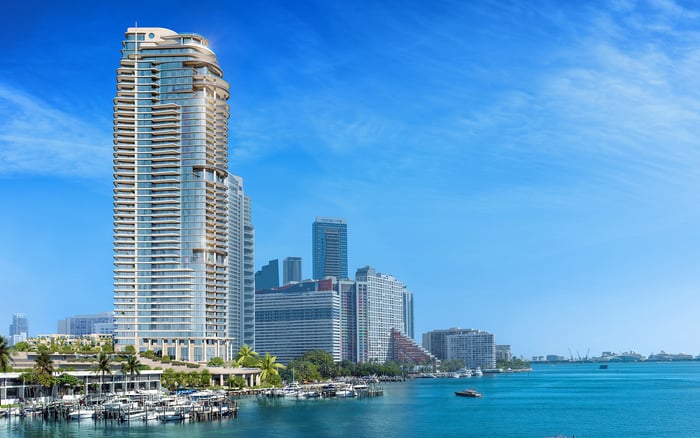
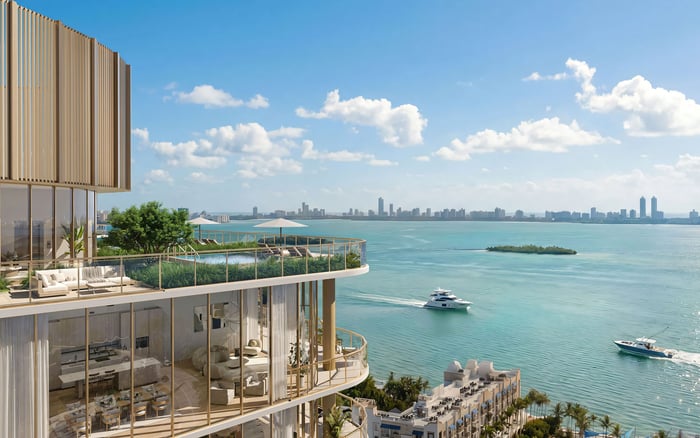
EB-5 capital is quietly shaping South Florida’s development pipeline, while globally mobile families evaluate residency pathways alongside real estate strategy. This guide explains current EB-5 thresholds, TEA rules, project structures, and the due diligence signals that matter most heading toward the 2027 inflation adjustment.
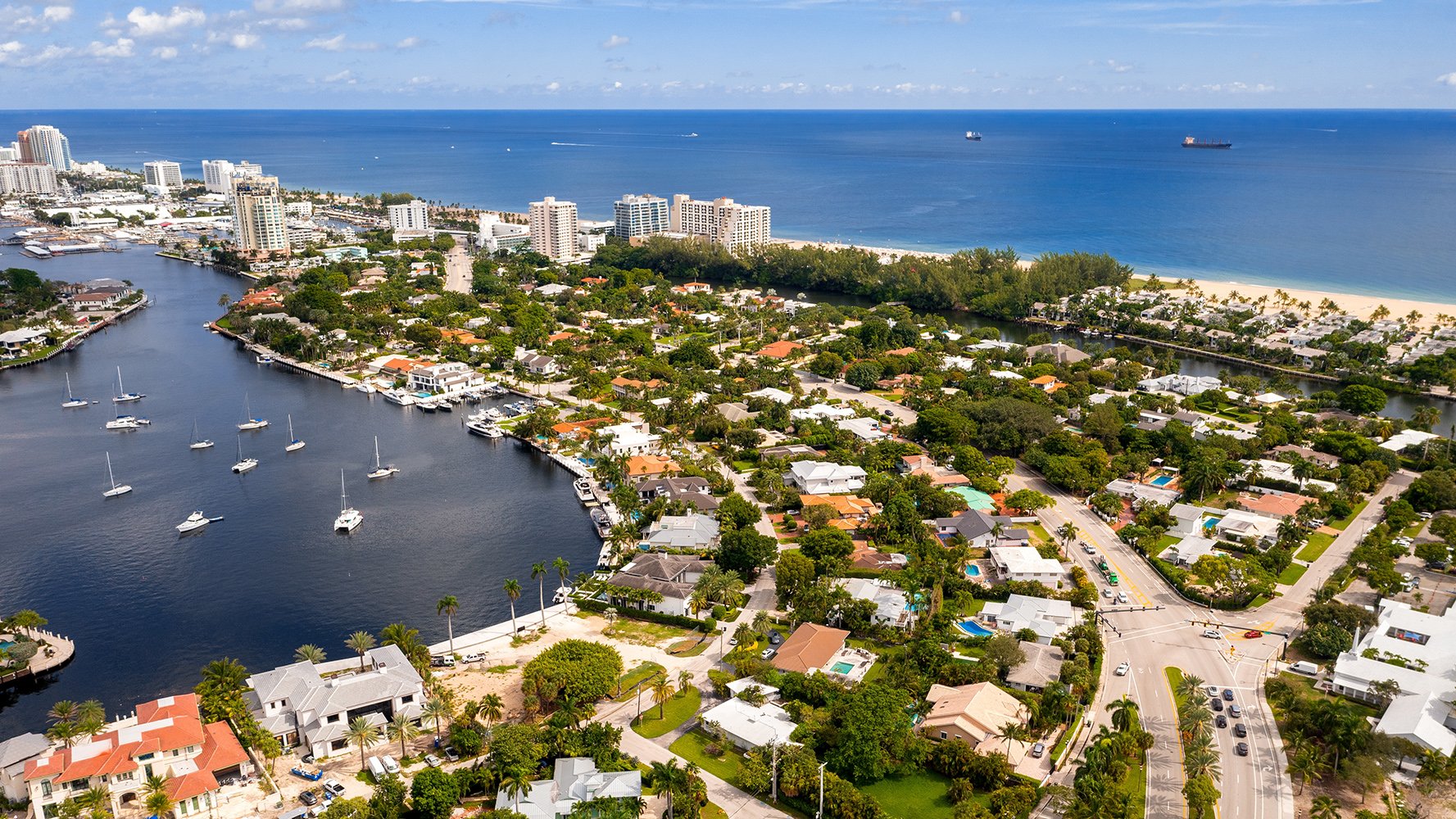
For globally oriented buyers, South Florida sits at a rare intersection: an international lifestyle market that also attracts sophisticated capital planning. The EB-5 Immigrant Investor Program, created by Congress in 1990 to spur U.S. economic growth through foreign investment and job creation, has re-entered the luxury real estate dialogue because it can influence how projects are financed and how quickly they reach the market.
For developers, EB-5 is often positioned as a potentially lower-cost source of capital when structured and administered compliantly. For internationally mobile families, it is frequently discussed as a residency pathway that can complement a broader U.S. footprint. The nuance matters. In investment conversations, marketing can blur the line between immigration outcomes, financial returns, and the real risks and timelines inherent in development.
EB-5 is not a real estate purchase program. It is an immigration framework tied to a qualifying investment into a compliant new commercial enterprise, with job creation as the central requirement.
Current publicly disclosed thresholds commonly cited in EB-5 materials are $800,000 when a project qualifies in a Targeted Employment Area (TEA) and $1,050,000 outside a TEA. An investor must generally demonstrate that the investment will create (or, in limited cases, preserve) at least 10 full-time U.S. jobs per investor.
Two principles should anchor any review.
First, the capital must remain “at risk.” Any language that resembles a guaranteed return or a guaranteed green card should trigger immediate scrutiny and counsel review.
Second, a luxury address does not automatically translate into an EB-5-ready structure. Immigration outcomes depend on compliant documentation, a credible job creation methodology, and careful execution, not on the prestige of the zip code.
TEA status is often what makes EB-5 pencil out for investors by enabling the lower $800,000 investment level. A TEA can be rural (outside metropolitan statistical areas and outside towns or cities over 20,000 people) or high-unemployment (typically at least 150% of the national average).
In South Florida, the practical implication is straightforward: TEA mapping can influence where EB-5 capital is most readily raised and how sponsors position a site. That can have downstream effects for pre-construction buyers, because capital stack decisions can affect project pacing, contingency planning, and the resilience of a construction timeline.
A refined approach is to ask whether the TEA designation is essential to the project’s viability or simply one tool among several. If it is essential, diligence should go deeper on assumptions, supporting documentation, and what happens if the TEA strategy changes.
Most luxury consumers first encounter EB-5 through real estate-adjacent marketing, but structure is what drives outcomes.
In a regional center EB-5 project, job creation can be counted using economic modeling, including indirect job creation. This is generally considered easier to document than direct, W-2 hiring in a stand-alone direct EB-5 business, where job creation is typically more straightforward conceptually but harder to scale.
For a buyer weighing lifestyle decisions in Brickell, Miami Beach, Edgewater, or Pompano Beach, the takeaway is simple: ask how job creation is expected to be documented, which assumptions the model relies on, and what disclosures exist around timelines and risk.
EB-5 can be one component of the capital stack for mixed-use and residential development. When structured well, it may help bridge financing gaps, diversify funding sources, and support forward momentum during market windows that reward certainty.
That said, the same lever can magnify risk when governance is weak. The U.S. Securities and Exchange Commission has pursued EB-5 enforcement actions where investor funds were allegedly diverted to personal purchases rather than the represented project use. South Florida has also seen public reporting of EB-5-linked development distress, including litigation tied to the Legacy Hotel & Residences at Miami Worldcenter. The lesson is not to avoid the category, but to apply the same rigor you would bring to any complex private placement.
In practice, the presence of EB-5 should sharpen your questions about escrow mechanics, use of proceeds, third-party oversight, reporting cadence, and what remedies exist if milestones are missed.
The high-end market is not monolithic. Some families are relocating full-time. Others are building a second-home strategy centered on flexibility, privacy, and durable asset quality. EB-5 tends to surface most often among globally mobile households seeking optionality.
In Edgewater, the appeal is often waterfront living with a more residential cadence than the densest pockets of Downtown. A project like Cove Miami fits naturally within that narrative: a luxury tower concept marketed around a curated amenity program and a limited residential count, designed for buyers who want prestige without maximal noise.
In Miami Beach, the tone shifts toward legacy beachfront value, hospitality-caliber service, and the daily ritual that makes a second home feel inevitable. The new-construction conversation can include boutique oceanfront offerings such as 57 Ocean Miami Beach, alongside private-club positioning and service culture referenced by names like Casa Cipriani Miami Beach. Even when EB-5 is not tied to a specific residence purchase, the broader funding environment can influence the supply of ultra-prime inventory that attracts international demand.
In Pompano Beach, the story is changing quickly: more design-forward beachfront product and a growing appetite for branded living. Armani Casa Residences Pompano Beach has been marketed as an ultra-limited collection of oceanfront residences with Armani/Casa design involvement, a kind of scarcity that resonates with buyers accustomed to global branded benchmarks.
EB-5 decisions are rarely purely financial, and they are never purely emotional. A disciplined approach typically brings together experienced immigration counsel, securities counsel, and a real estate advisor who understands how a capital stack behaves during construction.
Use these buyer-oriented questions as a baseline.
Are you investing in an EB-5 project entity, buying a residence, or doing both? Many EB-5 real estate narratives involve an investment into a project company (often through a regional center structure), while a separate real estate purchase may be optional.
How will the 10-job requirement be satisfied and evidenced? Ask whether indirect jobs are modeled and what assumptions drive the model.
What does “at risk” mean in plain language? If a pitch implies certainty, ask where that certainty comes from and how it is supported in writing.
What fees apply beyond the headline investment amount? Some offering documents publicly disclose administrative fees and other charges.
Who controls the money, and what are the guardrails? Oversight, reporting, and restrictions on use of proceeds are not accessories. They are the product.
The EB-5 Reform and Integrity Act introduced integrity rules and set investment amounts to adjust for inflation starting Jan. 1, 2027, and every five years thereafter. Industry analysts have warned that this adjustment could lift minimums, often modeled around roughly $900,000 in a TEA and $1.2 million outside a TEA depending on inflation measures.
For families considering EB-5 as part of a U.S. plan, timing is often less about urgency and more about certainty. Which stage of the process locks in which requirements? How might a higher minimum affect a project’s fundraising strategy? If a project relies on a large EB-5 raise, does it have alternative sources of capital if investor demand shifts ahead of 2027?
For luxury buyers focused on real estate first, the same timing issue can appear indirectly. Capital costs can influence pricing power, incentives, and the pace at which a pre-construction tower moves from announcement to execution.
Is EB-5 the same as buying a condo in Miami? No. EB-5 is an investment into a qualifying enterprise tied to job creation; a condo purchase is a separate transaction unless specifically structured otherwise.
What are the common EB-5 minimum investment amounts today? Publicly disclosed thresholds are often $800,000 in a TEA and $1,050,000 outside a TEA.
What is a TEA in plain terms? A Targeted Employment Area is typically a rural area or a high-unemployment area that can qualify a project for the lower EB-5 investment threshold.
How many jobs must be created per EB-5 investor? At least 10 full-time U.S. jobs per investor are generally required.
Why do many projects use regional centers? Regional center projects can often count jobs through economic modeling, including indirect job creation, which can be easier to document than direct hiring.
Can an EB-5 offering guarantee a green card or a return? It should not. EB-5 capital must be “at risk,” and guarantees are a red flag that warrants counsel review.
What risks have regulators highlighted in EB-5? Enforcement actions have alleged misuse of investor funds in certain cases, underscoring the need for strong oversight and clear use-of-proceeds controls.
How does EB-5 affect South Florida luxury development? It can be part of a project’s financing, potentially influencing timelines and execution if raised and deployed compliantly.
What changes in 2027 could matter to investors? Investment minimums are set to adjust for inflation starting Jan. 1, 2027, which could raise required amounts.
Who should be on my advisory team for an EB-5 decision? At minimum, experienced immigration counsel and securities counsel, plus a real estate advisor who understands development finance and sponsor risk.
For a discreet, buyer-first conversation about South Florida opportunities, connect with MILLION Luxury.
If branded residences are on your mind — as a home or as an allocation — we would be glad to share what we are seeing, privately.
Begin a quiet conversation