A discreet buyer’s guide to evaluating Brickell waterfront residences through the lens of boating access, marina rights, route practicality, and long-term ownership costs.
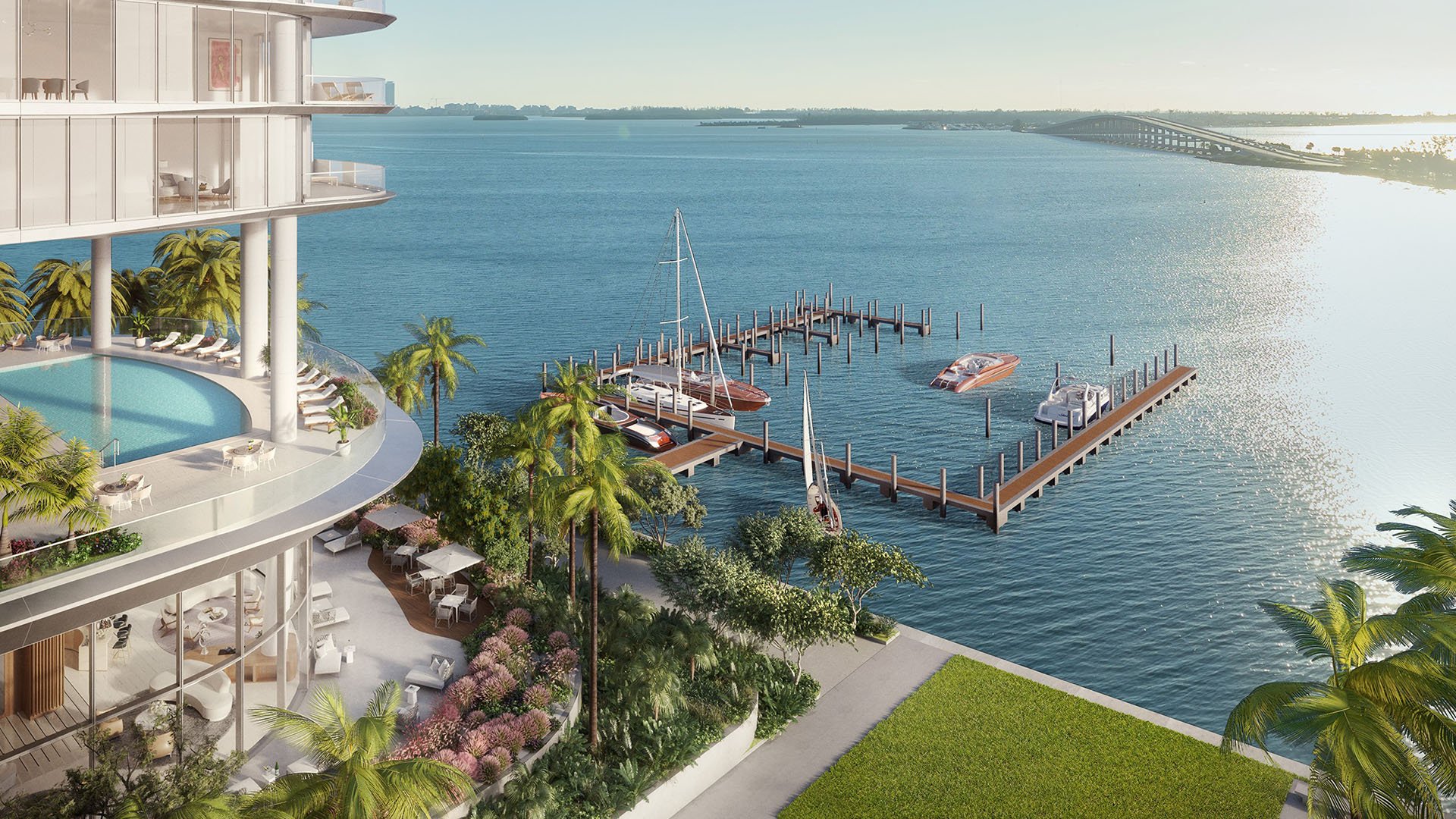
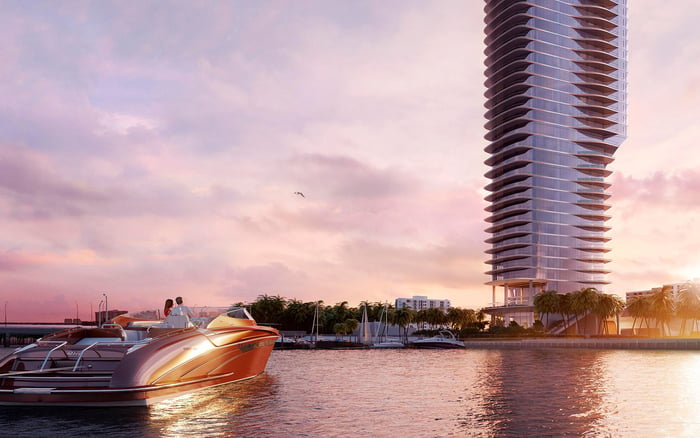
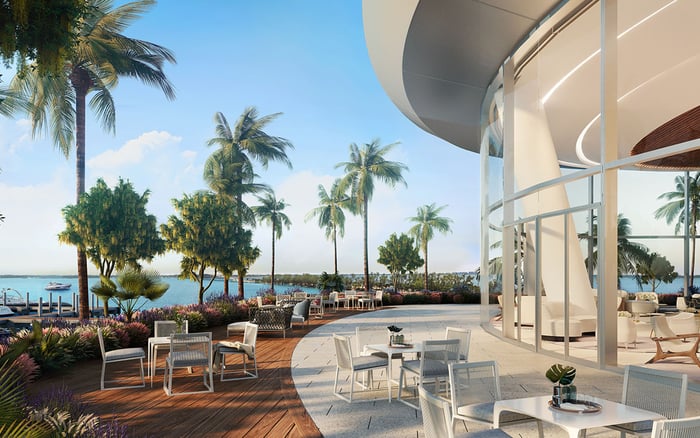
Brickell sells a powerful idea of waterfront living: glass towers, glittering bay light, private terraces, and an immediate connection to Biscayne Bay. For many buyers, that image naturally extends into a boating fantasy. A tender close at hand. A weekend departure without ceremony. A residence that feels not merely beside the water, but genuinely connected to it.
That distinction is where serious due diligence begins. A waterview is not the same asset as navigable access, and waterfront presence does not automatically translate into boating convenience. A residence may deliver an exceptional visual relationship with the bay while offering limited or no practical utility for a specific vessel, cruising style, or ownership routine. Disciplined buyers treat the marina conversation as a separate underwriting exercise, not as a lifestyle assumption folded into the view premium.
In Brickell, the right question is rarely, “Is there water nearby?” It is, “Can my boat, my schedule, my captain, and my preferred use pattern be supported without friction?”
A refined Brickell purchase can be compelling even without direct boating utility. The neighborhood’s appeal is broad: financial district energy, dining, culture, hotel-caliber services, and a vertical waterfront atmosphere that feels distinctly Miami. But buyers who intend to use a boat regularly should not allow architectural seduction to obscure operational reality.
When comparing Brickell addresses such as Una Residences Brickell, St. Regis® Residences Brickell, and Baccarat Residences Brickell, the boating conversation should be handled separately from architecture, interiors, amenity programming, and skyline appeal. Each buyer’s marine requirements are personal: vessel length, beam, draft, height, crew needs, delivery schedule, guest boarding preferences, and tolerance for off-site arrangements.
The cleanest approach is to define the boating brief before falling in love with a residence. Is the boat used weekly or seasonally? Is it a center console, day boat, tender, sportfish, yacht, or chartered alternative? Does the owner need private loading, secure storage, captain access, or simple proximity to a marina? The answers materially change the value of a waterfront address.
Before a contract is signed, a waterfront buyer should ask for written clarity on the actual boating rights available to the residence. If a slip is part of the discussion, determine whether it is assigned, licensed, leased, purchased separately, included as an appurtenant right, or subject to a waitlist. A boat slip should never be treated as a verbal amenity.
The vessel parameters matter just as much as the right itself. Request written limits for length overall, beam, draft, height, weight, tender storage, electrical service, shore power, and any restrictions on liveaboard use or commercial activity. Confirm whether guest docking, transient docking, or temporary loading is permitted. If the building has a dockmaster or marina manager, understand the scope of that role and whether access is staffed, self-managed, or dependent on association rules.
Do not assume fuel service, pump-out, provisioning, maintenance access, cleaning, detailing, or mechanical work can be handled at the property. Some buyers only need a convenient boarding point. Others require a more robust marine support ecosystem. The gap between those expectations can become expensive if discovered after closing.
For luxury buyers, boating access is often discussed in lifestyle language, but it lives in legal documents. The condominium declaration, bylaws, rules, marina agreements, slip licenses, management policies, and association minutes can determine whether a boating feature is durable, transferable, revocable, rentable, or merely convenient for the current owner.
Look closely at how the right is described. Is it exclusive use, a limited common element, a license, a separately deeded interest, or a revocable agreement? Can it be transferred with the residence? Can it be sold independently? Are there owner-occupancy requirements, insurance obligations, registration standards, captain access rules, hurricane protocols, or penalties for noncompliance?
Buyers comparing lifestyle-driven Brickell projects such as Cipriani Residences Brickell should make this review part of the same diligence package as floor plans, closing costs, association budgets, and building rules. The elegance of the residence does not replace the precision of the paperwork.
Even where docking is available, the route may be the real test. A vessel’s practical use depends on more than where it rests. Bridge clearances, opening procedures, channel conditions, traffic patterns, construction activity, no-wake zones, tides, and turning room can shape the daily experience. Buyers should map the actual route from dock to open water with the captain or marine advisor who will use it.
Height is especially important for larger boats or vessels with towers, hardtops, antennas, or outriggers. Draft matters for deeper-running boats. Beam matters for maneuvering and slip fit. Time matters for owners who expect spontaneous departures. A beautiful marina setting loses value if the first half hour of every trip becomes a logistical negotiation.
For some owners, the most rational solution is not direct residential docking, but a residence in Brickell paired with a separate marina arrangement nearby or elsewhere in Miami. That structure can preserve the lifestyle benefits of the neighborhood while allowing the vessel to live where service, access, and route conditions are more appropriate.
A marina component can add a second layer of ownership costs. Beyond the residence, buyers should evaluate slip fees, association charges, utility billing, insurance, dock maintenance, hurricane preparation, fendering, lines, cleaning, detailing, lift arrangements, haul-outs, bottom maintenance, and captain or crew access. These costs may be modest relative to the residence, but they influence the practical ownership experience.
Insurance deserves particular attention. The residence, the vessel, the slip right, and the association may each carry separate requirements. A lender, insurer, association, or marina operator may impose standards that are not obvious during a showing. A buyer should confirm requirements before contingency periods expire.
There is also a service question. Where will supplies be delivered? Where can guests board safely? Where can a captain park? Where is trash handled after a day on the water? Where can the boat be rinsed, fueled, repaired, or staged before a crossing? Luxury is often defined by what does not require explanation.
The strongest Brickell acquisition is one where the residence and the boating plan complement each other rather than compete. A buyer drawn to a new-construction urban lifestyle may find that a project like 2200 Brickell satisfies the residential brief, while boating is addressed through a separate marina membership, yacht club relationship, or private dock solution outside the building.
That approach is not a compromise when it is intentional. It can allow the buyer to prioritize architecture, service, floor height, light, privacy, and neighborhood access at home, while placing the boat in the most operationally efficient setting. Conversely, a buyer who wants to step from lobby to vessel should treat the marine component as essential infrastructure and underwrite it accordingly.
In either case, the discipline is the same: verify, document, and test the scenario before committing. Brickell’s waterfront will always be emotionally persuasive. The best buyers make sure it is also operationally honest.
Does a Brickell waterfront condo always include boating access? No. Waterfront presence and boating access are separate considerations that should be verified in writing.
What is the first document a boating buyer should request? Ask for the condominium and marina documents that define any dock, slip, license, or access rights.
Can a slip be transferred with a residence? Sometimes, but transferability depends on the governing documents and should not be assumed.
What vessel details should be checked before purchasing? Confirm length, beam, draft, height, weight, power needs, and any operational restrictions.
Should a captain review the route before closing? Yes. A captain or marine advisor can identify route issues that may not be obvious to a buyer.
Is a waterview premium the same as a boating premium? No. Waterview value is visual and emotional, while boating value depends on practical access.
What costs are easy to overlook? Slip fees, utilities, insurance, hurricane preparation, maintenance, and service logistics are common omissions.
Can boating access rules change after purchase? Rules may evolve through association governance or marina management, so buyers should review amendment powers.
Is off-site marina access a reasonable strategy? Yes. Many buyers prefer a Brickell residence with a separate boating arrangement that better suits the vessel.
What is the best way to shortlist comparable options for touring? Start with location fit, delivery status, and daily lifestyle priorities, then compare stacks and elevations to validate views and privacy.
For a discreet conversation and a curated building-by-building shortlist, connect with MILLION.
If branded residences are on your mind — as a home or as an allocation — we would be glad to share what we are seeing, privately.
Begin a quiet conversation