A buyer-focused guide to South Florida waterfront addresses where marina functionality, deep-water access, services, and legal dockage rights matter more than a postcard view.

In South Florida, almost every waterfront address can look persuasive at sunset. The harder question is whether it can support the way a serious yacht owner actually lives. A pretty dock may frame a terrace beautifully, but a true marina is an operating environment: protected basin, navigable depth, fuel, provisioning, pump-out, shore power, monitoring, security, slip-holder amenities and dependable access to marine trades.
That distinction matters because luxury waterfront marketing often compresses very different assets into the same language. A private dock, a residential basin and a full-service marina are not interchangeable. For buyers with substantial vessels, the real premium is not simply the view across the Intracoastal or Biscayne Bay. It is operational reliability.
The most valuable addresses are those where boating is not an accessory to the property but part of the surrounding infrastructure. That is why the strongest choices in South Florida are not always the flashiest towers or the most photogenic lots. They are the places where depth, service, legal dockage rights and rapid access to repairs can be underwritten before closing.
1. Fort Lauderdale Intracoastal Waterway - Fort Lauderdale / Broward County
Fort Lauderdale is the region’s benchmark for buyers who want a serious marina ecosystem rather than a symbolic dock. Its advantage is not a single facility or one residential enclave. It is the concentration of marinas, repair yards, provisioning, yacht clubs, brokerage, crewing and marine trades around the Intracoastal and Broward County’s boating economy.
For a large-yacht owner, that depth of ecosystem can matter more than a few minutes of drive time to Miami. When a vessel needs service, refit coordination, haul-out access or specialist support, Fort Lauderdale offers a practical operating base. Buyers comparing Fort Lauderdale waterfront should treat the marina network as part of the address itself.
2. Coconut Grove Marina District - Miami
Coconut Grove is Miami-Dade’s most established marina-oriented address cluster. It has long-running sailing culture, multiple boating facilities and a municipal waterfront context that makes Dinner Key and the Grove more practical for boaters than many purely residential bayfront addresses.
The Grove appeals to buyers who want neighborhood scale, mature waterfront character and access to South Biscayne Bay routes without giving up a refined residential setting. In Coconut Grove, the key diligence question is not whether the water feels close. It is whether a specific slip, depth profile and marina arrangement can support the vessel in question.
3. Brickell Key / Brickell waterfront - Miami
Brickell is not the obvious answer for every yacht owner, yet it can be compelling for buyers who want urban luxury, immediate Biscayne Bay access and proximity to marina services while remaining in Miami’s financial-core residential market. The key is to separate lifestyle adjacency from guaranteed dockage.
A buyer considering Brickell residences should confirm how the marina component actually works, if one is represented at all. Proximity can be valuable, but it is not the same as a transferable slip right or full-service boating support. Brickell is strongest for owners who prize city convenience and bay access, then verify the nautical terms deal by deal.
4. Downtown Miami / PortMiami-adjacent waterfront - Miami
Downtown Miami and PortMiami-adjacent waterfront offer a different appeal: proximity to deep-water commercial maritime infrastructure. For buyers who want to live near the city’s central waterfront and major marine corridors, this area can be strategically useful.
The caution is that commercial-scale maritime adjacency does not automatically translate into residential marina rights. Downtown claims around slips, services and vessel accommodation should be examined carefully. Downtown can be excellent for access and energy, but the specific residential dockage structure must support the valuation.
5. Coral Gables / Matheson Hammock-area waterfront - Miami-Dade
Coral Gables and the Matheson Hammock-area waterfront suit buyers seeking a quieter residential setting with access to South Biscayne Bay boating routes. The appeal is discretion and neighborhood character rather than the intensity of a major marina district.
For Coral Gables buyers, this is where diligence becomes especially important. Slip depth, ownership structure, transferability and service access should be confirmed before assigning a major premium to a waterfront property. The setting may be elegant, but serious yacht ownership still depends on operational detail.
The most sophisticated yacht buyers are not simply purchasing a residence. They are purchasing an operating radius. Fort Lauderdale’s edge is the scale of its marine-services environment, especially for owners who expect refit coordination, maintenance, brokerage, provisioning, crew support and reliable third-party trades nearby.
This does not mean Miami is secondary for every buyer. It means the highest use of a Fort Lauderdale waterfront address is often more practical for a vessel that needs commercial-grade support. A buyer may prefer Miami socially, architecturally or professionally, but if the vessel is the priority, Fort Lauderdale can be the more rational base.
That is why projects such as St. Regis® Residences Bahia Mar Fort Lauderdale sit in a different mental category for marina-focused buyers than a high-rise that merely faces water. Likewise, Riva Residenze Fort Lauderdale and Andare Residences Fort Lauderdale are best evaluated not only through design and views, but through the broader Fort Lauderdale boating context around them.
Miami is not one waterfront market. Coconut Grove, Brickell, Downtown and Coral Gables each solve a different problem for boaters. The Grove is the most natural Miami marina district, with boating culture embedded in daily life. Brickell is the urban bayfront choice. Downtown is about centrality and proximity to deep-water maritime infrastructure. Coral Gables is quieter, more residential and more dependent on site-specific verification.
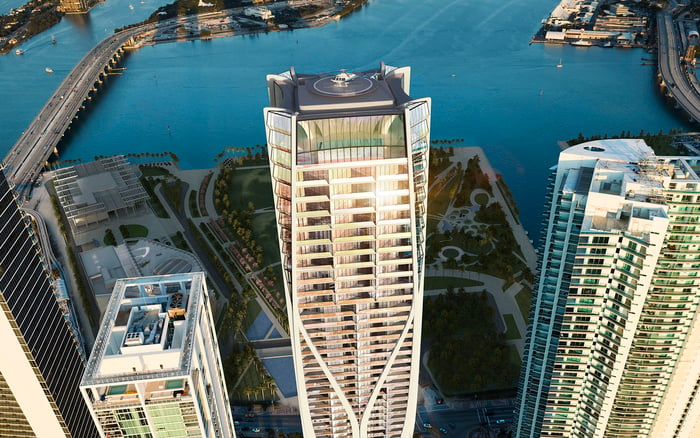
In Coconut Grove, buyers comparing Four Seasons Residences Coconut Grove with other nearby options should ask the practical question first: does the boating arrangement match the vessel, or is the property simply close to the water? In Brickell, a tower such as Una Residences Brickell may fit a buyer who wants bayfront living with access to Miami’s urban core, but the marina proposition still requires separate verification.
For buyers comparing Fort Lauderdale, Coconut Grove, Brickell, Downtown, Coral Gables and marina positioning, the best address is the one where the nautical terms are as clear as the floor plan.
Deep-water access is the first screen. Many waterfront properties can accommodate only smaller or shallow-draft boats, even when the listing language sounds expansive. Vessel length is only part of the equation. Beam, draft, bridge clearance, turning room and tidal conditions can all affect usability.
The second screen is the nature of the slip right. An “included slip” may be a lease, license, assignment, association-controlled right or another structure rather than fee-simple ownership. Transferability matters because a non-transferable or restricted right may have far less resale value than the marketing suggests.
Buyers should also verify dockage terms, waitlists, vessel-size limits, power service, insurance requirements, liveaboard restrictions, maintenance rules and whether fuel, pump-out or repair access is available nearby. A residential dock basin without fuel, repair, haul-out or commercial support may be entirely adequate for some owners, but it should not be priced like a serious marina.
Existing marina-adjacent addresses can command durable premiums because new marina capacity is difficult to add. Environmental, dredging and regulatory constraints make established locations increasingly important. That scarcity is real, but it rewards disciplined buyers. The market premium should attach to usable infrastructure, not romantic language.
For the buyer who wants a serious marina, South Florida’s hierarchy is clear. Fort Lauderdale leads for marine infrastructure and services. Coconut Grove is the strongest Miami marina district. Brickell and Downtown offer urban access with more deal-level scrutiny. Coral Gables provides refined residential calm, but the boating mechanics must be proven.
The best purchase is not simply the most expensive waterfront address. It is the address where the vessel, the slip, the services and the legal rights align. In this segment, the elegant move is also the practical one: underwrite the marina first, then fall in love with the view.
What separates a serious marina from a private dock? A serious marina typically offers operational services such as fuel, pump-out, provisioning, monitoring, shore power and slip-holder support. A private dock may offer convenience but not full boating infrastructure.
Why does Fort Lauderdale rank first for serious yacht owners? Fort Lauderdale combines marina access with repair yards, provisioning, yacht clubs and marine trades. That surrounding service network is the core advantage.
Is Coconut Grove the best Miami address for boaters? For many Miami buyers, yes, because it combines established boating culture with practical marina adjacency. Individual slip terms still need verification.
Can Brickell work for a serious boat owner? Brickell can work well for buyers who value urban living and Biscayne Bay access. The slip rights and marina services must be confirmed separately from the residence.
Does Downtown Miami offer true marina convenience? Downtown offers proximity to major waterfront and deep-water maritime infrastructure. Residential dockage claims should be reviewed carefully at the transaction level.
Is Coral Gables a good choice for yacht owners? Coral Gables can suit buyers who want a quieter residential setting and access to South Biscayne Bay. Depth, service access and ownership structure are the key diligence points.
What should buyers verify before paying a marina premium? Confirm depth, vessel length limits, beam, draft, power, insurance rules, waitlists, liveaboard restrictions and transferability. These details can change the true value of a waterfront home.
Are included boat slips always owned real estate? No. A slip may be a lease, license, assignment or association-controlled right. Legal counsel should review the structure before it is priced into the purchase.
Why are existing marina-adjacent addresses so valuable? New marina capacity can be difficult to create because of environmental, dredging and regulatory constraints. Usable existing infrastructure can therefore command a premium.
Should views or marina function matter more? For a serious yacht owner, marina function should come first. Views enhance the residence, but depth, services and rights determine whether the address truly works.
For a tailored shortlist and next-step guidance, connect with MILLION.
If branded residences are on your mind — as a home or as an allocation — we would be glad to share what we are seeing, privately.
Begin a quiet conversation