A buyer-oriented guide to evaluating boutique condo fees in Bay Harbor Islands, with emphasis on reserves, insurance, governance, assessments, and resale discipline.
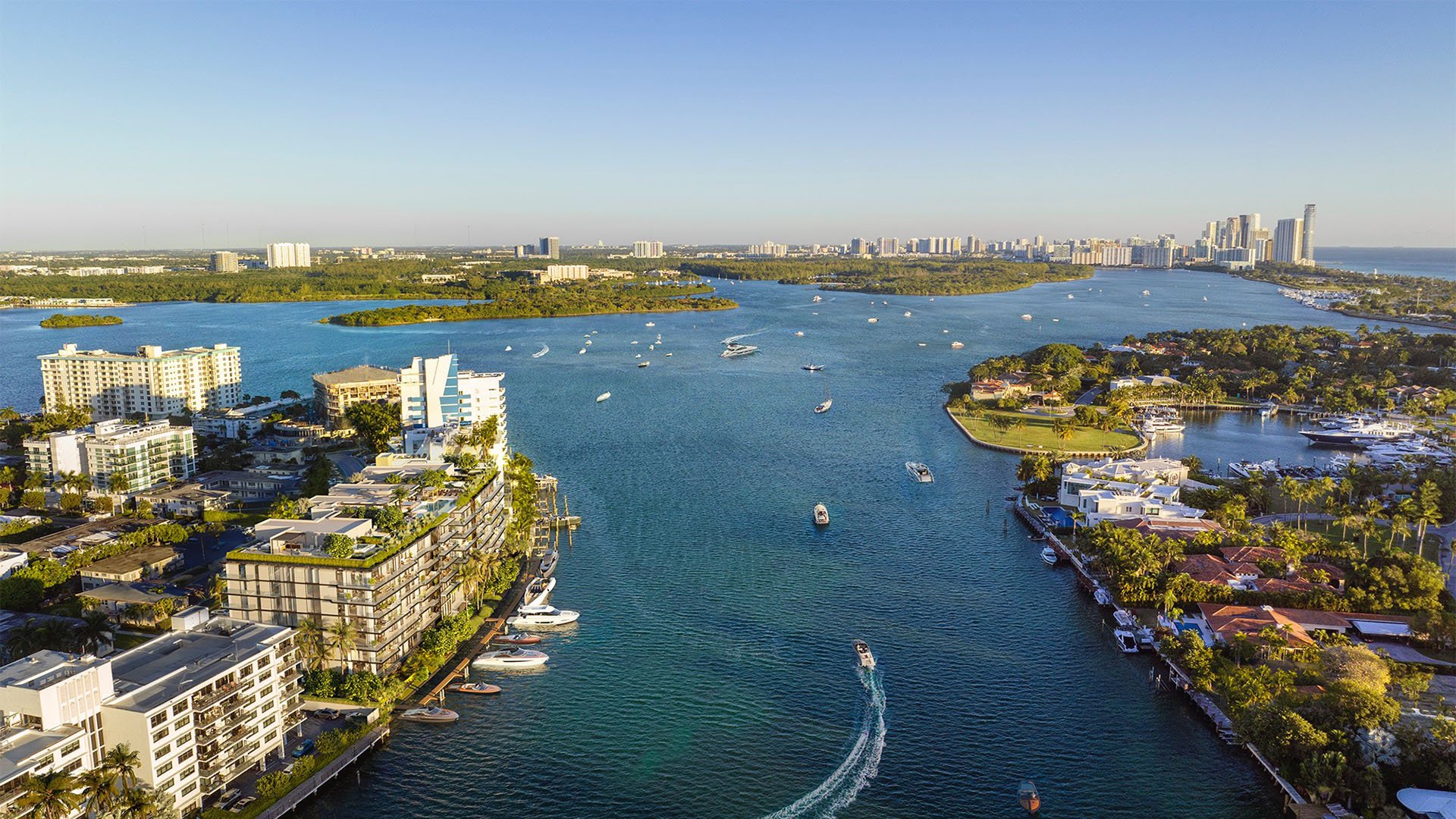
Bay Harbor Islands has become one of South Florida’s most nuanced residential markets, particularly for buyers who favor discretion over spectacle. Its low-profile streets, proximity to Bal Harbour and Surfside, and water-oriented setting appeal to owners who want privacy without leaving the Miami Beach orbit. In that context, boutique condominium living feels natural: fewer neighbors, quieter arrivals, more intimate amenities, and a calmer residential rhythm.
Yet the same qualities that make a smaller building desirable also change the arithmetic of ownership. In a large tower, fixed costs are spread across a broader ownership base. In a boutique building, every line item sits closer to the individual owner. Insurance, management, elevator service, waterfront maintenance, staffing, reserves, landscaping, security, and professional fees do not disappear because the building is smaller. They are simply shared among fewer units.
That is why Bay Harbor buyers should treat monthly fees not as a headline number, but as a living financial statement. The question is not only, “What are the dues today?” The sharper question is, “How resilient is this association if costs change?”
Boutique condominium fees can appear deceptively simple. A compact amenity program may suggest lower carrying costs than a resort-style tower, and in some cases that may be true. But smaller associations also have less margin for error. A single major repair, a shift in insurance expense, or a deferred reserve contribution can have a more visible impact on each owner.
This does not make boutique living inherently risky. Well-run smaller buildings can offer exceptional clarity and alignment among owners. The key is to understand whether the association is being managed for long-term elegance or merely for short-term affordability. A low fee that underfunds future needs can be less attractive than a higher fee supported by disciplined reserves and transparent planning.
The distinction matters across both new and established properties. At Alana Bay Harbor Islands, buyers may focus on the appeal of a contemporary boutique address. At Bay Harbor Towers, the conversation may include how an established building communicates its ongoing capital priorities. In each case, the quality of the fee matters more than the number alone.
For serious buyers, the due diligence package should be read as carefully as the floor plan. The operating budget shows how the association expects to function day to day. The reserve schedule offers clues about how future obligations are being anticipated. Meeting minutes can reveal whether owners are proactive, divided, or consistently deferring difficult choices. Insurance information helps clarify whether premiums are being absorbed in an orderly way or creating budget tension.
Special assessments deserve particular attention. The presence of an assessment is not automatically negative, especially if it funds necessary work and has been clearly communicated. The more important issue is whether assessments appear planned and strategic, or reactive and recurring. A building that addresses needs early may ultimately be more attractive than one that keeps fees artificially low until a large project becomes unavoidable.
Buyers should also ask how vendors are selected, how often contracts are reviewed, and whether the association has a culture of competitive bidding. In a smaller building, governance is intimate. That can be a benefit when owners are aligned, but it can create friction when participation is low or decision-making is informal.
Bay Harbor Islands buyers often prefer buildings without sprawling amenity decks or hotel-like intensity. That restraint can be appealing. A more curated amenity program may better suit residents who already have access to private clubs, marinas, beaches, restaurants, and wellness destinations nearby.
Still, restrained amenities require maintenance. Pools, elevators, garages, lobbies, fitness rooms, seawalls, roofs, mechanical systems, and access controls all need ongoing attention. Waterfront settings can add another layer of scrutiny because exterior exposure, drainage, and marine-adjacent conditions demand disciplined care.
This is where projects such as Onda Bay Harbor and La Maré Bay Harbor Islands enter the broader buyer conversation. The appeal is not merely that they are intimate or design-forward. Buyers must understand how the building’s physical promise is matched by its financial structure.
For an investment buyer, the monthly condominium fee is only one part of the holding-cost equation. The more important analysis is the relationship between dues, anticipated capital needs, rental rules if applicable, resale depth, and the competitive set. A boutique building with higher fees may still be compelling if the experience is rare, the location is strong, and the association is financially mature.
Resale buyers should compare fee levels against the building’s condition, services, reserves, and recent owner decisions. New-construction buyers should look beyond the developer presentation and focus on what the association budget may look like once the building is fully operating as a resident-controlled community. The transition from new delivery to long-term ownership is where assumptions become obligations.
At The Well Bay Harbor Islands, wellness-oriented positioning may be central to the ownership narrative. The due diligence question remains practical: what does it cost to preserve that experience over time, and how are those costs allocated?
In boutique buildings, owners are closer to the board, the budget, and one another. That proximity can create a highly responsive residential culture. It can also mean that personality, participation, and transparency matter more than in a large tower where professional management may define the daily rhythm.
A buyer should want to know whether the board communicates clearly, whether financial statements are delivered in an organized manner, and whether reserves are discussed with realism. The most attractive smaller associations tend to have a quiet professionalism about them. They do not avoid expenses. They prioritize them.
This governance premium is especially relevant in Bay Harbor Islands because the neighborhood attracts sophisticated, mobile buyers who may be comparing alternatives across Bal Harbour, Surfside, Miami Beach, and mainland Miami. The winning boutique building is not necessarily the one with the lowest fee. It is the one where the fee feels intelligible, defensible, and aligned with the lifestyle being purchased.
The strongest due diligence process begins before negotiation. Ask for the budget, reserves, insurance information, recent minutes, assessment history, rules, and any available capital planning materials. Then read them with the same attention given to views, finishes, ceiling heights, and parking.
A trusted attorney, accountant, insurance professional, or building consultant can help translate documents into risk. For high-value buyers, this is not excessive caution. It is the price of precision. Boutique ownership is personal, and the financial review should be equally tailored.
Ultimately, Bay Harbor Islands rewards buyers who understand that intimacy has a cost structure. Smaller buildings can offer exceptional privacy and elegance, but they require sharper questions. In a market where discretion is often the luxury, financial clarity is part of the architecture.
Why can boutique condo fees feel higher than expected? Smaller buildings share fixed costs among fewer owners, so each budget item can have a more noticeable effect on monthly dues.
Are lower condo fees always better for Bay Harbor Islands buyers? Not necessarily. A low fee may be attractive only if the association is also funding reserves and maintaining the property responsibly.
What documents should a buyer review first? Start with the operating budget, reserve information, insurance details, meeting minutes, rules, and any assessment history.
Should special assessments be considered a warning sign? They deserve scrutiny, but they are not automatically negative. The key is whether they are planned, transparent, and tied to necessary work.
How does insurance affect boutique condo ownership? Insurance can be a meaningful association expense, and smaller buildings may have fewer owners absorbing changes in premiums.
Is new construction easier to evaluate than resale? It can be different, not necessarily easier. Buyers should consider how the budget may evolve once the building operates long term.
Why does governance matter more in a smaller association? Fewer owners often means decisions feel more immediate, so board transparency and owner participation become especially important.
Can a boutique building still be a strong investment? Yes, if fees are supported by location, condition, rarity, governance, and a clear long-term ownership proposition.
How should buyers compare Bay Harbor Islands with Surfside or Bal Harbour? Compare not only price and location, but also association structure, amenities, reserves, and the character of daily living.
What is the main takeaway for boutique condo buyers? Treat the fee as a financial narrative, not a single number. The best buildings make their costs understandable and durable.
For a confidential assessment and a building-by-building shortlist, connect with MILLION.
If branded residences are on your mind — as a home or as an allocation — we would be glad to share what we are seeing, privately.
Begin a quiet conversation