A discreet 2026 buyer’s lens on how to evaluate Bay Harbor Towers, Shell Bay by Auberge Hallandale, and The Links Estates at Fisher Island through building scale, lobby privacy, arrival sequence, and day-to-day resident familiarity.
At the highest tier of South Florida residential decision-making, the most revealing questions are rarely about spectacle. They are about rhythm. How many people does a resident encounter between car and elevator? Does the lobby feel ceremonial, social, or genuinely discreet? Can staff recognize household preferences without making the building feel overfamiliar? For 2026 buyers weighing Bay Harbor Towers, Shell Bay by Auberge Hallandale, and The Links Estates at Fisher Island, those questions can matter more than a polished amenity inventory.
The modern ultra-premium buyer is not simply choosing a residence. The buyer is selecting a daily operating environment. Building scale, lobby privacy, and resident familiarity determine whether a property feels composed on a Tuesday morning, during a holiday weekend, after dinner, and when guests arrive. The strongest due diligence is therefore experiential, not abstract. It asks how a building behaves when it is not being presented.
Scale is often treated as a single statistic, but buyers should understand it as a lived condition. A larger residential environment may offer broader programming, layered services, and a more resort-like cadence. A more intimate setting may offer quieter circulation, quicker recognition, and fewer unscheduled encounters. Neither is inherently superior. The right answer depends on how the household wants to live.
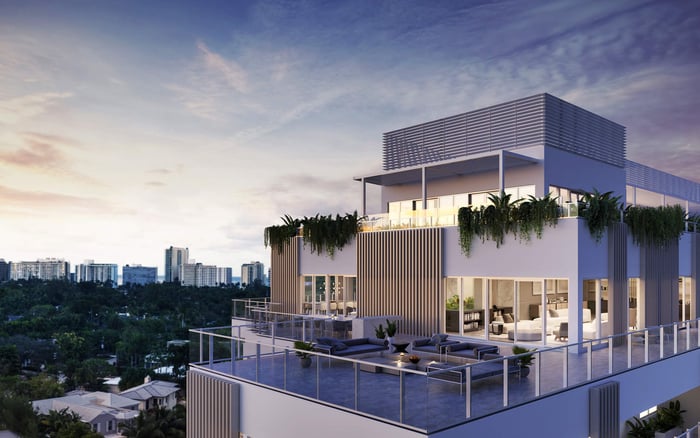
For Bay Harbor Towers, the scale conversation should begin with how the building manages arrival, parking, vertical circulation, and shared spaces during normal peak moments. Buyers should ask whether the property supports a sense of calm without feeling under-activated. In Bay Harbor Islands, privacy is often tied to neighborhood texture as much as building design, so the experience outside the front door matters too.
At Shell Bay by Auberge Hallandale, the question is how a hospitality-informed residential experience balances energy with discretion. Hallandale attracts buyers who may want proximity, service, and a polished club-like atmosphere, yet the due-diligence lens should remain practical: how does the property separate resident movement from guest movement, and how naturally does service recede when not needed?
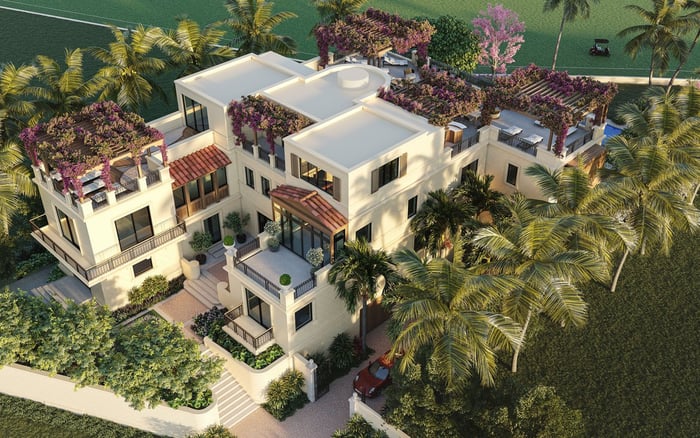
At The Links Estates at Fisher Island, the analysis may focus on the distinction between estate-style living and tower-style living. The point is not privacy as an idea, but privacy as a sequence: approach, entry, reception, internal movement, outdoor use, and departure.
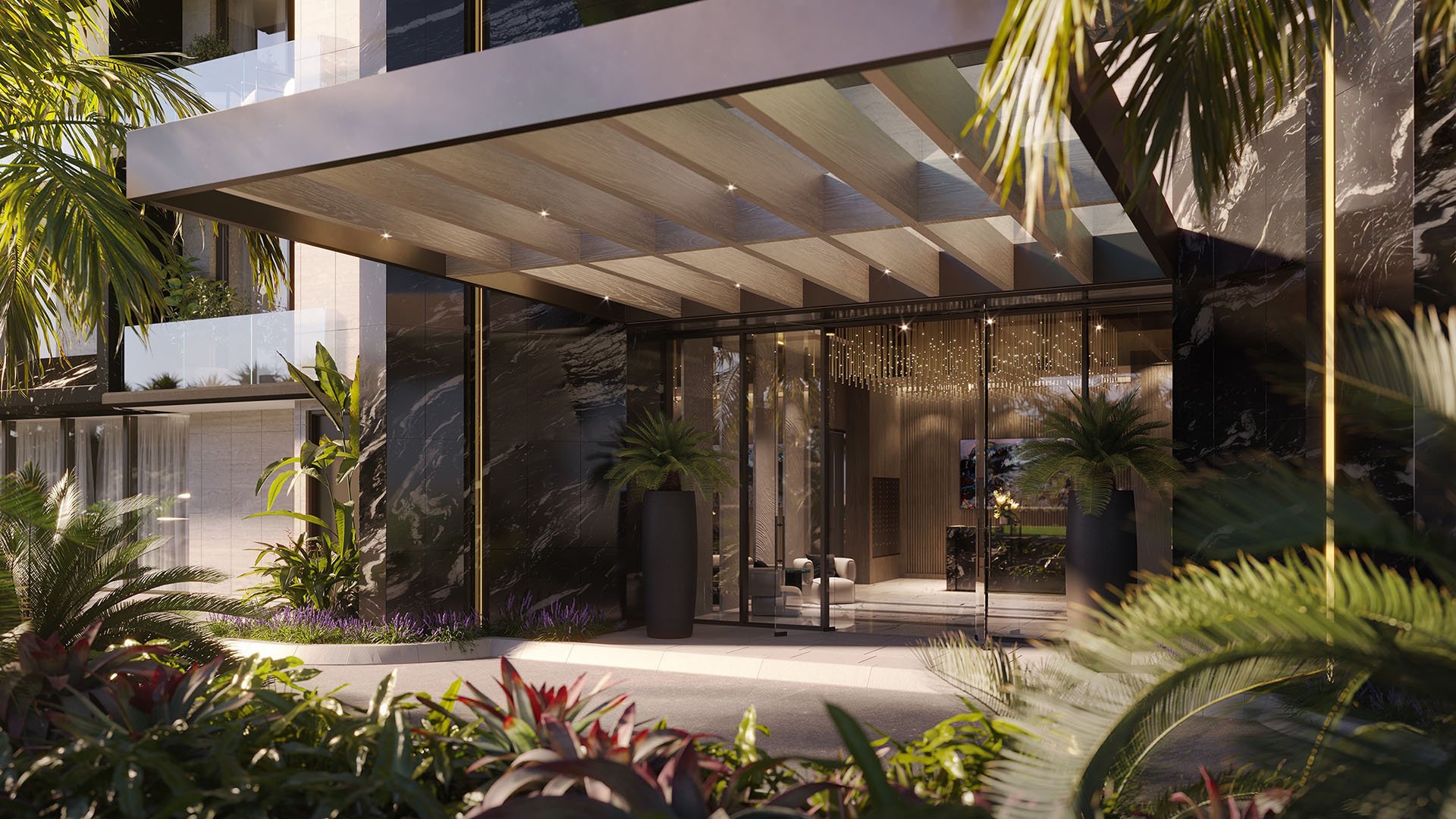
A private lobby is not defined by finishes or ceiling height alone. It is defined by choreography. The most elegant entrance can still feel exposed if arrivals stack at the wrong time, if guests wait in the wrong place, or if service traffic is visible in the resident path. Conversely, a restrained lobby can feel exceptional when the arrival sequence is quiet, legible, and controlled.
Buyers should visit at different times of day and pay close attention to thresholds. The curb, porte cochere, reception desk, elevator vestibule, package route, and valet rhythm all shape the privacy impression. In the ultra-luxury segment, the lobby is not just a room. It is the first filter between public life and domestic life.
For households with staff, drivers, visiting family, or frequent entertaining, this becomes even more important. A property may feel serene during a scheduled tour and entirely different when multiple arrivals overlap. The prudent buyer tests not only whether the lobby is beautiful, but whether it protects composure under pressure.
Resident familiarity is one of the least advertised and most valuable aspects of a building. It is the difference between anonymous service and intuitive service. When done well, staff recognize patterns, preferences, and household boundaries without intruding. When poorly calibrated, familiarity can feel casual, inconsistent, or too visible.
This is where boutique scale can be powerful, but only if management standards match the architecture. A smaller setting may allow for more personal recognition, while a larger setting may rely on systems, staffing depth, and formal protocols. Buyers should ask how continuity is maintained across shifts, how guest permissions are handled, and how discretion is trained.
The question is not whether the concierge knows a resident’s name. The question is whether the building can anticipate needs without creating social obligation. In the South Florida luxury market, where many owners split time among multiple homes, the property that remembers without overstepping often becomes the residence that feels easiest to return to.
Bay Harbor Towers, Shell Bay by Auberge Hallandale, and The Links Estates at Fisher Island sit in different lifestyle contexts, which is precisely why a disciplined comparison is useful. Buyers should resist flattening them into a single luxury category. Each should be measured against the household’s own pattern of use.
For a primary residence, everyday privacy may matter more than destination energy. For a second home, hospitality, lock-and-leave confidence, and guest handling may carry greater weight. For a family office or multi-generational ownership structure, the key issue may be whether the property can support different users without making the residence feel publicly trafficked.
Golf, boating, beach access, dining, and wellness may all enter the conversation, but they should not distract from the operational question: does the property make daily life easier and more private? A residence can offer memorable amenities and still fall short if the arrival sequence feels crowded or if service cannot distinguish residents from transient guests.
A serious buyer should conduct more than one visit. Tour during a calm window, then return when residents are more likely to be moving through the property. Watch how vehicles are handled. Notice whether staff communicate quietly. Observe whether guests appear to understand where to go. Listen for lobby acoustics. Privacy is often audible before it is visible.
Ask how deliveries, contractors, private chefs, trainers, and visiting family are routed. Review guest registration procedures and elevator access logic. Understand how amenity reservations work and whether resident-only spaces are protected in practice. These are not minor administrative questions. They reveal how the building will feel once ownership begins.
For buyers comparing Fisher Island, Hallandale, and Bay Harbor Islands, the broader setting also deserves scrutiny. A secure island environment, a hospitality-led residential community, and a bayfront neighborhood cadence will each create a different emotional register. The right choice should feel aligned before the contract is signed.
The next phase of ultra-prime South Florida buying is less about asking which project is most impressive and more about asking which property is most livable in private. Building scale determines exposure. Lobby design determines transition. Resident familiarity determines whether service feels graceful or generic.
In that context, Bay Harbor Towers, Shell Bay by Auberge Hallandale, and The Links Estates at Fisher Island are best studied as distinct privacy ecosystems. The winning choice is the one whose daily choreography matches the buyer’s standards when no one is performing for the tour.
Why does building scale matter in luxury due diligence? Scale shapes how often residents encounter staff, neighbors, guests, and service traffic. It directly affects privacy, energy, and daily ease.
Is a smaller building always more private? Not automatically. Privacy depends on circulation, staffing, guest control, and how well the property manages shared spaces.
What should buyers observe in a lobby tour? Buyers should watch arrival flow, staff discretion, guest waiting areas, elevator access, and how calm the room feels during movement.
How does resident familiarity affect value? Consistent, discreet recognition can make a residence feel effortless. It is especially important for owners who travel frequently.
What is the key question for Bay Harbor Towers? Buyers should evaluate whether the arrival sequence, shared spaces, and neighborhood cadence support the level of privacy they expect.
What is the key question for Shell Bay by Auberge Hallandale? Buyers should study how hospitality-style service is balanced with resident discretion, especially around guests and amenities.
What is the key question for The Links Estates at Fisher Island? Buyers should focus on the full privacy sequence, from approach and entry to outdoor living, service movement, and departure.
Should buyers visit more than once before deciding? Yes. Multiple visits at different times reveal traffic patterns, staff rhythm, and the true feel of the property.
How should second-home buyers think about privacy? They should prioritize secure access, guest handling, maintenance protocols, and a service culture that works smoothly when they are away.
What separates a beautiful lobby from a truly private one? A private lobby controls visibility, sound, timing, and movement. Beauty matters, but choreography determines discretion.
To compare the best-fit options with clarity, connect with MILLION.
If branded residences are on your mind — as a home or as an allocation — we would be glad to share what we are seeing, privately.
Begin a quiet conversation