A buyer-focused look at how golf access can shape luxury residential value in South Florida, from privacy and views to club culture, ownership structure, and resale positioning.
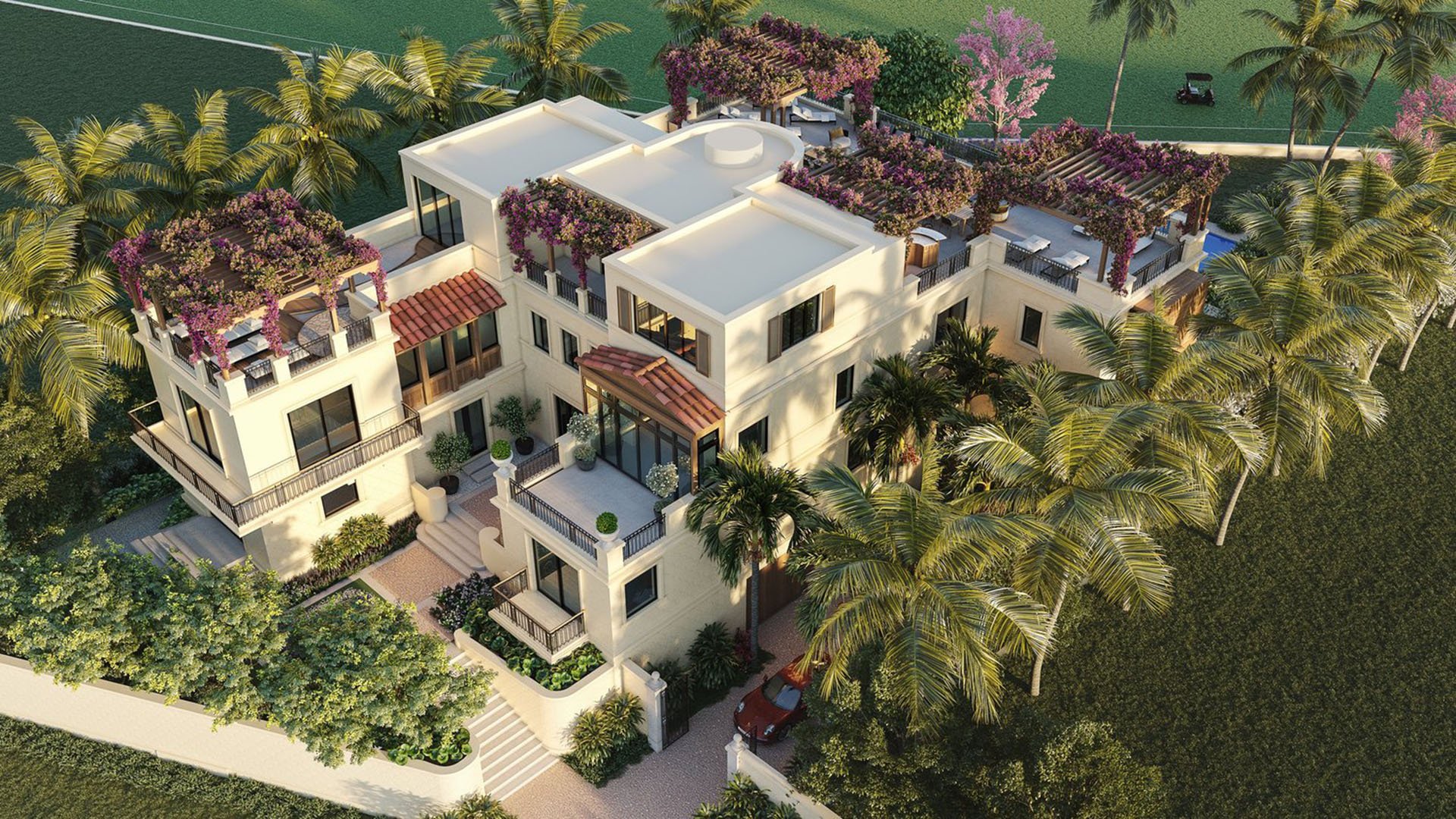
In South Florida, golf is not simply an amenity category. It is a residential language of space, routine, discretion, and controlled scenery. For ultra-premium buyers, course access can shape how a property lives every day: the morning walk, the low-density outlook, the social circuit, the guest experience, and the sense that the home sits within a curated environment rather than a conventional neighborhood grid.
That distinction matters in a region where luxury buyers can choose among oceanfront towers, bayfront estates, marina residences, private islands, and inland club communities. Golf-centric living offers something different from a beach or skyline address. It can provide a quieter edge, a greener horizon, and a lifestyle organized around ritual rather than spectacle.
The value effect is therefore not one-dimensional. A home beside or near a course is not automatically more valuable because of proximity alone. The premium, when it exists, is usually tied to a bundle of qualities: view protection, privacy, club access, architectural compatibility, community governance, and the depth of future buyer demand.
A residence that merely borders a course is different from one that participates in the club ecosystem. Serious buyers should separate three ideas: visual adjacency, practical access, and membership privilege. Each carries a distinct implication for pricing and desirability.
Visual adjacency is about outlook. A fairway, lake, or landscaped corridor can create a softer view plane than neighboring rooftops or traffic. Practical access is about convenience: how quickly a resident can reach the clubhouse, practice facilities, dining, fitness, or social spaces. Membership privilege is the most nuanced layer, because access may depend on separate approvals, dues, waitlists, transfer rules, or other conditions.
For that reason, golf-centric value should be underwritten with the same care as waterfront value. A canal is not the same as open bay, and a course view is not the same as assured club access. The most resilient properties tend to make the relationship clear, elegant, and easy to understand.
South Florida’s densest luxury markets have trained buyers to pay close attention to sightlines. In a vertical waterfront setting, the prized view may be an unobstructed ocean or bay exposure. In a golf setting, the equivalent is often a managed green corridor that creates breathing room around the home.
This is where course access can change residential value beyond the sport itself. A fairway-facing residence may feel more composed because the surrounding landscape is maintained as part of a larger plan. The experience can be cinematic without becoming public. Instead of the energy of a beachfront promenade, the buyer receives a quieter form of prestige: manicured distance, layered greenery, and the sense of a private resort embedded into daily life.
That appeal extends to buyers who may not play often. In many high-end households, golf is only one part of the decision. The broader attraction is the residential atmosphere that golf communities can create: low visual noise, measured traffic, a defined social center, and an environment where outdoor living is part of the architecture.
The South Florida buyer rarely evaluates golf in isolation. A family may compare Boca Raton, Hallandale, Palm Beach Gardens, Fisher Island, and coastal Broward through very different lifestyle lenses. The relevant question is not, “Is there golf nearby?” It is, “Does this address make golf part of a complete residential life?”
In Boca Raton, buyers often look for a polished balance of club culture, dining, wellness, schools, and established residential texture. A residence such as Alina Residences Boca Raton can sit within that broader conversation for buyers who want the Boca Raton lifestyle while also weighing access to the area’s club-oriented routines.
In Hallandale, the discussion shifts toward a location that can connect coastal living, Miami access, and a resort-minded residential profile. Shell Bay by Auberge Hallandale is a useful reference point for buyers studying how golf language, hospitality expectations, and private residential positioning are converging in the market.
Fisher Island presents another kind of scarcity, where privacy and controlled access are central to the identity of the address. For buyers comparing island living with course-oriented prestige, The Links Estates at Fisher Island places the conversation squarely in the rarefied tier where land, access, and lifestyle identity are inseparable.
Farther north, Palm Beach Gardens has long appealed to buyers who want a more relaxed club rhythm without surrendering sophistication. The Ritz-Carlton Residences® Palm Beach Gardens may enter the shortlist for those weighing branded residential service, northern Palm Beach County living, and proximity to a golf-oriented social environment.
Golf-centric property deserves exact due diligence. Buyers should first clarify whether club membership is included, optional, transferable, or entirely separate from the real estate purchase. They should then review initiation costs, recurring dues, guest privileges, tee access, dining minimums, governance documents, and any renovation or assessment history that could affect future carrying costs.
The next layer is physical. A view over a fairway may be beautiful, but orientation matters. Buyers should study sun exposure, privacy from play corridors, cart paths, maintenance routes, lighting, landscape buffers, and potential noise during events or early morning course work. The best homes feel connected to the course without feeling exposed to it.
Resale depth is equally important. A property with broad appeal to golfers, wellness buyers, seasonal residents, and privacy-focused families may be more flexible than one suited only to a narrow profile. In luxury real estate, the most durable value often comes from layered demand.
New-construction properties can sharpen the golf value proposition when they combine contemporary floor plans, service, wellness, security, and parking with access to green space or club culture. Today’s buyer may want the ease of a condominium or managed residence, while still seeking the calm and social architecture historically associated with private clubs.
That is why the most compelling golf-centric residences are not necessarily the most literal. Some are directly tied to golf. Others are part of a lifestyle map where a buyer can move fluidly between home, club, dining, boating, beach, and airport access. The winning formula is clarity: the residence must make the buyer’s preferred routine simpler, more private, and more pleasurable.
A gated-community setting can heighten that feeling, but gates alone do not create value. The value comes from coherence: the quality of the surroundings, the discipline of the association, the elegance of arrival, and the confidence that the environment will remain well cared for over time.
For investors and end users alike, golf should be treated as a lifestyle catalyst rather than a guaranteed pricing formula. It can strengthen a property’s narrative, improve its emotional appeal, and help distinguish it from competing luxury inventory. But the property still needs the fundamentals: location, design, condition, service, views, access, and a credible resale audience.
The best golf-centric purchases in South Florida are those where the amenity feels integral, not decorative. If the course, club, or green outlook genuinely improves everyday living, buyers tend to understand the value quickly. If the relationship is vague, distant, or administratively complicated, the pricing argument becomes weaker.
For discerning buyers, the practical approach is simple: buy the home first, then test the golf value with precision. The fairway should enhance the address, not compensate for weaknesses in architecture, location, or execution.
Does golf course access always increase residential value? No. Value depends on the quality of the property, the nature of the access, the view, the club structure, and future buyer demand.
Is a golf course view the same as club membership? No. A view is a physical attribute, while membership is a separate access and governance question that must be verified before purchase.
What should buyers ask about membership? Buyers should ask whether membership is included, optional, transferable, subject to approval, or governed by separate fees and rules.
Can non-golfers benefit from golf-centric living? Yes. Many buyers value the privacy, landscaping, open space, dining, wellness, and social environment even if they play rarely.
Are golf homes more private than waterfront homes? They can be, but privacy depends on setbacks, landscaping, cart paths, neighboring homes, and the way the community is planned.
What physical issues matter near a fairway? Orientation, sun, maintenance routes, ball exposure, cart traffic, landscape buffers, and event activity should all be reviewed.
Is Boca Raton a strong golf lifestyle market? Boca Raton is widely associated with club-oriented living, but each residence should be evaluated on its own access, design, and location.
How does Hallandale fit into the golf conversation? Hallandale can appeal to buyers seeking a South Florida base that blends coastal access, urban connectivity, and a resort-minded lifestyle.
What makes Fisher Island different for golf buyers? Fisher Island adds a high-privacy residential context, so golf-related value is often considered alongside exclusivity and controlled access.
Should buyers pay more for golf access? They should pay more only when the access, view, community quality, and resale logic clearly strengthen the overall property proposition.
When you're ready to tour or underwrite the options, connect with MILLION.
If branded residences are on your mind — as a home or as an allocation — we would be glad to share what we are seeing, privately.
Begin a quiet conversation