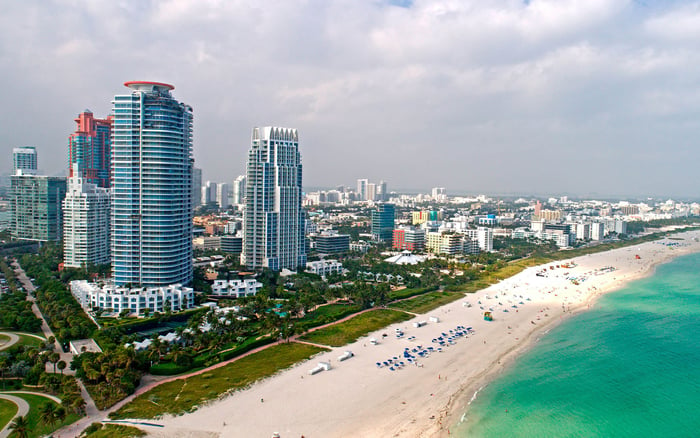
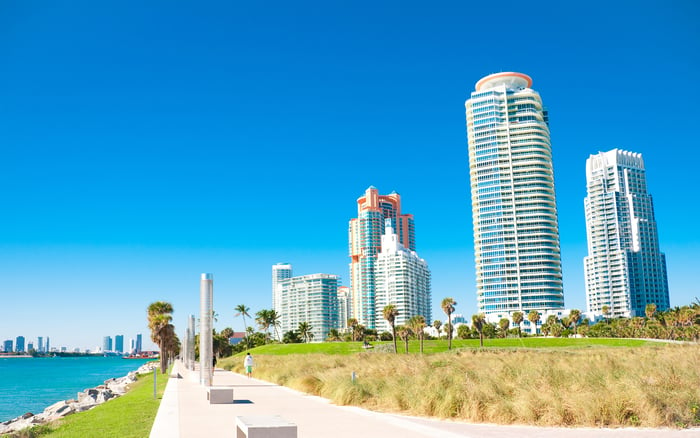
A buyer-oriented comparison of South Beach and Surfside for finance and technology relocations, focused on access, privacy, daily rhythm, family fit, and long-term residential strategy.

For a finance or technology principal considering Miami Beach, the choice between South Beach and Surfside is not simply a question of which coastline feels more glamorous. It is a question of where a new life operates with the least friction. South Beach rewards proximity, movement, dining, social visibility, and immediate access to the city’s cultural current. Surfside rewards privacy, composure, family ease, and a quieter form of oceanfront prestige.
That distinction matters because relocation is rarely just residential. It is also professional choreography. A buyer may be moving a fund, a family office, a founder schedule, a hybrid work culture, or a board-level social life. The right address should support how decisions are made, how guests are hosted, how children are settled, and how often a principal wants to be seen.
Within the broader Miami Beach conversation, South Beach and Surfside sit close on a map but far apart in mood. The sharper question is not which is better. It is which one makes a high-performing life feel more natural.
South Beach tends to matter more for buyers who still want intensity in their week. This is the choice for the principal who values walkability to restaurants, late meetings that become dinners, access to hotels and clubs, and the ability to keep a social calendar close to home. For finance buyers, that can translate into practical convenience: breakfasts, investor visits, charitable events, art week dinners, and spontaneous introductions all feel easier when the neighborhood is built around movement.
The strongest South Beach case is not the party postcard. It is the mature, residential side of the island, particularly South of Fifth, often searched as South of Fifth and Sofi. Here, the appeal is a more polished version of South Beach living: close to the energy, but framed by a calmer residential setting. A residence such as Apogee South Beach speaks to the buyer who wants privacy, scale, and immediate connection to the southern tip of Miami Beach without surrendering the neighborhood’s urban charge.
For technology founders, South Beach can be equally persuasive when company culture is relationship-driven. If clients, partners, designers, investors, and visiting teams all pass through Miami, a South Beach base can become an informal hospitality platform. The residence is not just a home. It becomes a stage for meetings that do not feel like meetings.
Surfside matters more when relocation is about reducing noise. Its appeal is less about appearing central and more about living exceptionally well at a quieter tempo. For buyers who have already built networks, the need to be in the middle of the room may be less important than the ability to retreat from it.
That distinction can be especially relevant for technology families and finance principals with demanding travel schedules. Surfside offers a softer arrival home: beach, privacy, lower visual intensity, and a residential rhythm that feels more protected. Oceanfront living here is not merely scenic. It is a way to create distance between professional velocity and private life.
Projects such as The Delmore Surfside fit this reading of the market, where the buyer is seeking a refined coastal address with a sense of separation. Nearby, Fendi Château Residences Surfside represents a more design-conscious interpretation of the same instinct: branded discretion, beachfront presence, and a quieter social signal than the highly visible South Beach address.
For some relocating families, Surfside also offers a psychologically simpler answer. It lets Miami function as a global city without making daily life feel like an urban performance. That is precisely why the area can matter more to buyers who already have access everywhere and now want control over when that access enters the home.
Finance buyers often evaluate location through time, access, and network density. The right residence shortens the distance between private life and opportunity. South Beach can therefore feel more strategic when the buyer expects an active hospitality schedule, frequent meetings, or regular social positioning. The ability to host a dinner, walk to a familiar room, or move quickly between appointments can be part of the investment thesis, even when it is never written down that way.
Technology buyers can be different, especially when work is less tied to a visible district and more tied to controlled environments. A founder may need excellent connectivity, but not constant exposure. For that buyer, Surfside may better support deep work, family time, wellness routines, and a more intentional public profile.
There are exceptions on both sides. A finance family with young children may prefer Surfside’s calmer cadence. A technology founder building a consumer brand may prefer South Beach’s cultural signal. The more useful framework is this: South Beach amplifies access, while Surfside protects bandwidth.
Investment is often discussed as though every luxury buyer has the same goal. They do not. Some want optionality, future resale depth, and broad name recognition. Others want scarcity, privacy, and a property that feels difficult to replicate. South Beach and Surfside each answer a different version of that desire.
South Beach generally suits buyers who want a globally recognizable lifestyle address with a wide range of use cases. It can appeal to owners who expect to entertain, spend part of the year in residence, or use the home as a social base. The presence of established luxury buildings and new hospitality-driven offerings gives buyers multiple ways to express that lifestyle. The Ritz-Carlton Residences® South Beach is naturally aligned with buyers who value service culture and brand familiarity in a central beach setting.
Surfside suits buyers who are less interested in volume and more interested in selectivity. The emotional driver is not being near everything. It is having the beach, the privacy, and the architectural restraint to make home feel like an escape. In that context, Arte Surfside illustrates why a smaller, design-led oceanfront identity can speak to buyers who want understatement rather than spectacle.
Neither position is inherently superior. The better investment is the one that matches the owner’s real use pattern. A home that supports daily life beautifully is more likely to be held with conviction.
A serious buyer should begin with calendar analysis. Where will meetings happen? How often will guests be hosted? Is the home a primary residence, second home, or seasonal base? Does the buyer want to walk into the center of the evening, or return to a more private shoreline after the day is done?
Then comes family structure. Children, pets, household staff, wellness routines, cars, school preferences, and airport habits all influence the answer. The elegant residence that looks perfect in a showing can feel wrong if it fights the family’s weekly rhythm.
Finally, consider personal signal. South Beach communicates participation. Surfside communicates restraint. Finance and technology relocation matters most when the address quietly reinforces how the buyer wants to live, lead, host, and withdraw.
Is South Beach better for finance relocations? It can be better for finance buyers who prioritize access, entertaining, and social proximity. The strongest fit is usually a buyer who wants a residence close to the city’s active rooms.
Is Surfside better for technology relocations? It can be better for technology buyers who value privacy, calm, and separation between work and home. It is especially compelling when the buyer’s professional life is not tied to daily visibility.
Which area feels more private? Surfside generally feels more private in tone because its luxury identity is quieter and more residential. South Beach offers privacy too, but usually within a more active environment.
Which area is better for entertaining? South Beach is often stronger for entertaining because dining, hospitality, and social access are closer at hand. Surfside is better for more intimate hosting at home.
Does oceanfront living matter more in Surfside? Oceanfront living is important in both areas, but Surfside leans more heavily on the beach as part of its daily identity. In South Beach, the surrounding neighborhood energy also carries significant weight.
Should a relocating family choose Surfside over South Beach? A family seeking calm and routine may prefer Surfside. A family that wants more immediate access to restaurants and cultural energy may prefer South Beach.
Is South Beach only for nightlife-oriented buyers? No. Its best residential pockets can be sophisticated, service-driven, and discreet while still offering immediate access to the neighborhood’s energy.
Is Surfside too quiet for a highly social buyer? Not necessarily, but it requires a buyer who prefers to choose when to engage. Social life is accessible, yet home remains more removed.
Which area has stronger long-term appeal? Both can have strong appeal when the residence matches the owner’s needs. The better choice depends on use pattern, privacy preference, and confidence in the specific property.
How should buyers compare specific buildings? Compare service culture, floor plan, views, arrival experience, privacy, and how the building supports daily life. The neighborhood decision should be refined by the building decision.
To compare the best-fit options with clarity, connect with MILLION.
If branded residences are on your mind — as a home or as an allocation — we would be glad to share what we are seeing, privately.
Begin a quiet conversation