A discreet 2026 due-diligence framework for comparing penthouse scale, roof-right control, and livable outdoor rooms across Downtown Miami and Brickell branded residences.

In Miami’s upper tier, the word penthouse still carries theatrical force. It suggests altitude, separation, entertaining scale, and a quiet sovereignty above the city. Yet the 2026 buyer is asking a more exacting question: what does that scale actually control?
For purchasers comparing Casa Bella by B&B Italia Downtown Miami, Waldorf Astoria Residences Downtown Miami, and Viceroy Brickell, the due-diligence conversation should move beyond romance. A large residence can feel compromised when service paths are awkward, outdoor space is more symbolic than usable, or roof-related rights remain loosely defined. Conversely, a more disciplined plan can live larger when privacy, circulation, ceiling transitions, storage, and mechanical separations are handled with intelligence.
Downtown and Brickell have matured into distinct luxury languages. Downtown can frame itself through skyline drama and cultural proximity. Brickell tends to speak in finance-district energy, walkability, and a more vertical daily rhythm. Both can deliver elevated living, but neither should be assessed by renderings alone.
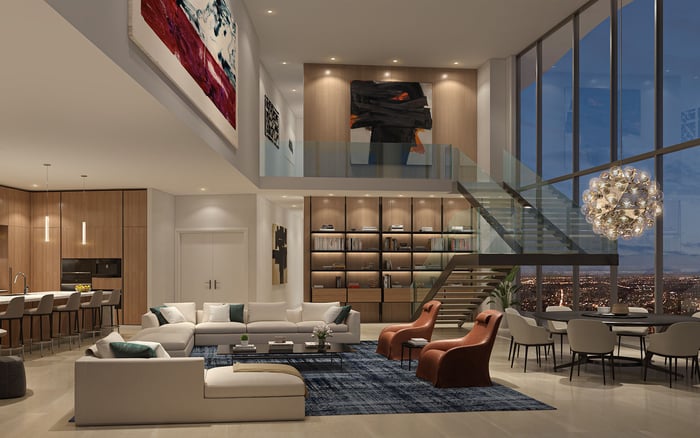
Penthouse buyers often begin with total area, but the better test is usable hierarchy. Where does the residence receive guests? How quickly can staff or deliveries move without crossing private zones? Does the primary suite feel protected from entertaining areas? Is the kitchen conceived for display, serious cooking, catering support, or all three?
Scale should be read in layers. The first is arrival: elevator opening, foyer depth, art walls, sightlines, and sound containment. The second is daily living: storage, laundry, back-of-house practicality, and the ability to close off certain areas without making the home feel segmented. The third is hospitality: whether dinner, overnight guests, and outdoor entertaining can unfold without disturbing private rooms.
This is where penthouse value becomes less about a single number and more about architectural consequence. A wide living room with limited wall space may be less useful than a slightly smaller room with better proportions. A dramatic terrace may underperform if furniture layouts, wind exposure, drainage, and shade have not been considered. A private roof condition may carry prestige, but it needs legal and operational clarity to become a true asset.
Roof rights are among the most misunderstood elements in luxury condominium purchasing. Buyers should distinguish between ownership, exclusive use, limited common elements, association-controlled areas, and developer-reserved rights. Each category can produce a different experience, even when the marketing language sounds similar.
The key questions are practical. Who can access the roof area? What may be installed there? Are planters, outdoor kitchens, shade structures, plunge pools, media systems, or lighting controlled by the owner, the association, or both? Who maintains waterproofing, pavers, railings, drains, and any equipment serving the residence? What approvals are required for future changes?
A roof can be a signature privilege, but it can also be a governance puzzle. In a high-rise environment, the roof may contain life-safety systems, mechanical equipment, access routes, and maintenance obligations that limit private discretion. Buyers should insist that the purchase documents, condominium declaration, plans, and rules speak clearly and consistently. In this price tier, ambiguity is not a lifestyle feature.
Terrace size attracts attention, but wind-protected outdoor rooms create value in daily use. South Florida buyers understand sun, humidity, storms, and seasonal wind. The question is not simply whether a residence has outdoor space, but whether that space can support breakfast, reading, dinner, planting, conversation, or quiet work without feeling exposed.
A wind-protected outdoor room may benefit from partial enclosure, thoughtful orientation, deeper overhangs, architectural screens, or a plan that allows furniture to sit away from edges. Buyers should review how doors stack, how indoor flooring meets exterior surfaces, whether drainage interrupts furniture placement, and whether lighting and outlets are placed for real use rather than photographic effect.
The balcony remains one of Miami’s great luxuries, but it should be evaluated with the same seriousness as an interior room. If the outdoor area cannot hold proper seating, shade, privacy, and circulation, it may photograph beautifully while living narrowly. If it is protected, proportioned, and connected to the correct interior spaces, it can become the most used room in the residence.
Views matter, especially at the top of a tower, but governance often determines long-term satisfaction. In Downtown, buyers weighing Casa Bella by B&B Italia Downtown Miami against Waldorf Astoria Residences Downtown Miami should look closely at the relationship between private residences, shared amenities, access protocols, and any branded-service standards that shape daily life.
In Brickell, a buyer considering Viceroy Brickell should test the same issues through a neighborhood lens. How does the building handle arrivals at peak times? How private is the residential entry experience? How are amenities scheduled, managed, and protected from overuse? Does the operating structure support a calm home environment despite the area’s active urban pulse?
These are not minor administrative questions. For a high-floor buyer, the value of discretion is often embedded in elevator strategy, valet choreography, service access, guest management, package handling, and the tone of the condominium rules. The more expensive the residence, the less tolerance there is for friction.
The strongest buyers enter contract review with a defined checklist. For penthouse and upper-tier residences, that checklist should include condominium declarations, exhibits, floor plans, roof or terrace diagrams, maintenance responsibility schedules, alteration rules, insurance obligations, and association control provisions.
If roof rights are promised, they should be visible in the documents. If outdoor kitchens or upgrades are contemplated, approval pathways should be understood before closing. If private elevators, storage, parking, or service areas are central to the purchase, they should be mapped precisely. If the residence relies on adjacent common elements for privacy or access, the buyer should understand who controls those spaces and how rules may evolve.
Luxury real estate often rewards patience. A residence can still be magnificent while requiring negotiation around disclosures, finishes, timing, or governance. The point is not to remove all complexity. The point is to know which complexities are acceptable and which ones will shape daily life.
The most sophisticated 2026 buyer is not anti-romance. Quite the opposite. They are protecting the romance by examining the structure beneath it. They want the skyline, the service, the architecture, the branded aura, and the feeling of arrival. But they also want the quiet assurances that make those pleasures durable.
For Casa Bella by B&B Italia Downtown Miami, Waldorf Astoria Residences Downtown Miami, and Viceroy Brickell, the lens should be comparative rather than reactive. Ask how each residence lives at noon, at sunset, during a dinner party, during a storm, and during a month when the owner is away. The best answer is rarely a single amenity or a single view. It is the cumulative intelligence of plan, rights, management, and restraint.
What is the first penthouse due-diligence question? Begin with control: what is privately owned, what is exclusive use, and what remains association controlled.
Why do roof rights require special attention? Roof areas can involve access, maintenance, waterproofing, equipment, and alteration limits that affect real use.
Is a larger terrace always better? Not necessarily. Protection from wind, shade, layout, and privacy can matter more than headline size.
How should a buyer compare Downtown and Brickell? Compare lifestyle rhythm, arrival experience, building governance, and how private the residence feels day to day.
What makes a penthouse live larger? Clear circulation, useful storage, protected bedrooms, proper service access, and well-proportioned rooms all contribute.
Should outdoor kitchens be assumed if a terrace is large? No. Buyers should confirm permissions, utilities, drainage, ventilation, and association approval requirements.
Why does elevator strategy matter? It affects privacy, guest flow, service movement, and the feeling of separation from the rest of the building.
Can branded residences differ in daily experience? Yes. Brand standards, staffing, amenity rules, and residential access protocols can vary meaningfully.
What should be reviewed before closing? Review declarations, plans, exhibits, rules, maintenance obligations, and any roof or terrace provisions.
What is the best 2026 buyer mindset? Treat views and finishes as the beginning, then verify rights, governance, usability, and long-term control.
To compare the best-fit options with clarity, connect with MILLION.
If branded residences are on your mind — as a home or as an allocation — we would be glad to share what we are seeing, privately.
Begin a quiet conversation