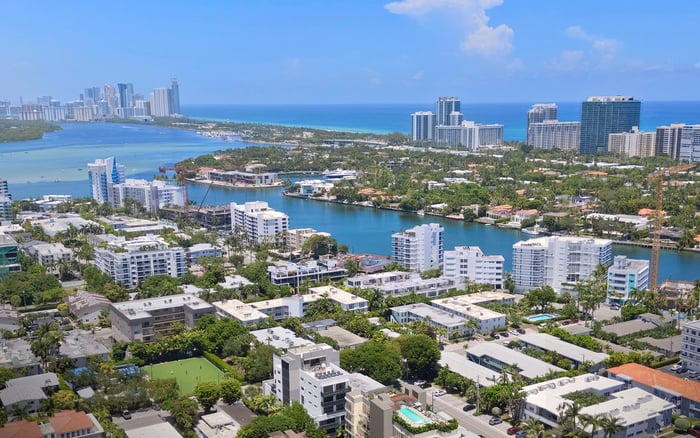
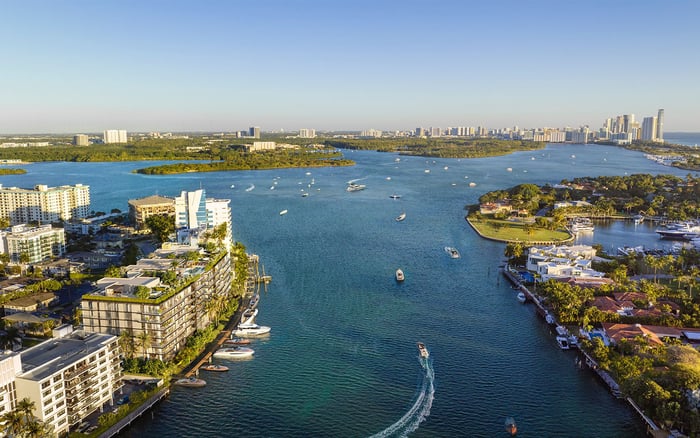
Bay Harbor Islands offers a rare blend of privacy, walkability, and waterfront living between North Miami and Bal Harbour. This two-island municipality has evolved from a mid-century vision into one of South Florida’s most discreet luxury enclaves, defined by boutique condo living, a tight-knit civic footprint, and immediate access to world-class shopping and beaches nearby. For buyers, the appeal is less about spectacle and more about control: shorter drives, fewer buildings, and a lifestyle calibrated to daily ease.
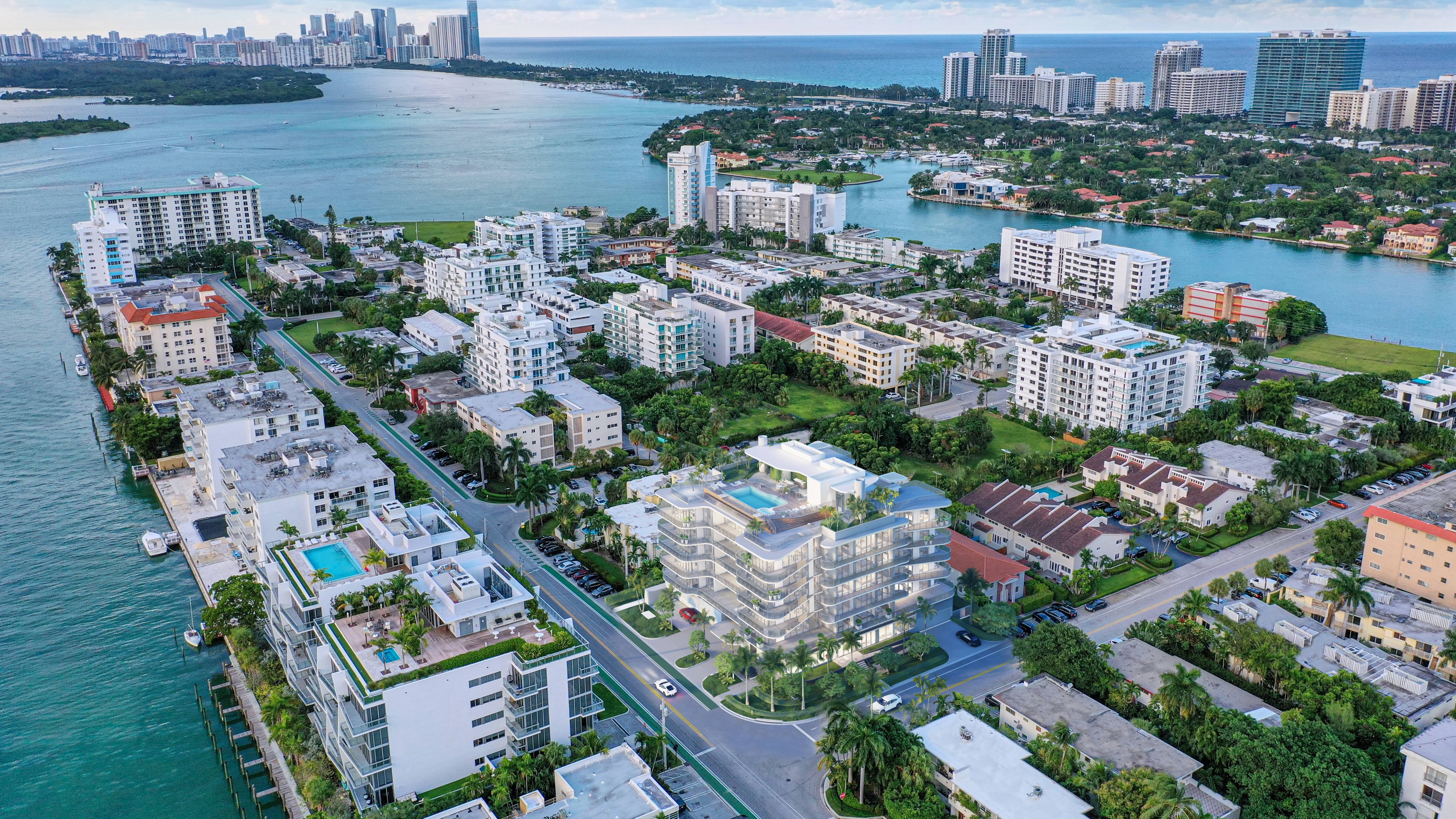
Bay Harbor Islands is a two-island municipality in Biscayne Bay between North Miami and Bal Harbour, valued for a calm, residential rhythm that still sits moments from the region’s most glamorous coastal amenities. The town is split across two compact landmasses: a 105-acre East Island and a 103-acre West Island. That limited footprint shapes almost everything buyers care about, including how quickly you can handle daily errands, how consistent the neighborhood feels season to season, and how tightly the built environment is managed.
Bay Harbor Islands delivers proximity without the noise of a major beachfront strip. You are close to the water on all sides, yet the day-to-day experience reads more local than touristic. A primary connection to the mainland is the Shepard Broad Causeway, completed in 1951, which still reinforces the area’s sense of easy access. The town’s identity is unusually cohesive for Miami-Dade: a walkable community with parks, a public K - 8 school, and municipal services designed around residents. For luxury buyers, that translates into something tangible: fewer lifestyle tradeoffs, and less reliance on long drives for basic quality-of-life needs. If you want one external anchor point, keep in mind the nearby gravitational pull of Bal Harbour’s luxury retail. That adjacency tends to matter as much for full-time residents as it does for second-home owners who want polished, predictable options close by.
Bay Harbor Islands’ modern story begins with Shepard Broad, who bought the two islands in 1945. The town was incorporated in 1947, and Broad served as its first mayor for 26 consecutive one-year terms. For buyers, this is not trivia. It helps explain why the municipality feels planned rather than accidental, and why newer additions often arrive as curated, boutique statements instead of sprawling, high-density waves.
Bay Harbor Islands remains a relatively small city of about 6,005 residents, with a median age of 36.0. That profile tends to align with a blend of established professionals, young families, and globally mobile second-home owners. On pricing, recent headline indicators show a median home sale price of $755,000 in December 2025, with a median sale price per square foot of $962. Those figures do not tell you what a best-in-class waterfront residence trades for, but they underscore the core point: this market is priced like a luxury submarket, and value is often expressed in per-square-foot terms rather than raw median pricing. Ownership patterns are also telling. The homeownership rate is 50.9%, and the median property value is $542,700. In a boutique municipality where condo living is a dominant product type, that balance can point to a meaningful rental population alongside owner-occupants, an important nuance for buyers weighing privacy, building culture, and long-term stability.
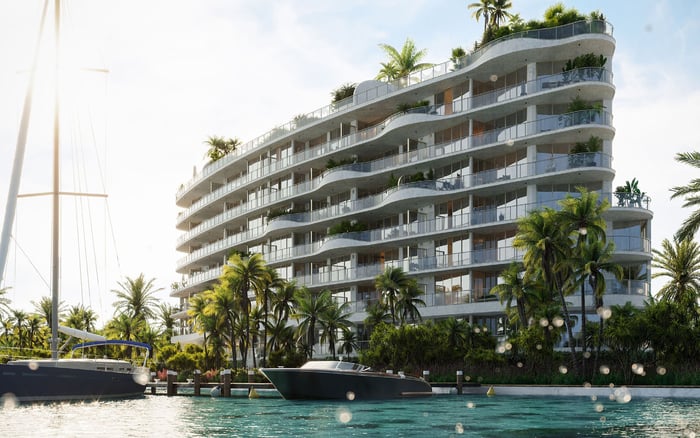
Bay Harbor Islands is rarely about towering skylines. Instead, it is about buildings that function more like private clubs: fewer residences, tighter service ratios, and a higher likelihood that neighbors are invested in long-term stewardship. Within that context, new and newly delivered projects matter because they can reset expectations for design, amenities, and finishes. Consider Bay Harbor Towers, an eight-story, 44-residence condo project that topped off in November 2025 with projected completion in Q3 2026. Marketing has cited pricing starting around $2.6 million, with penthouses from about $10 million. Even if you are not shopping that exact product, those numbers help bracket what the market is willing to support for new waterfront inventory. For a different boutique profile, Alana Bay Harbor Islands is a seven-story, 30-residence project by Alta Developers. Smaller residence counts like this often appeal to buyers who want a “known quantity” building, where management, neighbor profiles, and day-to-day operations can feel more controllable. Beyond individual buildings, Bay Harbor Islands also hosts multiple boutique waterfront offerings marketed under the La Maré Residences umbrella. If your preference leans toward a newer, curated waterfront lifestyle with a strong design narrative, La Maré Bay Harbor Islands belongs on the short list of names to understand in this micro-market.
The town’s split geography is central to choosing correctly. East Island and West Island are nearly equal in land area, but the experience can change by block: water adjacency, views, and the level of “through traffic” can all shift quickly across a small island. Buyers should think in terms of:
How often you want to walk to daily needs versus drive
Whether your preference is an open-water feel or a more buffered residential edge
Your tolerance for seasonal congestion near major access routes
Rather than making assumptions from a map screenshot, take the time to evaluate the zoning fabric at a high level. Bay Harbor Islands provides zoning guidance via its published zoning map, reflecting distinct land-use areas across the two-island town. In a town this compact, zoning is not an abstract policy document; it is the framework that shapes the view corridor you are buying.
Development in Bay Harbor Islands tends to arrive as discrete, high-end proposals rather than sweeping rezoning transformations. One publicly disclosed proposal describes a luxury waterfront condominium project near East Bay Harbor Drive with 33 units and 69 parking spaces. For buyers, the forward-looking takeaway is straightforward: additional boutique supply can introduce fresh design and amenity competition, but it can also raise the bar on buying well, selecting a line, view, and building culture that stay resilient as nearby inventory evolves.
Bay Harbor Islands is often chosen by buyers who want daily life to run efficiently. The town’s parks, walkability, and municipal services are not “amenities” in the glossy-brochure sense; they are the infrastructure of ease. Families frequently value having a public K - 8 option within the municipality. The Ruth K. Broad Bay Harbor K-8 Center is the town’s public K - 8 school and has an “A” rating. Even for buyers without children, the presence of a strong neighborhood school often correlates with neighborhood stability and a more anchored residential population. And when you want a dose of high-gloss luxury, the proximity to Bal Harbour’s retail and dining scene offers a nearby escape valve, without importing that intensity to your front door.
A useful way to evaluate Bay Harbor Islands is by contrast: it often serves buyers who want a coastal, design-forward lifestyle but prefer less exposure than major beachfront corridors. If you are considering a more resort-forward oceanfront experience, Surfside projects such as Arte Surfside can represent a different proposition, with a stronger emphasis on direct beachfront presence. If your lifestyle requires a larger urban core, Brickell offers a dramatically different rhythm. A branded high-rise environment like 2200 Brickell may suit buyers who want immediate access to the city’s business and dining ecosystem. These comparisons are not about better or worse. They are about whether your “luxury” is defined by being in the center of everything, or by being close enough, while living in a smaller, more controlled residential pocket.
Confirm the building’s residence count and service model; boutique living is a culture
Underwrite price-per-square-foot relative to view, water adjacency, and renovation level
Evaluate walkability from your front door, not just the municipality’s general reputation
Consider the development pipeline near your view corridor and approach routes
Decide if your priority is full-time ease, or a second-home lock-and-leave setup
Is Bay Harbor Islands its own city or part of Miami Beach? It is its own municipality in Biscayne Bay between North Miami and Bal Harbour.
How big is Bay Harbor Islands? The town spans two islands: a 105-acre East Island and a 103-acre West Island.
What is a current snapshot of pricing there? Recent figures show a $755,000 median sale price and $962 median price per square foot.
Is the area walkable for daily life? Yes, it is positioned as a walkable community with parks and resident-focused services.
Is there a local public school option? Yes, the town’s public K - 8 school is the Ruth K. Broad Bay Harbor K-8 Center.
What new luxury inventory should buyers watch? Boutique projects are active, including newly delivered and in-progress waterfront condos.
When is Bay Harbor Towers expected to complete? Completion has been projected for Q3 2026.
Does Bay Harbor Islands feel more like a second-home market or full-time living? It supports both, with a meaningful owner-occupant base and a sizable condo lifestyle.
How does it compare to Surfside or Brickell? It is quieter and more residential than those areas while remaining close to both.
What is the main connection to the mainland? The Shepard Broad Causeway is a primary link between the islands and the mainland.
To explore Bay Harbor Islands opportunities with discretion and precision, connect with MILLION Luxury
If branded residences are on your mind — as a home or as an allocation — we would be glad to share what we are seeing, privately.
Begin a quiet conversation