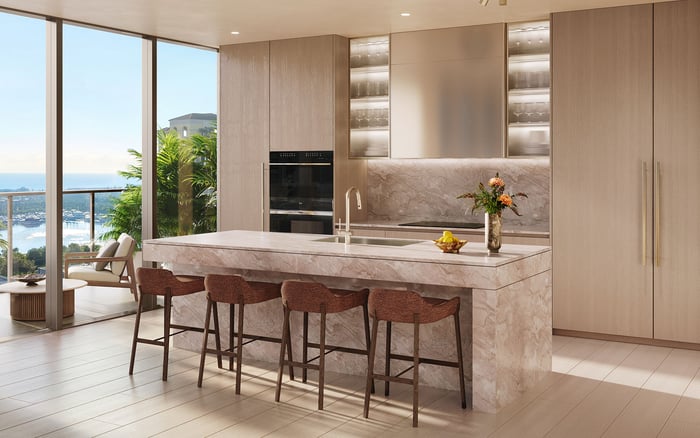
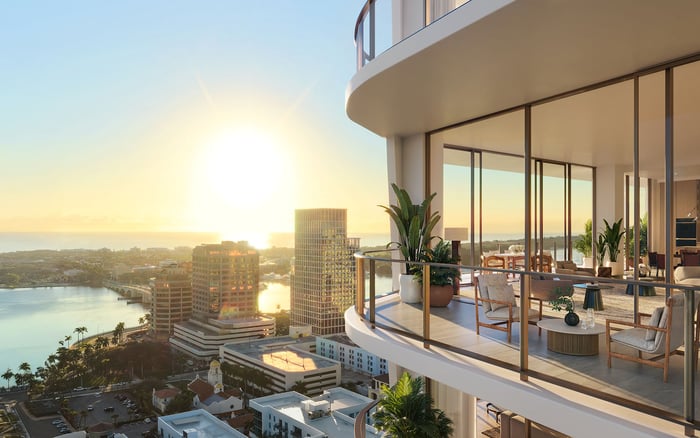
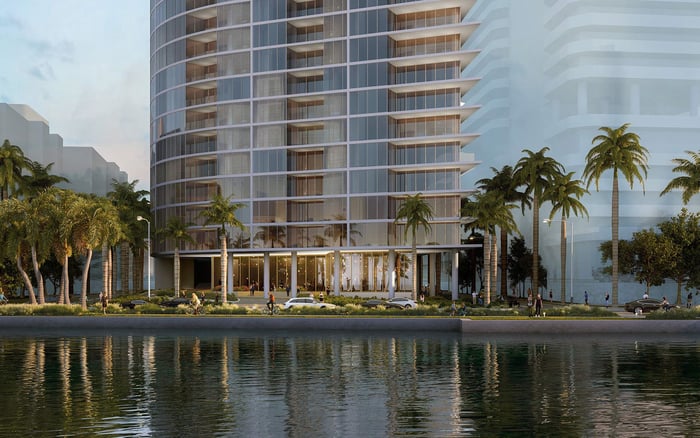
For West Palm Beach buyers weighing branded serenity against neighborhood energy, the sharper distinction is not one of luxury level but of daily rhythm. Banyan Tree aligns with hospitality-led privacy, wellness, and managed service, while Nora House is defined by immersion in a walkable district shaped by dining, retail, and public life. The right choice depends on whether home should feel like a quiet retreat or an elegant launch point into the city.
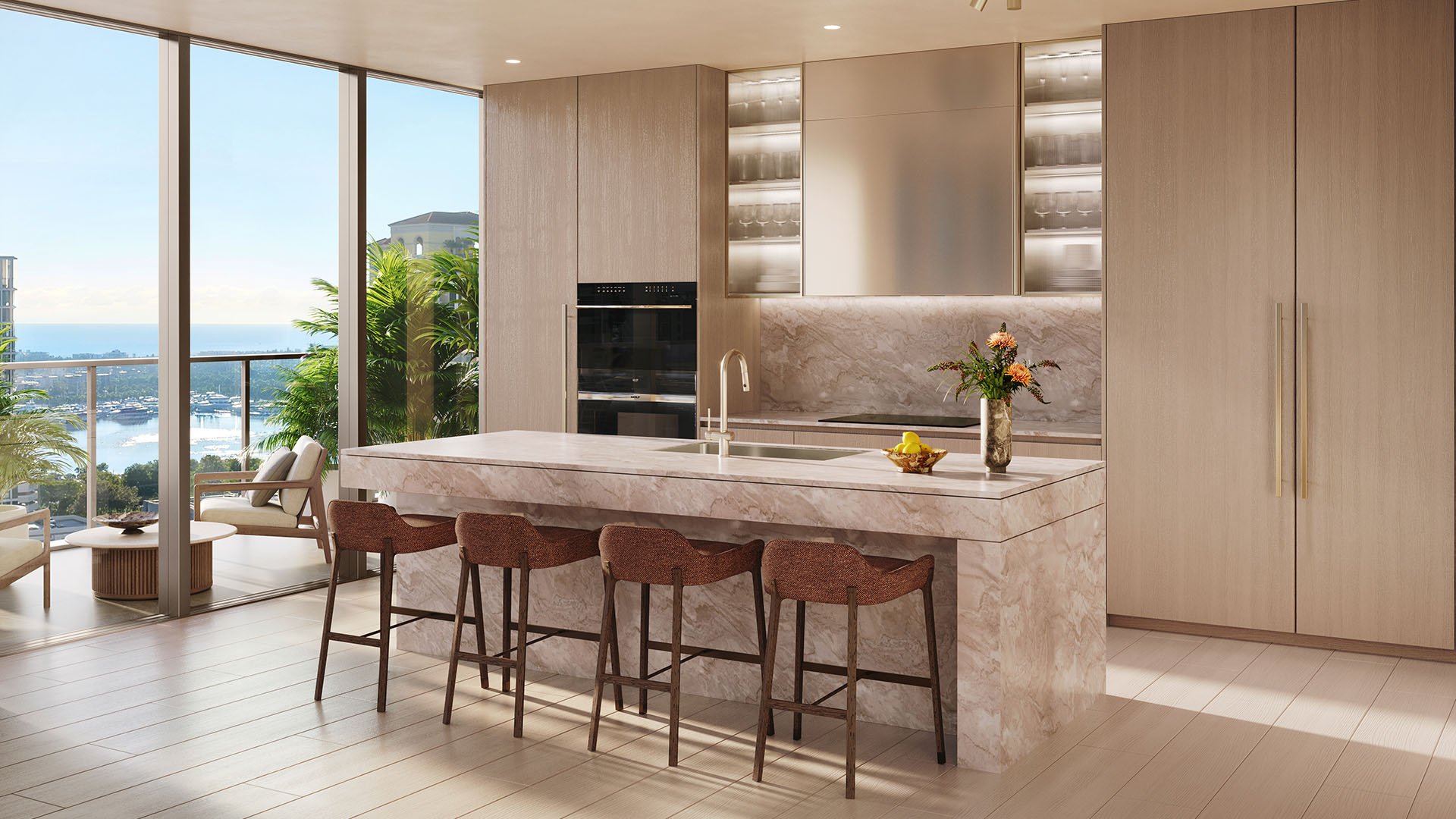
In West Palm Beach, luxury increasingly splits into two distinct forms of aspiration. One is private, service-rich, and inwardly composed. The other is social, walkable, and defined by what happens just beyond the lobby. That is the essence of the choice between Banyan Tree Residences West Palm Beach and Nora House West Palm Beach.
For the sophisticated buyer, this is less a question of which address is more luxurious than of which lifestyle feels more precise. Banyan Tree belongs to a branded-residence tradition built around hospitality, wellness, concierge support, and the emotional value of calm. Nora House, by contrast, draws its identity from the surrounding Nora district, a mixed-use environment centered on walkability, adaptive reuse, dining, shops, offices, and public gathering space just north of downtown.
Both concepts are compelling. But they are compelling for different reasons, and the buyer who mistakes one for the other may end up with a beautiful residence that does not suit the cadence of daily life.
Banyan Tree has long been associated with a hospitality model that places a premium on restoration, discretion, and service. In residential form, that translates into ownership shaped by curated wellness, concierge attention, and resort-style amenity thinking. The emotional promise is clear: your home is not simply where you live, but where the brand protects your time.
That matters for a certain kind of Palm Beach County buyer. Some owners do not want their residence to depend on neighborhood activation for its value. They want the atmosphere of arrival, the reassurance of managed service, and a setting that privileges privacy over spontaneity. In that framework, Banyan Tree feels less like a social stage and more like a controlled retreat.
That is why the phrase private sanctuary fits so naturally. The branded-residence model is designed to reduce friction and increase ease. It appeals to primary residents who place a premium on order, to second-home owners who want lock-and-leave confidence, and to those who prefer wellness and service to street energy. Buyers considering other hospitality-oriented South Florida options often read the same sensibility into properties such as Mr. C Residences West Palm Beach or The Ritz-Carlton Residences® West Palm Beach, where the logic of branded living is similarly tied to ease, discretion, and continuity of service.
What Banyan Tree does not suggest, at least in the clearest verified sense, is a neighborhood-first proposition. Its appeal is not rooted in stepping outside into a dining district or an open-air social scene. It is rooted in the idea that luxury can feel edited, serene, and carefully managed.
Nora House speaks to a very different ambition. Nora, short for North Railroad Avenue, is being shaped as a mixed-use district in West Palm Beach with restaurants, retail, offices, and public space. Its identity is not secluded or retreat-like. It is open-air, urban in spirit, and deliberately connected to the experience of moving through a neighborhood on foot.
For residents, that changes the meaning of luxury. Rather than ask a building to provide every emotional reward internally, the district becomes part of the offering. Dinner is not an event that requires a car and a plan. Social life can unfold organically. Retail and gathering spaces contribute to the mood of the week, not just the weekend. The appeal is less about separation from the city and more about elegant proximity to it.
That distinction is especially important in a market where West Palm Beach continues to reward mixed-use, live-work-play environments. Nora House sits conceptually within that demand. Its value is tied to immersion in a district designed around placemaking and pedestrian life. Buyers already drawn to urban, connected addresses such as Alba West Palm Beach or Forté on Flagler West Palm Beach often understand the broader appeal: home is not only the residence itself, but the immediate cultural ecosystem around it.
This is where the phrase walk-to-dinner cultural living becomes useful. It captures more than convenience. It describes a lifestyle in which restaurants, public life, and nearby institutions create texture and variety. For some buyers, that feels more contemporary than the traditional luxury ideal of separation.
The Banyan Tree buyer is usually seeking a residence that softens the outside world. Privacy is not a bonus. It is the organizing principle. Wellness matters. Service matters. A quieter atmosphere matters. This buyer may entertain selectively, travel often, or simply prefer a home environment that feels self-contained and composed.
The Nora House buyer tends to see the city itself as part of the residential experience. That does not mean sacrificing refinement. It means valuing access, spontaneity, and social texture. This buyer wants to step outdoors and immediately feel the life of the district. Dining, cafés, public space, and local activation are not distractions from home. They are extensions of it.
Neither instinct is more sophisticated than the other. But they rarely belong to the same person at the same moment in life. The question is whether your ideal day begins with controlled calm or with the possibility of movement.
West Palm Beach is particularly well suited to this contrast because it now supports both forms of luxury. On one side are residences and hospitality-driven concepts that promise privacy, service, and a more insulated experience. On the other are districts and urban settings increasingly defined by walkability, dining, and cultural adjacency.
The city’s broader mixed-use momentum has made pedestrian life more valuable than it once was. For residents who prioritize access to programming, civic life, and nearby activity, proximity to cultural institutions strengthens the appeal of a more outward-facing residential experience. In that context, Nora House is not simply about restaurants. It is about living in conversation with the city.
By contrast, Banyan Tree aligns with the enduring Palm Beach-area desire for a residence that feels elevated above the rush of daily activity. The central distinction is clear: one concept is managed hospitality privacy, the other is district-based walkability and placemaking.
Discerning buyers rarely ask only what a project includes. They ask what the residence asks of them in return.
A sanctuary-oriented property asks you to value stillness, service, and the emotional clarity of a home that contains much of what you need. The reward is predictability, discretion, and a sense of retreat.
A district-oriented property asks you to enjoy permeability. The reward is flexibility, immediacy, and a lifestyle in which the best moments may happen outside the building rather than within it.
In practical terms, a buyer deciding between these two concepts should think about three things. First, how often do you want to leave the property for pleasure rather than necessity? Second, do you experience luxury more intensely through privacy or through access? Third, should home feel like an exhale from the city or a front-row seat to its most interesting blocks?
Those answers tend to resolve the comparison quickly.
For buyers who want brand-managed quiet, wellness, and service, Banyan Tree is the stronger fit. For buyers who want to step outside into restaurants, public life, and a more culturally textured daily routine, Nora House is the more natural choice.
It is a distinction between protected calm and elegant participation. In today’s West Palm Beach, both are legitimate forms of luxury. The more important question is which one feels like your version of home.
Is Banyan Tree Residences West Palm Beach best understood as a private retreat? Yes. Its clearest verified appeal is hospitality-led privacy, wellness, and service rather than neighborhood-driven street life.
Is Nora House more about the district than the building alone? Yes. Its lifestyle value is closely tied to Nora’s dining, retail, walkability, and public gathering spaces.
Which project better suits buyers who love walking to dinner? Nora House. The concept is tied to an open-air mixed-use district built around pedestrian access and social life.
Which project better suits buyers who prioritize concierge-style living? Banyan Tree. The brand’s residential model centers on managed service, wellness, and hospitality programming.
Does Banyan Tree promise an urban live-work-play environment? Not in the clearest verified sense. Its orientation is more private and service-enhanced than neighborhood-activated.
Is Nora House a good fit for culture-oriented buyers in West Palm Beach? Often, yes. Its urban setting aligns with buyers who value access to dining, public life, and nearby cultural activity.
Are both options luxury, just in different forms? Exactly. One expresses luxury through retreat and service, while the other expresses it through access and placemaking.
Would a second-home owner naturally lean toward Banyan Tree? Many would. Buyers who value ease, discretion, and a more controlled residential experience may find that model especially appealing.
Would a full-time city-loving resident naturally lean toward Nora House? In many cases, yes. Buyers who want daily immersion in restaurants, retail, and neighborhood energy may prefer Nora House.
What is the simplest way to choose between them? Decide whether your ideal home should buffer you from the city or place you elegantly within it.
For a confidential assessment and a building-by-building shortlist, connect with MILLION.
If branded residences are on your mind — as a home or as an allocation — we would be glad to share what we are seeing, privately.
Begin a quiet conversation