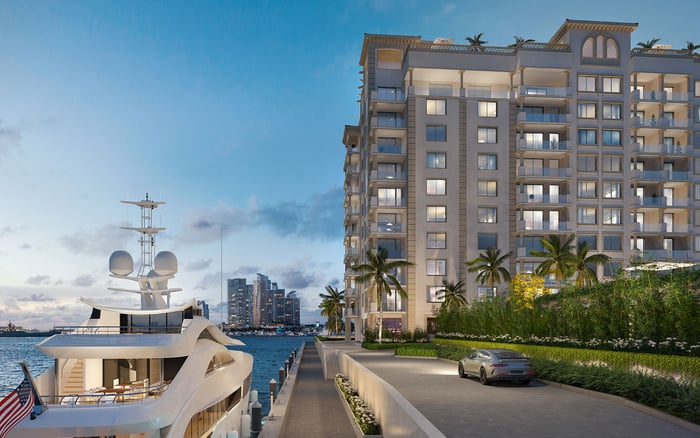
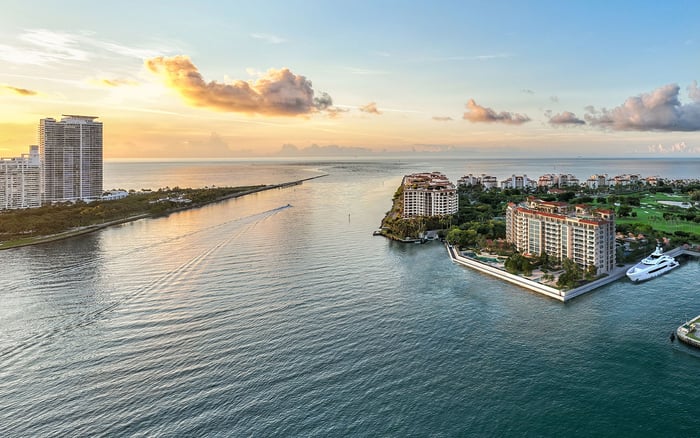
A discreet buyer’s guide to the cultural divide between hospitality-branded residence living and estate autonomy on Fisher Island, with The Links Estates at Fisher Island as the clearest counterpoint for ultra-high-net-worth households weighing service, staffing, privacy, and control.
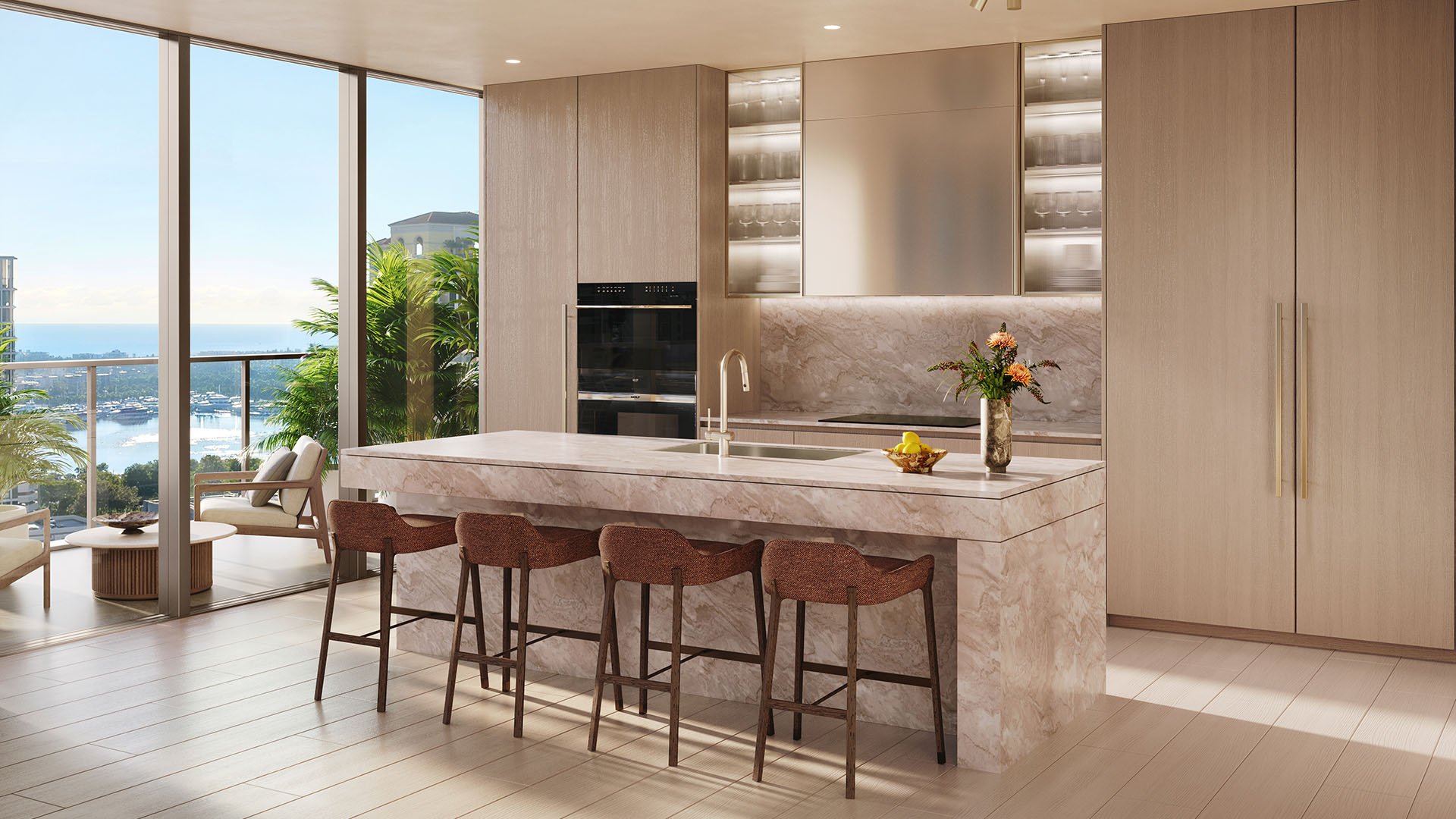
For ultra-high-net-worth buyers, the difference between Banyan Tree Residences West Palm Beach and The Links Estates at Fisher Island is not simply geographic. It is cultural. One ownership model invites the buyer to value a curated residential promise associated with a hospitality brand. The other centers the sovereignty of an estate within a private island environment.
That distinction matters because service is never neutral. The organization of a building or estate community shapes how staff enter the home, how privacy is protected, how often ownership engages with shared systems, and whether daily life feels orchestrated by a broader brand standard or directed by the household itself.
For buyers comparing West Palm Beach, Fisher Island, and the wider Palm Beach luxury corridor, the conversation may begin with architecture and amenities. It should quickly move to governance, access, staffing, and the quiet emotional tone of ownership.
A hospitality-branded residence typically asks the buyer to trust a recognizable service philosophy. Its appeal is consistency: a defined atmosphere, a legible identity, and the expectation that the residential environment will be shaped by trained systems. For many global owners, that promise reduces friction. It can make a second or third home feel immediately understandable.
The Links Estates at Fisher Island operates from a different center of gravity. Its identity is rooted in Fisher Island itself: privacy, access control, community norms, and private-club integration. Rather than relying on an external hotel flag to define the experience, The Links Estates at Fisher Island reflects an estate-oriented residential model inside a controlled island ecosystem.
This is why the comparison is useful. A branded condominium can be compelling for the owner who wants residential life framed by curated touchpoints. An estate at Fisher Island appeals to the owner who wants fewer layers between household preference and daily decision-making.
Staffing is where the philosophical difference becomes practical. In a highly serviced branded-residence tower, the buyer may be drawn to a building-level service apparatus. That structure can create ease, particularly for owners who prefer a hospitality-style interface and standardized service expectations.
The Links Estates at Fisher Island is associated with owner-controlled household staffing rather than a primarily building-controlled service structure. That distinction is material. It changes the cadence of the home. The estate owner can shape the domestic team around family routines, security preferences, entertaining patterns, travel schedules, and long-term household protocols.
For some buyers, the advantage of a brand is that service already has a script. For others, especially those with established household offices or long-serving private staff, too much building choreography can feel less like convenience and more like friction. The Links Estates at Fisher Island speaks to the latter instinct: privacy first, owner direction first, and service as an extension of the household rather than a performance of the building.
Autonomy has become one of South Florida’s most valuable luxury features. It is not always visible in renderings, but it influences every day of ownership. It determines whether a family can arrive unnoticed, host discreetly, keep staff movement controlled, and live without constant negotiation with shared residential systems.
The Links Estates at Fisher Island prioritizes estate privacy and owner-directed living. Its appeal is tied to the sovereignty of a stand-alone estate within a controlled island environment. That makes it especially relevant for buyers who view privacy not as an amenity, but as the foundation of residential value.
This is where Fisher Island carries unusual weight. The island setting gives the ownership experience a brand identity rooted in place and membership culture rather than a global hospitality flag. In that sense, The Links Estates at Fisher Island is not anti-service. It is simply organized around a different hierarchy: discretion, access control, household autonomy, and private-club codes before scripted hospitality.
West Palm Beach brings a different psychology to the comparison. Its luxury market has increasingly attracted buyers who want refined urban access, cultural proximity, and a polished residential environment without replicating the density or tempo of Miami. Within that context, Banyan Tree Residences West Palm Beach becomes a useful lens for examining how a branded residential concept may communicate comfort, continuity, and an elevated service expectation.
The key is not to assume one model is superior. A buyer who prizes a recognizable hospitality framework may prefer the clarity of a branded residence. A buyer who wants to preserve the independence of a private household may lean toward an estate-oriented model. Both can be luxurious. They simply answer different questions.
For a globally mobile family, the branded-residence promise may feel efficient: arrive, be known, and enter an environment shaped by a consistent service idea. For a family whose life is already managed through private staff, security protocols, and established household standards, Fisher Island’s estate model may feel more natural.
The most sophisticated buyers are increasingly evaluating residential culture before the floor plan. They ask who controls access, how visible staff will be, what the community rewards, and whether the home will feel like a private residence or part of a larger service theater.
The Links Estates at Fisher Island belongs in the gated-community conversation, but its positioning is more nuanced than a generic security label. Its value is connected to the broader Fisher Island ecosystem, where privacy, access control, and community norms shape the ownership experience. The result is a form of luxury that is quiet, coded, and highly dependent on the buyer’s preference for private-club integration.
The same evaluation applies to single-family homes and estate-style living across South Florida. The question is not merely whether a residence is large or private. The question is whether the culture around the residence supports true household independence.
A practical comparison should begin with three questions. First, does the household want service to be primarily building-led or household-led? Second, does the family value a globally legible brand identity or a place-based private-club identity? Third, how much autonomy should the home preserve over staffing, privacy, and daily movement?
For buyers who want a curated residential experience, the branded model can offer reassurance. For buyers who want ownership to feel closer to a private compound within a controlled enclave, The Links Estates at Fisher Island presents a clear counterpoint. Its culture emphasizes discretion, privacy, and community codes over hotel-style service standardization.
The right answer depends on the buyer’s existing life. Those who travel with staff, manage multiple residences, and require strict access protocols often value autonomy above convenience. Those who prefer a defined service environment may find a branded residence more aligned with their expectations.
What is the core difference between these ownership models? The core difference is cultural: a branded residence emphasizes a curated service promise, while The Links Estates at Fisher Island emphasizes estate privacy and owner direction.
Why does building culture matter to UHNW buyers? Building culture determines how service, privacy, staffing, and access are handled in daily life. It can affect the home as much as architecture or amenities.
Is The Links Estates at Fisher Island a hospitality-branded tower? No. It is characterized as an estate-oriented residential model within the Fisher Island environment rather than a hospitality-branded condominium tower.
What makes Fisher Island relevant in this comparison? Fisher Island is a private residential enclave where access, community norms, and private-club identity can shape ownership.
Does more service always mean more luxury? Not necessarily. Some buyers prize scripted service, while others value discretion, household control, and fewer shared systems.
Who may prefer an estate-oriented model? Buyers with established private staff, security preferences, or a desire for household autonomy may find an estate model more aligned with their lifestyle.
Who may prefer a branded residence model? Buyers who appreciate a recognizable service philosophy and a curated residential atmosphere may be drawn to a branded residence concept.
How should buyers compare staffing models? They should ask whether service is primarily controlled by the building or directed by the household. That distinction shapes privacy and daily routine.
Is privacy the main appeal of The Links Estates at Fisher Island? Privacy is central, but the appeal also includes owner-directed living, access control, and integration into Fisher Island’s private-club culture.
What should buyers decide before touring? Buyers should decide whether they want a home defined by brand-led service or by estate autonomy within a controlled community.
To compare the best-fit options with clarity, connect with MILLION.
If branded residences are on your mind — as a home or as an allocation — we would be glad to share what we are seeing, privately.
Begin a quiet conversation