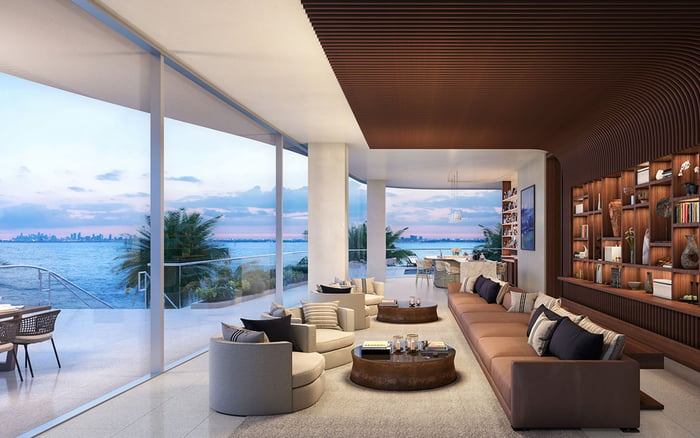
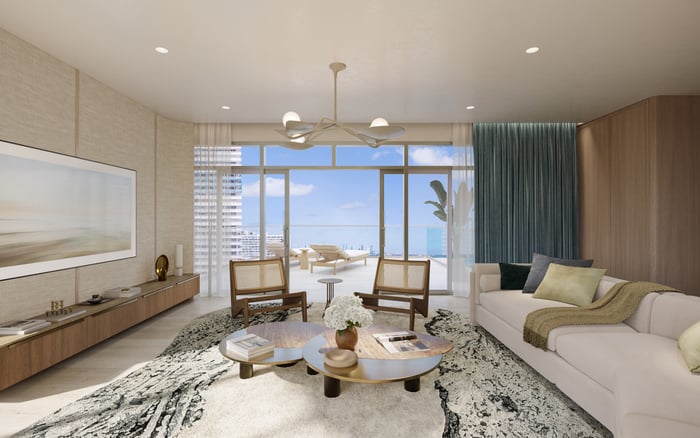
A buyer-focused guide to evaluating energy-aware automation across South Florida’s oceanfront, bayfront, and city residences, with emphasis on exposure, comfort, resilience, and long-term livability.
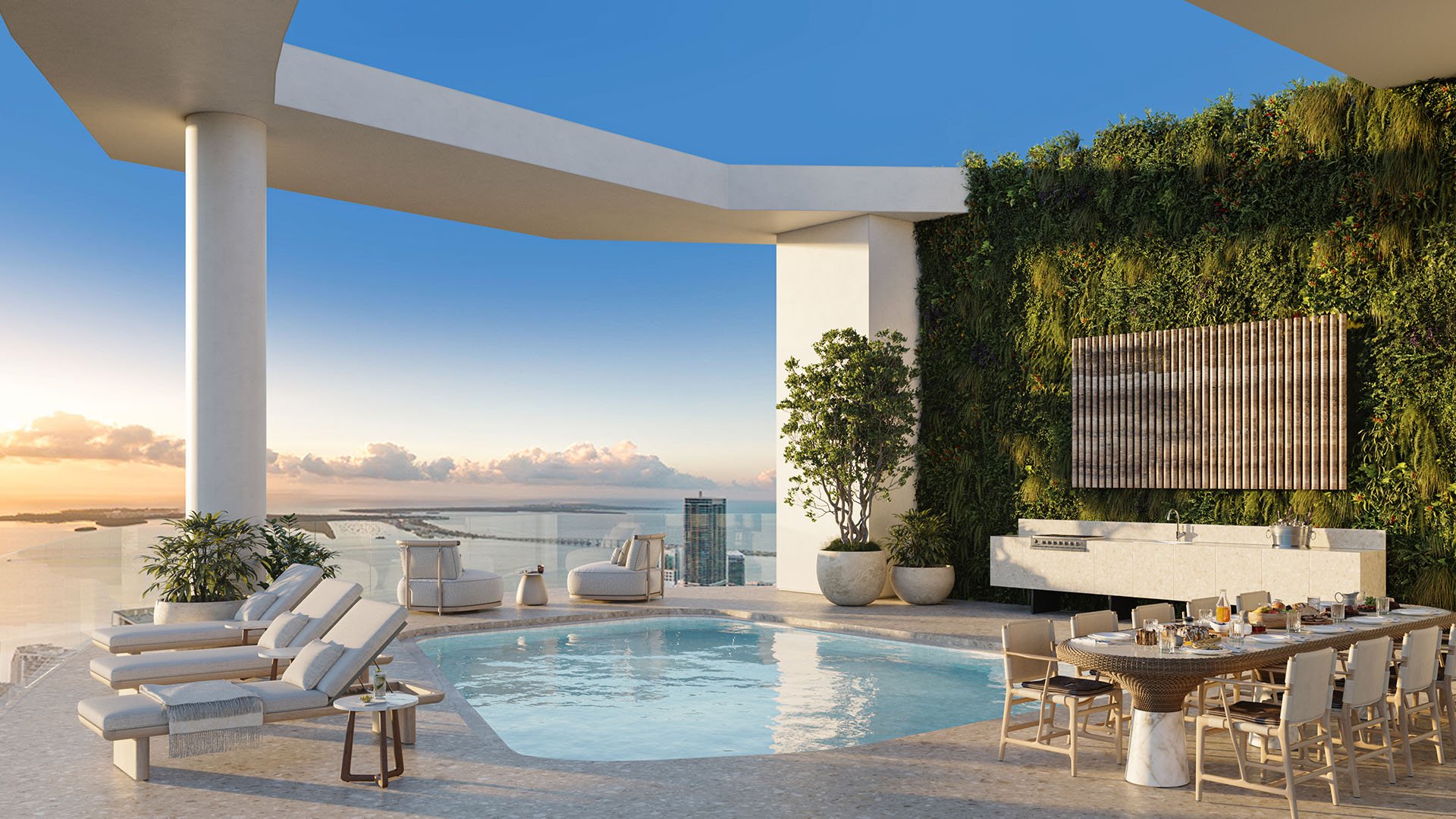
Energy-aware automation is often presented as a collection of sleek wall panels, discreet sensors, and app-based controls. For a South Florida luxury buyer, the better question is not how many systems a residence can connect. It is whether the home understands its setting. Oceanfront, bayfront, and city living each place distinct demands on cooling, humidity management, shading, ventilation, and resilience. A well-composed automation strategy should feel almost invisible, quietly preserving comfort while reducing unnecessary energy use.
The most sophisticated residences do not treat energy as a separate utility conversation. They connect it to architecture, daily rhythm, and the protection of finishes. A waterview great room with full-height glass needs different intelligence than a shaded city pied-à-terre in Brickell. A balcony exposed to salt air asks more of material selection and maintenance planning than an interior-facing terrace in a dense urban tower. The right comparison begins with exposure.
Oceanfront ownership offers one of South Florida’s rarest sensory experiences: direct horizon, moving light, and a constant marine atmosphere. That same atmosphere requires a sharper approach to automation. Salt-laden air, intense sun, and persistent humidity can influence how a residence feels, how finishes age, and how mechanical systems are expected to perform.
In this setting, prioritize automation that coordinates HVAC operation with humidity control, not temperature alone. A cool room can still feel uncomfortable if moisture is not managed intelligently. Look for systems that support zoned conditioning, occupancy awareness, and protective settings when the residence is unoccupied. Second-home owners should be especially attentive to remote monitoring, because the most valuable feature may be an early alert when conditions move beyond the desired range.
Shading is equally important. Automated shades can reduce solar gain during peak exposure while preserving views when the light is softer. The strongest systems allow different façade orientations to respond independently. In an oceanfront home, east-facing morning exposure, reflective water glare, and afternoon heat from other elevations may not behave the same way. A single whole-home command is convenient; nuanced programming is what makes it refined.
Bayfront residences can feel more sheltered than the open beach, but they still demand careful environmental thinking. Water views, cross-breezes, boat traffic, and reflective afternoon light can create a layered set of comfort conditions. The automation goal is balance: preserve the openness that makes bay living desirable while preventing heat, glare, and humidity from controlling the day.
In areas such as Aventura or Surfside, buyers should study how the residence meets the water. Is the primary living area oriented to long western light, sunrise glow, or a protected basin? Does the terrace invite doors to stay open, and if so, can the system respond when open-air living conflicts with conditioned interiors? Door and window sensors, integrated HVAC pauses, and humidity recovery modes can help the home avoid working against itself.
Bayfront living also rewards nuanced lighting control. Automated scenes can reduce artificial lighting when natural light is abundant, then shift to warmer interior tones in the evening. For entertaining, the best systems manage transitions between indoor salons, terraces, and outdoor kitchens without requiring a host to adjust every zone manually.
City residences ask a different set of questions. In Brickell, Downtown, and other urban cores, buyers often prioritize proximity, services, privacy, and lock-and-leave ease. Energy-aware automation should support those rhythms. The residence may be occupied intensely during part of the week, left quiet during travel, and activated again on short notice before arrival.
For city living, scheduling and zoning matter. Bedrooms, offices, service areas, and entertaining spaces should not all run identically. A refined system allows cooling, lighting, and shades to follow actual use. It should also be simple enough for guests, household staff, or visiting family to operate without compromising programmed efficiencies.
Smart-grid and demand-response readiness can be relevant in urban settings, especially where buildings are designed for coordinated energy behavior. Buyers do not need to become technical specialists, but they should ask whether the residence can respond to peak periods in a way that protects comfort. The ideal system makes small adjustments intelligently, rather than asking the owner to think about the grid.
Begin with the building envelope. Automation cannot fully compensate for a poorly considered envelope, exposed glazing, or weak separation between indoor and outdoor conditions. Ask how glass, insulation, doors, and ventilation strategies work with the control system. In luxury real estate, comfort is created by the relationship between architecture and technology, not by technology alone.
Then examine the HVAC strategy. Is humidity measured and managed directly? Are there meaningful zones, or only broad areas? Can the system maintain protective conditions while the owner is away? Does it offer clear alerts without constant nuisance notifications? A strong answer should be practical and calm.
Next, test the user experience. Luxury automation should not feel like a puzzle. Wall controls, app interfaces, voice options, and preset scenes should be intuitive. If a buyer needs a lengthy tutorial to dim lights, lower shades, or set an away mode, the system may be overdesigned for daily life.
Finally, consider maintenance. Oceanfront and bayfront homes should be evaluated for corrosion-aware equipment placement, service access, and durable exterior components. City residences should be assessed for building-level integration, staff protocols, and the ease of updating systems over time.
The most important comparison is personal. A year-round resident who entertains frequently will need different automation than a seasonal owner who wants remote oversight and rapid pre-arrival conditioning. A collector with sensitive materials may place greater value on stable humidity. A family with children may care more about simple scenes, sleep settings, and air comfort across bedrooms.
Buyers should also distinguish between convenience and intelligence. Convenience turns lights on from a phone. Intelligence anticipates solar gain, occupancy, humidity, and the owner’s daily pattern. In the best homes, energy awareness is not a visible performance. It is why the residence feels serene at noon, welcoming at dusk, and protected while empty.
Is energy-aware automation more important on the oceanfront? It is especially valuable there because salt air, sun, and humidity place constant demands on comfort systems and finishes.
Should I compare automation before comparing amenities? Yes. Amenities influence lifestyle, but automation affects the daily comfort and resilience of the private residence itself.
What is the first system to evaluate? Start with HVAC and humidity control, because cooling comfort in South Florida depends on more than temperature.
Are automated shades just a convenience feature? No. When programmed well, they help manage glare, heat gain, privacy, and the changing character of daylight.
Does bayfront living require the same planning as beachfront living? It requires similar discipline, though the exposure pattern may be more layered and site-specific.
What matters most in a city residence? Zoning, scheduling, intuitive controls, and lock-and-leave settings are especially important for urban ownership.
Should remote monitoring be a priority for second homes? Yes. Remote alerts and away modes can help protect comfort conditions when the residence is unoccupied.
Can automation reduce energy waste without reducing comfort? It can, when the system responds to occupancy, sunlight, humidity, and programmed lifestyle patterns.
How should I evaluate a smart-home interface? Test whether everyday actions feel simple, elegant, and understandable without technical assistance.
Is the best system always the most complex one? No. The best system is the one that quietly supports the residence, the setting, and the owner’s routine.
To compare the best-fit options with clarity, connect with MILLION.
If branded residences are on your mind — as a home or as an allocation — we would be glad to share what we are seeing, privately.
Begin a quiet conversation