In South Florida, outdoor space is not a bonus feature, it is a core room. Yet not all outdoor square footage performs the same. This guide clarifies the true differences between a Balcony and a Terrace, explains why depth and orientation matter more than raw area, and outlines the due diligence that protects resale value and building harmony. Along the way, we spotlight Miami-beach residences where indoor outdoor living is treated as architecture, not afterthought.
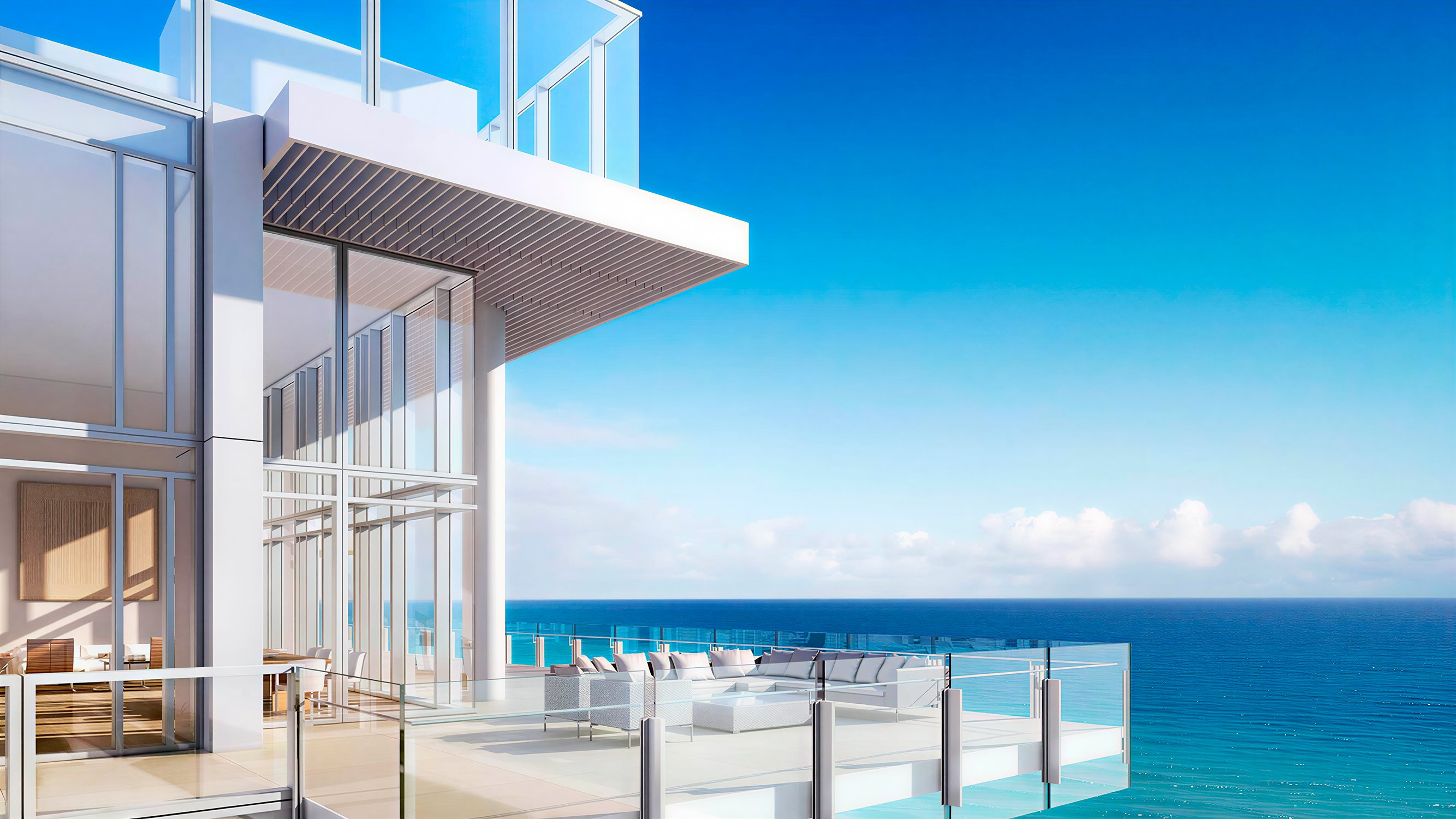
A Balcony is an elevated platform that projects from a building wall, typically accessed from an interior room and enclosed by a railing or parapet. A Terrace is a flat, open outdoor platform that can be larger than a balcony and may be ground-level or on a rooftop, sometimes private and sometimes shared.
In South Florida luxury condos, the practical difference is less about vocabulary and more about performance. A balcony often functions as a viewing perch: fresh air, a skyline or ocean line, and a place for a quick pause. A terrace, when properly dimensioned, can behave like an outdoor room where you dine, lounge, and host with the same ease you expect indoors.
The terminology matters because contracts, condominium documents, and house rules frequently treat balconies and terraces differently. Maintenance obligations, waterproofing responsibility, and what is permitted outside can all hinge on how the space is classified.
Outdoor space is frequently marketed by total area, but livability is driven by proportion. Typical balcony dimensions are often cited around 4 to 6 feet wide and 5 to 10 feet deep. That can work for a bistro set and a few plantings, but it can also lock the experience into “coffee and a view.”
Depth is the quiet deciding factor. Once you can place seating and still maintain comfortable circulation, the exterior stops being decorative and starts operating as usable living space. Larger balconies are often described as exceeding about 10 feet in depth and 6 to 10 feet in width, which supports more realistic furniture plans and a more credible entertaining setup.
Juliet balconies sit at the other end of the spectrum. They are typically very shallow and prioritize daylight, air, and façade rhythm over usable floor area. They can be elegant and functional for ventilation, but they are not the answer for buyers seeking dining, lounging, or a true indoor-outdoor lifestyle.
Safety and sightlines also shape the experience. Residential railing height is commonly 36 inches in many code contexts, with variations by jurisdiction and conditions. That dimension can preserve views while maintaining a baseline of protection, and it influences whether seated sightlines clear the rail and how open or enclosed the outdoor area feels.
The market has consistently signaled that private outdoor space can command a meaningful premium, but the premium is not purely mathematical. In practice, value follows usability.
In New York City, widely cited brokerage analysis has suggested the average price premium for homes with private outdoor space rose materially post-pandemic, including an average premium reported around 28% in Manhattan and about 20% in Brooklyn. In the condo context, some New York practitioners also cite a rule of thumb that terraces can add roughly $100 to $200 per square foot of terrace area, with diminishing returns at very large sizes.
Nationally, consumer-facing housing commentary drawing on Zillow has suggested homes with outdoor space can sell for roughly 5% to 12% more than comparable homes without it, depending on market conditions.
South Florida is its own ecosystem. MILLION Luxury has highlighted how a given budget can buy materially more prime real estate in Miami than in Manhattan, which changes the scale of what “outdoor space” can be. Here, buyers may be able to prioritize depth, privacy, and furnishing flexibility rather than treating exterior square footage as a scarce add-on.
Across markets, the same drivers tend to hold: configuration, orientation (sun and wind), privacy, and whether the space can actually be furnished and used predict value more reliably than nominal square footage alone.
The most compelling oceanfront residences treat outdoor space as architecture, not an afterthought. A signature example is how 57 Ocean Miami Beach emphasizes 12-foot-deep terraces. That one decision addresses the most common disappointment in condo outdoor living: a beautiful opening to a space that is too shallow to live in.
In the Faena District, Faena House Miami Beach helped establish a modern expectation that the exterior should feel like a continuation of the interior. The proposition is straightforward: if the living room is where you host, the outdoor room should be able to host too, without compromised proportions or noticeably lesser finishes.
On the newer end of the market, Five Park Miami Beach reflects a broader shift in buyer priorities. Outdoor areas are increasingly expected to be sizable, thoughtfully sheltered, and usable across the day, supported by furniture plans that feel intentional rather than improvised.
For buyers drawn to branded hospitality energy with residential privacy, Shore Club Private Collections Miami Beach speaks to the appeal of stepping from interior calm to an exterior setting that feels curated, service-aware, and naturally social.
Taken together, these references point to a shared Miami Beach standard: the exterior is expected to perform like living space.
Outdoor space becomes a problem when responsibilities are unclear. Before treating a balcony or terrace as an extension of the interior, confirm four items early and in writing.
First, maintenance and repair responsibility. Some buildings treat portions of terraces as limited common elements, some assign responsibility to the unit owner, and some split waterproofing versus surface finishes. Confirm who maintains, repairs, and insures each component.
Second, waterproofing and leak risk. Leaks can be costly and contentious, especially when water migrates into structural assemblies or the unit below. Understanding the building’s waterproofing approach, inspection routines, and repair protocol is not optional diligence; it is asset protection.
Third, rules that determine whether the space can function as imagined. Verify permitted uses and restrictions for grills, heaters, noise, planters, and alterations. A terrace that cannot legally accommodate your intended cooking, shading, or planting plan may be visually impressive yet operationally limited.
Fourth, wind, salt, and exposure realities. Miami’s coastal climate rewards robust materials and thoughtful anchoring. Even with great design intent, furniture selection and maintenance planning should anticipate salt air, sun intensity, and seasonal weather.
Outdoor living upgrades are often pursued to improve aesthetics, expand entertaining capacity, and extend usable living space. For luxury buyers, the best results come from treating the exterior with the same discipline you would apply to an interior project.
Start with zoning. High-performing outdoor rooms typically create dedicated areas for dining, lounging, and entertaining. In practical terms, that can mean placing a dining table near the kitchen for service flow and positioning deep seating where sightlines and evening breezes are most enjoyable.
Prioritize indoor-outdoor continuity. Consistent flooring tones, coordinated textiles, and lighting that matches interior warmth help the terrace read as a true extension of the home rather than a separate, less considered zone.
Add comfort infrastructure. In South Florida, shading is often the difference between “available” and “used.” Smart and sustainable features like automated shading or irrigation are increasingly viewed as practical luxuries, not gimmicks. Where permitted, discreet heating and integrated audio can expand the hours you actually spend outside.
Consider wellness, not only entertaining. Luxury outdoor trends increasingly include resort-style elements and wellness uses such as areas for yoga or meditation. Even without a private spa, a quiet corner with soft lighting and planting can become the most valuable part of the terrace.
At the top of the market, outdoor space can define a trophy residence rather than merely enhance it. When privacy, view corridors, and true habitability align, exterior square footage carries disproportionate weight.
In New York, widely reported benchmark transactions illustrate this effect: a 2025 sale at 220 Central Park South for $82.5 million included a roughly 500-square-foot terrace, while 150 Charles Street reportedly sold for $60 million with about 3,207 square feet of private terraces. CityRealty has also profiled Central Park Tower’s marquee penthouse offering with about 1,433 square feet of outdoor terrace area.
For South Florida, the point is not that Miami should mirror New York pricing mechanics. The takeaway is that outdoor space becomes meaningfully more valuable when it pairs privacy with an iconic view and is dimensioned to be genuinely usable, not symbolic. That is precisely what discerning buyers increasingly demand in Miami Beach.
Is a Balcony the same as a Terrace? No. A Balcony projects from the building wall; a Terrace is a flatter platform that can be larger and may be ground-level or rooftop.
What Balcony size is actually usable? A balcony feels functional when it can accommodate seating while still leaving clear circulation; very small balconies can read as standing room only.
What dimensions are typical for balconies? Commonly cited dimensions are about 4 to 6 feet wide and 5 to 10 feet deep, often enough for a small set and plants.
Why does depth matter so much? Depth determines whether furniture can be placed comfortably without crowding, which is what turns outdoor area into an outdoor room.
What is a Juliet balcony good for? Light, air, and a visual connection to the outside. It typically does not provide meaningful usable floor area.
Do condos with outdoor space sell for more? Often, yes. Various analyses suggest premiums can range from single digits to materially higher, depending on market and quality of the outdoor space.
How do buildings usually handle terrace repairs? It varies. Some assign maintenance to the owner, some to the association, and some split responsibilities, so verify the allocation in writing.
Are terrace leaks a serious risk? They can be. Waterproofing failures can be expensive and can lead to disputes, so review the building’s approach and responsibility.
What rules should I check before buying? Confirm restrictions on grills, heaters, noise, planters, and alterations such as shading or lighting, since rules govern how you can use the space.
What tags describe the core considerations here? Balcony and Terrace are the fundamentals; for many buyers in Miami Beach, Oceanfront exposure is the value driver.
For discreet guidance on evaluating outdoor space in South Florida luxury condos, connect with MILLION Luxury.
If branded residences are on your mind — as a home or as an allocation — we would be glad to share what we are seeing, privately.
Begin a quiet conversation