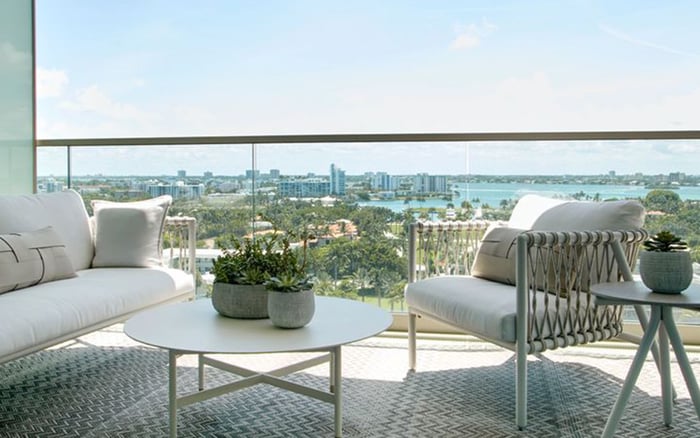
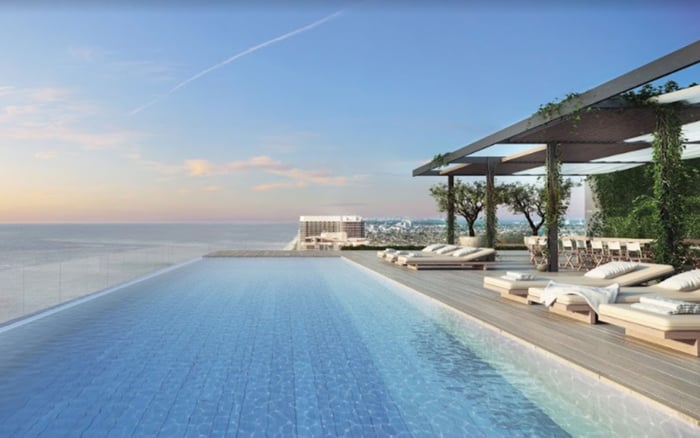
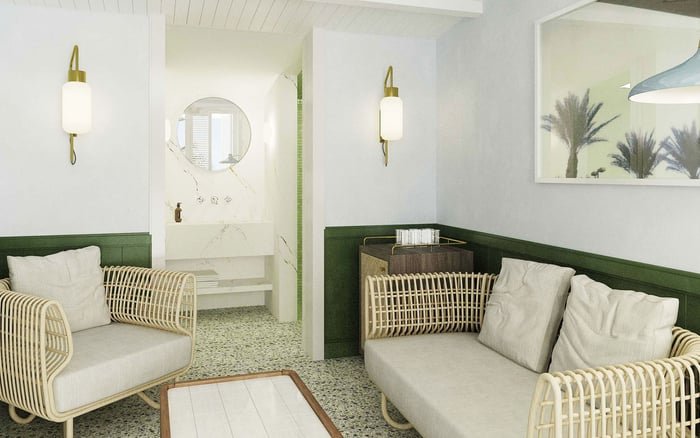
A discreet, buyer-oriented comparison of two ultra-prime beachfront lifestyles: The Surf Club Four Seasons in Surfside and St. Regis Residences Bal Harbour, focusing on daily service, privacy, and the realities of beach access in Bal Harbour & Surfside.
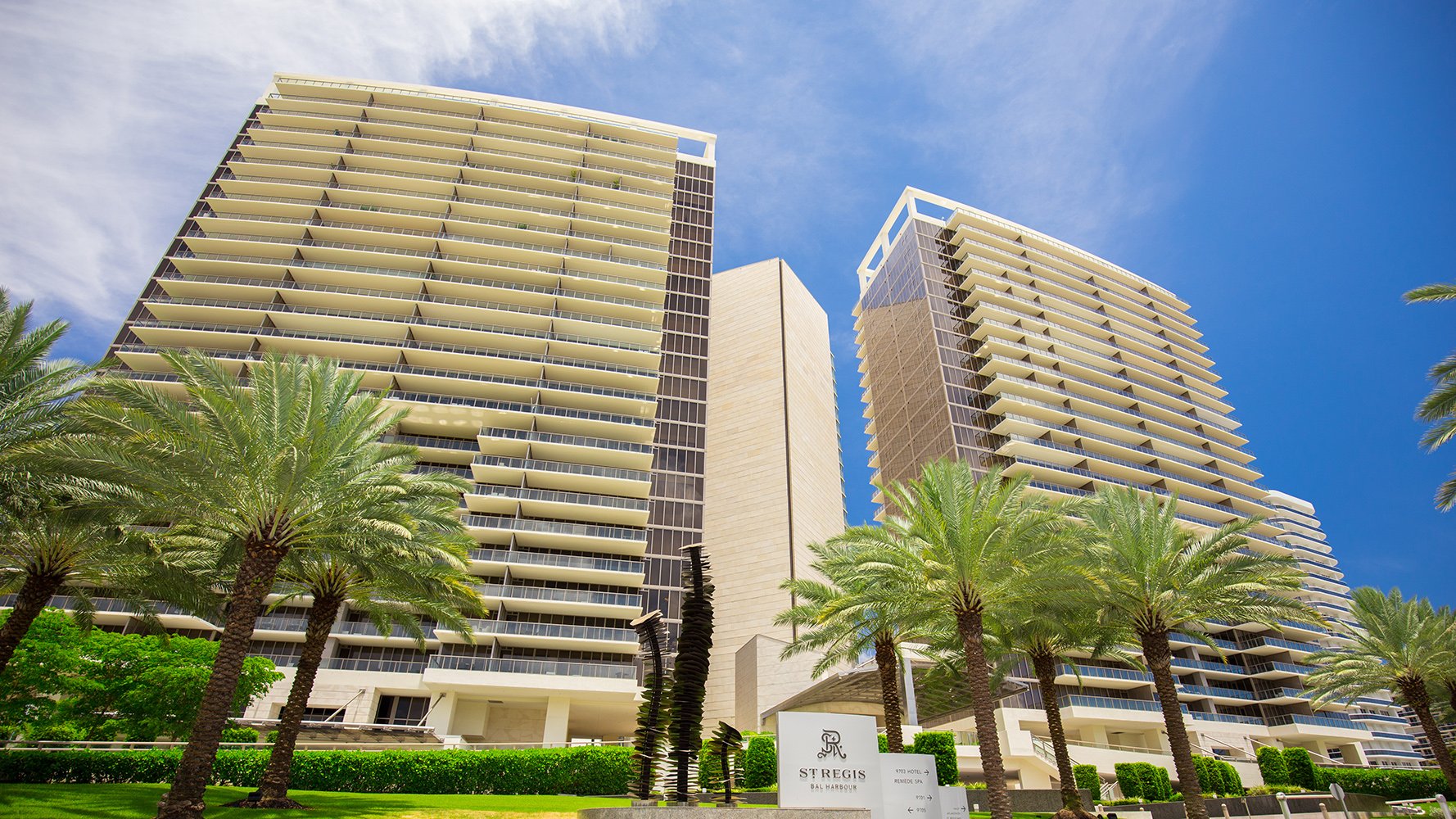
Bal Harbour and Surfside share the same ribbon of Atlantic coastline, yet they deliver two distinctly calibrated versions of oceanfront living. For buyers evaluating branded residences, the conversation can get reduced to a logo. In practice, the real differentiators are quieter-and far more telling: how your car is received, where guests are staged, how staff circulates, how quickly a beach setup appears, and how much of daily life remains unobserved.
That’s why the comparison between The Surf Club Four Seasons and the St. Regis Residences Bal Harbour matters. Both speak to an ultra-premium audience. Both treat service as table stakes. Still, they tend to draw different temperaments, different hosting patterns, and different definitions of “privacy.”
In Bal Harbour, the broader ecosystem includes established oceanfront addresses and a tightly edited streetscape, which is why some buyers cross-shop nearby residences such as Oceana Bal Harbour for a more purely residential rhythm. In Surfside, the boutique scale and walkable feel can pull attention toward design-forward, low-density alternatives like Arte Surfside. These satellites help clarify intent: do you want the cadence of a hotel, or the quiet confidence of a standalone residential building?
In a Four Seasons context, service is typically engineered to feel intuitive-almost invisible. Owners drawn to The Surf Club Four Seasons often want a lifestyle that reduces the “decision fatigue” of a second home: arrivals are cleanly handled, requests are picked up quickly, and the property functions like a refined extension of a resort stay. The tone may be relaxed, but the operating precision is real.
St. Regis, by contrast, is long associated with a more ceremonious approach to hospitality, where rituals and formality can be part of the pleasure. In a residential setting, that often translates into service that feels especially polished for buyers who entertain in a way that benefits from choreography: timing, guest flow, and the sense that details have been deliberately staged.
The practical question isn’t which brand is “better.” It’s which service cadence you want to live with daily. If you picture yourself living “in residence” with predictable routines, personal support, and a home-first mindset, you may prefer a model that reinforces a private household. If you picture arriving in seasons and using the property as a true coastal base camp with minimal friction, a hotel-minded backbone can be the more compelling fit.
Privacy at this level is rarely about being “hidden.” It’s about control: control of entry, control of encounters, and control over what staff and neighbors can infer from your patterns.
In branded environments, the first privacy test is arrival. How separated is resident access from hotel guests, visitors, and vendors? How discreet is the transition from vehicle to private interior? The second test is vertical circulation. When you step into an elevator, does it feel like the private spine of your home-or a shared conduit?
The Surf Club Four Seasons tends to appeal to owners who are comfortable with the hum of a world-class property, as long as resident moments are protected. Done well, that produces a “socially quiet” lifestyle: you can be present without being exposed. St. Regis Residences Bal Harbour tends to attract owners who want a more residence-forward atmosphere, where the building’s tempo is less influenced by transient patterns.
For buyers who want maximum separation from public-facing energy while staying in the Bal Harbour and Surfside orbit, it can be useful to compare each lobby and arrival sequence against boutique residential options nearby, such as Ocean House Surfside, where the experience can skew more intimate and owner-centric.
Buyers often ask, “Which has better beach access?” The sharper question is: “Which makes the beach easiest to use-consistently, with the least exposure?”
Beach access at the ultra-luxury level has three layers:
Proximity and path. How quickly can you move from front door to shoreline without passing through public-facing pinch points?
Setup and staffing. The real luxury isn’t stepping onto sand. It’s arriving to an already-ordered environment-towels, water, shade, and attention that feels anticipatory rather than reactive.
Control and comfort. On high-traffic weekends or peak-season days, does the beach still read as calm? Are the lines between residents, hotel guests, and the broader public realm clearly managed?
The Surf Club Four Seasons is widely understood as a place where the shoreline experience is part of the property’s identity. That tends to translate into a beach operation designed to perform at a high level day after day, including the kind of service continuity that makes spontaneous beach time realistic.
At St. Regis Residences Bal Harbour, the appeal often centers on a more residential interpretation of beachfront living-where beach access matters, but the overall emphasis leans toward a private-home feel and the formality embedded in the brand’s hospitality DNA.
For perspective beyond Bal Harbour and Surfside, some buyers look north to Sunny Isles for a different expression of oceanfront scale, using properties like St. Regis® Residences Sunny Isles as a benchmark for how branded living can read in a newer, tower-centric beachfront environment.
Luxury living is increasingly defined by the third space: not your unit, not the beach, but the places where you read, take meetings, decompress, or host without fully entertaining at home.
In a Four Seasons ecosystem, those third spaces often feel built for long, unhurried use, supported by hospitality-minded service that makes it easy to linger. That’s attractive for owners who want the building to function like a private club with ocean air.
In a St. Regis context, the third space can lean more refined and appointment-driven, emphasizing polish, presentation, and a sense of arrival even within the property. This can appeal to owners who want their building to read as a composed address-where shared spaces carry a more formal tone.
When touring, focus on the sensory reality: acoustics, sightlines, and the visibility of back-of-house activity. Do you see staff work areas? Do you hear kitchen movement? Are there corners where you can disappear with a book or take a call? These details often reveal more than a long amenity list.
At this tier, the purchase isn’t only a home; it’s an operating system for how you live in South Florida.
The Surf Club Four Seasons often fits buyers who:
Use the home frequently and want the momentum of a resort-caliber environment.
Entertain casually, but expect flawless execution.
Value spontaneity: beach now, lunch later, no planning burden.
St. Regis Residences Bal Harbour often fits buyers who:
Prioritize a residence-first atmosphere and a quieter building tempo.
Entertain with more structure, where service rituals feel aligned.
Want an address that reads as decidedly “residential,” even when fully staffed.
Neither approach is universally superior. The right choice is the one that matches your living pattern: do you want your day to feel like a perfectly managed stay, or a perfectly supported household?
Bring this checklist to a private tour. It keeps the conversation anchored in lived reality.
Arrival control: Where do residents enter, and how are visitors processed?
Elevator privacy: Are there moments of unintended interaction?
Staff choreography: Does service feel seamless or visibly busy?
Beach routine: How is setup handled, and what does “reserved” actually mean?
Quiet zones: Is there a genuine refuge space when the building is active?
Hosting flow: Can guests move without crossing private resident circulation?
Nighttime feel: How does the property sound and look after dinner hours?
For buyers considering the neighborhood more broadly, it can be useful to tour at least one highly residential comparator in Bal Harbour, such as Rivage Bal Harbour, to separate brand-driven service appeal from the underlying value of pure beachfront residency.
If your ideal is a beachfront lifestyle where the beach feels like an extension of a hotel-caliber day, The Surf Club Four Seasons typically aligns with that model of effortless continuity. If your ideal is a residence-forward address where service supports a private household and the building’s energy feels more contained, St. Regis Residences Bal Harbour can be the more natural match.
The most sophisticated buyers make this decision by observing moments, not marketing: the pause at arrival, the quiet in the corridors, the speed of a simple request, and whether the beach experience feels genuinely managed for residents.
Which is better for a true lock-and-leave lifestyle? Both can work, but many buyers prefer the more residence-forward feel when minimizing day-to-day interaction.
Will I feel like I live in a hotel at The Surf Club Four Seasons? The experience can feel resort-adjacent, but well-designed resident separation can keep it residential in practice.
Is St. Regis Residences Bal Harbour more private by default? It can feel more contained, though privacy ultimately depends on arrival, circulation, and daily operations.
What does “beach access” really mean in this comparison? Beyond frontage, it’s about setup, staffing, and how consistently the shoreline feels controlled and calm.
Which is better for frequent entertaining? Choose the service style that matches your hosting: effortless, relaxed execution versus more formal choreography.
Do branded residences always deliver the same service as the hotel brand? Service is typically brand-informed, but the day-to-day experience is shaped by the specific property’s operations.
How should I evaluate privacy during a tour? Watch arrival, elevator behavior, staff visibility, and whether shared spaces invite lingering without exposure.
Is Surfside’s lifestyle meaningfully different from Bal Harbour’s? Yes-Surfside often reads more boutique and walkable, while Bal Harbour can feel more edited and address-driven.
Should I also tour non-branded buildings nearby? Yes, a purely residential comparator helps clarify whether you’re buying service, location, or both.
What is the single most important deciding factor? Your living pattern: resort-cadence ease versus residence-first quiet and control.
If you'd like a private walkthrough and a curated shortlist, connect with MILLION Luxury.
If branded residences are on your mind — as a home or as an allocation — we would be glad to share what we are seeing, privately.
Begin a quiet conversation