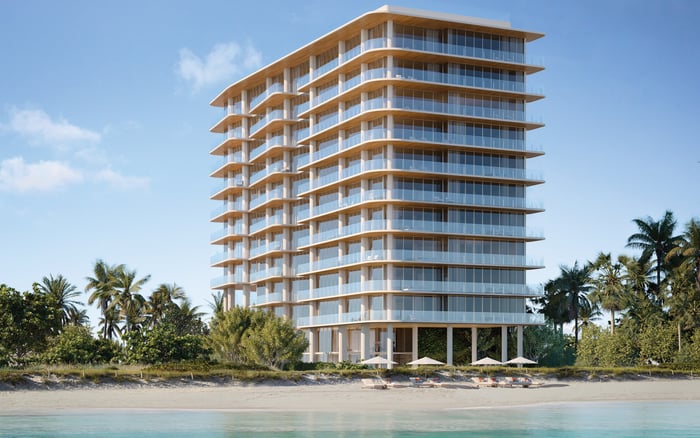
A close look at why private beach pavilions at Ocean House Surfside stand out in South Florida’s luxury residential market, where land scarcity, regulation, and a premium on privacy make such amenities unusually rare.
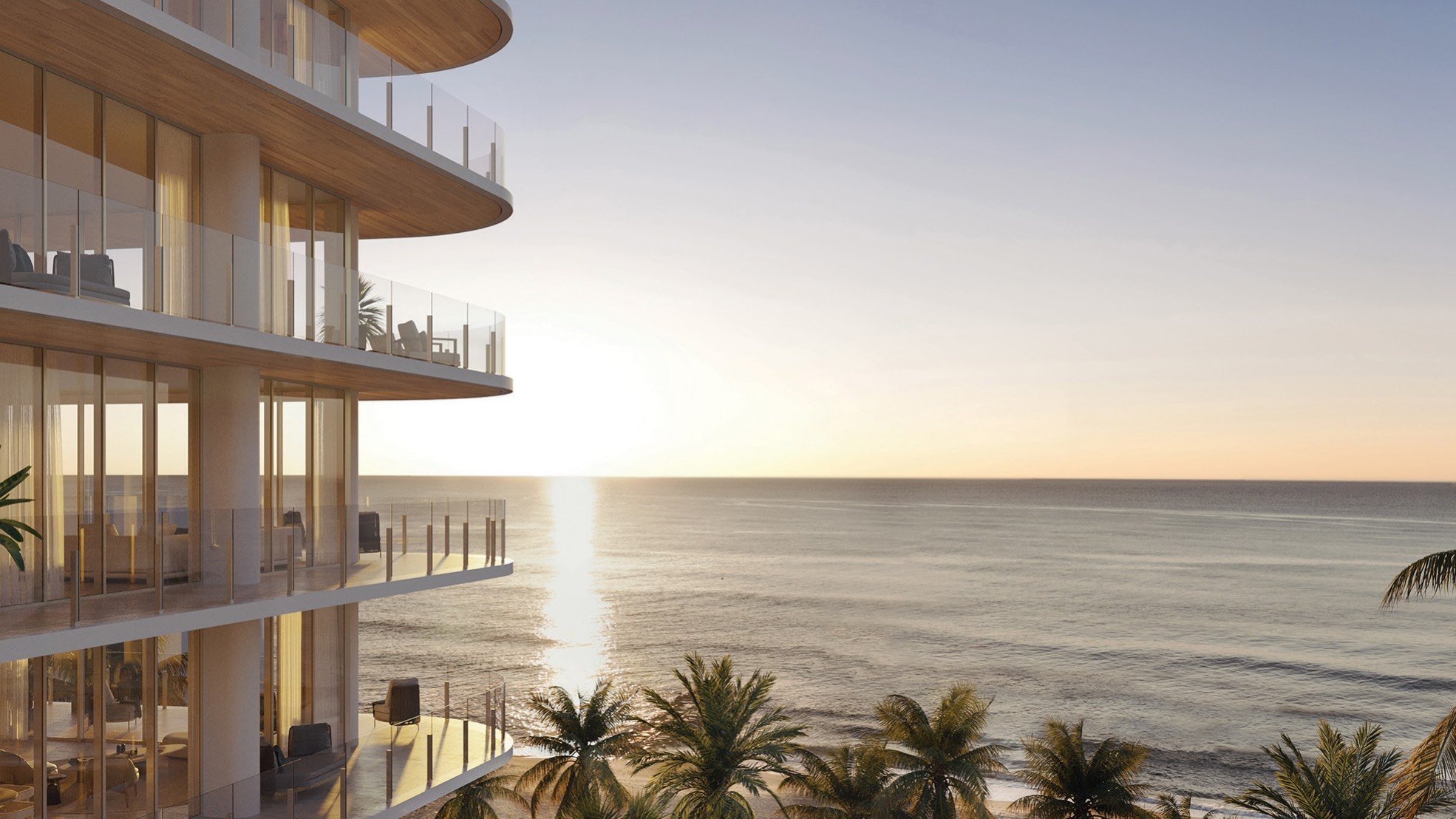
In South Florida luxury real estate, beachfront living is often defined by access rather than true separation. Residents may expect attentive beach service, reserved loungers, or cabana-style comforts, but a private beach pavilion belongs to a more selective category. At Ocean House Surfside, that distinction matters because the amenity is not merely decorative. It helps define how the property is perceived within the highest tier of oceanfront living.
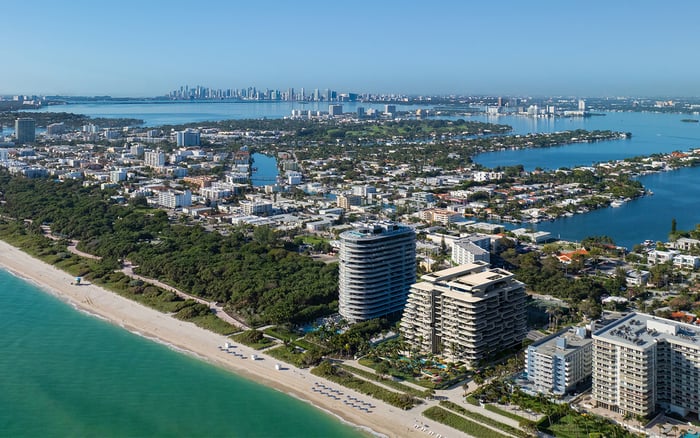
Ocean House Surfside is an oceanfront condominium in Surfside, the compact beachfront town just north of Miami Beach. Its setting already places it in a narrower field. Surfside has a more residential, lower-density character than many neighboring coastal districts, and that alone changes the meaning of exclusivity. In an environment where the shoreline is finite and development is tightly controlled, an amenity that creates added privacy on the sand carries greater weight than it would in a broader, more resort-driven market.
A private beach pavilion also answers a specific buyer desire. It provides shade, shelter, and a stronger sense of separation than open beach seating. For many luxury purchasers, especially those buying for retreat as much as residence, that additional layer of discretion is precisely the appeal.
Rarity in Surfside is not simply a matter of branding. It is shaped by the town’s development constraints and by the limited amount of true beachfront land available for new or reinvented residential product. When a market is small, highly regulated, and already valued for its quieter atmosphere, any amenity that requires additional design coordination and ongoing maintenance becomes less common almost by definition.
That context helps explain why Ocean House Surfside’s pavilions register differently from conventional beach programming. In many luxury projects, the beachfront component is communal by design. Shared service is efficient, elegant, and easier to integrate. Private pavilion structures suggest something more tailored, and tailoring is more difficult to achieve on tightly governed oceanfront sites.
The Surfside setting makes this even clearer when viewed alongside neighboring luxury addresses. Projects such as Arte Surfside, Fendi Château Residences Surfside, and The Surf Club Four Seasons Surfside all benefit from the same prized coastline and the same broader appeal of privacy near Miami Beach without being of it. In that company, Ocean House Surfside’s beach pavilion concept reads as a deliberate ultra-luxury differentiator rather than a routine amenity.
Beachfront amenities may appear effortless once completed, but their execution rarely is. Along the Miami-Dade coastline, accessory structures and exposed outdoor environments must meet demanding construction expectations shaped by wind exposure, storm resilience, and the punishing effects of salt air. Materials, detailing, anchoring, and long-term upkeep all matter more at the water’s edge.
That is one reason simpler beach amenities are more common. Loungers, service setups, and shared cabanas can satisfy many residents while reducing structural complexity and maintenance demands. A private pavilion, by contrast, implies a more durable and carefully considered intervention. It must perform aesthetically, function comfortably, and endure a far harsher environment than a typical poolside structure.
For buyers, this matters because rarity is often a function of friction. The more difficult an amenity is to design, approve, build, and maintain, the fewer projects will pursue it with conviction. Ocean House Surfside benefits from that equation. The pavilions are rare not only because they are desirable, but because they are more difficult to bring into being on an exposed and regulated shoreline.
Across South Florida’s upper-tier residential market, privacy-focused amenities have become one of the clearest ways to distinguish a property. The region has no shortage of luxury towers, branded residences, and oceanfront addresses, yet sophisticated buyers increasingly look beyond broad amenity counts. They focus on the quality of experience: how private arrival feels, how sheltered outdoor living feels, and how effectively a project reduces exposure to crowds even in highly visible coastal settings.
That is why Ocean House Surfside’s private beach pavilions resonate beyond lifestyle imagery. They signal a form of controlled access to the shoreline that feels more residential than hotel-like. In practical terms, that means the beachfront experience can feel calmer, more contained, and more aligned with a boutique ownership profile.
The distinction becomes more meaningful when compared with other prestige oceanfront developments where the luxury proposition may lean on scale, wellness, or dramatic architecture. 57 Ocean Miami Beach, for example, reflects the strong market appetite for wellness-oriented beachfront living, while The Delmore Surfside speaks to the continuing draw of rare new product in Surfside itself. Ocean House Surfside’s pavilion amenity adds another dimension to that competitive field: a more secluded way to inhabit the sand.
For an ultra-premium buyer, the question is rarely whether beach access exists. The more relevant question is how that access is experienced. A standard arrangement may be entirely luxurious, but it remains shared by nature. A private pavilion suggests a different threshold of ownership, one that extends the home’s sense of refuge directly to the beachfront.
That can influence buyer interest because premium purchasers often respond most strongly to amenities that are difficult to replicate elsewhere. Oceanfront inventory across greater Miami remains constrained by site scarcity and regulatory realities. Within that limited inventory, standout experiential features can sharpen a project’s identity and support its position in the ultra-luxury segment.
Ocean House Surfside therefore benefits from a layered form of rarity. First, Surfside itself is limited, residential in tone, and exceptionally finite along the water. Second, the development sits in a market where unusual beachfront amenities are inherently harder to deliver. Third, the private pavilion concept aligns with what affluent buyers increasingly value: privacy, comfort, shade, and a stronger sense of personal domain at the shoreline.
The private beach pavilions at Ocean House Surfside are best understood as rare for structural reasons, not merely promotional ones. They stand apart because beachfront luxury in South Florida usually stops at shared service and communal comfort. Moving beyond that model requires a more exacting combination of land, design discipline, market positioning, and operational commitment.
In Surfside, where development controls help preserve a quieter coastal scale, that rarity becomes even more pronounced. The result is an amenity that supports Ocean House Surfside’s boutique, ultra-luxury identity with unusual clarity. For buyers who place a premium on discretion at the water’s edge, the pavilion is not a peripheral extra. It is one of the clearest expressions of why this address occupies a narrower and more exclusive lane.
What is unusual about private beach pavilions at Ocean House Surfside? They offer a more secluded beachfront experience than the shared access and standard beach service more commonly found in luxury residential projects.
Why are these pavilions considered rare in Surfside? Surfside has limited beachfront land and tightly controlled development conditions, which make distinctive oceanfront amenities harder to deliver.
Does Surfside’s character affect this rarity? Yes. Its lower-density, more residential atmosphere heightens the value of private, boutique-style beachfront features.
Are private beach pavilions common in South Florida luxury buildings? No. Beach amenities more often center on shared loungers, cabanas, and service rather than private pavilion structures.
Why do affluent buyers value this type of amenity? Privacy, shade, shelter, and direct beachfront use are especially compelling in the ultra-luxury coastal segment.
Do coastal building conditions matter for pavilion design? Yes. Beachfront structures must respond to wind exposure, storm resilience, and corrosive salt-air conditions.
Are pavilions more demanding than simpler beach amenities? Generally, yes. They require more durable construction and can carry higher maintenance obligations over time.
How does this amenity support Ocean House Surfside’s positioning? It reinforces the project’s place in the ultra-luxury tier by offering an experiential feature that feels both private and difficult to replicate.
Is the value of the pavilion mainly aesthetic? No. Its importance lies in how it changes the lived beachfront experience, creating greater separation and comfort.
What should buyers take away from this feature? It reflects a combination of scarcity, regulation, and premium market intent that makes Ocean House Surfside stand out on the shoreline.
For a discreet conversation and a curated building-by-building shortlist, connect with MILLION Luxury.
If branded residences are on your mind — as a home or as an allocation — we would be glad to share what we are seeing, privately.
Begin a quiet conversation