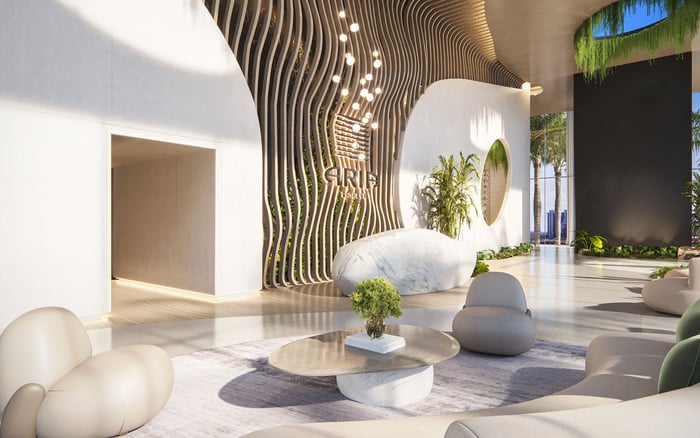
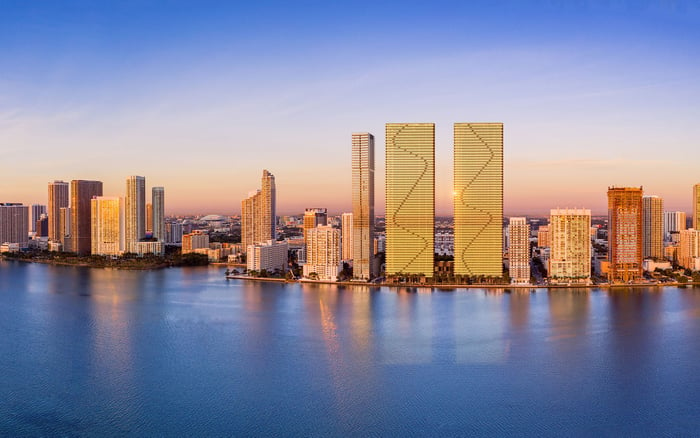
Cold-plunge amenities are moving from boutique wellness studios into the most design-forward residential towers. For buyers considering Villa Miami and EDITION Edgewater, the question is less about trend and more about viability: what it takes to execute well, what it signals about building culture, and how it affects day-to-day ownership in Edgewater.
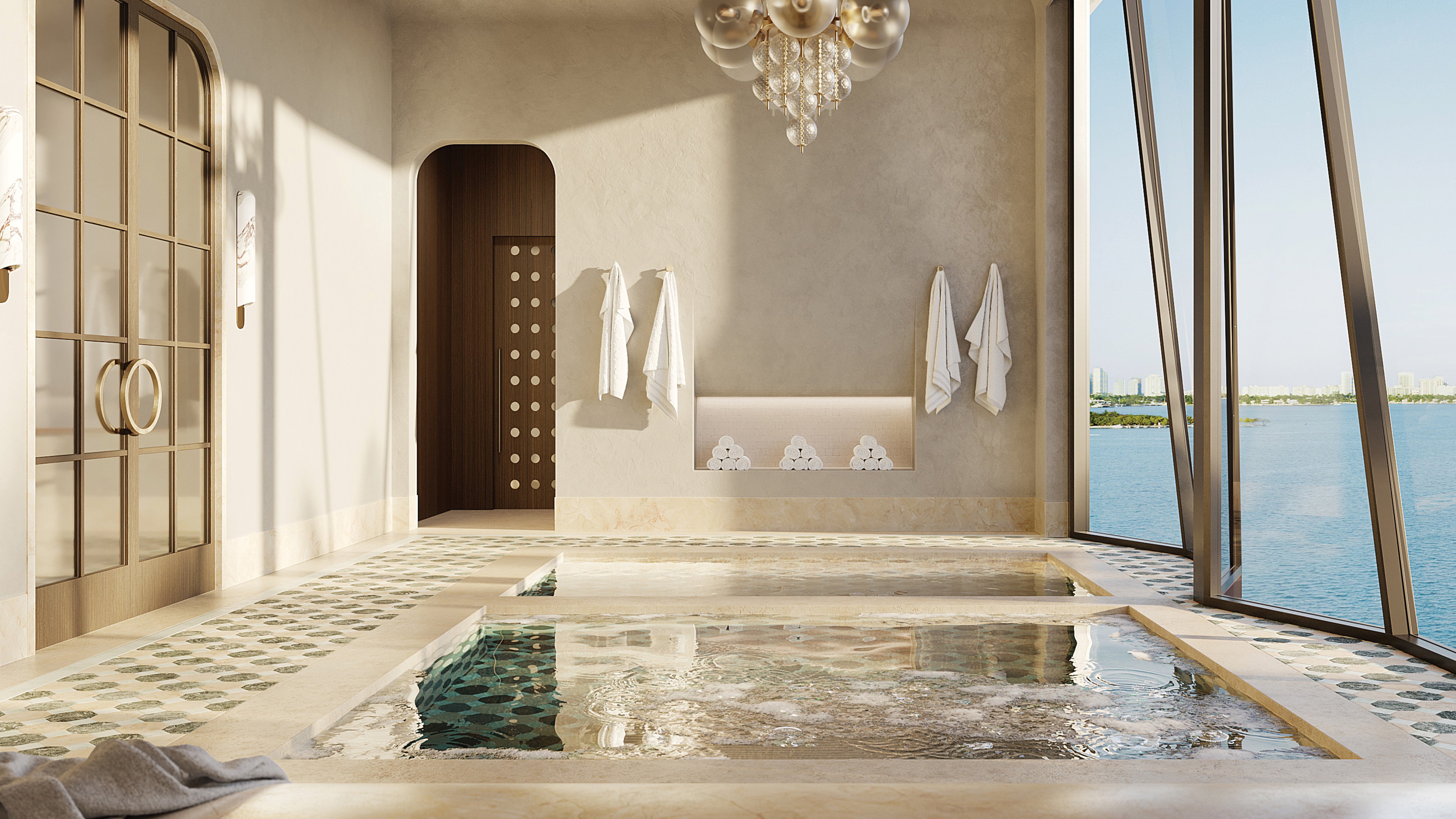
Cold plunge has become shorthand for disciplined wellness, but in a residential setting it succeeds only when it’s treated as architecture, operations, and culture-not simply a basin of cold water. In Edgewater, where new towers compete on lifestyle clarity as much as skyline presence, a credible recovery circuit can operate like a private club: a place residents genuinely use, where the design supports routine.
For buyers weighing Villa Miami against EDITION Edgewater, the viability question isn’t whether a cold plunge can be built. It’s whether it can be integrated in a way that feels effortless, discreet, and reliably maintained over time. The best executions aren’t loud, novelty-driven “amenity deck” statements. They’re quiet, tightly controlled environments that reward repeat use.
In an ultra-premium residential tower, viability has four layers that directly affect ownership.
First is spatial logic. A cold plunge should sit inside a complete thermal and recovery narrative: hot, cold, rest, repeat. Without adjacency to heat experiences and a true decompression zone, the plunge becomes a photo-op instead of a habit. Even in buildings with multiple wellness touchpoints, the key is how few decisions a resident must make to move seamlessly from one to the next.
Second is mechanical integrity. Cold water isn’t the challenge; stable cold water is. Temperature consistency, filtration, and air handling have to be engineered as a single system. A plunge that’s sometimes cold and sometimes merely cool becomes a reputational problem long after the marketing moment.
Third is acoustic and humidity control. Plunge users enter and exit quickly, but the surrounding environment absorbs sound, condensation, and wet traffic. A luxury experience depends on controlled quiet, dry finishes, and circulation that never forces a dripping walk past a lounge of fully dressed residents.
Fourth is operational discipline. Staffing, cleaning protocols, towel service, and access rules determine whether the plunge reads as serene or chaotic. A cold plunge can feel like a private sanctuary at 7 a.m., then turn into an unmanaged splash zone if governance is vague.
Because amenity programs can evolve during development and pre-delivery phases, the smartest comparison isn’t “which one has it,” but “which one can sustain it.” Start with the assumption that both towers intend to compete in a similar luxury set-then evaluate the probability of consistent, high-level execution.
With Villa Miami, look at how wellness is positioned within the building’s identity. A strong indicator is whether prime amenity square footage is reserved for quiet, repeat-use programming rather than only event-oriented spaces. Cold plunge performs best when it’s framed as a daily ritual, not a weekend perk.
With EDITION Edgewater, evaluate whether the concept leans into hospitality-grade cadence. In luxury, the difference between “nice” and “exceptional” is often operational: the towel is there, the room is reset, and the environment remains consistently calm. A cold plunge managed as a service-not just a fixture-tends to hold up better in resident perception.
In both cases, buyers should request clarity on where the plunge is located, how it relates to fitness, and whether it sits within a dedicated wellness zone rather than functioning as an isolated element.
A cold plunge amenity either feels inevitable-like it always belonged-or it feels bolted on. The difference is in details that rarely make it to a sales table.
Water experience design matters. A true plunge is about depth, safe entry, non-slip surfaces, and an edge detail that doesn’t read like a hotel pool. Materials should tolerate repeated wet traffic without polishing into slipperiness. Lighting should be flattering and low-glare, not bright and clinical.
Privacy gradients are equally important. A cold plunge is intimate; people are visibly uncomfortable by design. The best spaces use screening, corner placement, and sightline control so residents don’t feel on display. This is especially relevant on high-rise amenity floors, where glass and views can tempt designers into openness that ultimately suppresses use.
Circulation must be intentional. You want a clean loop: changing, showering, plunge, recovery. A layout that forces residents to cross social spaces in robes or wet feet will reduce usage. A well-planned circuit, by contrast, increases the sense of a private club.
Finally, the room has to breathe. A damp, chlorinated feel is the fastest way to cheapen an otherwise premium amenity level. Quiet ventilation and dehumidification are as much luxury signals as stone and wood.
Cold plunge reads as small, but it’s operationally demanding when held to a luxury standard. Owners should think about the building the way they would a private members club.
Cleaning cadence is the headline. Frequent wipe-downs, clear signage, and enforced shower requirements keep the room elegant and reduce resident friction. When rules are ambiguous, the amenity becomes politicized: some residents avoid it, others complain, and the space loses its aura.
Access policy matters as well. Is the plunge intended as a quiet zone with age or guest limitations? Is it reservable, or first-come? Luxury buildings perform best when expectations are set early and aligned to the target resident profile.
Then there’s wear and tear. Cold plunge users move quickly, drip, and track water. Surrounding finishes should be selected for resilience, and the building should budget for periodic refresh so the space stays crisp. Ultimately, viability is an HOA question: will the building continue funding the experience, not just the installation?
In Edgewater, amenities often become shorthand for who a building is “for.” A well-executed cold plunge can imply a building culture that values routine, privacy, and high-touch maintenance. That matters to resale not because every buyer plunges daily, but because the amenity signals discipline across the broader program.
A wellness suite that’s quiet and cohesive may photograph well, but more importantly, it tours well. Prospective buyers can feel when a space is regularly used and properly managed. The smell, the sound, the dryness of the floor, the availability of towels, and the condition of grout lines all communicate whether a building is run with rigor.
Edgewater buyers also cross-shop beyond the immediate neighborhood. When comparing lifestyle narratives, it helps to benchmark against wellness-forward projects in other submarkets. For example, The Well Coconut Grove provides a useful reference point for how a “wellness-first” identity can become a primary driver of residential choice. Similarly, Brickell’s branded pipeline, such as 2200 Brickell, illustrates how buyers increasingly expect a complete lifestyle story-not simply a gym and a pool.
For a purchaser evaluating Villa Miami and EDITION Edgewater, diligence is less about asking “is there a plunge” and more about confirming the conditions that make it exceptional.
Ask where it lives. Is it in a dedicated wellness zone with controlled access, or exposed within a mixed-use amenity deck? Ask what sits nearby. Plunge works best when paired with showers and recovery seating-and when it’s not directly adjacent to loud social areas.
Ask how it’s maintained. Luxury is consistency. Confirm whether staff presence is planned, what the intended cleaning schedule is, and whether clear usage rules are in place to protect the atmosphere.
Ask how it’s engineered. You don’t need brand names or technical specs to understand intent. You want confidence that the building is planning for temperature stability, robust filtration, and air quality. If answers are vague, the plunge may be treated as décor.
Ask how it’s experienced. Lighting, privacy, and circulation determine whether residents use it weekly or forget it exists. The most viable plunge programs feel natural: you can arrive, reset, and leave without feeling exposed.
Even a beautifully designed cold plunge is only as compelling as the ecosystem around it. A wellness narrative can be undermined by overcrowded elevators, insufficient locker facilities, or a fitness room that feels like an afterthought.
This is why buyers should evaluate the amenity stack as a sequence. The value is in how the building supports routine: a morning workout, recovery, then a calm transition back to residence. The best towers reduce friction through thoughtful adjacency and a consistent sense of privacy.
It’s also why some wellness-driven buyers still consider oceanfront or resort-caliber comparisons in other markets when lifestyle alignment is paramount. A project like 57 Ocean Miami Beach can serve as a contrast point for how different neighborhoods translate luxury into daily rhythm. The point isn’t that one is “better,” but that buyers should choose the environment that supports their actual habits.
Cold plunge integration is viable at the highest level when it’s treated as a controlled ritual space with hospitality-grade operations. Between Villa Miami and EDITION Edgewater, the sharper lens is to evaluate design adjacency, privacy, acoustic and humidity control, and the building’s willingness to budget for ongoing excellence.
In Edgewater, where lifestyle differentiation increasingly lives in the details, a cold plunge can be a meaningful signal of seriousness-but only if it’s executed as a program rather than an amenity.
Is a cold plunge a meaningful amenity for resale in Edgewater? It can be, primarily as a signal of a disciplined wellness program and strong operations.
What is the biggest risk with residential cold plunge rooms? Inconsistent maintenance, unclear rules, and humidity issues can quickly degrade the experience.
Should a cold plunge be indoors or outdoors in a high-rise? Indoors is typically easier to control for privacy, sound, and temperature consistency.
Does cold plunge work without a sauna or steam component? It can, but it’s far more compelling as part of a full hot-cold-recovery circuit.
What should buyers ask a sales team about cold plunge? Location, adjacency to showers, staffing expectations, and how access is managed.
Can a cold plunge increase HOA costs? Yes, primarily through staffing, cleaning, and periodic refresh of wet-area finishes.
How do you tell if a cold plunge is designed for real use? Look for privacy, non-slip materials, a clear circulation loop, and dedicated recovery seating.
Is cold plunge more valuable for full-time residents or second-home owners? Full-time residents tend to extract more value because it rewards routine and daily habits.
Will a cold plunge feel crowded in a large tower? It can, unless the wellness zone is sized and governed to preserve quiet, controlled use.
What makes cold plunge feel “luxury” rather than trendy? Silence, cleanliness, stable conditions, and a design that prioritizes discretion over spectacle.
To compare the best-fit options with clarity, connect with MILLION Luxury.
If branded residences are on your mind — as a home or as an allocation — we would be glad to share what we are seeing, privately.
Begin a quiet conversation