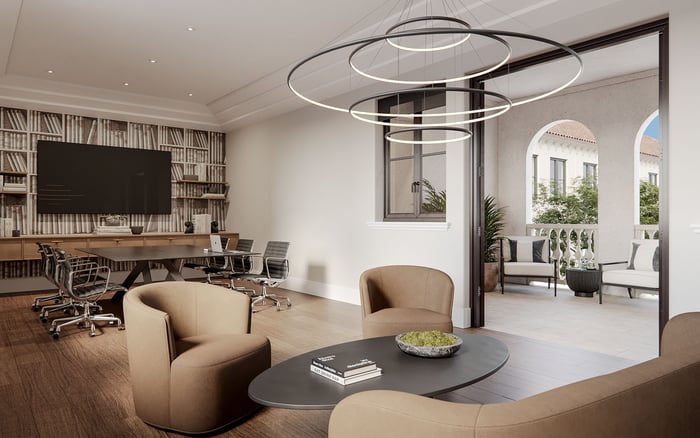
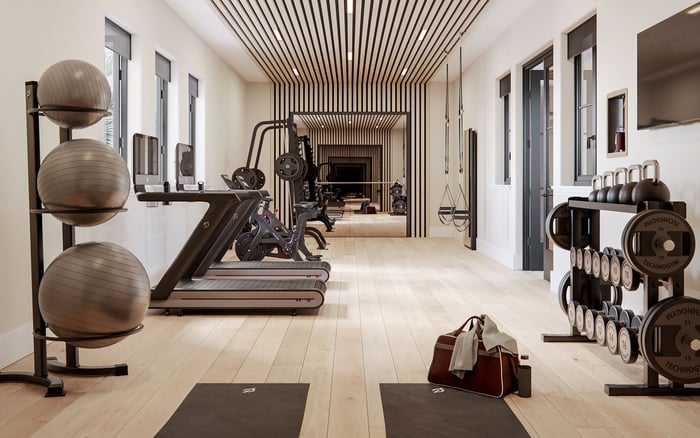
A buyer-oriented look at circadian lighting and air purification through the lens of comfort, health, and long-term value at Cora Merrick Park in Coral Gables.
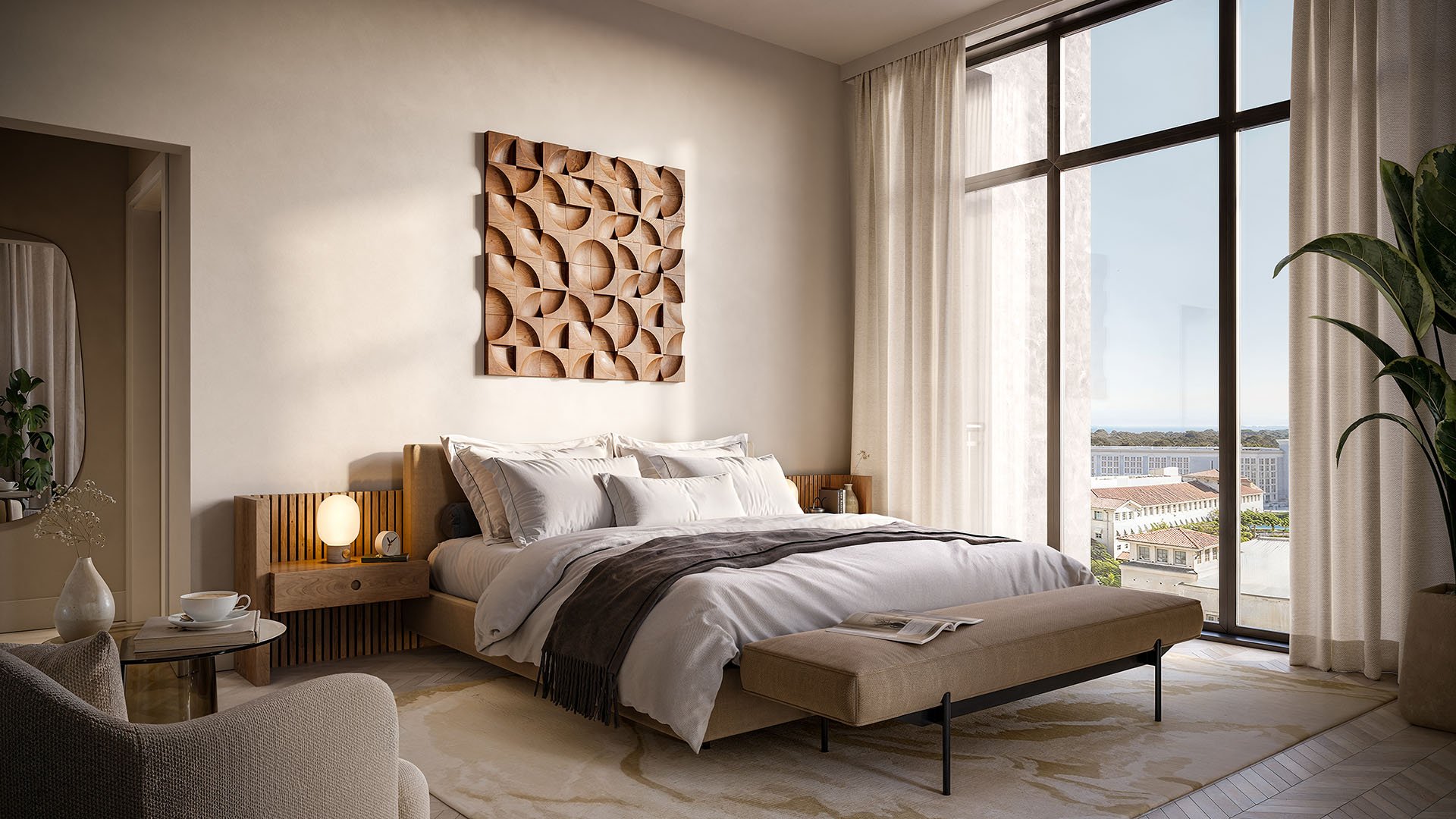
Wellness has evolved from a marketing adjective into a set of building decisions that can be inspected, specified, and maintained. In day-to-day living, two systems do more practical work than most amenity decks: the lighting that supports alertness and wind-down, and the mechanical system that delivers breathable, low-irritant air. For buyers evaluating Cora Merrick Park in Coral-gables, the smart move is not to chase a single headline feature, but to confirm that the building’s light and air strategies operate as engineered systems-not décor.
Circadian lighting is not simply “warm at night, cool in the morning.” It is a coordinated approach across spectrum, intensity, timing, and glare control, aligned with how residents actually use a home. Air purification is not just a filter rating; it is an ecosystem of filtration, ventilation, humidity control, source management, and serviceability. When these elements are executed well, the result is intentionally subtle: steadier sleep, fewer odors, less dust, and a home that feels consistently composed.
The most productive way to assess circadian lighting is to separate what is visible from what is verifiable.
1) Spectrum and tunability (what the LEDs can do).
Ask whether key fixtures support tunable white-and whether the range is meaningful for residential life: cooler tones for mornings and working hours, warmer tones for evenings. If the system is described as “tunable,” confirm it is tunable at the fixture and driver level, not only through a preset scene that still delivers essentially the same spectral profile.
2) Intensity and distribution (how light lands in the room).
A circadian-friendly plan depends on bright, comfortable morning light without harsh points of glare. Look for layered lighting: ambient (indirect or diffused), task (kitchen, vanity, desk), and accent. The litmus test is straightforward: can the home feel energized without reading clinical, and can it dim to intimate levels without becoming flat or shadowy.
3) Timing and automation (how the home behaves without effort).
The most effective circadian strategies are low-friction. Ask whether lighting scenes can follow a schedule, how easily residents can override them, and whether the interface is intuitive. A wellness system that demands constant tinkering is rarely used.
4) Glare and view management (the quiet metrics).
In South Florida, glare is an under-discussed circadian disruptor because it pushes residents to close shades and retreat into dim interiors. Evaluate window treatments, daylight control, and how the home balances view preservation with comfort.
Even when circadian features are not prominently advertised, strong residential lighting tends to present the same way: flattering skin tones, minimal flicker, and a home that transitions from day to night with clear intention.
Air quality conversations often collapse into a single number, but buyers are better served by thinking in “stacked controls.” The goal is to manage particulates, gases, and moisture while keeping noise and drafts low.
Filtration (particulates).
Ask what filters are used at the central system and, if applicable, at in-unit equipment. “High-efficiency” should translate into specifics: filter class, replacement intervals, and whether the system can handle higher-resistance filters without sacrificing airflow.
Ventilation (fresh air delivery).
Purification is not a substitute for outside air. The questions here are operational: how much outside air is introduced, when, and under what control logic. A well-ventilated building can keep interiors feeling crisp without relying on open windows that invite humidity swings.
Gas-phase control (odors and VOCs).
Many irritants are not captured by standard particulate filtration. Ask whether gas-phase media is used where appropriate-and what the maintenance plan looks like.
Humidity management (comfort and preservation).
In a coastal climate, humidity is a foundational metric. A residence can present pristine finishes and still feel “off” if humidity is unstable. Ask how the system manages latent load, particularly in shoulder seasons.
Acoustics and draft control (the luxury layer).
The best air systems are nearly invisible: quiet registers, balanced airflow, and no whistling returns. If a home sounds like it is working hard to breathe, it will not read as a sanctuary.
Luxury buyers increasingly treat wellness systems the way they treat elevators, waterproofing, and reserves: verify early, document, and understand ongoing obligations.
Commissioning and testing documentation.
If the building positions itself as wellness-forward, request commissioning records or performance checks tied to HVAC balancing, ventilation, and controls. For lighting, ask whether scenes or specifications were validated for flicker and dimming compatibility.
Sensor strategy.
If indoor air quality sensors are present, confirm what they measure (CO2, particulates, humidity, VOC proxies), where they are placed, and how residents access the information. A sensor that is tucked away and never referenced is functionally décor.
Maintenance protocols and access.
Purification depends on service. Ask how filters are replaced, who is responsible, and whether parts are readily available. In-unit systems that require specialized access or uncommon consumables tend to underperform over time.
Controls and resident experience.
Evaluate the interface: wall controls, app control, scheduling, and guest modes. A premium experience is calm and predictable-not complicated.
This is the moment to be politely rigorous. The building may be excellent, but excellence in light and air is typically demonstrated through specifics.
In Coral-gables, buyers often prioritize architectural coherence, privacy, and a composed day-to-day living experience. That makes circadian lighting and air quality especially relevant, because they shape the feel of the home more than the spectacle of the amenity deck.
For context, it can be useful to compare buyer mindset in nearby urban and waterfront districts where different stressors dominate. In Brickell, for example, the conversation often centers on vertical living logistics and urban exposure; in that frame, wellness strategies tend to emphasize airtightness, controlled ventilation, and lighting that offsets screen-heavy routines. If you are benchmarking lifestyle and systems across neighborhoods, properties such as 2200 Brickell and 888 Brickell by Dolce & Gabbana can help clarify what “high-design” lighting packages and premium mechanical expectations often look like in today’s new-construction positioning.
Meanwhile, coastal buildings introduce their own variables: salt air, humidity, and the desire to keep interiors serene even when the environment is not. When you look at how oceanfront projects frame comfort, you will often see heightened attention to humidity control, corrosion considerations, and the quiet performance of mechanical delivery. That lens can be useful when thinking about how Cora Merrick Park should perform day-to-day, even though its setting and lifestyle orientation are distinct.
You do not need lab equipment to spot the difference between a wellness narrative and a wellness system. On a private tour, use these observations as proxies.
Lighting, daytime:
Stand near windows and look inward. Do you see balanced illumination deeper into the room, or harsh contrast that makes you want to close shades? Check whether kitchens and baths avoid sharp glare on reflective surfaces.
Lighting, evening:
Dimming quality matters more than maximum brightness. Watch for stepping, flicker, or color shifts as lights dim. A luxury lighting system should dim smoothly and remain flattering.
Air, acoustics:
Pause with the HVAC running. Listen for hiss, rumble, or vibration. Premium air delivery should be low-noise and even.
Air, freshness:
Note whether the home smells “new,” “perfumed,” or simply neutral. Overly scented environments can sometimes mask ventilation or material off-gassing concerns.
Comfort, humidity cues:
Are surfaces cool and clammy, or comfortably neutral? Do closets and bathrooms feel aired out? These small signals often correlate with larger mechanical performance.
Even when a project does not publish granular wellness statistics, the best residences typically share a disciplined philosophy: make the body feel calm without announcing the machinery. In a refined Coral Gables context, that can mean prioritizing glare-free daylight control, evening lighting that is genuinely restful, and air delivery that is both clean and quiet.
If you are cross-shopping within the immediate area, it is also worth noting how nearby residential options express “comfort engineering” in different ways. Ponce Park Coral Gables provides a natural neighborhood comparator for how new residential offerings in the Gables translate lifestyle into specifications and day-to-day livability.
And if your lifestyle extends between submarkets, comparing how buildings articulate wellness can sharpen your questions. In Coconut Grove, for instance, the narrative often leans into greenery, walkability, and indoor-outdoor rhythm, which changes what good lighting and fresh air feel like in daily use. A project such as The Well Coconut Grove can be a helpful reference point for how explicitly wellness-centered positioning is presented to buyers.
In the ultra-premium segment, finishes and views get photographed; comfort gets remembered. Circadian lighting and air purification are particularly value-relevant because they influence retention and resale in ways that do not depend on trend cycles. A home that sleeps well, reads well at night, and feels fresh year-round tends to earn loyalty.
From a buyer’s standpoint, the objective is not to chase buzzwords. It is to confirm that the building’s systems support your actual routines: early mornings, late dinners, travel schedules, hosting, and the simple desire to feel restored at home.
What does “circadian lighting” mean in a residential setting? It typically refers to lighting that shifts warmer and dimmer in the evening and cooler and brighter earlier in the day to support natural daily rhythms.
Do I need tunable-white fixtures to benefit from circadian design? Not always; excellent daylight control, warm evening scenes, and low-glare layering can achieve much of the same lived effect.
What should I ask to verify air purification in a condo? Ask about filtration type, outside-air ventilation strategy, humidity control, and the filter replacement plan.
Is a high-efficiency filter enough to ensure clean air? Filtration helps with particulates, but ventilation, humidity management, and source control also matter for overall air quality.
Why does CO2 come up in air-quality conversations? CO2 is often used as a practical indicator of ventilation effectiveness and perceived “stale air,” especially in occupied spaces.
Can air systems be “too loud” even in luxury buildings? Yes; duct design, register selection, and fan settings can create noise that undermines the sense of calm.
What lighting issues are most noticeable on a walkthrough? Glare, poor dimming performance, and unflattering color quality are the most immediately visible signs.
How does humidity affect a luxury interior? Unstable humidity can make spaces feel uncomfortable and may stress certain materials over time.
Should I expect building-wide wellness features at Cora Merrick Park? It is reasonable to ask what is provided at the building level versus inside each residence, and how performance is maintained over time.
How do I compare wellness features across neighborhoods like Coral Gables and Brickell? Compare the verifiable basics: lighting control, ventilation and filtration details, humidity stability, and the ease of daily operation.
When you're ready to tour or underwrite the options, connect with MILLION Luxury.
If branded residences are on your mind — as a home or as an allocation — we would be glad to share what we are seeing, privately.
Begin a quiet conversation