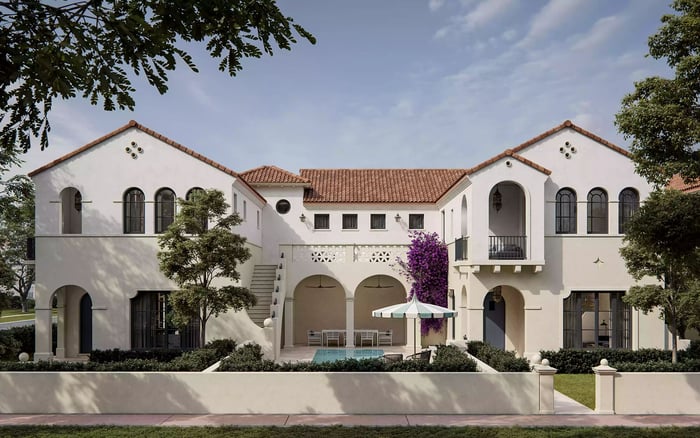
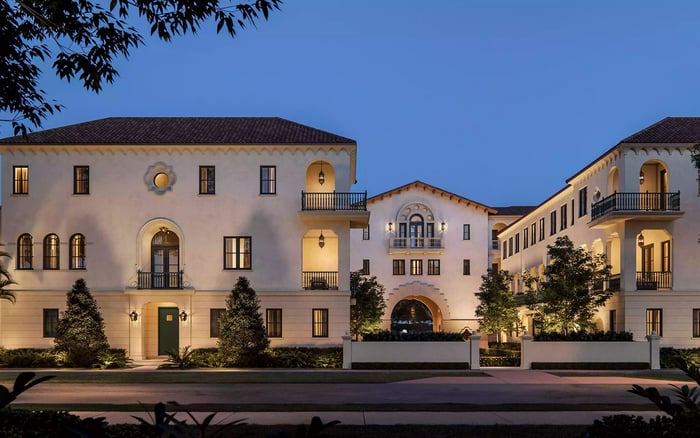
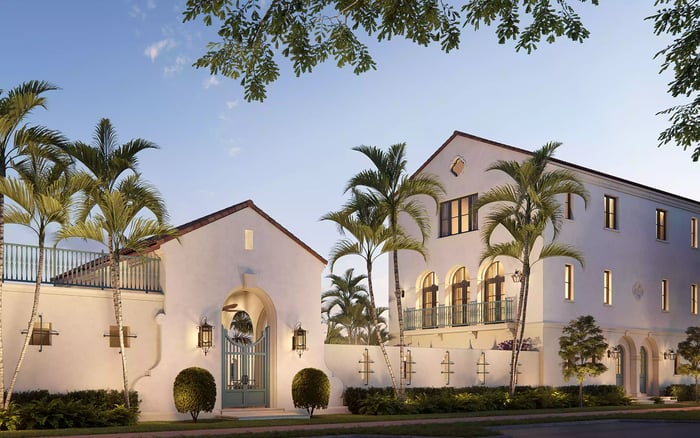
In Coral Gables, a buyer’s daily experience is often defined by what sits at street level: a stitched-together village of storefronts and courtyards, or a more contemporary, master-planned mix where residences, dining, and errands share a single, efficient ecosystem. The Village at Coral Gables and Cora Merrick Park both place luxury living within walking distance of the city’s best routines, but they do so with very different design instincts. This editorial looks at the choice through the lens that matters most to end users and long-term owners: how architecture, retail placement, and pedestrian cadence shape privacy, noise, resale psychology, and the simple pleasure of coming home.
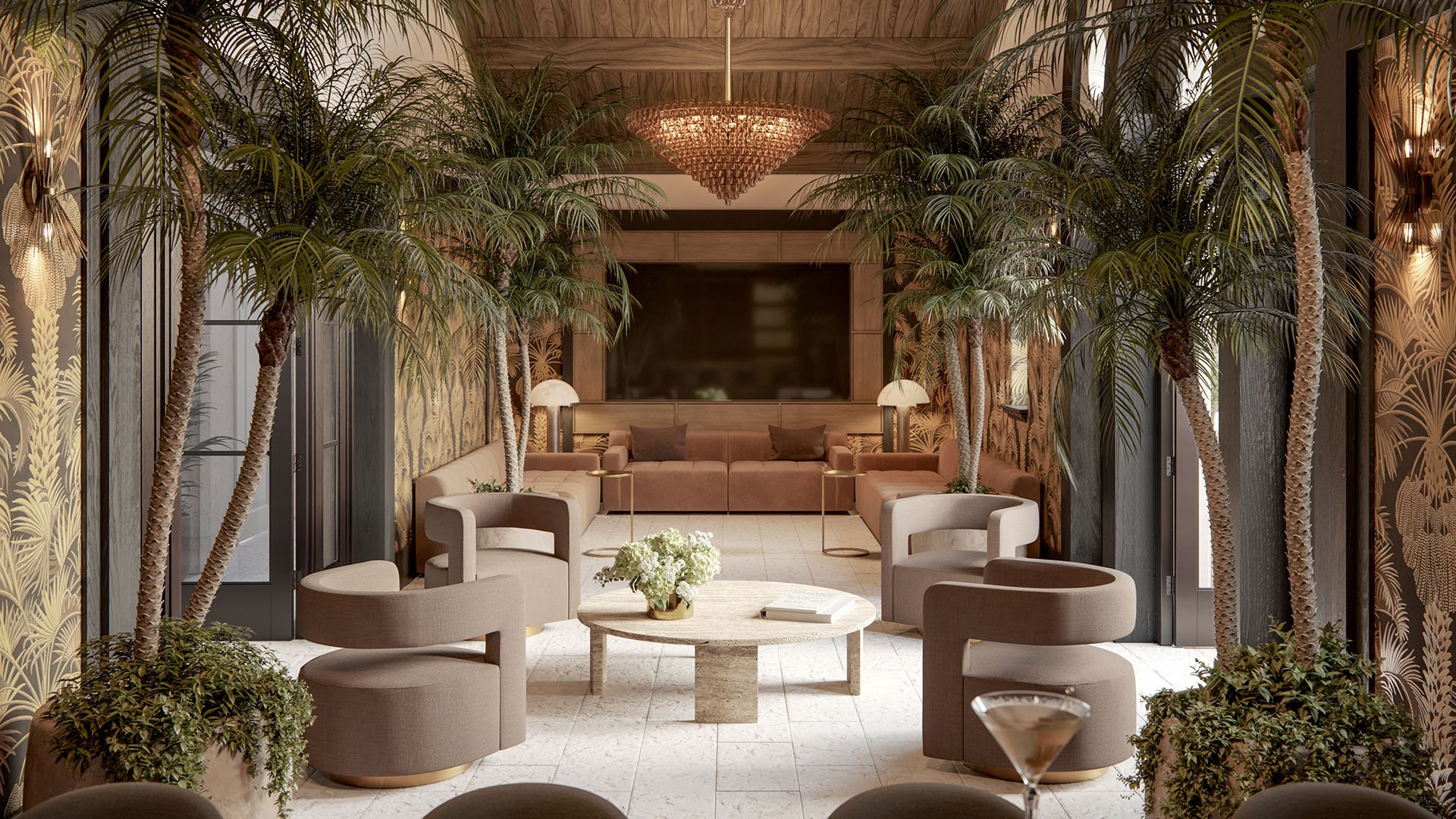
Both The Village at Coral Gables and Cora Merrick Park deliver a distinctly Coral Gables promise: a life where errands, dining, and culture feel adjacent rather than scheduled. The lived experience, however, diverges quickly.
One model is heritage-forward-architecture that feels accumulated over time, with storefronts and passages that invite a slower pace and unplanned stops. The other is modern retail integration: a deliberately composed environment where residential entries, lobby transitions, parking, and food-and-beverage are designed to work together with fewer points of friction.
In luxury terms, this is more than aesthetic. It is about how often you will move through the neighborhood on foot, how present the public realm feels from inside your home, and how the property will read to future buyers who may define “walkability” differently than you do.
Heritage architecture, when executed well, does what modernity often resists: it makes the everyday feel ceremonial. A Mediterranean-leaning façade, an arcade, a courtyard sequence, and smaller-scale storefront rhythms can project a sense of permanence-an idea that aligns with how many buyers think about Coral Gables as a legacy address.
For residents, the appeal is less about novelty and more about texture. You are choosing a setting that rewards moving slowly: meeting a friend, picking up a small item, lingering in a shaded passage. At its best, the “village” concept creates micro-moments of privacy in public-being out in the city without feeling on display.
There is also a resale advantage in the psychology of it. Many buyers will tolerate minor functional inconveniences in exchange for a timeless, place-specific atmosphere. In a market where new buildings can read as interchangeable, character becomes its own form of scarcity.
If you are comparing nearby options in the same city, it can help to look at other Coral Gables projects that similarly position lifestyle as an architectural experience, such as Ponce Park Coral Gables, where the conversation also tends to revolve around walkable routines and how public space meets the front door.
Modern retail integration prioritizes choreography. The question is not only “Is it charming?” but “Does it perform?” This approach typically favors cleaner separations between public and private zones, more legible arrival sequences, and a tighter relationship between resident parking, elevators, and daily conveniences.
For many luxury buyers-especially those managing demanding schedules-integrated retail is not about being surrounded by activity. It is about controlled access to it. The ideal is to step out for a coffee, a reservation, or a last-minute purchase without turning it into a production, then return to a quieter, secured residential realm.
Cora Merrick Park fits naturally in this frame, where the retail component is part of the lifestyle proposition rather than an incidental streetscape. If you value predictability over surprise, and efficiency over wandering, this design philosophy can feel more “luxury” in day-to-day practice.
When buyers say they want “shops downstairs,” they often mean something more precise: the option of activation, without having to live inside it.
Three practical filters help separate a great mixed-use environment from a merely busy one:
The best buildings protect the arrival moment. Ideally, you move from street to lobby with minimal overlap with restaurant queues, delivery traffic, or late-night footfall.
Trash, loading, and food delivery are the unglamorous determinants of daily serenity. Even the most beautiful heritage environment can lose its “boutique” feel when service circulation is handled poorly.
A place that feels charming at 11 a.m. can feel performative at 11 p.m., or vice versa. Ask yourself: do you want your building’s ground floor to be a destination after dark, or do you prefer a quieter perimeter?
These questions are not unique to Coral Gables. In more intensely urban submarkets like Brickell, buyers routinely weigh the convenience of integrated amenity ecosystems against the desire for a calmer residential envelope-a tension you also see in buildings like 2200 Brickell and 888 Brickell by Dolce & Gabbana, where lifestyle and street energy can be part of the address’s value proposition.
The most important differences between heritage-forward villages and modern integrated projects are often invisible in a rendering.
Acoustics and vibration.
Restaurants, fitness concepts, and even high-turnover retail can transmit sound differently depending on slab design, ceiling assemblies, and mechanical placement. A beautiful streetscape is not a guarantee of quiet bedrooms.
Lighting and sightlines.
Heritage environments can create romantic, intimate lighting-but also more complex sightlines. Modern integration can feel brighter and more transparent, which some buyers read as safer and others read as less discreet.
Security posture.
Mixed-use can be either remarkably secure or surprisingly porous; it comes down to access control and how it is designed. Look for a lobby that feels like a destination, not a corridor.
In coastal markets, similar trade-offs show up in a different outfit. Oceanfront living can offer extraordinary serenity, but the public realm can intensify around peak seasons. A project like 57 Ocean Miami Beach illustrates how luxury often hinges on managing the transition between an active exterior environment and a protected interior calm.
A useful way to decide between The Village at Coral Gables and Cora Merrick Park is to map your week-not your mood.
If your ideal day includes lingering:
You may value the Village model. Heritage architecture supports a slower tempo, and the mental shift from work to leisure can begin the moment you step outside.
If your ideal day includes efficiency:
You may prefer modern retail integration. A more direct path from car to home to dinner reservation can reduce the “small frictions” that accumulate over time.
If you host frequently:
Consider guest arrivals and after-hours behavior. Is there an intuitive drop-off? Will friends feel comfortable locating the entry at night? Is the building’s social energy aligned with the kind of evenings you enjoy?
If you travel often:
Integrated environments can be easier to “lock and leave,” particularly when service, security, and access are designed as a cohesive system.
For end users, the decision is personal. For owners thinking about future liquidity, it is also strategic.
Heritage-forward environments can be emotionally durable. They photograph well, communicate identity quickly, and often attract buyers who value place-making and are less price-sensitive about minor functional compromises.
Modern integration can be functionally durable. It aligns with evolving expectations around convenience, wellness routines, and frictionless services. The buyer pool can be broader, including those who want Coral Gables prestige within a more contemporary lifestyle framework.
The key is to avoid treating either option as a proxy for “old versus new.” Luxury buyers increasingly demand both: the romance of a neighborhood and the performance of a well-run building. Your decision should hinge on which of those two qualities you cannot live without.
When you visit either environment, treat the first 10 minutes as a diagnostic.
Stand at the residential entry and watch movement patterns. Do you see congestion points? Do deliveries feel contained?
Listen before you look. Sound is often the tell. If you can hear the street’s rhythm in a place meant to feel insulated, you will hear it at home.
Walk the perimeter at a different time of day than your scheduled tour. The truth of mixed-use reveals itself in transitions: afternoon to evening, weekday to weekend.
This is where “heritage” and “integration” become real, not theoretical. You are not choosing a façade. You are choosing a daily soundtrack.
Which is better for a quiet, private lifestyle: The Village at Coral Gables or Cora Merrick Park? It depends on how retail is separated from residential access; tour at night to gauge noise and foot traffic.
Does heritage architecture typically hold value better than modern mixed-use design? Heritage styling can be emotionally timeless, while modern integration can remain competitive through convenience.
What should I ask about retail when considering a mixed-use luxury residence? Ask how loading, deliveries, trash, and after-hours operations are routed and managed.
Is walkability always a positive for luxury buyers? Walkability matters most when it is paired with privacy, controlled access, and a calm residential entry.
How can I tell if ground-floor restaurants will impact my unit? Spend time near the lobby and residential corridors and listen for bass, HVAC, and late-night activity.
Are modern integrated projects easier to live in day-to-day? Often, yes-because arrival, parking, and amenity access are designed as one coordinated system.
Do buyers in Coral Gables generally prefer classic or contemporary design? Demand exists for both; many buyers decide based on lifestyle cadence more than pure aesthetics.
What matters more: the architecture or the tenant mix? Tenant mix can change over time, but the building’s circulation, separation, and acoustics stay with you.
Should investors prioritize retail integration for rental demand? Convenience can support rental appeal, but privacy and management quality remain decisive.
How should I schedule tours to compare both fairly? See each once in daylight and once after dark to understand how the public realm behaves.
If you'd like a private walkthrough and a curated shortlist, connect with MILLION Luxury.
If branded residences are on your mind — as a home or as an allocation — we would be glad to share what we are seeing, privately.
Begin a quiet conversation