A discreet buyer’s guide for families moving from mountain-house scale to South Florida condominium living, with a focus on Coral Gables, Coconut Grove, Brickell, privacy, service, schools, storage and long-term fit.
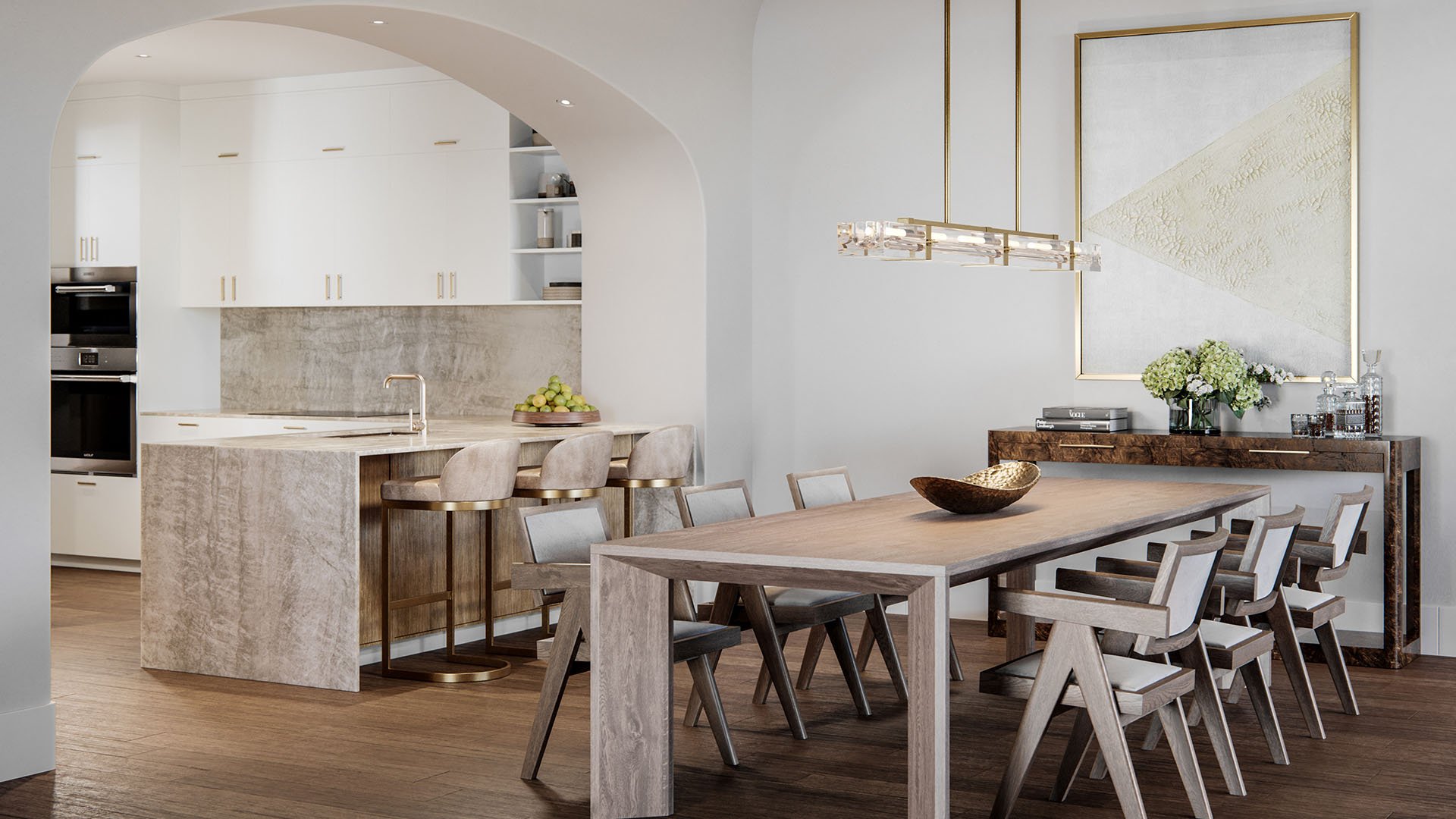
For an Aspen family considering Coral Gables, the first decision is often framed too narrowly. This is not simply a move from a private home to a condominium. It is a move from one kind of scale to another. Mountain-house living offers separation, storage, seasonal rituals and a strong sense of arrival. A successful South Florida condominium must translate those comforts into a vertical residence without losing privacy, rhythm or ease.
That is why family-scale condos require a different lens than trophy pied-à-terres. The right residence must absorb school mornings, visiting grandparents, sports equipment, pets, household staff, remote work and quiet evenings at home. It should feel composed when full, not merely impressive when empty.
For buyers using an initial filter, the essential point is simple: square footage is only the opening line. Floor-plate intelligence, elevator experience, service culture, parking choreography, acoustic privacy and neighborhood fabric matter just as much.
Coral Gables appeals to families because it offers a more residential temperament than many coastal or urban districts. The neighborhood conversation tends to revolve around tree-lined streets, private clubs, schools, restaurants, culture and daily convenience rather than spectacle. For an Aspen buyer accustomed to beauty with restraint, that emotional register can feel familiar.
Within that setting, projects such as Cora Merrick Park, Ponce Park Coral Gables and The Village at Coral Gables are worth studying not as interchangeable options, but as distinct answers to the same question: how should a family live when it wants the lock-and-leave advantages of a condo while preserving the emotional logic of a home?
The buyer should walk the neighborhood at the hours the family will actually use it. Morning school departures, late-afternoon activities, weekend meals and evening returns reveal more than a polished tour. The best building is the one that makes ordinary days feel gracious.
Before comparing buildings, define what family-scale means for your household. For some buyers, it means multiple bedrooms and a den that can close off for focused work. For others, it means a generous kitchen, two living zones, substantial closets, deep terraces or an entry sequence that separates guests from family life.
A family moving from Aspen should pay particular attention to storage. Seasonal equipment changes, but the need for storage does not disappear. Golf bags, paddle gear, beach items, holiday decor, luggage, strollers, bicycles and children’s sports equipment all require a plan. If the residence looks immaculate only because everything has been edited out, it may not perform in real life.
Study the route from car to residence. Is there a private or semi-private elevator experience? Can children, groceries, pets and guests move through the building without friction? Does the arrival feel calm during peak hours? In luxury family living, the invisible choreography is often the greatest amenity.
A beautiful plan is not always a livable plan. Families should look beyond the marketing image and test the residence room by room. Where will backpacks land? Where does a guest sleep without disrupting the children? Can one parent take a call while another hosts dinner? Is the primary suite meaningfully separated, or merely oversized?
Flow matters. A family-scale condo should allow public and private zones to operate independently. Bedrooms should not all open directly into the entertaining area. Kitchens should be handsome enough to host yet practical enough for breakfast before school. Laundry should be placed where life actually happens, not hidden so far away that daily use becomes inconvenient.
Terrace depth is another subtle test. A narrow ledge may photograph well, but a usable outdoor room changes the way a family lives in South Florida. Shade, wind, furniture placement and access from the main living spaces all deserve attention.
Private-school planning should begin before the building shortlist is final. Commute patterns can reshape the value of a residence, especially when children are in different schools or activities. A condo that appears ideal on a weekend may feel less elegant during weekday traffic if the family’s daily map has not been tested.
The same is true of clubs, marinas, medical appointments, tutors, sports, grandparents and airport access. Luxury is not merely what happens inside the residence. It is the reduction of avoidable friction across the week.
For some families, Coconut Grove belongs in the same conversation as Coral Gables because it offers a village-like environment with a distinct waterfront and garden character. A buyer comparing the two might study Four Seasons Residences Coconut Grove as part of a broader view of how low-key sophistication, service and neighborhood texture can coexist.
Brickell is not the default answer for every family, but it should not be dismissed automatically. For parents who prize walkability, restaurants, office proximity, cultural energy and full-service living, Brickell can be compelling. The trade-off is density. Some families welcome that intensity, while others prefer the softer cadence of Coral Gables or Coconut Grove.
A project such as 2200 Brickell can be evaluated through the same family-scale lens: not only the residence, but the path to the car, the school run, guest parking, pet routines, sound separation and after-hours building atmosphere.
The right Brickell choice is rarely about skyline alone. It is about whether urban convenience genuinely improves family life or simply adds another layer of stimulation. A buyer coming from Aspen should be candid about the household’s tolerance for movement, traffic, energy and proximity.
In a single-family home, privacy is controlled by gates, landscaping, staff and distance. In a condominium, privacy is designed through systems. Elevators, lobby scale, staff training, package handling, guest registration, valet flow and amenity access shape how discreet the building feels.
Families should ask how the building behaves on holidays, during school vacations and at peak guest moments. A quiet weekday tour may not reveal the full pattern. Pet policies, children’s use of amenities, contractor access and household staff protocols should all be reviewed carefully.
This is where boutique scale can be powerful, but only if the service structure is mature. A smaller building may feel intimate, while a larger building may offer deeper staffing. Neither is inherently better. The correct choice depends on the family’s expectations, travel patterns and appetite for visibility.
Some buyers will discover that the ideal answer is not a conventional tower residence. A Townhouse format or hybrid residence can offer more direct entry, layered outdoor space and a stronger sense of house-like separation. Others will prefer a high-floor condo for light, views and security.
The key is to decide what must be private and what can be shared. Pools, gyms, lounges and wellness areas can be shared beautifully when the private residence is complete enough on its own. If the family depends on common areas to compensate for an undersized floor plan, the fit may weaken over time.
Think in seasons of life. Children grow. Grandparents visit. Work patterns shift. A residence that feels slightly generous today may feel just right in five years, while a tightly optimized plan can become frustrating quickly.
Approach each tour as a rehearsal. Arrive with the family’s real needs, not a generic luxury checklist. Ask about parking allocation, storage options, guest procedures, delivery handling, pet circulation, service elevators, noise transfer, terrace usability, insurance considerations, association rules and future resale audience.
Walk the garage. Stand in the elevator lobby. Open every closet. Measure the breakfast area. Consider where holiday guests will sit, where luggage will go and how the residence feels after sunset. True luxury reveals itself in repetition.
For Aspen buyers, the best South Florida condo is not the one that imitates a mountain home. It is the one that preserves the family’s standards while embracing a different climate, architecture and daily rhythm.
What makes a condo family-scale rather than simply large? A family-scale condo has functional zoning, storage, privacy and service flow that support daily household life, not just generous square footage.
Is Coral Gables a strong fit for families relocating from Aspen? Coral Gables can appeal to buyers who want a residential setting, mature neighborhood character and a calmer alternative to denser urban districts.
Should school planning come before choosing a building? Yes. School routes, activity schedules and commute tolerance can quickly determine whether a residence feels convenient or cumbersome.
Can Brickell work for a family with children? It can, especially for families that value walkability and full-service urban living, but the building and daily logistics must be tested carefully.
How important is storage in a luxury condo? It is critical. Families often underestimate the space required for sports gear, luggage, seasonal items, pets and household supplies.
Are boutique buildings better for privacy? Not always. Boutique scale can feel intimate, but privacy also depends on staffing, elevator design, guest procedures and resident culture.
Should buyers prioritize views or floor plan? For a primary family residence, floor plan usually deserves priority because it affects daily life more consistently than the view alone.
What should Aspen buyers look for during a tour? They should rehearse real routines, including school departures, grocery arrivals, guest visits, pet walks and evening returns.
Is a Townhouse-style residence a good compromise? It can be, particularly for buyers who want more separation, directness and house-like living while retaining condominium convenience.
How can a buyer compare Coral Gables and Coconut Grove? Compare daily rhythm, school access, waterfront preferences, dining habits and the level of neighborhood energy the family wants.
To compare the best-fit options with clarity, connect with MILLION.
If branded residences are on your mind — as a home or as an allocation — we would be glad to share what we are seeing, privately.
Begin a quiet conversation