For Latin American buyers, South Florida condominium security should be reviewed as part of legal, operational, and lifestyle due diligence before signing or before review periods expire.

For Latin American buyers, South Florida offers a compelling mix of lifestyle, waterfront living, branded hospitality, and global connectivity. Yet one of the most consequential questions is often asked too late: how does the building actually control access, risk, privacy, and emergency operations?
The answer matters because luxury presentation is not the same as security performance. A dramatic lobby, attentive valet, and polished concierge desk may create a feeling of order, but the real protections sit in protocols, contracts, records, staff training, technology, insurance, and board governance. For families buying from Latin America, the issue is not whether a building feels safe during a tour. It is whether the building’s systems support the way the household intends to live.
This is especially relevant in condominium purchases, where an owner joins a governed community. The rules may determine how guests are approved, how vendors enter, how drivers wait, how packages are handled, whether private staff can move through service areas, and how personal security personnel are treated. A buyer who expects a private routine may discover that the association’s procedures carry more weight than individual preference.
Security questions belong at the front of due diligence, not after a deposit becomes psychologically or legally difficult to revisit. Purchase agreements and condominium document-review periods can involve important deadlines, so security protocols should be raised before signing or immediately when condominium documents arrive.
The most useful documents are not always glamorous. Governing documents, bylaws, rules, meeting minutes, financial records, insurance materials, and available service contracts can reveal how a building is actually managed. They may show whether staffing is stable, whether security is handled by employees or third-party vendors, how the board supervises access-control expenses, and whether recurring operational concerns appear in meeting records.
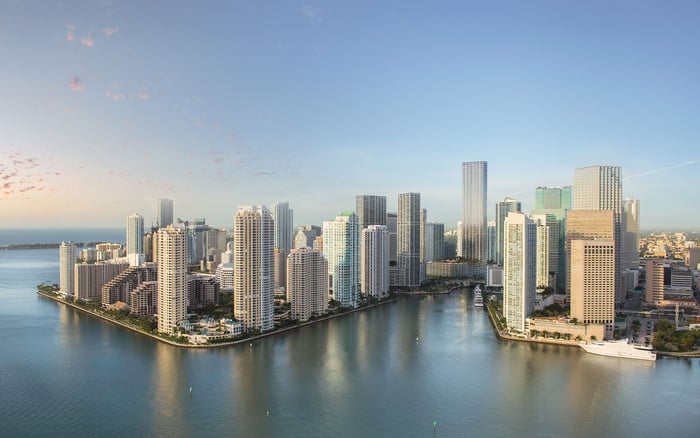
In Brickell, for example, buyers comparing highly serviced towers such as The Residences at 1428 Brickell should look beyond skyline views and amenity design. They should ask who controls visitor authorization, how elevator access is programmed, whether cameras are monitored live or reviewed only after an incident, and whether valet or loading-dock access is governed by written procedure.
Latin American buyers often purchase with a broader household ecosystem in mind. Relatives may visit for extended stays. Drivers, nannies, assistants, tutors, private chefs, yacht crew, nurses, pet staff, and personal security details may need recurring access. Some buyers also maintain homes across countries, which means the residence may be occupied by family members or staff while the principal owner is abroad.
Condominium bylaws and association rules can regulate guest and vendor access, use restrictions, board authority, and owner obligations. That can be positive when protocols are clear and consistent, but problematic when expectations are assumed rather than confirmed. A building may require advance registration, identification, digital credentials, service-elevator routing, package-room procedures, or limits on who can be added to an owner’s access list.
There is also a fairness boundary to understand. Visitor screening and resident-access protocols should be applied consistently and lawfully, including without discriminatory treatment. Well-run buildings should be able to explain how they balance privacy, screening, fair treatment, and resident convenience.
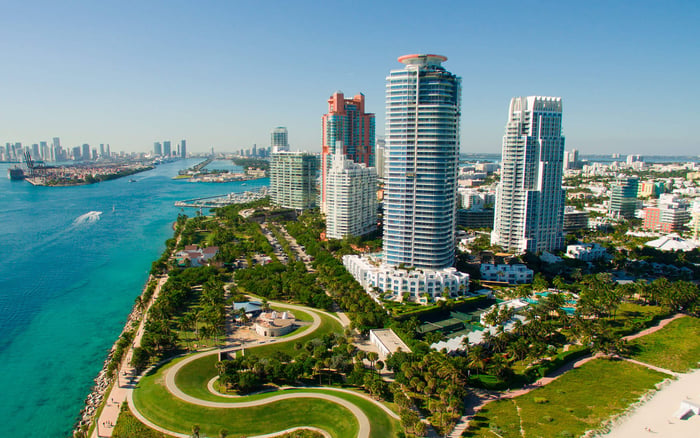
For Miami Beach buyers evaluating privacy-oriented residences such as The Perigon Miami Beach, the central question is not whether access is restrictive. It is whether access is predictable, documented, and compatible with the household’s real-world rhythm.
A building may describe its personnel as security, concierge, patrol, front desk, gatehouse, access control, or hospitality. Those words are not interchangeable. Buyers should ask what each team is responsible for, who supervises them, whether any role requires credentials, and how duties change between daytime, overnight, weekends, and storm conditions.
This distinction matters. A concierge may be excellent at hospitality but not assigned to patrol or incident response. A valet team may control a sensitive point of entry without being responsible for surveillance. A gatehouse may verify visitors but not patrol garage areas. A roving patrol may observe rather than intervene. None of these structures is inherently wrong, but the buyer should understand the model before assuming a level of protection.
Questions should be direct and calm: Who employs the security personnel? Is the association contracting with an outside provider? Are contracts and bids available for review within association records? Who supervises the vendor? How are incidents logged? How often are post orders updated? What happens when a staff member calls out sick? What is the overnight staffing plan?
In Sunny Isles Beach, where vertical living and high-profile ownership can heighten expectations, buyers considering towers such as St. Regis® Residences Sunny Isles should distinguish between service prestige and verifiable security operations. The same discipline applies across waterfront properties, from oceanfront condominiums to bayfront enclaves.
Luxury buildings increasingly rely on smart infrastructure. Access control, cameras, elevators, lighting, HVAC, parking systems, package rooms, and amenity reservations may be connected through building automation. That convenience introduces digital and operational risk.
A buyer does not need to become a technologist, but the questions should be specific. Who issues and revokes digital credentials? Can former staff, former vendors, or short-term guests retain access if credentials are not removed correctly? Are elevator permissions tied to unit ownership, lease status, or manual approval? Who can see camera feeds? Are cameras monitored in real time? Is there a written response plan if systems fail or are compromised?
The more seamless a building feels, the more important it is to know who controls the invisible layer. A biometric reader, fob, license-plate system, or app-based credential is only as secure as its administration. For buyers who travel frequently, digital access governance may be as important as lobby staffing.
In South Florida, security is not limited to crime prevention. Hurricane preparation, evacuation procedures, power continuity, staffing, communications, garage protection, elevator protocols, and post-storm re-entry can all affect family safety and property risk. Waterfront or high-rise buyers should confirm how their specific building responds before a storm, during an outage, and after authorities allow residents to return.
Ask whether the building has generator contingencies, how critical systems are prioritized, which services continue when elevators are limited, how residents receive communications, and whether management has a written plan for vendors and emergency personnel. Also ask how access is controlled after a storm, when contractors, adjusters, domestic staff, family members, and delivery services may all be trying to enter at once.
For buyers looking at island or resort-style living, such as The Residences at Six Fisher Island, emergency access and re-entry protocols should be reviewed with the same seriousness as finishes, floor plans, and views.
Before signing, or during the document-review window, request a clear explanation of the building’s access-control structure. Confirm who approves visitors, who can override access decisions, how repeat vendors are registered, how packages are stored, how garages are monitored, and whether incident logs or summaries can be discussed. Ask management and advisors to help compare the building’s procedures with the household’s actual routine.
Review insurance-related records and ask how incidents in common areas, garages, amenities, and access points are handled. A beautiful pool deck, private dining room, spa, or children’s room is still part of a shared risk environment. Governance quality often appears in the details: documented procedures, consistent enforcement, vendor accountability, and calm communication.
The core principle is simple. Do not buy the impression of security. Buy into a building where the protocols, people, records, technology, and emergency planning align with the way your family actually lives.
Should Latin American buyers ask security questions before signing a condo contract? Yes. Security questions should be raised before signing or during the document-review period, when the buyer may still have meaningful leverage.
Does a luxury brand guarantee strong building security? No. Luxury branding can signal service quality, but buyers should still verify staffing roles, access rules, technology controls, and emergency plans.
What condo documents can reveal security operations? Governing documents, bylaws, rules, meeting minutes, insurance records, financial records, and available service contracts can help show how the association operates.
Why do guest rules matter for international families? Many buyers rely on relatives, drivers, nannies, assistants, chefs, or private staff, and building rules may regulate how those people enter.
Should buyers ask about security credentials or training? Yes. Buyers should understand what each staff role is authorized to do, how personnel are trained, and who supervises access-control procedures.
Are concierge staff and security personnel the same thing? Not necessarily. Concierge staff may provide hospitality and access assistance, while security personnel may have different duties and response expectations.
What should buyers ask about cameras? Ask whether cameras are monitored live, who can access recordings, how footage is handled, and what happens after an incident.
Do smart-building systems create security risks? Yes. Digital credentials, elevators, cameras, and building automation can create risk if access and incident response are not well managed.
Why are hurricane protocols part of security due diligence? Storms affect evacuation, staffing, power, elevators, communications, re-entry, and vendor access, all of which influence safety and continuity.
Can a buyer impose private security routines after closing? Only if those routines comply with condominium rules, association authority, and lawful, consistent access procedures.
For a discreet conversation and a curated building-by-building shortlist, connect with MILLION.
If branded residences are on your mind — as a home or as an allocation — we would be glad to share what we are seeing, privately.
Begin a quiet conversation