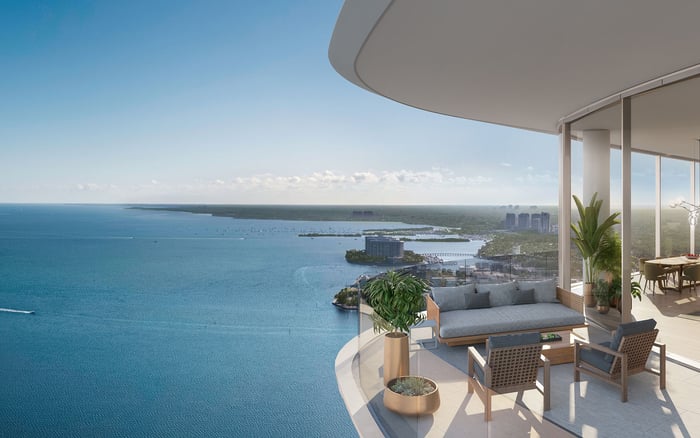
In Miami’s luxury condominium market, “best floor” is less a number than a lifestyle decision. The premium for height is real, but it is earned through view corridors, daylight, privacy, and the daily mechanics of vertical living. This guide maps the trade-offs buyers actually feel, from elevator friction and wind exposure to balcony durability and emergency planning, so you can choose a level that matches your priorities and risk tolerance.

In a city defined by waterlines and glass towers, floor selection is one of the most consequential decisions a luxury buyer makes. In Miami, height is not simply a status marker-it’s a bundle of performance characteristics: view quality, daylight, breeze, acoustics, privacy, elevator time, exposure to wind and storms, and even how your home feels on a gusty evening.
The market prices that bundle accordingly, often with meaningful differentials. Scenic, unobstructed views can lift value by roughly 1% to 2.5%, and in vertical markets, floor level itself has been modeled at around a 1% value change per floor before isolating pure “view” effects. Translation: two homes with similar interiors can sit in very different value lanes simply because one captures a cleaner horizon.
For South Florida’s ultra-premium buyer, the more useful question isn’t “highest floor possible?” It’s “highest-quality daily experience with the lowest friction.”
Miami’s luxury skyline isn’t uniform. A 20th-floor residence can read like a penthouse if it clears surrounding rooftops and frames open water. Meanwhile, a 40th-floor home can still look straight into another tower if it lands in the wrong corridor.
Many buyers pay for height when what they truly want is an unobstructed composition: an ocean band, bay sparkle, or a sunset skyline that won’t be interrupted by the next construction cycle. When you tour, go to the glass at different times of day. Focus on what can’t be designed later: distance to the horizon, the angle away from neighboring windows, and whether key sightlines stay clean when you shift three steps left or right.
In neighborhoods like Brickell, the calculus can be especially sensitive to future development. If your primary motivation is a long, cinematic view, prioritize towers with a stronger likelihood of maintaining open corridors. For example, buyers comparing new urban high-rises often cross-shop residences such as 2200 Brickell and evaluate how the unit’s orientation-not just its elevation-performs day to day.
There’s a reason seasoned condo owners often gravitate to a mid-high range rather than the absolute top. Upper floors typically deliver stronger daylight and ventilation than lower levels, and brighter interiors aren’t merely aesthetic. Daylight exposure supports circadian rhythm and can improve mood through serotonin-related pathways-a meaningful lifestyle advantage if you spend substantial time at home.
But height brings its own trade-offs. Above roughly 30 floors, daily life becomes more elevator-dependent, and peak-time congestion can introduce small but cumulative friction. Building teams can mitigate waits with destination dispatch and zoning, yet performance still depends on how the tower is programmed, occupied, and trafficked.
For many, the “best” floor is the one that feels elevated enough to clear street noise and visual clutter, while remaining low enough to preserve easy entry and exit. The exact sweet spot is building-specific, but the logic holds: mid-high floors often deliver the best balance of privacy, view, and logistics.
Luxury buyers notice elevator design the way car enthusiasts notice steering feel. The number of cabs matters-but so does the control strategy, resident density, and how amenities are stacked.
When you consider a higher floor, ask how the building performs during predictable surges: school mornings, weekend beach departures, and evening arrivals. Towers can reduce wait times with destination dispatch, group controls, and zoning, but your lived experience will hinge on whether the system is calibrated to real usage patterns.
If you anticipate frequent comings and goings, the “best floor” may be the one that saves you minutes every day, not the one that wins a conversation at dinner. In a vertical lifestyle, time is an amenity.
Higher floors are more exposed to wind and weather, which can increase maintenance needs and costs compared with more buffered mid-level floors. That exposure also shapes comfort. Upper levels can run hotter in summer and colder in winter, increasing HVAC runtime and potentially utility bills.
Then there’s motion. Skyscrapers are engineered to sway under wind loads. This movement is generally safe structurally, but it can be perceptible. Wind-induced motion can persist longer than earthquake shaking, and some occupants experience motion-sickness-like discomfort.
If you’re sensitive, schedule a longer visit on a breezy day-not a calm one. The goal is to understand the building’s personality. A high floor can feel serenely detached, or subtly unsettled, depending on your body’s response.
Height is a sensory experience. A controlled study comparing a low level versus the 31st and 46th floors found heart rate decreased and heart-rate variability increased at higher floors, suggesting greater parasympathetic, relaxation-related activity. For some buyers, elevation is genuinely calming.
For others, it’s the opposite. Height intolerance-described as visual intolerance to height-is estimated to affect about 30% of the general population and can include dizziness, nausea, and anxious postural behavior near edges or windows. Acrophobia is a diagnosable anxiety disorder, commonly cited around 2% to 5% prevalence, and can meaningfully impair daily functioning.
The practical takeaway is simple: don’t buy a high-floor home on aspiration alone. Stand near the glass. Step onto the terrace. If your body tightens, believe it. A luxury residence should lower your baseline stress, not raise it.
Many buyers assume higher is always “cleaner and quieter.” The reality is more nuanced.
On some measurement days in an urban building, higher floors averaged roughly 3% to 10% fewer large particles than lower floors, while fine particulate results were less consistent. But indoor air quality in high-rises is strongly influenced by ventilation design and operation. A pristine view doesn’t guarantee pristine air if filtration and fresh-air strategies aren’t well executed.
Acoustically, higher floors often reduce street-level noise but can introduce different sound profiles: wind around balcony edges, mechanical equipment, or rooftop systems in certain configurations. Tour with your own sensitivity in mind. Silence in a staged showing isn’t the same as silence at 11 p.m. on a windy night.
High-rise emergencies are different. Evacuation challenges increase with longer egress distances and more complex strategies. Consider this not as an alarm, but as a planning lens. Ask how the building communicates during events, how stairwells are maintained, and what resident protocol looks like.
In Florida, due diligence also includes the structural safety inspection regime: certain condominium buildings, generally three or more stories, are subject to periodic milestone inspections beginning at 30 years of age. For buyers of established luxury towers, this can influence timing and financial planning around future work.
Balconies deserve their own scrutiny. They’re exposed to water and temperature cycling, and can deteriorate faster than some facade elements if water accumulates. If outdoor space is central to your lifestyle, look closely at waterproofing details, drainage behavior after rain, and the overall maintenance culture.
For a coastal lifestyle where outdoor living is part of the daily rhythm, buyers exploring oceanfront or near-ocean residences like 57 Ocean Miami Beach often evaluate terrace design and exposure as carefully as interior finishes.
Rather than chasing a single “best floor,” align level selection with how you actually live.
If your priority is cinematic views and privacy, lean higher-but validate elevator performance, wind comfort, and your personal response to height. If your priority is seamless daily movement, consider mid-high floors where you still clear much of the city’s noise and visual density while reducing dependence on peak-time elevator traffic.
If you’re buying for indoor-outdoor living, evaluate balcony durability and wind patterns. A spectacular terrace that’s rarely comfortable isn’t an amenity-it’s a photo opportunity.
If you value discretion, remember that privacy isn’t purely altitude. Orientation, setback, glazing, and the presence of neighboring towers often matter more than raw floor count.
In Sunny Isles, for instance, lifestyle buyers comparing ultra-high elevations often weigh the romance of open water against the practicalities of wind and daily vertical circulation. Homes in buildings such as Bentley Residences Sunny Isles tend to draw precisely this buyer: someone who wants the full horizon, but expects the building to perform like a private club.
For those who prefer a calmer, more residential cadence while staying close to the water, Hallandale offers a different tempo, and residences such as 2000 Ocean Hallandale Beach can appeal to buyers who want ocean presence with a slightly less compressed high-rise ecosystem.
In Miami, luxury is rarely about maximums. It’s about optimization.
The best floor is the one that delivers a view you’ll never tire of, daylight that makes the home feel alive, elevator access that respects your time, and exposure that matches your comfort. When those variables align, the result isn’t just a higher price point. It’s a higher quality of living.
What floor has the best resale value in Miami high-rises? Resale often tracks view quality first and floor level second, with clean corridors commanding consistent premiums.
Are higher floors always quieter? They can reduce street noise, but wind and building systems can create different sound profiles at elevation.
Do higher floors have better air quality? Sometimes larger particles can be lower at higher floors, but indoor air quality depends heavily on ventilation design.
Is living above the 30th floor inconvenient? It can increase elevator dependence, and peak times may add friction depending on the building’s capacity and controls.
Do skyscrapers sway enough to feel? Yes, wind-driven sway can be perceptible in some towers, and sensitive occupants may find it uncomfortable.
Can height affect stress or relaxation? Some evidence suggests higher floors can be physiologically calming for certain people, but others feel anxious at height.
How common is discomfort near heights? Height intolerance is estimated around 30% of the population, while acrophobia is commonly cited around 2% to 5%.
Do higher floors cost more to cool or heat? They can, since exposure to sun and wind may increase temperature swings and HVAC runtime.
Are balconies riskier on high floors? Balconies are exposed elements that can deteriorate from water and temperature cycling, so condition and maintenance matter.
What due diligence should condo buyers prioritize in Florida towers? Review building safety inspection requirements, maintenance history, and how the property plans for future repairs and reserves.
For a tailored shortlist and next-step guidance, connect with MILLION Luxury.
If branded residences are on your mind — as a home or as an allocation — we would be glad to share what we are seeing, privately.
Begin a quiet conversation
.jpg&width=700&height=438&fit=cover)