Brightline access can sharpen South Florida mobility, but ultra-prime buyers still prioritize privacy, architecture, service, outdoor living and neighborhood fit.
Brightline-connected travel has become part of the South Florida luxury conversation because it reflects a real shift in how affluent owners use the region. A modern buyer may keep a primary residence elsewhere, maintain a coastal home in Florida, entertain across multiple counties, and move frequently between business, dining, culture, and airports. Regional mobility matters.
Yet for the ultra-premium audience, convenience is rarely the whole story. A residence is not chosen simply because it sits near a mode of transportation. It is chosen because it gives time back without compromising beauty, privacy, service, or the daily emotional reward of being home. Brightline access may open the door to a neighborhood discussion, but it does not close the decision.
The more refined question is not whether a building is connected. It is whether that connection enhances a larger lifestyle composition. In South Florida, the best properties are measured by how quietly they fold mobility into a much broader standard of living.
Luxury buyers often begin with geography. They want to know whether a residence makes the region easier to use. A well-positioned home can simplify movement between business districts, cultural plans, waterfront weekends, and family commitments. In that sense, rail access can serve as a filter, narrowing attention to places that feel practical for a multi-city routine.
But once a buyer is engaged, the conversation quickly moves indoors and upward in quality. The elevator arrival, acoustic control, staff professionalism, arrival sequence, garage experience, and sense of discretion begin to matter more than the commute itself. If the building experience feels ordinary, the transportation advantage loses force.
This is especially true for owners comparing dense urban settings with coastal and bayfront alternatives. A Brickell residence may appeal to buyers who value immediacy and vertical energy, while a quieter waterfront address may appeal to those who want a slower daily cadence. Both can be connected, but they serve different versions of luxury.
Time is the rarest amenity, but privacy is what gives that time its value. For this reason, the most discerning buyers evaluate connected locations through a personal lens. Can the owner arrive without friction? Can guests be received gracefully? Can staff, deliveries, and services operate without disturbing the household? Can a family live fully without feeling exposed?
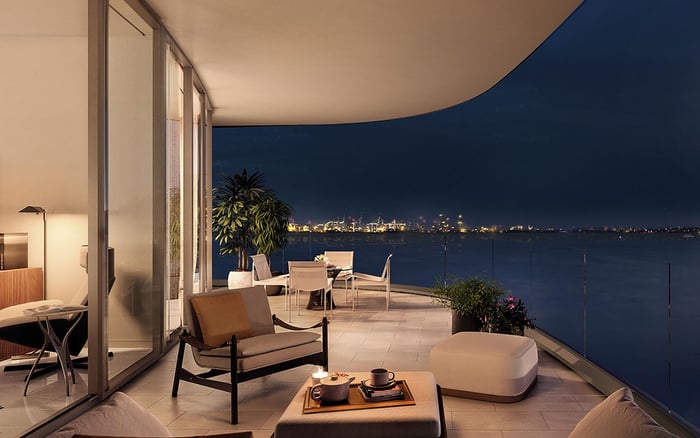
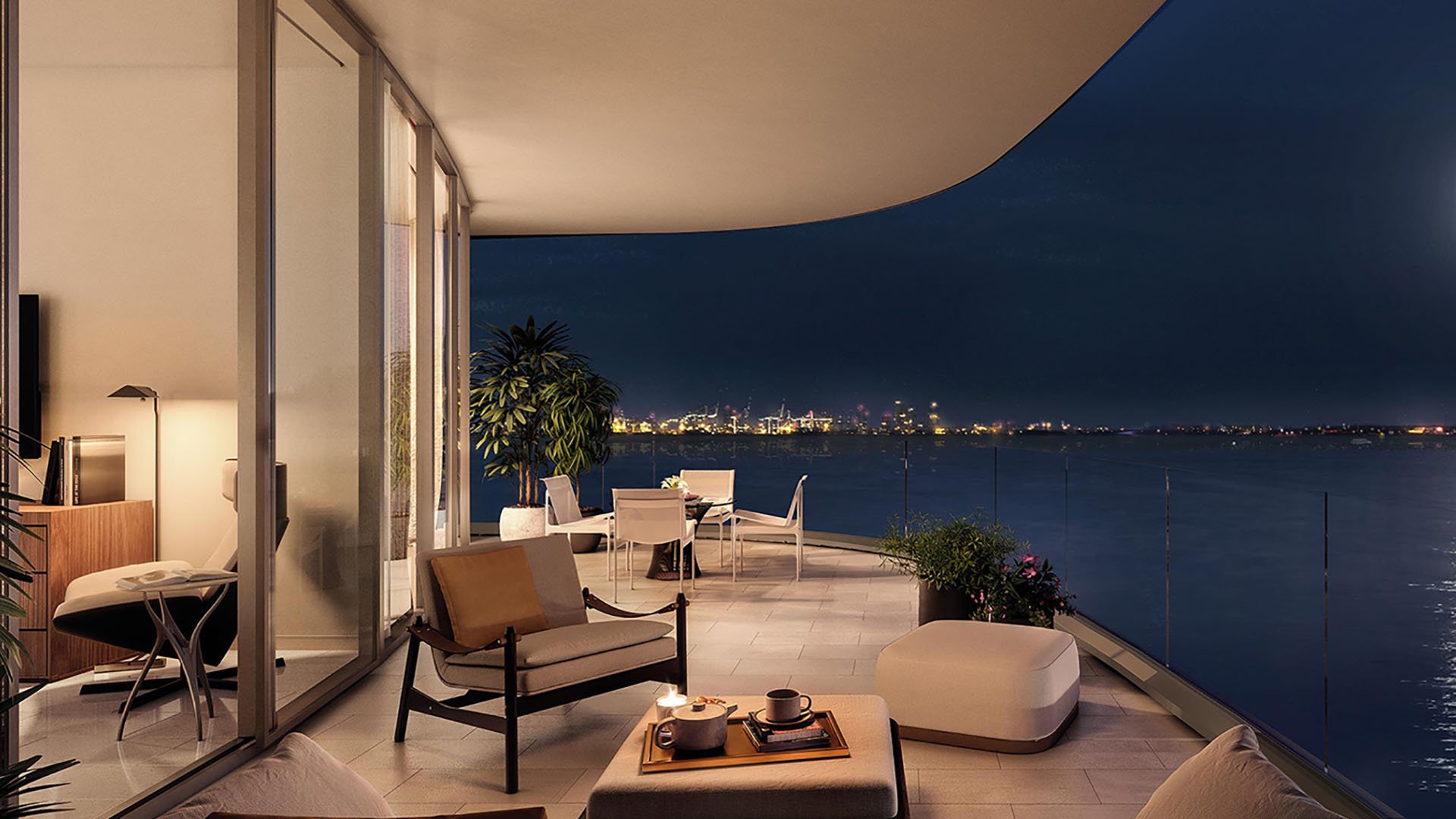
Architecture also becomes a form of filtration. Wide rooms, measured sightlines, natural light, and balanced proportions can make an urban residence feel calm rather than compressed. Balcony design is no longer a decorative afterthought; it shapes how residents experience climate, view, and distance from the city below. A deep outdoor room may matter as much as a faster regional trip.
The same is true of wellness and hospitality. A buyer may appreciate station access, then ultimately choose the building with the better spa sequence, quieter pool deck, stronger culinary programming, or more intuitive concierge culture. In South Florida, connectivity gets attention, but livability earns commitment.
No single mobility feature can flatten South Florida into one market. Each luxury enclave has its own tempo. Brickell is associated with financial energy and high-rise convenience. Miami Beach suggests resort ease, architectural character, and a more social waterfront rhythm. Fort Lauderdale offers a different relationship to boating, marina life, and residential space. Palm Beach and its surrounding luxury corridor carry their own language of discretion, heritage, and composed living.
For a buyer, the right answer depends on how the residence will actually be used. A weekly business traveler may prize immediate urban access. A second-home owner may care more about arrival ritual, building management, and the ability to settle in instantly after time away. A family may prioritize schools, wellness, security, and proximity to the people they see most often.
This is where rail connectivity becomes only one layer. It can make a broader map feel more fluid, but it cannot replace neighborhood fit. A home must still reflect the buyer’s identity, social pattern, and long-term plan for South Florida.
Investment discussions around connected locations should be handled with restraint. Transit access can support desirability when it aligns with employment, lifestyle, and neighborhood growth, but luxury value is not built on access alone. The upper end of the market responds to scarcity, view quality, brand strength, service consistency, floor plan intelligence, and the condition of competing inventory.
A penthouse near a convenient mobility corridor may still underperform if its layout is compromised or its building lacks distinction. Conversely, a residence farther from a station may command lasting attention if it delivers exceptional privacy, water orientation, architectural pedigree, or rare outdoor space. The luxury buyer is not purchasing a pin on a map. They are buying a hierarchy of advantages.
The smartest investment lens considers both present usability and future defensibility. Is the home easy to enjoy today? Is it differentiated enough to remain desirable later? Does the building have a clear identity, or is it dependent on the surrounding narrative? Connectivity can support the answer, but it should not be the answer.
In ultra-prime real estate, arrival is choreography. A buyer notices the turn into the property, the scale of the lobby, the way staff recognizes residents, the privacy of the elevator, and the transition from public world to private sanctuary. If a home is meant to make regional travel easier, its own arrival experience must feel even more controlled.
This is why the most successful connected residences do not feel transactional. They do not merely say, you can get somewhere quickly. They say, once you return, the day decompresses. The terrace, the view, the material palette, and the service culture all work together to restore balance.
That emotional shift is difficult to quantify, but luxury buyers recognize it immediately. A building may be convenient, but a true residence feels composed. The difference is decisive.
South Florida buyers increasingly compare lifestyle archetypes rather than just addresses. One buyer wants the urban core because business, dining, and culture are close at hand. Another wants a marina setting because the boat is central to the week. Another wants the beach because the daily ritual begins outside, not in a car or train.
Brightline-connected travel can make these choices feel less isolated from one another. It can help an owner imagine using more of the region without committing to a single daily radius. Still, the home itself must support the lifestyle that happens most often. Occasional convenience should not outrank daily satisfaction.
The best acquisitions begin with honesty. How many nights will the owner be in residence? Who uses the home when the owner is away? Is entertaining formal or relaxed? Is the priority view, service, walkability, boating, wellness, or lock-and-leave simplicity? Once those answers are clear, connectivity becomes an enhancement rather than a distraction.
For luxury buyers, the next step is to evaluate connected locations with discipline. Start with the building’s fundamentals: privacy, floor plan, ceiling height, outdoor space, service model, and long-term maintenance culture. Then study the neighborhood as a lived environment, not just a convenient coordinate. Finally, decide whether the transportation advantage genuinely improves your routine.
This is the more mature reading of South Florida mobility. Brightline may influence the search, but the purchase should still be anchored in quality. The right residence should make the region feel accessible while making home feel irreplaceable.
Is Brightline proximity enough to justify a luxury purchase? No. It can improve convenience, but buyers should also evaluate privacy, design, service, views, and neighborhood identity.
Does rail access matter more for primary homes or second homes? It can matter for both, but in different ways. Primary owners may value routine efficiency, while second-home owners often value smoother arrivals and departures.
Should Brickell buyers prioritize connectivity? Brickell buyers often value access and immediacy, but the residence must still deliver quiet interiors, strong service, and a refined arrival experience.
Can a waterfront home be preferable to a more connected urban address? Yes. If boating, views, privacy, or outdoor living are central to the owner’s lifestyle, waterfront quality may outweigh transit proximity.
How should investors view rail-connected luxury property? Treat connectivity as one supporting factor. Scarcity, architecture, building reputation, and unit quality remain essential to long-term desirability.
Does a balcony materially change the ownership experience? Yes. In South Florida, a well-designed outdoor area can become a daily living room, especially when it offers privacy and usable depth.
Is a penthouse automatically the strongest choice near transit? Not always. A penthouse still needs a strong layout, protected views, appropriate scale, and a building worthy of its premium.
Why is arrival experience so important in luxury buildings? Arrival sets the tone for privacy and ease. A polished sequence from curb to residence can make connected living feel genuinely elevated.
Should buyers choose the most convenient location first? Convenience should start the conversation, not end it. The better approach is to match location with how the owner actually lives.
What is the simplest way to evaluate a connected residence? Ask whether it improves both movement and daily life. If it only solves transportation, it may not be enough.
For a confidential assessment and a building-by-building shortlist, connect with MILLION.
If branded residences are on your mind — as a home or as an allocation — we would be glad to share what we are seeing, privately.
Begin a quiet conversation