A buyer-focused look at how to evaluate reserve health, disclosure materials, and pre-funded budget arrangements when considering a resale residence at Continuum on South Beach.

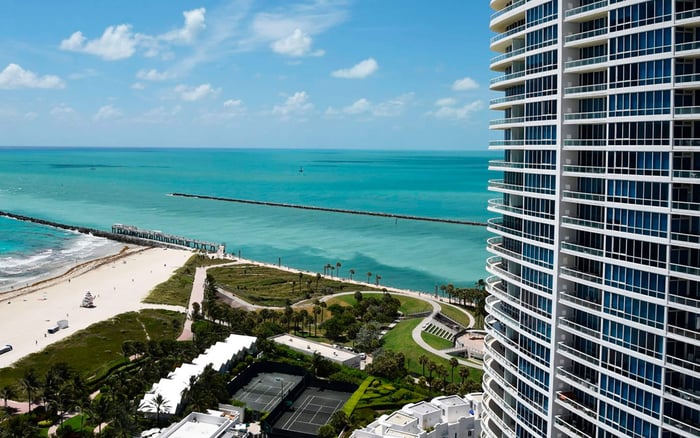
At the highest tier of Miami Beach ownership, elegance is only part of the equation. For a resale buyer at Continuum on South Beach, the more revealing measure of value often sits behind the finishes: the health of the condominium’s capital reserves and the realism of its annual budget. At a landmark oceanfront community spanning 22 beachfront acres at 1 Ocean Drive, with more than 500 homes planned and an amenity profile that includes pools, spa, fitness, dining, beach club, and concierge services, reserve planning is not a technical footnote. It is central to the ownership experience.
Continuum on South Beach was designed by Herzog & de Meuron, and that design pedigree carries a sophisticated physical plant. In luxury communities, owners are not simply funding lobbies and landscaping. They are supporting waterproofing programs, elevator modernization cycles, mechanical systems, pool deck replacements, parking structure upkeep, facade work, and the many unseen systems that preserve service levels and long-term appearance. In Miami Beach, especially in South of Fifth, oceanfront exposure tends to accelerate wear. Salt air, moisture intrusion, corrosion risk, and demanding maintenance cycles can turn an undercapitalized budget into a meaningful ownership concern.
This is why reserve analysis at Continuum deserves the same attention a buyer would give to floor plan, view corridor, and line location. A residence in Continuum on South Beach may present beautifully on day one, yet the financial stewardship behind the common elements will influence both comfort and future liquidity.
The first principle is simple: exact reserve health for a Continuum resale unit is generally not something a prudent buyer should infer from broad market chatter. Current reserve funding percentages, special assessment details, and the most relevant budget line items are typically delivered through the official resale certificate and association materials rather than ordinary public property records.
That means any claim that the association is fully funded, partially funded, or carrying a specific reserve balance should be treated as unconfirmed unless it appears in the latest association package. For a luxury resale purchase, precision matters. Even sophisticated buyers sometimes focus on monthly dues without examining whether those dues are actually supporting a robust reserve program.
The diligence framework in Florida places real importance on condominium disclosures in resale transactions. For a buyer, that shifts the conversation from speculation to documentation. The right question is not whether a building has reserves in the abstract. The right question is how current the reserve study is, what components are being funded, whether contributions track anticipated replacement timing, and whether any known shortfalls are likely to be addressed through future assessments.
Continuum’s setting is part of its appeal, but it also defines its maintenance reality. Oceanfront communities in Miami Beach typically face elevated long-term costs tied to facade upkeep, sealants, glazing systems, sliding doors and windows, waterproofing, and corrosion management. Elevators and major mechanical systems can also face more punishing conditions in coastal environments.
For a community with extensive amenities, reserve planning should be viewed as a dynamic model rather than a static savings account. Pool surfaces age. Decks require rehabilitation. Waterproofing systems have finite cycles. HVAC equipment, pumps, life-safety infrastructure, and parking-area components all require disciplined forecasting. At Continuum, where service and presentation are inseparable from the ownership experience, reserve sufficiency is a meaningful expression of stewardship.
That same lens is useful when comparing Continuum with other elite waterfront product in the region, whether at Apogee South Beach, 57 Ocean Miami Beach, or The Perigon Miami Beach. The finishes and lifestyle differ, but the central financial question is similar: how well does the budget anticipate the realities of salt, sun, wind, and complex shared infrastructure across oceanfront living?
In resale transactions, pre-funded budget arrangements can matter more than many buyers expect. In practical terms, this usually refers to situations where the seller has already covered part of the year’s reserve contribution before closing, which can reduce the buyer’s immediate first-year burden. It does not eliminate the need to analyze the association’s finances, but it can improve the near-term economics of a purchase.
A sophisticated buyer should separate three ideas that are often blurred together. First is the overall health of the association’s reserves. Second is the annual operating and reserve budget for the current year. Third is the economic structure of the specific sale contract, including whether the seller is effectively delivering a partially pre-funded ownership position for that budget year.
Those points are related, but not identical. A seller’s prepayment may help with near-term cash flow, yet it says little by itself about whether reserve contributions are adequate over time. Conversely, a well-funded association remains attractive even if the buyer assumes normal prorations at closing. The important task is to understand exactly what is being prepaid, how it is documented, and whether any major capital obligations sit outside the ordinary budget framework.
For a Continuum resale, the essential review package should include the latest reserve study or reserve summary, recent financial statements, the current approved budget, and any available history of special assessments. Buyers should also look for board discussions or notices that indicate upcoming projects involving structural work, waterproofing, elevators, pool decks, parking structures, or other major common elements.
This review is especially important in a post-legislative environment where qualifying condominium buildings are subject to milestone inspections and structural integrity reserve study requirements. For purchasers in SoFi and the broader Miami Beach market, the practical implication is straightforward: deferred maintenance has become a far less tolerable category, and reserve planning has become a more central part of value analysis.
When reading the documents, buyers should focus on several pressure points:
Whether reserve contributions appear aligned with major replacement timelines
Whether special assessments have occurred recently or are being discussed
Whether the reserve schedule addresses major coastal wear items comprehensively
Whether the budget seems to rely on optimism rather than realistic replacement costs
Whether there is clarity around seller credits or pre-funded reserve components at closing
For context, this diligence mindset is increasingly relevant across premium South Florida inventory, from Setai Residences Miami Beach to newer trophy offerings elsewhere in the market. The common thread is that luxury ownership is best understood through both design and governance.
The sharpest buyers at Continuum are not merely asking whether the building is prestigious. They are asking whether the capital plan is commensurate with that prestige. That is the distinction between buying beautifully and buying intelligently.
Because exact current reserve percentages and pre-funded amounts are not broadly disclosed in public-facing materials, the sound conclusion is not numerical. It is strategic. Continuum on South Beach warrants serious confidence only when the resale package confirms disciplined reserve funding, transparent disclosure, and no mismatch between lifestyle expectations and capital realities.
For the buyer who values discretion, predictability, and long-term quality, reserve health is not a back-office issue. It is part of what protects ownership in one of South Florida’s defining residential communities.
What is the main financial issue to study in a Continuum resale? The most important issue is whether reserve funding appears strong enough to support future capital replacements without undue reliance on special assessments.
Are Continuum’s exact reserve balances publicly confirmed? Not in the materials provided here. Buyers should obtain the latest association resale package for current figures.
Why are reserves especially important in an oceanfront building? Coastal exposure increases wear on facades, waterproofing, glazing systems, elevators, and mechanical infrastructure.
What does a pre-funded budget mean in a resale transaction? It often means the seller has already covered part of that year’s reserve contribution, easing the buyer’s immediate first-year cash burden.
Does a seller prepayment prove the association is financially healthy? No. It helps with transaction economics, but it does not replace a full review of reserves and capital planning.
Could underfunded reserves lead to special assessments? Yes. If major expenses are not adequately reserved for, owners may face future assessments.
Which documents should a buyer request before closing? Request the latest reserve study or summary, recent financial statements, the approved budget, and special-assessment history.
Do luxury amenities affect reserve needs? Absolutely. Pools, spa facilities, fitness areas, concierge infrastructure, and extensive common spaces increase replacement obligations.
How does Florida law affect resale diligence? Florida condominium rules make disclosures and reserve-related review an important part of the buyer diligence process.
What is the clearest buyer takeaway for Continuum on South Beach? Treat reserve health as part of asset quality, and do not close until the association documents clarify funding levels and capital exposure.
For a discreet conversation and a curated building-by-building shortlist, connect with MILLION Luxury.
If branded residences are on your mind — as a home or as an allocation — we would be glad to share what we are seeing, privately.
Begin a quiet conversation