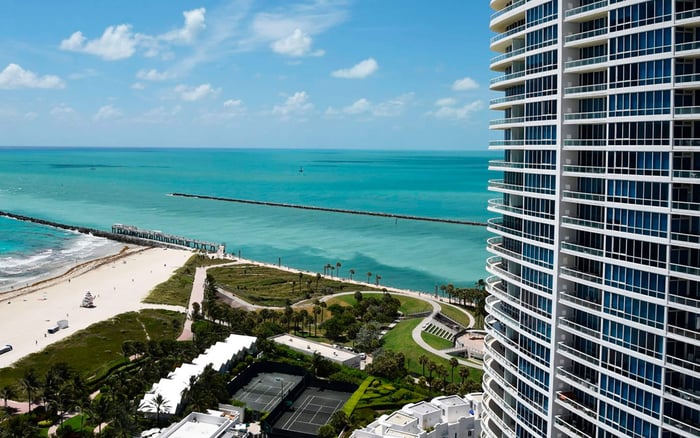
A buyer-focused comparison of South of Fifth’s two defining ultra-luxury addresses, examining architecture, lifestyle, resale dynamics, and the distinct legacies each has established in Miami Beach.
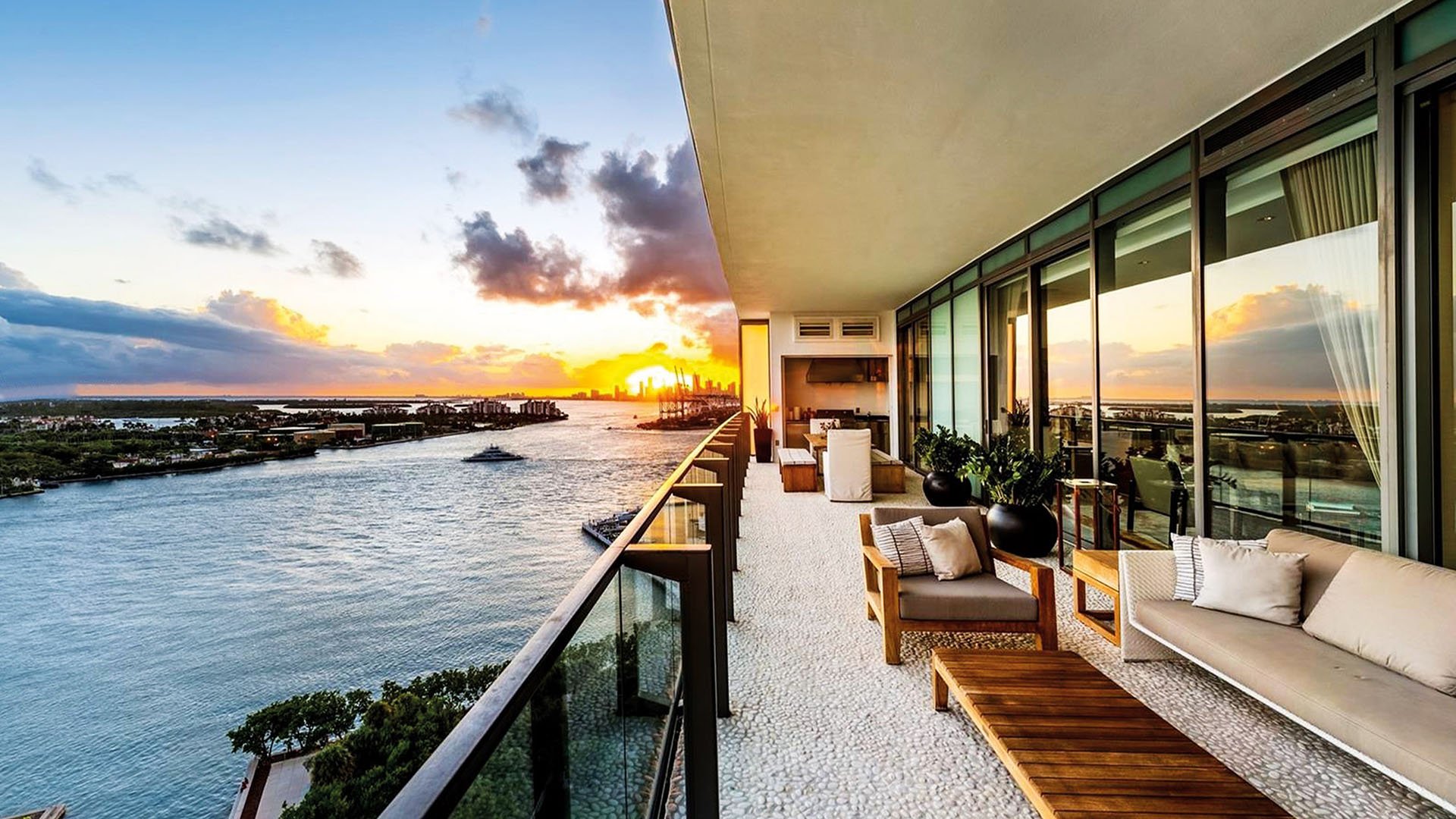
In South of Fifth, legacy is not simply about age or visibility. It is about the ownership identity a building creates over time. That is why the comparison between Apogee South Beach and Continuum on South Beach remains one of the most revealing discussions in Miami Beach luxury real estate.
Both developments sit within one of the city’s most exclusive enclaves, and both have helped define what top-tier buyers expect from oceanfront condominium living. Yet they embody two distinctly different interpretations of ultra-luxury. Apogee is best understood as a pure residential trophy asset: architecture-forward, privacy-driven, and tightly held. Continuum, by contrast, presents as a larger lifestyle estate, where residential ownership is intertwined with hospitality, resort programming, and a club-like sensibility.
For buyers, investors, and second-home owners evaluating the upper tier of the market, this is less a question of which project is superior than of which philosophy of luxury feels more lasting.
Apogee South Beach holds a singular place in the South of Fifth narrative because it is inseparable from its design authorship. Conceived by Herzog & de Meuron, the project established itself as a sculptural glass presence on the skyline and reinforced the idea that Miami Beach luxury could compete not only through water views and services, but through architectural pedigree.
That distinction matters. In a market where many residences compete through amenity packages and branding, Apogee’s identity is rooted in form, silhouette, and scarcity. The residences are known for larger-format layouts and penthouse-caliber living tailored to buyers who value discretion, privacy, and a less transactional atmosphere. The result is a building often perceived as hold-oriented rather than churn-oriented.
Its amenity profile supports that positioning without overwhelming it. Spa, fitness, lounge, concierge, and beach-oriented services are part of the experience, but they serve the residential core rather than redefine it. For a buyer seeking a home that feels closer to a private collection than a hospitality ecosystem, Apogee offers a clarity few towers achieve.
This architecture-led approach has become even more relevant as newer branded and design-centric residences have entered the broader South Florida conversation, from 57 Ocean Miami Beach to The Perigon Miami Beach. Yet Apogee’s appeal remains distinct because it pairs design authorship with a mature South of Fifth setting already recognized for rarity.
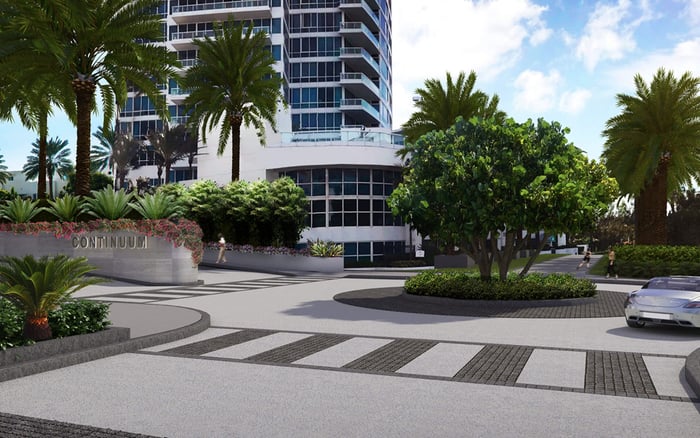
Continuum on South Beach tells a different story. Its legacy is tied less to a single signature tower and more to the concept of a complete oceanfront ecosystem. Continuum is associated with multiple buildings, broader physical scale, and a resort-style amenity structure that extends well beyond what buyers would typically expect from a conventional condominium.
That scale changes the ownership proposition. Pools, beach club access, spa and fitness offerings, concierge service, and food-and-beverage elements create an environment that feels closer to a private resort than a singular residential address. The project is also associated with a hybrid residential-plus-hospitality model, along with a membership component that reinforces its club character.
For many buyers, that means Continuum offers something more expansive than apartment ownership. It offers belonging to a lifestyle platform. In a market where convenience and service have become central to ultra-luxury, that broader proposition can be especially persuasive, particularly for international owners, seasonal residents, and those who want a residence that integrates naturally into travel patterns and leisure routines.
This model has influenced how buyers evaluate newer hospitality-inflected projects across the region, including properties such as Shore Club Private Collections Miami Beach and The Ritz-Carlton Residences® South Beach, where service identity carries significant weight.
The clearest distinction between Apogee South Beach and Continuum on South Beach is the contrast between scarcity and scale.
Apogee benefits from a tighter resale environment and lower turnover, reinforcing its reputation as a rarified, hold-oriented asset. In practical terms, that tends to strengthen a sense of exclusivity buyers can feel immediately. Inventory is not merely limited; it is culturally limited, because ownership often appears to be retained rather than cycled.
Continuum operates from the opposite strength. Because it spans a broader estate and appeals to a wider buyer base, it tends to offer greater secondary-market depth. For the market, that creates more points of entry into the brand and a wider range of ownership experiences, while still keeping the project firmly within the ultra-luxury tier.
This distinction often shapes negotiations and purchase strategy. Buyers pursuing Apogee are usually seeking a highly specific asset and may be willing to wait for it. Buyers pursuing Continuum may have more options within the same branded environment, allowing them to prioritize views, service patterns, or lifestyle preferences without leaving the ecosystem.
On a per-residence basis, Apogee is generally viewed as the more expensive proposition, reflecting its scarcity, larger-format identity, and trophy positioning. That premium is not only financial. It is also psychological. Buyers are often paying for the confidence that the building will remain highly selective in character.
Continuum, while firmly ultra-luxury, is associated with a wider pricing band. That can make entry into the address more approachable relative to Apogee, even if the ownership experience remains highly elevated. In effect, Continuum captures a broader spectrum of luxury demand without surrendering prestige.
The buyer profiles follow naturally from that difference. Apogee often suits the purchaser who prioritizes privacy, architecture, and a more residential tempo. Continuum often suits the purchaser who values service density, social energy, and the layered convenience of an oceanfront club environment. Both appeal strongly to global wealth and second-home demand, but they satisfy different emotional definitions of what premium ownership should feel like.
In today’s market, the answer depends on what one believes South of Fifth is meant to represent.
If the neighborhood’s highest expression is an artful, limited-supply residential statement, Apogee South Beach stands as one of its clearest symbols. Its legacy is architectural, restrained, and deeply tied to the idea that true luxury can still feel private.
If the neighborhood’s future lies in fully serviced, experience-rich oceanfront living, Continuum on South Beach arguably set that template earlier and at a larger scale. Its legacy is not a façade alone, but an entire way of occupying the waterfront.
That is why the rivalry has endured. Apogee and Continuum are not simply competing condo addresses in Miami Beach. They are two blueprints for South of Fifth itself. One defines luxury through singularity. The other defines it through breadth.
For many sophisticated buyers, the real takeaway is that South of Fifth remains compelling precisely because it can sustain both models at the highest level. The enclave still rewards architectural conviction, but it also rewards service, lifestyle, and club-caliber amenities. Few neighborhoods manage that balance with equal credibility.
Is Apogee South Beach more private than Continuum on South Beach? Generally, yes. Apogee is more closely associated with a pure residential, low-turnover ownership profile centered on privacy and exclusivity.
Does Continuum on South Beach feel more like a resort? In many respects, yes. Its larger scale, hospitality elements, and club-style amenity structure give it a more resort-oriented character.
Which project is more architecture-driven? Apogee South Beach. Its identity is strongly tied to Herzog & de Meuron and its sculptural glass design.
Which address typically has more resale options? Continuum on South Beach usually offers greater secondary-market depth because of its broader scale and buyer reach.
Is Apogee South Beach considered a trophy asset? Yes. It is widely perceived as a scarce, high-prestige residential asset within South of Fifth.
Does Continuum on South Beach include club-style benefits? It is associated with a membership component and a club-like ownership experience beyond a traditional condo model.
Which is better for a second-home buyer? It depends on priorities. Apogee favors privacy and scarcity, while Continuum often better suits buyers who want service-rich, resort-style living.
Are both projects considered ultra-luxury? Yes. Both are widely regarded as anchor addresses in the uppermost tier of Miami Beach residential living.
How does pricing usually differ between the two? Apogee is generally positioned higher on a per-residence basis, while Continuum tends to offer a wider pricing band.
Why do these two buildings matter so much in South of Fifth? Because each helped define a different model of oceanfront luxury ownership in one of Miami Beach’s most exclusive enclaves.
For a confidential assessment and a building-by-building shortlist, connect with MILLION Luxury.
If branded residences are on your mind — as a home or as an allocation — we would be glad to share what we are seeing, privately.
Begin a quiet conversation