A buyer-focused comparison of Alana Bay Harbor Islands and Glass House Boca Raton, centered on usable outdoor living, shade performance, glass comfort, salt-air durability, and recurring maintenance exposure.
Alana Bay Harbor Islands and Glass House Boca Raton belong in the same buyer conversation because each asks a more sophisticated version of the South Florida question: how much of the architecture remains genuinely livable once sun, humidity, salt air, wind-driven rain, and a long cooling season enter the underwriting model?
The answer is not found in a generic amenity comparison. It begins with micro-context. Alana Bay Harbor Islands should be read through its island-village coastal setting, where intimacy, waterfront adjacency, and salt exposure shape day-to-day ownership. Glass House Boca Raton should be read through Boca’s coastal luxury-condo market, where transparent architectural language must be balanced against glare, heat gain, storm exposure, and long-term envelope care.
For the ultra-premium buyer, the question is not which project appears more open to the outdoors. It is which residence plan converts openness into usable, shaded, comfortable space for daily living.
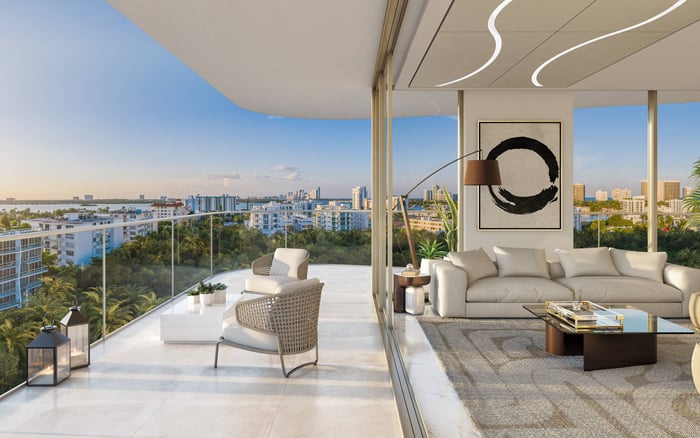
Terrace depth is one of the most consequential variables in this comparison. A shallow outdoor area can photograph elegantly and still fail during the hours when South Florida buyers most want to use it. A deeper, better-covered terrace can function as a breakfast room, reading room, cocktail room, or quiet extension of the primary suite.
At Alana, due diligence should focus on how the residence plan, glazing, and terraces work together. Buyers should determine whether the indoor-outdoor concept creates genuinely shaded space or simply adds exposure. Overhangs, balcony coverage, and solar orientation matter because shade is not cosmetic in South Florida. It is a core livability feature.
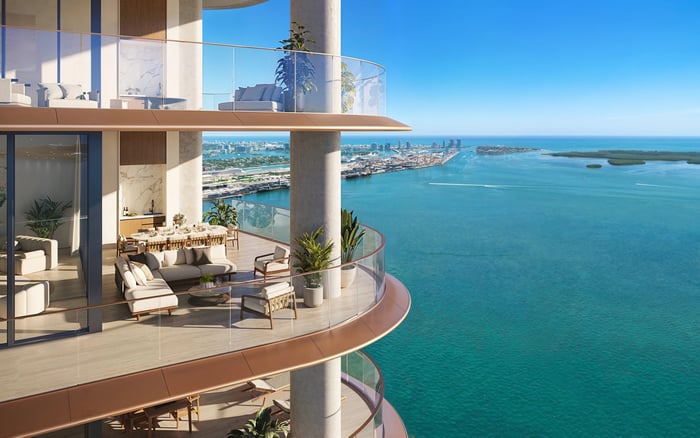
At Glass House Boca Raton, the same test becomes even more pointed because glass-forward architecture can intensify the sensory experience of light, view, and transparency. The underwriting issue is whether that drama is supported by outdoor rooms that remain usable, or whether the exposures become heat- and glare-prone during key parts of the day.
Balcony drains, door thresholds, and terrace waterproofing deserve the same attention as view corridors. The most refined outdoor living space is only as strong as its ability to handle sudden rain, humidity, and repeated coastal wear.
Large glass openings are a luxury signature, but they are also part of the operating model. At Alana, buyers should evaluate whether wide openings and balcony doors increase moisture-management demands at thresholds, HVAC transitions, and other points where conditioned interiors meet humid exterior air.
At Glass House, the transparent façade strategy should be studied for comfort as much as aesthetics. Heat gain, glare, cooling-load sensitivity, and condensation risk can all affect how a residence lives over time. The glass may create a remarkable connection to the outside, but the buyer should ask how that connection performs at noon, in August, after a storm, and during extended cooling demand.
This is where luxury underwriting becomes practical. The best residences do not force owners to choose between visual openness and comfort. They choreograph glass, shade, ventilation, and weather protection so indoor-outdoor living feels effortless rather than engineered around inconvenience.
The coastal setting is not a backdrop. It is an ownership variable. For Alana, the Bay Harbor Islands context makes salt-air maintenance central to the evaluation of exterior metals, railings, balcony drains, sealants, façade inspections, and any salt-exposed shared amenities. The real work is understanding how the building anticipates coastal upkeep.
For Glass House Boca Raton, the underwriting must examine salt-air durability, storm exposure, façade cleaning, corrosion-resistant finishes, and hurricane-grade envelope performance. None of these items should be treated as afterthoughts, particularly where glass and exterior assemblies define both the architecture and the ownership experience.
The question is not whether maintenance will exist. It will. The question is whether the assumptions are transparent, recurring, and aligned with the building’s design ambition. Buyers should request maintenance expectations for glass, balcony waterproofing, exterior hardware, and shared amenities exposed to coastal conditions.
A disciplined buyer can compare Alana and Glass House through five distinct scores.
First, score indoor-outdoor living. Does the plan make the terrace feel like part of daily life, or does it function as an occasional perch? Second, score shade performance. Study overhangs, orientation, and the hours when outdoor space is most likely to be used. Third, score glass comfort. Ask how the residence manages glare, heat gain, condensation risk, and cooling demand. Fourth, score salt-air durability. Review exterior metals, railings, sealants, drains, and façade maintenance assumptions. Fifth, score recurring maintenance exposure. Ownership cost should include the architecture’s long-term care profile, not just monthly fees and purchase price.
Investment quality in this segment is often created by the details least visible in renderings. New-construction buyers should be especially attentive to specifications, warranties, maintenance protocols, and how the association plans to manage exterior systems over time.
Alana Bay Harbor Islands may appeal to the buyer who wants the scale and rhythm of an island-village coastal setting, provided the terraces, shade, and moisture details support year-round use. Glass House Boca Raton may appeal to the buyer drawn to a more transparent architectural expression in Boca’s luxury market, provided the glass strategy is supported by comfort, durability, and practical protection.
Neither should be underwritten as a simple lifestyle image. In South Florida, the premium is earned when architecture performs. Shade is value. Dry thresholds are value. Corrosion-resistant details are value. A terrace that remains comfortable through humid afternoons and wind-driven rain is value.
What is the main difference between Alana Bay Harbor Islands and Glass House Boca Raton? Alana should be framed through a Bay Harbor Islands island-village coastal lens, while Glass House should be framed through Boca Raton’s coastal luxury-condo profile.
Why is shade so important in this comparison? Shade determines whether outdoor areas are genuinely usable in South Florida’s sun and humidity, not merely attractive in presentation materials.
What should buyers study first at Alana? Buyers should look at terrace depth, balcony overhangs, solar orientation, and how glass openings manage moisture at thresholds.
What should buyers study first at Glass House Boca Raton? Buyers should evaluate whether the glass-forward design balances view and transparency with heat control, glare management, ventilation, and weather protection.
Does more glass automatically mean better indoor-outdoor living? No. Glass can enhance connection to the outdoors, but it must be supported by shade, cooling performance, condensation control, and practical exterior detailing.
Which maintenance items matter most near salt air? Exterior metals, railings, sealants, balcony drains, façade cleaning, waterproofing, and corrosion-resistant finishes should all be part of the ownership review.
Should buyers ask for maintenance assumptions before contract decisions? Yes. Maintenance expectations for glass, balconies, exterior hardware, shared amenities, and façade care should be reviewed early.
Is this comparison mainly about amenities? No. The stronger framework is micro-context, outdoor usability, shade performance, glass comfort, salt-air durability, and recurring maintenance exposure.
How should a buyer compare operating costs? Buyers should consider cooling-load sensitivity, façade upkeep, balcony waterproofing, salt exposure, and storm-resilience assumptions alongside standard fees.
What is the best way to shortlist comparable options for touring? Start with location fit, delivery status, and daily lifestyle priorities, then compare stacks and elevations to validate views and privacy.
For a tailored shortlist and next-step guidance, connect with MILLION.
If branded residences are on your mind — as a home or as an allocation — we would be glad to share what we are seeing, privately.
Begin a quiet conversation