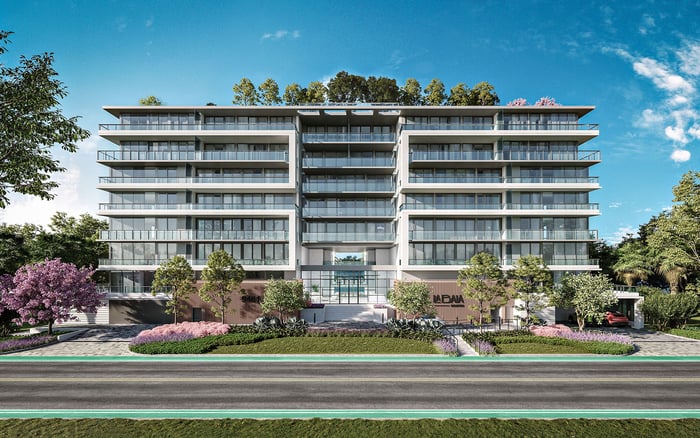
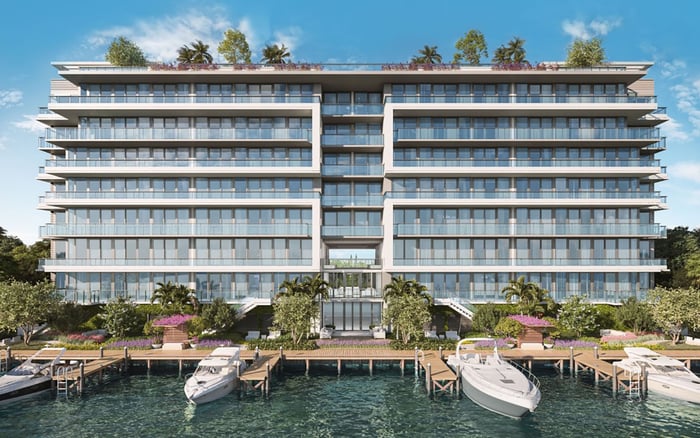
A discreet buyer’s guide to comparing La Baia North Bay Harbor Islands and The Cove Residences Edgewater through acoustic comfort, technology infrastructure, and remote-work privacy, especially for clients who value residential service without the circulation patterns of a hotel.
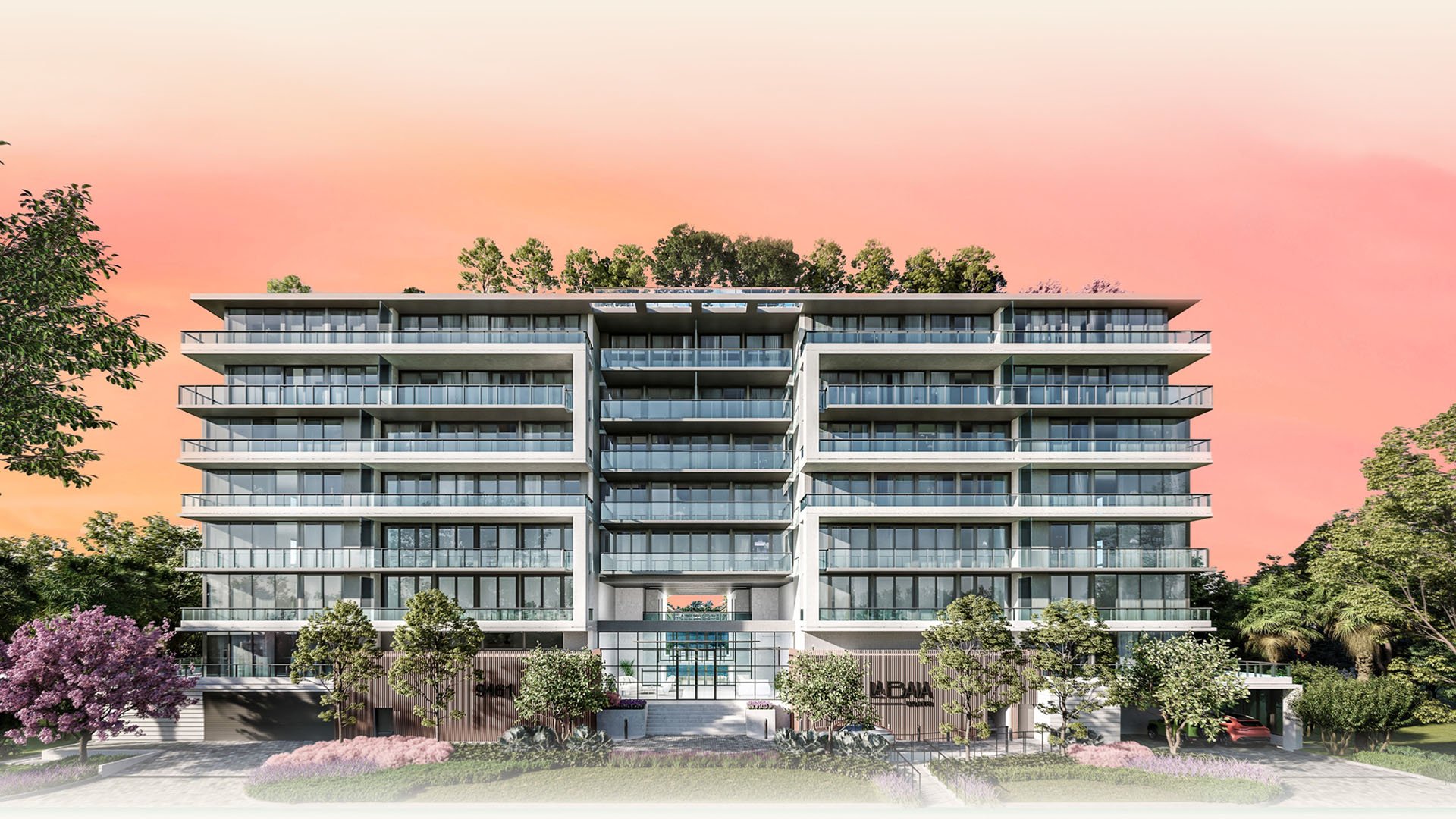
For a certain South Florida buyer, the appeal is not simply a polished lobby, a graceful arrival, or a service team that remembers preferences. The aspiration is more exacting: hotel-level attentiveness without the transient rhythm of hotel guests. That is the lens through which La Baia North Bay Harbor Islands and The Cove Residences Edgewater should be compared.
Both names sit within a broader shift in new-construction demand, where buyers are no longer satisfied by amenity counts alone. They want residences that perform. They want quiet rooms during market hours, reliable connectivity for overseas calls, and private circulation that does not make home feel like a public venue. They also want service to feel present without becoming conspicuous.
This is especially relevant for buyers who split time among Miami, New York, London, São Paulo, Mexico City, or the Caribbean. A residence may serve as a primary home, second home, or seasonal base, but it still needs to function at the level of a private office and a retreat. In that context, La Baia North Bay Harbor Islands vs The Cove Residences Edgewater is less about choosing a label and more about choosing a daily operating environment.
The phrase “hotel-level service” can mean many things, so buyers should define it before comparing buildings. For some, it means valet, reception, package handling, maintenance coordination, and a sense of security at arrival. For others, it means an invisible infrastructure of convenience, where staff support the residence without creating the social density associated with hospitality properties.
A private residential building should feel distinctly different from a hotel. Elevators should not become extensions of the lobby. Amenity spaces should not read as public lounges. Guest flow should be legible and controlled. The better question is not “What services are offered?” but “How do those services move through the building?”
At La Baia North Bay Harbor Islands, the Bay Harbor setting suggests a buyer profile often drawn to a calmer residential cadence. In Edgewater, The Cove Residences Edgewater sits within an urban waterfront context where buyers may place greater emphasis on proximity, energy, and skyline connectivity. Neither preference is inherently superior. The distinction is how each environment supports discretion.
Acoustic comfort is one of the most under-discussed elements in high-end condominium buying. It is also one of the hardest to correct after closing. A residence can be beautifully finished and still disappoint if work calls capture hallway noise, if elevators announce themselves through shared walls, or if amenity activity travels vertically into living spaces.
Buyers should review the acoustic strategy across four layers. First is the exterior envelope: glazing, balcony doors, and exposure to street, waterway, bridge, or marina activity. Second is the internal separation between residences, corridors, mechanical areas, and service zones. Third is the location of amenities relative to private rooms. Fourth is the floor plan itself, especially the relationship among bedrooms, home offices, family rooms, kitchens, and terraces.
For La Baia North Bay Harbor Islands, the question may be how the residence mediates waterfront openness with interior stillness. For The Cove Residences Edgewater, the question may be how an urban water-view lifestyle is balanced with the sound profile of a denser district. Buyers should not rely only on a daytime tour. They should ask how the building is intended to feel during early calls, late dinners, weekends, and peak arrival hours.
A truly refined residence does not simply block noise. It creates zones. The primary suite should feel insulated from entertaining areas. A study should not share its acoustic life with the kitchen. Secondary bedrooms should support children, guests, or staff without compromising the working day. In this tier of the market, quiet is not absence. It is design intelligence.
Ultra-luxury buyers often examine stone, millwork, appliance packages, and views with great care. Technology infrastructure deserves the same seriousness. A beautiful residence that cannot sustain high-quality video calls, smart-home systems, secure access, and multiple users streaming or working at once will feel dated almost immediately.
Diligence should begin with connectivity. Buyers should ask about available service providers, in-unit wiring pathways, common-area connectivity, backup considerations, and the ability to support future upgrades. They should also examine where routers, panels, and low-voltage systems are intended to live. A luxury residence should not force visible equipment into primary living spaces simply because planning was an afterthought.
Technology also touches privacy. Smart access, package systems, cameras in common areas, elevator controls, and guest authorization can either create confidence or friction. For buyers who entertain discreetly, manage household staff, or receive confidential visitors, access architecture matters as much as design language.
The comparison between La Baia North Bay Harbor Islands and The Cove Residences Edgewater should therefore include a direct discussion of the digital backbone. Not the marketing vocabulary, but the practical reality: how does the building support a household with simultaneous work, school, security, entertainment, and travel needs?
Remote-work privacy is now a luxury planning category. A room labeled as a den may not function as a true office if it opens directly to the main living area, lacks acoustic separation, or depends on borrowed light that limits screen use. The best work-from-home setting has privacy, proportion, lighting control, power access, and psychological distance from domestic activity.
Buyers comparing these two residences should map a normal week. Where does the first call of the day happen? Where does a confidential conversation take place when family or guests are present? Can two adults work simultaneously without one retreating to a bedroom? Is there a place for a printer, secure storage, or a second screen that does not disturb the atmosphere of the home?
This matters for boutique residential buildings as much as large towers. In a smaller-feeling environment, privacy may come from calm circulation and fewer interruptions. In a more urban setting, privacy may come from vertical separation, plan efficiency, and controlled access. The right answer depends on household rhythm.
A buyer who hosts often may want an office removed from the entertainment zone. A buyer who travels frequently may prefer a compact, lockable work area with strong connectivity and easy shutdown. A family may need both a formal study and an informal homework zone. These needs should be identified before falling in love with a view.
A high-level tour should be disciplined. Begin with arrival. Observe whether the approach feels residential, calm, and controlled. Then evaluate the lobby not as a design moment, but as an acoustic and social environment. Is it serene, or does it invite lingering traffic? Does the building feel like a private address or a stage?
Next, walk the route to the residence as if you already live there. Notice elevator wait, corridor width, lighting, sound transfer, and the transition from public to private. Inside the residence, stand silently in each major room. Close doors. Imagine a call in one room and a dinner in another. Listen for mechanical hum, corridor activity, and exterior sound.
Then test the work zones. Ask where the primary internet equipment will be placed. Consider camera backgrounds, glare, privacy from the entry, and proximity to powder rooms or service areas. A residence that photographs beautifully may still require compromises if the only practical office location sits in the emotional center of the home.
Finally, evaluate service choreography. Package delivery, valet return, maintenance visits, guest arrival, pet movement, and household staff access all shape privacy. The most elegant buildings make these events feel effortless rather than visible.
La Baia North Bay Harbor Islands may appeal to buyers who prioritize a more residential waterfront rhythm, measured privacy, and a sense of retreat within the Miami orbit. The emotional value is calm: a home that feels service-aware but not performative.
The Cove Residences Edgewater may appeal to buyers who want a connected urban waterfront lifestyle, with the city close at hand and daily life organized around movement, views, and access. The appeal is immediacy: a residence that supports sophisticated urban living while still aiming for private comfort.
The decision should not be reduced to neighborhood preference alone. A Bay Harbor Islands buyer may still want strong technology and professional-grade work privacy. An Edgewater buyer may still demand deep quiet and controlled residential service. The strongest choice is the one whose plan, infrastructure, and operational culture match the way the owner actually lives.
For many affluent buyers, the deciding factor will be a feeling that emerges only after careful questioning. Does the residence calm the day, or add stimulation? Does the building protect privacy, or merely promise it? Does technology disappear into the background, or require constant management? When the answers are clear, the comparison becomes less emotional and more exacting.
What is the main difference buyers should examine first? Start with lifestyle rhythm: quieter residential cadence versus more urban waterfront energy.
Why is acoustic comfort so important in this comparison? Sound affects sleep, work calls, entertaining, and long-term satisfaction more than many visible finishes.
Should buyers ask about technology before contract review? Yes. Connectivity, wiring, access systems, and upgrade capacity should be discussed early.
Is a den automatically suitable for remote work? No. A true work area needs privacy, acoustic control, light management, and dependable connectivity.
How should service be evaluated in a private residence? Study how staff, guests, deliveries, and maintenance move through the building day to day.
Does hotel-level service require a hotel component? Not necessarily. Many buyers prefer attentive residential service without hotel guest circulation.
What should a buyer listen for during a tour? Listen for corridor noise, mechanical hum, exterior activity, elevator proximity, and amenity spillover.
Can Edgewater still feel private? Yes, if the building’s access, floor plans, acoustic design, and service flow support privacy.
Can Bay Harbor Islands still feel connected? Yes. Buyers often weigh calm residential character against convenient access to the broader Miami area.
What is the best way to shortlist comparable options for touring? Start with location fit, delivery status, and daily lifestyle priorities, then compare stacks and elevations to validate views and privacy.
To compare the best-fit options with clarity, connect with MILLION.
If branded residences are on your mind — as a home or as an allocation — we would be glad to share what we are seeing, privately.
Begin a quiet conversation