A discreet buyer’s comparison of Shell Bay by Auberge Hallandale and EDITION Edgewater through the practical lens of parking rights, EV charging readiness, valet flow, and private-driver logistics.
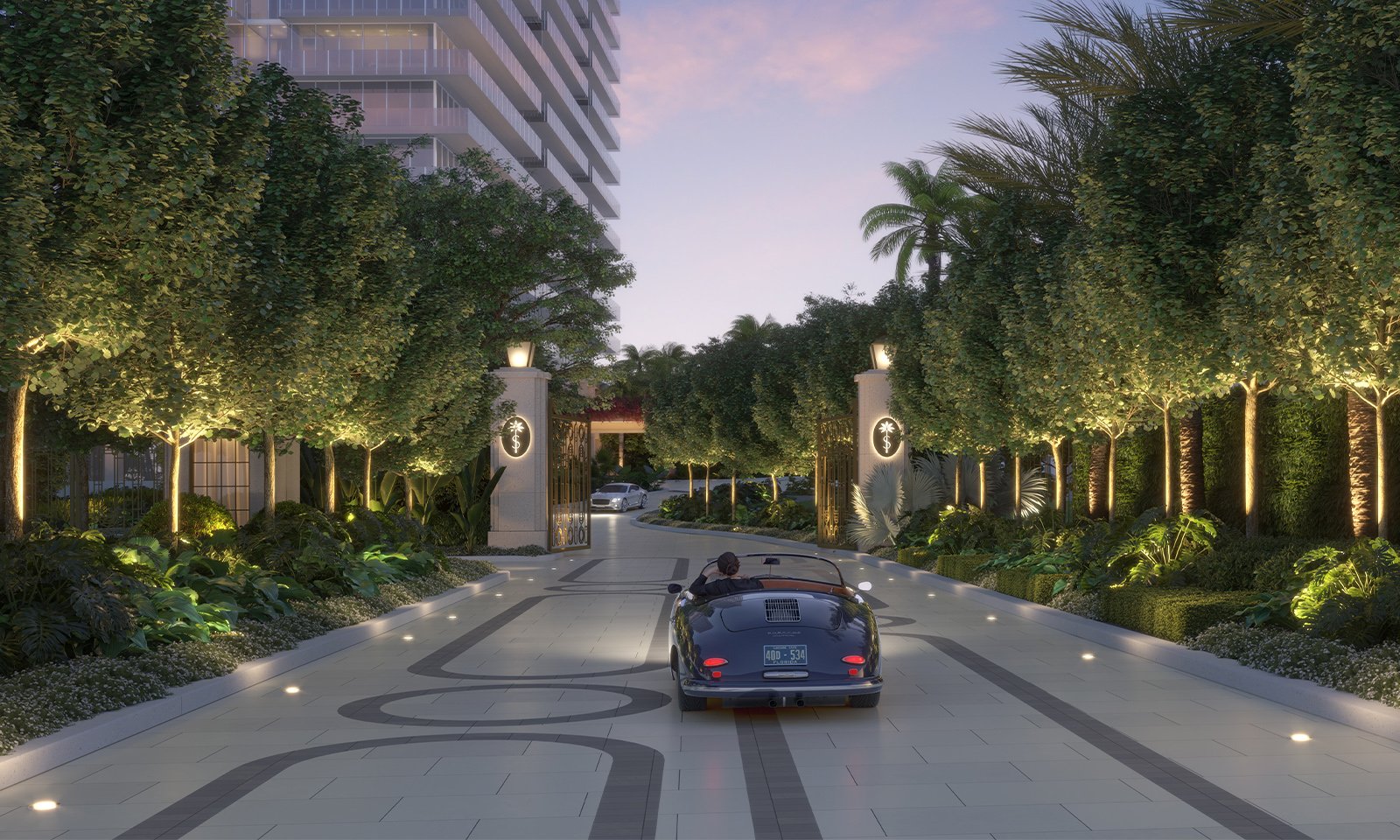
For many South Florida buyers, the glamour of a residence is first measured in architecture, service, water, and privacy. Yet the daily experience is often shaped by something quieter: where the car goes, how the driver waits, whether an EV can charge without friction, and how gracefully guests arrive on a busy evening.
That is the practical distinction at the center of Shell Bay by Auberge Hallandale vs EDITION Edgewater. Shell Bay by Auberge Hallandale sits on the Hallandale side of the comparison and reads as the more resort- or club-oriented proposition. EDITION Edgewater, in Miami’s Edgewater neighborhood, belongs to the denser urban-tower category, where curb management and valet rhythm may carry greater weight in daily life.
Neither project should be reduced to a parking conversation. But for a buyer with multiple cars, a private driver, family guests, domestic staff, or an electric-vehicle routine, mobility is not a secondary detail. It is part of the luxury program.
Shell Bay by Auberge Hallandale is the more logical project to evaluate for households seeking private arrival, resort-style circulation, and potentially more forgiving vehicle logistics. In a Hallandale setting, the broader campus idea can change the feel of arrival even before the legal documents are reviewed. The questions become less about a single curb and more about the choreography of arrival courts, guest parking, private-driver waiting, service access, and internal movement.
That does not mean a buyer should assume abundant parking rights or unlimited flexibility. The due-diligence work remains essential. For Shell Bay, the key is to confirm whether spaces are deeded, assigned, self-park, valet-only, or expandable. The difference is not cosmetic. A deeded space may feel like property control. An assigned space may be governed differently. A valet-only structure may suit one owner beautifully while frustrating another who prefers immediate access.
For a New Project buyer, the appeal is the promise of a polished residential ecosystem. The refined question is whether that ecosystem supports the way the household actually moves. A couple with one sedan and a chauffeur has a different need from a family with SUVs, weekend guests, and a second-home pattern that brings vehicles in waves.
EDITION Edgewater represents the Miami urban-address side of the comparison. For buyers who want Edgewater, the value proposition is not simply vertical living. It is access to a denser city rhythm, with all the convenience and compression that come with it. That makes the arrival sequence especially important.
In this setting, the buyer should study valet throughput, curbside flow, private-driver staging, and guest drop-off discipline with unusual care. A dense neighborhood can heighten the importance of operational excellence. The best urban towers do not merely provide service. They make movement feel calm even when the street outside is active.
EDITION Edgewater is therefore the more logical project to evaluate for buyers who prioritize a Miami urban address and are comfortable scrutinizing valet, curb, and chauffeur operations closely. The question is not whether city living is less luxurious. It is whether the building’s systems make city density feel effortless.
Parking rights deserve the same granular review here as they do at Shell Bay. Buyers should confirm whether parking is deeded, assigned, self-park, valet-only, or expandable, and they should understand how those rights apply to guests, additional vehicles, staff, and long-stay family members.
Ultra-premium buyers often ask, “How many spaces?” That is only the opening question. The better question is, “What exactly is the legal and operational nature of those spaces?”
At both Shell Bay and EDITION Edgewater, the buyer should distinguish between ownership, assignment, access, and service protocol. Deeded spaces, assigned spaces, valet-managed spaces, and self-park rights can produce very different daily experiences. Expandability matters as well. If the household grows, acquires another vehicle, or uses the residence seasonally, can additional parking be obtained, licensed, leased, or otherwise accommodated?
Guest parking should be reviewed separately. A residence may work well for the owner’s cars but create friction when adult children, visiting friends, a private chef, or security personnel arrive. For Investment-minded owners, these operating details can also influence perceived convenience, especially if the residence is used by family members or held for long-term ownership.
The more expensive the residence, the less tolerance there is for ambiguity. The buyer should ask for the parking language in writing, then align it with the condominium documents, association rules, and service model.
EV charging has become a luxury infrastructure issue. Marketing language may suggest readiness, but buyers should verify the actual conditions at both Shell Bay by Auberge Hallandale and EDITION Edgewater.
The central questions are practical: How many chargers are available? Is the electrical capacity sufficient for future demand? Can an owner install a dedicated charger? Are there association rules governing installation, billing, access, maintenance, or upgrades? If charging is shared, how is priority managed? If it is assigned to specific spaces, what happens when an owner changes vehicles or spaces?
The answer may not be identical across vehicle types or ownership structures. A buyer with one plug-in hybrid has a different exposure than a household with multiple EVs. A private driver who must return the vehicle fully charged each morning creates another layer of complexity.
For luxury buyers, EV readiness should be reviewed as part of the residence’s long-term utility. A property that feels seamless today should not become inconvenient as vehicle habits change.
The most discreet aspect of mobility is often where people wait. A private driver needs a place to stage without creating awkwardness. A guest needs a drop-off sequence that feels intuitive. A valet team needs enough room and rhythm to absorb peak moments.
This is where Shell Bay and EDITION Edgewater diverge philosophically. Shell Bay’s resort- or club-oriented profile makes it a natural candidate for buyers who value a more private arrival environment. EDITION Edgewater, by contrast, asks whether an urban tower can turn a tighter Miami setting into an elegant daily routine.
The right choice depends on temperament. Some buyers want the privacy and spatial breathing room associated with Hallandale. Others want the immediacy of Edgewater and are willing to rely on precise operations. Neither preference is inherently superior. They simply serve different lives.
Shell Bay is the more intuitive starting point for multi-car households, owners who entertain frequently, and buyers who place high value on resort-like circulation. It may also appeal to those who want the arrival experience to feel removed from the pace of the city.
EDITION Edgewater is the sharper fit for buyers who want Miami density and are prepared to ask detailed questions about how the building manages cars, drivers, valet queues, and guest access. Its appeal lies in the urban address, but the buyer must confirm that the operating details match the promise.
In both cases, the sophisticated move is not to assume. It is to test the residence against a real week in the owner’s life: airport runs, school runs, dinner guests, service providers, early-morning departures, late-night arrivals, and EV charging cycles.
Which project is better for multi-car households? Shell Bay is the more logical project to evaluate for multi-car households that value private arrival and potentially more forgiving vehicle logistics.
Which project is better for an urban Miami lifestyle? EDITION Edgewater is the stronger fit for buyers who prioritize an Edgewater address and are willing to study valet, curb, and driver operations closely.
Should buyers assume parking spaces are deeded? No. Buyers should confirm whether spaces are deeded, assigned, self-park, valet-only, or expandable before relying on any parking expectation.
Why does EV charging require extra diligence? EV convenience depends on charger count, electrical capacity, owner installation rights, billing, access rules, and association approvals.
Is valet-only parking necessarily a drawback? Not always. Some owners prefer a fully serviced model, while others need immediate self-park access and tighter control over vehicle movement.
Why does private-driver staging matter? A driver needs a practical waiting solution that does not disrupt the arrival court, valet flow, or guest experience.
Does Hallandale automatically mean easier vehicle logistics? Not automatically. Shell Bay’s setting may support a more resort-oriented arrival, but the specific rights and rules still need written confirmation.
Does Edgewater automatically mean difficult parking? No. The issue is not density alone, but how well the building manages curb flow, valet throughput, and chauffeur logistics.
What should second-home buyers focus on? Second-home owners should test peak arrival periods, guest parking, staff access, and whether cars can be managed smoothly during extended absences.
What is the most important document to review? The buyer should review the condominium documents, parking agreements, association rules, and any written service protocols before committing.
When you're ready to tour or underwrite the options, connect with MILLION.
If branded residences are on your mind — as a home or as an allocation — we would be glad to share what we are seeing, privately.
Begin a quiet conversation