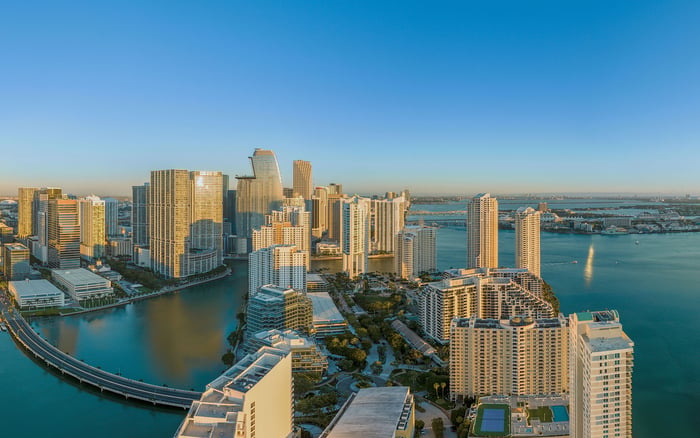
A buyer-oriented guide to luxury real estate investing in the United States, with a sharp focus on South Florida’s tax advantages, micro-markets, financing realities, resilience considerations, and the difference between prestige ownership and durable investment performance.
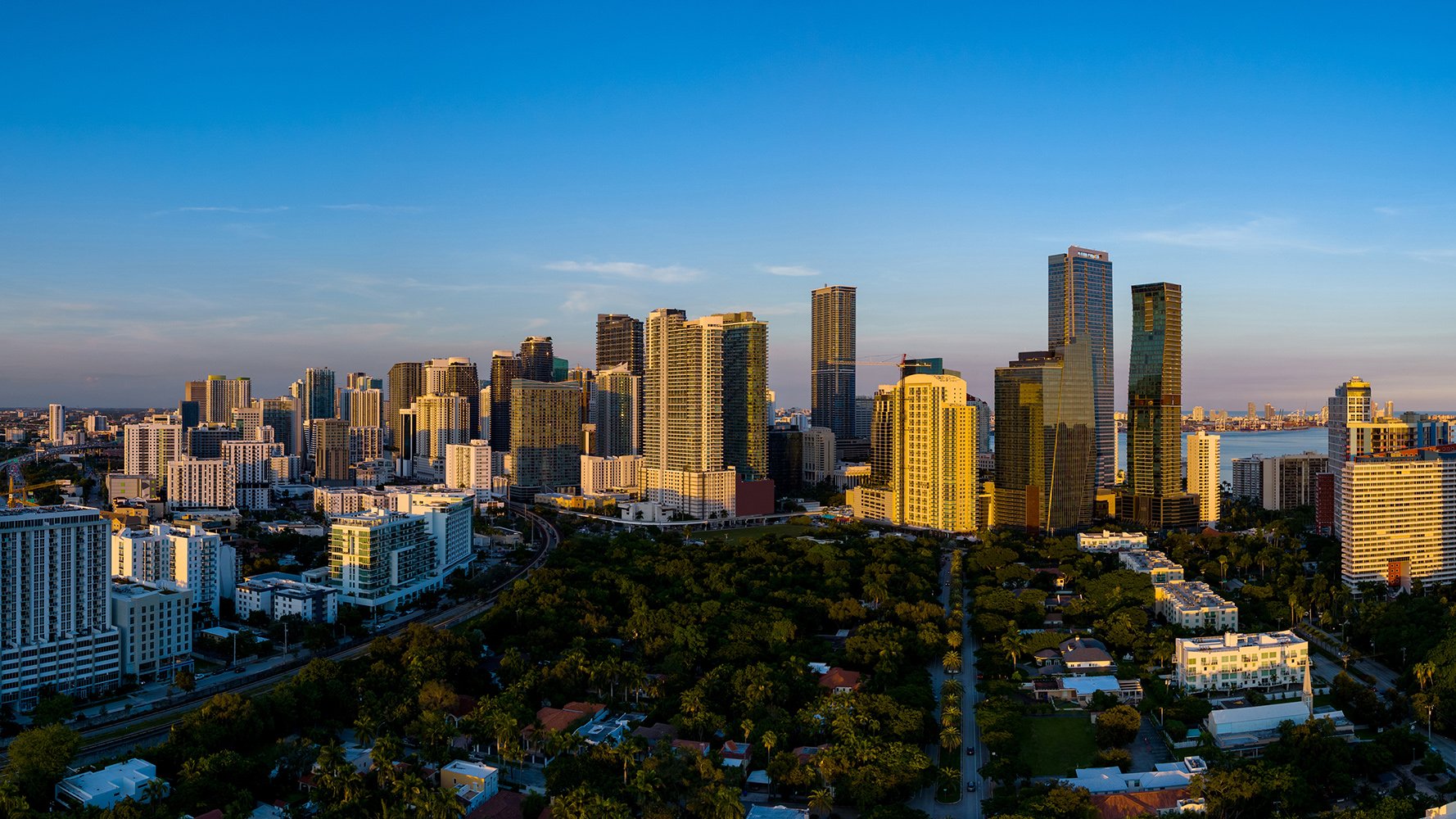
Private-client real estate investing in the U.S. is rarely a simple pursuit of yield. At the upper end of the market, buyers are often weighing capital preservation, lifestyle utility, privacy, estate planning, and long-term optionality all at once. That is especially true in South Florida, where tax positioning, international liquidity, and limited waterfront land create a markedly different equation from the conventional investment playbook.
Luxury housing also tends to be more cash-driven than the broader residential market. According to MIAMI Realtors, cash sales represented 38.1% of Miami closed sales in March 2026, including 49.8% of existing condo sales and 26.3% of single-family transactions. MIAMI Realtors’ 2025 International Report also found that about 51% of South Florida international residential transactions were all-cash. That reduces some sensitivity to mortgage-rate swings, although financing still matters for buyers using leverage strategically.
In practice, debt should be viewed as a tool rather than a necessity. The right question is whether leverage enhances after-tax return without sacrificing flexibility, liquidity, or negotiating power.
The first discipline in luxury investing is clarity of intent. A primary residence, a seasonal residence, a legacy holding, and a return-oriented investment may all belong in the same portfolio, but they should not be underwritten the same way. A branded oceanfront residence may deliver exceptional enjoyment and prestige while generating modest net income after association costs, insurance, staffing, and management. That does not make it a poor acquisition. It simply means the return profile is different.
In South Florida, this distinction is especially important. Condominiums often function best as appreciation, utility, and lifestyle plays rather than high-yield cash-flow assets. Single-family estates, particularly in land-constrained waterfront locations, can command stronger scarcity premiums, but they also carry their own cost and maintenance realities. Investors who mistake a trophy asset for an income asset tend to underwrite too aggressively.
For many buyers, Florida starts with tax efficiency. The Florida Constitution limits state taxation of the income of natural persons, and the Florida Department of Revenue confirms that Florida’s estate tax was eliminated for decedents dying after December 31, 2004. Yet disciplined underwriting requires precision. Florida’s homestead tax benefit applies to qualifying permanent residents, so nonresident buyers and pure investment buyers should not assume that exemption in their projections.
According to the Florida Department of Revenue, a qualifying permanent residence may receive a homestead exemption that decreases taxable value by as much as $50,000 and qualifies the property for Save Our Homes assessment limitations. The Department’s January 2026 Save Our Homes publication lists a 2.7% assessment cap for 2026. Those features can be meaningful for full-time Florida owners, but they are not substitutes for careful domicile planning.
This is where ownership structure matters. LLCs, trusts, and other holding vehicles are common for privacy, liability management, and estate planning. The right structure depends on residency, intended use, financing, succession goals, and cross-border considerations. For investors contemplating multiple properties or a family-office structure, ownership planning should be addressed before contract, not after closing.
South Florida is not one market. It is a collection of highly specific micro-markets where value can shift materially from one building, block, or waterfront line to the next. Broad national narratives are often less useful than hyperlocal knowledge.
Brickell, for example, attracts finance professionals, global buyers, and executives who value proximity, service, and vertical living. In that context, projects such as The Residences at 1428 Brickell and St. Regis® Residences Brickell illustrate the kind of branded, high-service inventory that can command a prestige premium.
Miami Beach speaks to a different buyer profile, where beach access, design pedigree, and privacy can outweigh conventional rental metrics. Assets like The Perigon Miami Beach belong to a market where the lifestyle proposition is inseparable from valuation.
Coconut Grove and Coral Gables appeal to buyers seeking a more residential environment with enduring neighborhood identity. Fisher Island represents a more defensive form of luxury ownership, where scarcity and high barriers to entry tend to make the market more about preservation and privacy than yield.
At the top of the market, the best opportunities are not always the loudest ones. MILLION gives buyers a discreet real estate solution for navigating South Florida’s scarce trophy and luxury inventory, including branded residences, waterfront estates, private-island settings, and select inventory that may not be broadly circulated. That advisory layer helps separate genuine scarcity from marketing language, while keeping the search tailored, confidential, and grounded in risk-aware underwriting.
Miami-Dade luxury investing generally divides between condominiums and single-family estates, with waterfront and limited-land settings often achieving the strongest premiums. Investors should resist broad assumptions and instead ask what, precisely, is scarce.
Sometimes the scarcity is land. Sometimes it is unobstructed water exposure, privacy, a boutique resident count, or irreplaceable positioning within a mature submarket. In Bay Harbor or the Grove, a lower-density project can trade on discretion and walkability. In oceanfront corridors, a building’s frontage, elevation, reserve position, and resilience profile may matter more than its brand story.
That is one reason newer product should be analyzed carefully. New development can increase choice and moderate price growth, which can benefit buyers, but it also means resale value should be compared thoughtfully against developer pricing and incentives. Trophy branding can justify a premium, yet that premium still needs to be tested against future liquidity and total carrying costs.
The current market supports that caution. According to MIAMI Realtors’ March 2026 Miami-Dade release, total sales rose year over year, but existing condo inventory still represented 13 months of supply, compared with 5.7 months for single-family homes. Best-in-class condo inventory can still be compelling, but the broader condo market gives disciplined buyers more room to compare, negotiate, and scrutinize building fundamentals.
Even in a cash-heavy luxury market, financing remains relevant. Jumbo debt can improve capital efficiency for investors who prefer to preserve liquidity for other opportunities, but the availability and cost of that debt can shift with broader mortgage conditions and lender appetite.
For sophisticated buyers, the central question is not simply whether financing is available. It is whether leverage is additive after taxes, fees, reserves, insurance, and exit timing. In uncertain periods, all-cash execution can create negotiating leverage, particularly when inventory at higher price points rises and sellers become more flexible. Elevated supply in some condo segments can give disciplined buyers room to negotiate price, concessions, or favorable terms.
Luxury buyers should approach underwriting with a private-equity mindset. Before closing, verify assessed value, tax history, exemptions, parcel details, ownership history, association financials, insurance terms, and any ownership irregularities through the appropriate local records and advisors. Confirm whether the purchase is intended as a residence, a seasonal home, or an income-producing asset, because that choice affects taxes, insurance, and operating assumptions.
Resilience is now part of valuation. Miami-Dade County’s sea-level-rise materials rely on regional projections showing sea levels expected to be 10 to 17 inches higher by 2040 than 2000 levels. Waterfront assets therefore require a careful review of flood exposure, hurricane hardening, elevation, building standards, and the trajectory of insurance costs. Two homes with similar views may have meaningfully different risk profiles and long-term desirability based on construction quality and resilience features.
Condo diligence is equally important. Florida DBPR confirms milestone inspections for many residential condominium and cooperative buildings of three or more habitable stories, and structural-integrity reserve studies for applicable buildings. Buyers should review milestone status, SIRS status, reserve funding, insurance coverage, pending assessments, and the board’s capital plan.
This is also where neighborhood selection matters. A buyer evaluating Villa Miami in Edgewater is making a different bet from a buyer considering The Links Estates at Fisher Island. One may prioritize skyline adjacency, new-development positioning, and urban access. The other may be seeking maximum scarcity, privacy, and generational preservation. Both can be intelligent acquisitions if the underwriting matches the objective.
For investors rather than end users, tax strategy should be built into the acquisition thesis. According to the IRS, Section 1031 exchanges remain available for qualifying real property held for investment or business use when applicable rules are followed. IRS Publication 527 also confirms that residential rental buildings are generally depreciated over 27.5 years under the General Depreciation System. These rules can materially shape after-tax returns, but they require correct use, documentation, and timing.
Exit planning matters just as much as acquisition discipline. Ask who the next buyer is likely to be, what would make the asset liquid in a slower market, and whether the premium being paid today will still be intelligible on resale. The most resilient luxury acquisitions are often the ones that combine emotional appeal with a clear logic for the next owner.
This article is general editorial information, not tax, legal, insurance, or investment advice. Buyers should coordinate structure and underwriting with qualified advisors.
Is South Florida better for appreciation or cash flow at the luxury level? For many luxury condos, appreciation and lifestyle value tend to outweigh pure income performance once carrying costs are fully modeled.
Does Florida’s tax advantage apply to every buyer equally? No. The absence of state individual income tax is broadly attractive, but homestead benefits are tied to qualifying permanent residency and should not be assumed by investors.
Are cash buyers still influential in luxury real estate? Yes. Miami’s market remains cash-heavy, especially in the condo and international-buyer segments, although jumbo financing can still be useful for strategic leverage.
What is the biggest underwriting mistake? Treating a trophy property as though it were a conventional yield asset without fully accounting for insurance, association costs, staffing, reserves, and management.
Do branded residences always outperform on resale? Not necessarily. Brand premiums can support demand, but they should still be tested against liquidity, competition, and carrying costs.
Why does micro-market knowledge matter so much in Miami? Pricing can vary sharply by building, block, waterfront access, elevation, and neighborhood identity, even within the same broader area.
Are waterfront estates safer investments than luxury condos? They can offer stronger scarcity value, but they also require careful analysis of maintenance, resilience, flood exposure, and insurance.
Is Fisher Island primarily a yield play? Generally no. It is better understood as a scarcity-led preservation market with limited inventory and high barriers to entry.
Should investors consider entity ownership before making an offer? Yes. Ownership through an LLC, trust, or similar vehicle can materially affect privacy, liability management, financing, and estate planning.
What is the best way to shortlist comparable options for touring? Start with location fit, delivery status, daily lifestyle priorities, and risk profile, then compare stacks and elevations to validate views and privacy.
When you are ready to tour or underwrite the options, connect with MILLION for a discreet path into South Florida’s most limited luxury and trophy inventory, from public listings to select private residences where available.
If branded residences are on your mind — as a home or as an allocation — we would be glad to share what we are seeing, privately.
Begin a quiet conversation