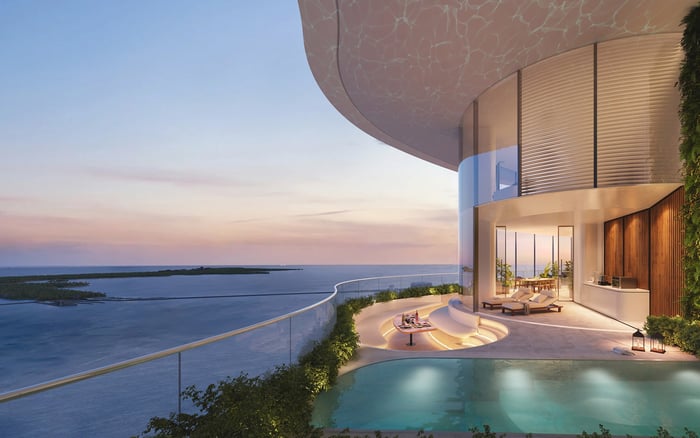
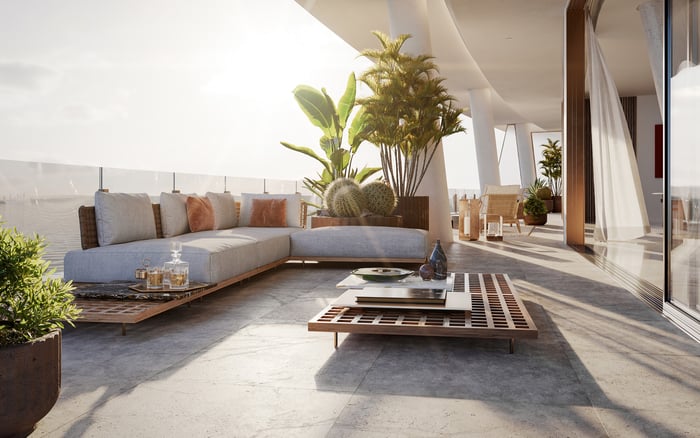
A plan-first comparison of Four Seasons Residences Coconut Grove and Mr. C Residences Boca Raton for buyers who host, entertain, and value acoustic privacy.

Four Seasons Residences Coconut Grove and Mr. C Residences Boca Raton both sit within South Florida’s hospitality-branded residential conversation, where service language, atmosphere, and lifestyle imagery can become persuasive quickly. For the serious buyer, however, the more revealing question is not which sales gallery feels more seductive. It is which residence performs when a private dinner is underway, guests are moving through the home, and one member of the household wants quiet while another is hosting.
That makes this comparison less about brand preference and more about lived-in function. A buyer who entertains frequently should study each plan through three lenses: private dining, entertaining flow, and acoustic separation. Those categories may sound practical, but at this tier they are luxury issues. A residence that hosts beautifully, without friction, will feel composed long after the rendering has been forgotten.
For a new-construction or pre-construction purchaser comparing Coconut Grove with Boca Raton, the discipline is to slow the emotional cadence of the presentation. The name on the building matters. The way the home absorbs a real evening matters more.
Private dining begins before the first guest sits down. At Four Seasons Residences Coconut Grove, the buyer should look beyond whether the dining vignette appears elegant and ask how the kitchen supports the act of hosting. Is there enough functional depth for preparation, plating, refrigeration, circulation, and cleanup without turning the evening into a visible back-of-house exercise? Can a seated dinner scale gracefully, or does the plan rely on the visual promise of a beautiful table without the support space behind it?
The same questions apply to Mr. C Residences Boca Raton. A hospitality-branded identity can suggest a polished lifestyle, but the private residence still has to manage the mechanics of dinner. The buyer should study dining capacity, the distance between kitchen and table, the practical path for serving, and whether prep activity can remain discreet when guests are present. If outside help or catered service is part of the lifestyle, the plan should be tested for that reality rather than admired only as a furnished scene.
The strongest dining plan is not always the largest. It is the one where preparation, presentation, conversation, and cleanup do not collide. A formal host should ask for furniture plans, appliance and cabinetry details where available, and a clear explanation of how the residence is intended to function during a real hosted meal.
A successful entertaining plan has a sequence. Guests arrive, are received, move toward living areas, gather near dining or view corridors, and eventually spill toward outdoor space if the residence offers that rhythm. The path should feel intuitive, not improvised.
At Four Seasons Residences Coconut Grove, the buyer should evaluate movement from entry to living room, from living room to dining zone, from dining to kitchen or service areas, and from interior entertaining space to terrace life. The question is whether guests can circulate without interrupting preparation, crossing private bedroom thresholds, or congesting the most important social zones.
At Mr. C Residences Boca Raton, the same test should be applied with equal rigor. A beautiful arrival moment is only the first note. The better plan allows the evening to expand naturally, with enough clarity that guests do not need direction at every turn. It should also allow the host to move efficiently between conversation and service tasks without losing the room.
This is where sales-gallery furniture can mislead. A vignette can imply flow by leaving out the messier realities of chairs pulled back, glassware in use, staff or family moving through the kitchen, and guests clustering where the view, bar, or terrace access feels most compelling. The buyer should mentally populate the plan with actual people, not just staged silhouettes.
Sound is one of the most underestimated parts of residential luxury. It reveals itself after closing, often when it is too late to change. For both Four Seasons Residences Coconut Grove and Mr. C Residences Boca Raton, acoustic separation should be treated as a central diligence item rather than an engineering footnote.
The buyer should ask how bedrooms are separated from entertaining areas, whether primary suites sit close to social rooms, and how sound may travel from dining, media, terrace, corridors, neighboring residences, elevators, mechanical systems, or other building infrastructure. Without disclosed ratings or assemblies, the correct posture is not assumption. It is inquiry.
For a household that hosts private dinners, acoustic performance is not only about protecting neighbors from music or conversation. It is about protecting the household from itself. One guest bedroom should not feel attached to the dining room. A late conversation should not make the primary suite unusable. A corridor should not announce every arrival.
Boutique intimacy, branded service, and elegant design all lose force if sound behaves carelessly. The quietest luxury is often the one nobody notices because the plan, envelope, and building systems are doing their work.
The most useful way to compare these residences is to create the same evening in each plan. Imagine eight to twelve guests, a seated dinner, a pre-dinner drink, a transition to the living area, and a late departure. Then trace the route of food, guests, staff or family assistance, dirty plates, sound, and privacy.
For Four Seasons Residences Coconut Grove, diligence should focus on whether the residence supports the buyer’s actual hosting style rather than a generalized idea of refined living. If dinners are central to the lifestyle, the kitchen and dining relationship deserves as much attention as the view or finish palette.
For Mr. C Residences Boca Raton, the buyer should apply the same standard. The brand may create a distinctive emotional setting, but the plan still has to pass the dinner test, the circulation test, and the quiet test. A second-home buyer may use the residence seasonally, but concentrated periods of hosting can make functional shortcomings even more visible.
A thoughtful buyer does not need to reject the romance of a sales gallery. The point is to place it in the proper sequence. Emotion may open the conversation, but plans, specifications, and practical questions should close it.
Before choosing between Four Seasons Residences Coconut Grove and Mr. C Residences Boca Raton, ask for the clearest available plan materials and study them with the habits of a host. Where does a catered tray go? Where do guests gather when the table is not yet ready? Can someone sleep while others continue talking? Does the terrace strengthen the party path or create a bottleneck? Are bedrooms protected from the most active entertaining zones?
The best branded residence for this buyer is not simply the one with the more familiar name or the more cinematic presentation. It is the one whose private spaces remain private, whose social spaces feel generous under pressure, and whose kitchen and dining sequence can carry the evening without exposing every working part.
Which project is better for private dining? The answer depends on the specific residence plan. Compare kitchen depth, dining capacity, prep space, and the serving path before deciding.
Should brand reputation determine the choice? Brand reputation can frame expectations, but it should not replace plan review. The residence still needs to function for the buyer’s daily and entertaining life.
What is the first thing a host should study? Start with the relationship between the kitchen, dining area, living room, and terrace. That sequence usually reveals whether entertaining will feel natural or forced.
Why is acoustic separation so important? Sound affects privacy, sleep, and comfort during real use. It is especially important for buyers who host often or share the residence with family and guests.
Can a sales-gallery vignette prove entertaining quality? No. It can suggest mood and scale, but it cannot substitute for reviewing plans, circulation, specifications, and practical hosting scenarios.
What should buyers ask about bedrooms? Ask how bedrooms are separated from dining, living, terrace, corridor, and service-related noise. Quiet sleeping zones are a core part of luxury.
Does a larger residence always entertain better? Not necessarily. A smaller plan with clear circulation and strong kitchen support may host more gracefully than a larger plan with awkward movement.
How should buyers compare Coconut Grove and Boca Raton lifestyles? Compare location preference separately from floor-plan performance. A favored setting should still be matched with a residence that supports hosting and quiet.
What documents are most useful before committing? Buyers should request available floor plans, finish and appliance information, and any disclosed acoustic or building-system details. The goal is to test real use before emotion takes over.
What is the best way to shortlist comparable options for touring? Start with location fit, delivery status, and daily lifestyle priorities, then compare stacks and elevations to validate views and privacy.
To compare the best-fit options with clarity, connect with MILLION.
If branded residences are on your mind — as a home or as an allocation — we would be glad to share what we are seeing, privately.
Begin a quiet conversation