A discreet buyer’s guide to evaluating Auberge Beach Residences & Spa Fort Lauderdale against Kempinski Residences Miami Design District through the lens of penthouse livability, roof rights, terrace protection, oceanfront maintenance, and real outdoor usability in South Florida weather.
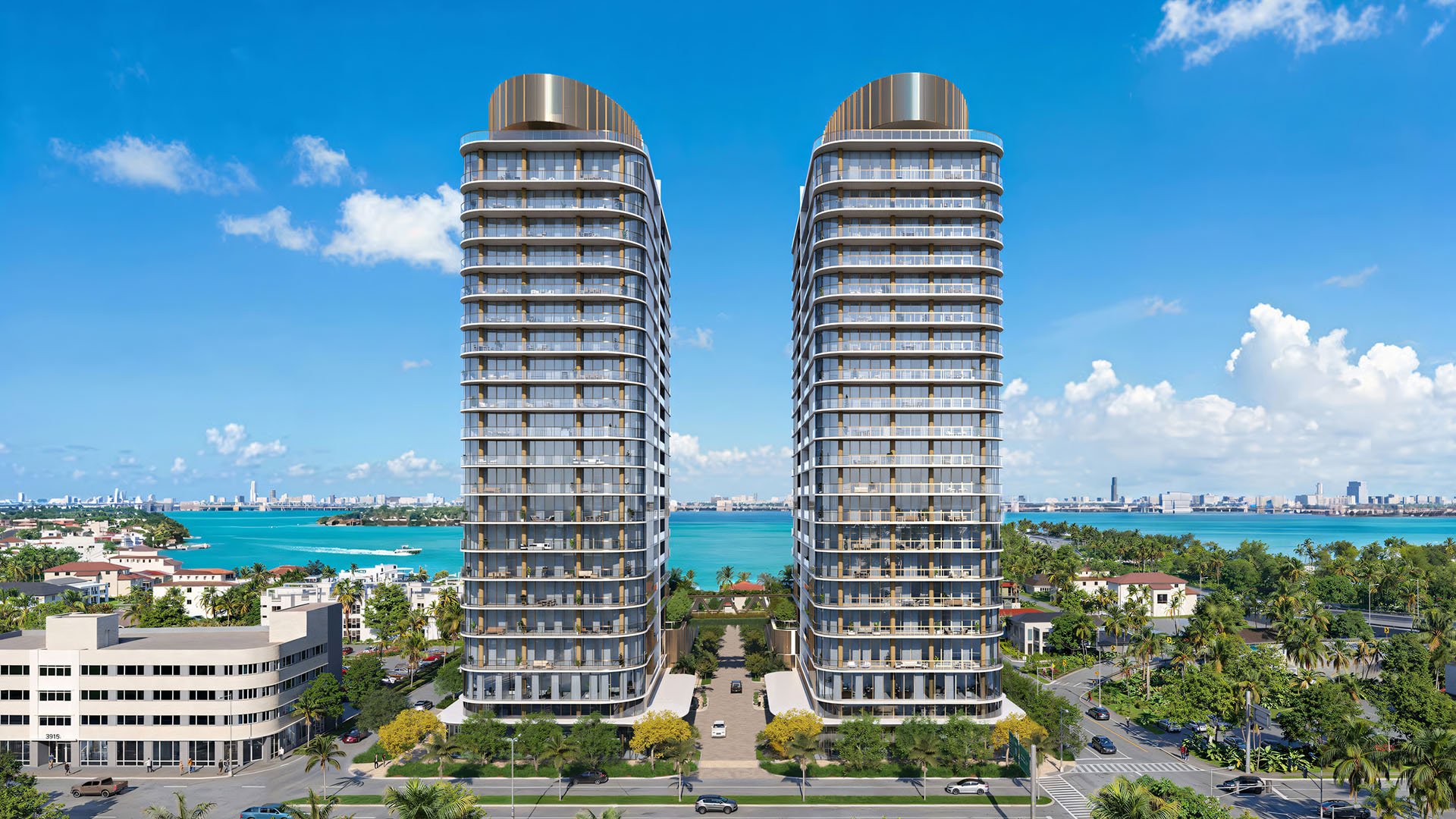
At the top of the South Florida residential market, hospitality branding can be seductive. It promises service, atmosphere, identity, and the assurance that a private home belongs to a broader lifestyle. Yet the more disciplined penthouse buyer understands that the name on the porte cochere is only the beginning. Long-term value is set by physical realities: how the terrace is shaped, how much outdoor space can actually be used, whether roof rights are exclusive, how wind behaves at elevation, and how much maintenance the home demands in a salt-air environment.
That is the proper lens for comparing Auberge Beach Residences & Spa Fort Lauderdale with Kempinski Residences Miami Design District. One is framed by direct oceanfront living in Broward, with immediate beach access and a horizontal resort rhythm. The other belongs to an urban design-district conversation, where culture, dining, and city proximity may compete with the promise of private elevation. For a buyer considering a Penthouse, the question is not which brand feels more glamorous. It is which residence will support the way the owner actually lives.
Auberge Beach Residences & Spa Fort Lauderdale occupies the clearest position in this comparison because its lifestyle premise is direct and physical. It is the Oceanfront option, oriented toward sand, sea, and daily beach use rather than an inland urban pattern. That distinction matters because oceanfront living is not an abstract amenity. It changes the morning routine, the way guests gather, the maintenance profile, and the importance of protected outdoor space.
Here, immediate beach access and a horizontally oriented lifestyle define the experience. This is not the same as simply having a water view from a tall tower. The experience is more tactile: leaving the residence and arriving at the sand, using outdoor rooms as extensions of the interior, and treating the ocean as a daily companion rather than a distant vista.
Beach access is especially relevant for buyers who want their outdoor life to begin at the building edge. In this frame, Auberge is stronger for a household prioritizing beach adjacency and protected terrace living over urban cultural proximity. The value is not just what can be photographed. It is what can be repeated on an ordinary Tuesday morning, in bright sun, moving air, and salt spray.
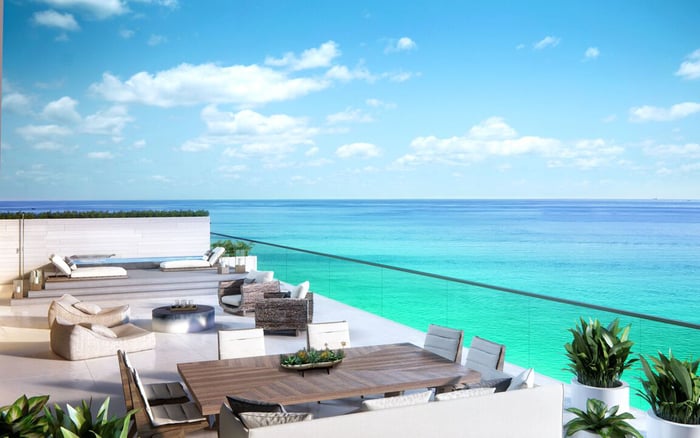
The word Terrace appears constantly in luxury condominium marketing, but not all terraces perform the same way. A shallow ledge can read beautifully in renderings and still fail as a true outdoor room. A deep, recessed terrace can be more valuable because it allows furniture, shade, dining, and conversation to happen with less exposure.
Auberge’s recessed terraces are central to the way the property should be evaluated. They suggest an outdoor-room concept rather than a purely decorative balcony. In South Florida, that distinction is critical. Wind, sun, salt, and storm conditions can turn large but exposed outdoor areas into spaces that are admired more than used. Buyers should ask how the terrace behaves at breakfast, at midday, at sunset, and during shoulder-season weather, not only how it looks on a clear day.
For penthouse buyers, terrace depth also affects privacy. Recessed outdoor space can feel calmer and more residential. It may reduce the sense of being suspended in full exposure, often the hidden tradeoff of top-floor living. This is where Fort Lauderdale’s oceanfront lifestyle can become more practical than theatrical: the best space is not always the largest open plane, but the one that works without negotiation.
Roof rights often carry emotional force. They imply exclusivity, height, and personal command of the sky. But in a South Florida penthouse, roof rights should be examined with a colder eye. Are they deeded or merely usable by custom? Are they private or shared? Can they accommodate shade, landscape, cooking, seating, and safe circulation? Are there limitations from the association, building systems, structural design, or life-safety requirements?
A roof terrace that cannot be comfortably occupied in wind or sun may have less daily value than a smaller, recessed outdoor room one level below. Likewise, an expansive open-air roof can bring maintenance responsibilities that are easy to underestimate. Salt air, storm preparation, drainage, waterproofing, furnishings, and mechanical adjacency all matter. The more elevated and exposed the space, the more its design must prove itself.
This is the central caution in the Auberge versus Kempinski discussion: do not allow brand prestige to blur roof-rights analysis. If Kempinski offers an urban vertical proposition, the buyer should test the upper-level outdoor areas with the same discipline applied to oceanfront property. In both settings, symbolic square footage is not the same as livable square footage.
South Florida buyers often speak of views as if they are the final word. At penthouse scale, wind protection can be just as important. Outdoor rooms that are partially enclosed, recessed, or shielded by architecture can extend the usable season and make entertaining less conditional.
This is where Auberge’s deep, recessed terrace concept becomes meaningful. The practical luxury is not merely to step outside, but to stay outside comfortably. A buyer should consider whether guests can dine without fighting gusts, whether cushions and table settings remain manageable, whether planters can survive, and whether doors can be opened without disrupting interior climate control.
The same scrutiny applies to any urban alternative. In a dense city context, height may deliver drama, but wind patterns around towers can be unpredictable. The most refined buyer will not rely on a view corridor alone. The goal is to understand whether the outdoor architecture creates rooms, not just edges.
Oceanfront living carries a specific maintenance reality. Salt, humidity, and exposure affect glass, railings, hardware, exterior furniture, stone, metalwork, and plantings. A residence on the beach must be loved and managed accordingly. For Auberge, this is not a reason to hesitate, but it is a reason to underwrite the lifestyle honestly.
The buyer who wants the beach at the door is accepting a closer relationship with the elements. That relationship can be magnificent when the terrace is protected and the building is operated with discipline. It can be frustrating when outdoor surfaces are overly exposed or when storm preparation becomes a recurring burden.
For Kempinski Residences Miami Design District, the maintenance questions may be different, but they are not absent. Urban vertical living can involve its own constraints around access, outdoor storage, building rules, and mechanical proximity. The correct approach is to compare the two homes not as branded ideas, but as machines for private life.
Auberge is the stronger fit for the buyer who wants direct oceanfront living, immediate beach use, and outdoor rooms tied to the sand and sea. It suits an owner who values protected terrace life over urban adjacency, and who understands that a home at the water’s edge is both a privilege and a maintenance commitment.
Kempinski Residences Miami Design District may appeal to a buyer whose center of gravity is urban, cultural, and design-led. Without relying on unverified specifics, the comparison can still be framed clearly: if the priority is proximity to a city environment, evaluate the residence around privacy, vertical circulation, roof rights, and outdoor performance at height. If the priority is oceanfront rhythm, Auberge has the more direct lifestyle thesis.
For either choice, the final decision should be made from the outside in. Stand on the terrace. Understand the exposure. Confirm what is private. Study how the outdoor space can be furnished. Ask how it will feel in wind, sun, rain, and salt. Then consider the brand.
The best penthouse is not the one with the most dramatic promise. It is the one where architecture, climate, and ownership rights align. In this comparison, Auberge Beach Residences & Spa Fort Lauderdale offers a clear oceanfront proposition supported by immediate beach access and a recessed terrace language. Kempinski Residences Miami Design District should be evaluated as an urban alternative only after its private outdoor areas, roof rights, and wind behavior are fully understood.
For the ultra-premium buyer, the hierarchy is simple: usable outdoor rooms first, roof rights second, branding third. A name may create confidence, but climate decides whether the space becomes part of daily life.
Is Auberge Beach Residences & Spa Fort Lauderdale the more beach-oriented choice? Yes. Its core lifestyle proposition is direct oceanfront living with immediate beach access.
Should penthouse buyers prioritize roof rights over terrace depth? Not automatically. A deep, protected terrace may be more usable than a larger exposed roof area.
Why does wind protection matter so much in South Florida? Wind can determine whether outdoor space functions as a true room or only as visual square footage.
Is branding enough to justify a penthouse decision? No. Branding should follow the physical evaluation of exposure, privacy, rights, and maintenance.
What should buyers examine first at Auberge? They should study terrace usability, wind exposure, oceanfront upkeep, and daily beach integration.
Can an urban residence compete with an oceanfront penthouse? Yes, if its outdoor areas, roof rights, and private living experience support the buyer’s priorities.
Is oceanfront maintenance a serious consideration? Yes. Salt air, sun, and storms can affect furnishings, finishes, and exterior systems over time.
What makes a terrace feel like an outdoor room? Depth, enclosure, shade, privacy, and furniture flexibility all help transform a terrace into a room.
Who is the best fit for Auberge? A buyer who wants beach adjacency, protected outdoor living, and a resort-like oceanfront rhythm.
What is the main takeaway for penthouse buyers? Choose the residence whose outdoor spaces can be used comfortably in real South Florida weather.
To compare the best-fit options with clarity, connect with MILLION.
If branded residences are on your mind — as a home or as an allocation — we would be glad to share what we are seeing, privately.
Begin a quiet conversation