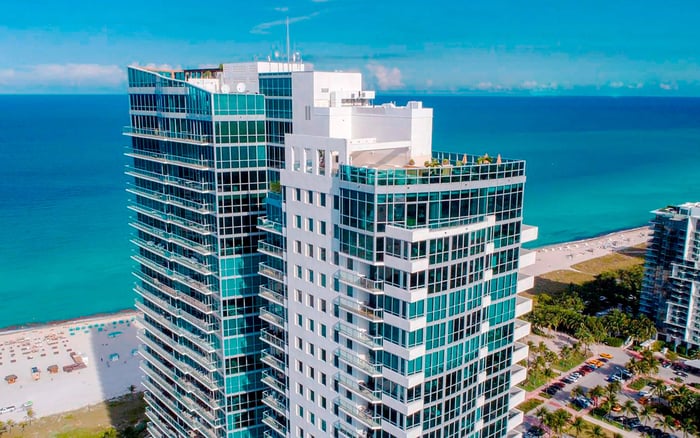
A buyer-focused due diligence guide for evaluating 57 Ocean Miami Beach through wellness amenities, legal documents, coastal building risk, insurance, reserves, and long-term ownership discipline.

At the upper end of Miami Beach real estate, wellness is no longer a decorative amenity category. It shapes daily rituals, service expectations, renovation decisions, resale positioning, and the cost of long-term ownership. For buyers evaluating 57 Ocean Miami Beach, the question is not simply whether the property presents a wellness lifestyle. The sharper question is whether that lifestyle is documented, funded, maintained, and enforceable after closing.
That distinction matters. Beachfront residences are purchased for atmosphere, privacy, water, light, and rhythm. Yet a wellness-focused buyer should resist treating marketing language as proof. Spa areas, fitness spaces, pool service, beach service, concierge support, and wellness programming should be reviewed as separate components. Some may be physical amenities. Some may be staffed services. Some may depend on association budgets, outside vendors, house rules, or separate charges.
In a Miami Beach purchase, the most elegant decision is often the most disciplined one: compare what is presented, what is promised, what is legally included, and what is actually operating.
The first layer of diligence is documentary. Buyers should confirm whether the wellness amenities shown in sales materials match the amenities included in the condominium declaration, bylaws, rules and regulations, and other governing documents. If a buyer is prioritizing a spa, gym, pool deck, beach program, treatment room, meditation space, or wellness concierge concept, the legal review should determine who controls the space, who may use it, and whether access can be limited by rules, reservations, fees, or future association decisions.
This is where sophisticated buyers separate brand atmosphere from ownership rights. A beautiful amenity is not the same as a perpetual right to use it in a particular way. Ask whether wellness spaces are completed, operational, staffed, reserved, or subject to seasonal rules. Ask whether private trainers, massage providers, guests, family members, tenants, or household staff may access those areas. Ask whether the association can change hours, capacity, service levels, or reservation protocols.
Buyers comparing 57 Ocean with other Miami Beach residences such as The Perigon Miami Beach or The Ritz-Carlton Residences® Miami Beach should apply the same standard: the more central wellness is to the purchase rationale, the more carefully it should be tied to enforceable rights and operating budgets.
Wellness ownership can carry two distinct costs: visible monthly dues and the less obvious cost of service continuity. Buyers should confirm whether spa, fitness, pool, beach-service, concierge, and wellness-program elements are included in regular condominium dues or billed separately. The answer can affect both personal use and resale value.
A prudent review should distinguish between physical amenities, programming, service levels, and long-term funding. A building may have a fitness facility, but the staffing model, equipment replacement cycle, class programming, cleaning protocols, and reservation system determine the experience. A beach-service program may be valuable, but its scope, hours, staffing, rules, and cost structure should be understood before contract contingencies expire.
The strongest due diligence file will include the association budget, reserve information, meeting minutes, insurance materials, pending special-assessment disclosures, and any correspondence or minutes discussing repairs, staffing, capital projects, or changes to amenity operations. These documents help reveal whether the wellness experience is supported as a durable residential platform or treated as a flexible line item.
Oceanfront living is the central romance of 57 Ocean, but proximity to the Atlantic also creates a distinct inspection profile. Salt exposure, humidity, wind, storm-surge risk, and long-term exterior maintenance all require attention. This does not mean there is a known problem. It means the buyer’s inspection team should be calibrated to a marine environment.
A structural and building-condition review should focus on concrete condition, balcony systems, waterproofing, exterior coatings, windows, doors, and corrosion-prone components. Garage, storage, mechanical, and common-area conditions should also be evaluated through the lens of coastal exposure. Buyers should ask whether any ongoing or planned repairs affect façades, pools, decks, elevators, garages, waterproofing, beach access, or wellness spaces.
Beach-access rights deserve their own review. A beachfront residence may feel intuitively connected to the sand, but buyers should understand the rules governing use, service, maintenance, closures, and any limits on access. The same level of scrutiny applies when comparing 57 Ocean with other shoreline residences such as Shore Club Private Collections Miami Beach, where the desirability of the beachfront setting should be matched by a careful reading of rights, rules, and practical operations.
Insurance diligence is not a back-office issue for beachfront buyers. It is a primary ownership question. The review should include building coverage, flood coverage, windstorm coverage, general association coverage, and unit-level insurance. Deductibles and exclusions deserve particular attention because they can materially affect exposure after a major weather event.
Buyers should verify whether the residence, common areas, garage spaces, storage spaces, and amenity areas are affected by flood-zone rules, elevation requirements, or storm-surge exposure. The goal is not to eliminate coastal risk. That is impossible in a beachfront market. The goal is to understand how risk is allocated among the association, the unit owner, insurance carriers, reserves, and potential future assessments.
A buyer should also coordinate the insurance review with legal and inspection findings. If a building component is excluded, underinsured, subject to a high deductible, or dependent on association reserves, that fact belongs in the purchase analysis. Resale buyers should be especially attentive to whether prior minutes, budgets, or disclosures identify deferred maintenance, capital planning, or unresolved insurance matters.
The legal review should cover the declaration, bylaws, rules and regulations, rental restrictions, pet policies, renovation rules, amenity access rights, and limits on beach or wellness use. This is particularly important for buyers who expect to renovate, host extended family, employ private wellness professionals, travel seasonally, or hold the property as a second home.
Rental rules and guest policies should be reviewed even by buyers who do not expect to lease the residence. Restrictions can influence future exit strategy and buyer pool. Pet policies, contractor access rules, elevator reservations, work-hour limitations, and renovation approvals can also shape the ownership experience. In luxury condominiums, the details are not minor. They define how privately and efficiently one can live.
Buyers looking across Miami Beach and Surfside may also compare the governance posture of residences such as Eighty Seven Park Surfside with 57 Ocean, not to assume equivalence, but to understand how different buildings organize use rights, service models, and association obligations.
Before closing, a buyer should obtain review from a Florida condominium attorney, a qualified inspector, an insurance advisor, and, where appropriate, a structural engineer familiar with coastal high-rise buildings. In the ultra-premium market, the cost of expert review is modest compared with the value of clarity.
The buyer’s team should compare the project materials, purchase contract, condominium documents, inspection results, association disclosures, budget, reserves, meeting minutes, and insurance information. Any gap between lifestyle presentation and enforceable obligation should be addressed before closing, not after move-in.
The best beachfront acquisitions are not driven by suspicion. They are driven by calm verification. For wellness-focused buyers, that means confirming that the promise of balance, restoration, and ease is supported by documents, funding, maintenance, and service discipline.
What should wellness-focused buyers verify first at 57 Ocean Miami Beach? Start by matching all marketed wellness amenities against the condominium documents, rules, and association materials.
Are wellness amenities automatically included in monthly dues? Not necessarily. Buyers should confirm whether spa, fitness, pool, beach-service, concierge, or wellness-program elements are included or separately billed.
Why is coastal inspection different for an oceanfront condo? Beachfront buildings face salt exposure, humidity, wind, storm-surge risk, and exterior maintenance demands that require specialized review.
Should a buyer review association budgets and reserves? Yes. Budgets, reserves, minutes, insurance details, and assessment disclosures help reveal the building’s financial and maintenance posture.
What structural items deserve attention? Concrete condition, balconies, waterproofing, exterior coatings, windows, doors, and corrosion-prone components should be reviewed.
What insurance questions matter most? Buyers should examine flood, windstorm, general building, and unit-level coverage, with close attention to deductibles and exclusions.
Can rules affect use of wellness spaces? Yes. Access, hours, reservations, guests, staffing, vendors, and fees may be governed by association rules.
Does resale due diligence differ from a new purchase review? Resale buyers should pay special attention to meeting minutes, pending repairs, prior disclosures, and any special-assessment risk.
Should beach access be reviewed legally? Yes. Buyers should understand use rights, service rules, maintenance responsibilities, and any limits affecting beach or amenity access.
What is the best way to shortlist comparable options for touring? Start with location fit, delivery status, and daily lifestyle priorities, then compare stacks and elevations to validate views and privacy.
For a tailored shortlist and next-step guidance, connect with MILLION.
If branded residences are on your mind — as a home or as an allocation — we would be glad to share what we are seeing, privately.
Begin a quiet conversation