A discreet, practical guide for South Florida luxury condo buyers who want to evaluate neighborhood noise before making a 2026 purchase decision.
For the 2026 luxury condo buyer, silence is no longer assumed. It is inspected, compared, negotiated, and, when properly understood, valued. South Florida’s most desirable addresses often sit within places of energy: waterfront promenades, marinas, restaurant districts, bridges, causeways, construction corridors, and animated hotel zones. The question is not whether a neighborhood has sound. The question is whether that sound profile matches the life a buyer expects to live.
A residence can look serene in a brochure and feel entirely different at 11:30 p.m. on a Saturday, during a weekday school drop-off, or when a nearby project begins its morning work cycle. The most sophisticated buyers now treat acoustics with the same seriousness they bring to views, ceiling heights, private elevator entries, and finishes. A quiet bedroom, a usable balcony, and a calm primary suite may matter more over five years than a dramatic first impression in the lobby.
One showing is not enough. A credible neighborhood noise test begins with at least four visits: weekday morning, weekday evening, weekend afternoon, and late night. Each visit reveals a different version of the building’s surroundings. Morning exposes delivery patterns, school traffic, service vehicles, and commuter movement. Evening reveals restaurant noise, valet circulation, and bridge or arterial traffic. Weekend afternoons capture boating, beach access, event traffic, and pool deck activity. Late night is the test of sleep quality.
Do not stand only in the sales gallery or lobby. Test the actual line, exposure, and elevation whenever possible. Open the terrace door, then close it. Sit in the primary bedroom for several minutes. Stand near the elevator bank. Listen in the hallway. Walk the garage entrance. The aim is not to find absolute silence. It is to understand rhythm, repetition, and whether the sound disappears when the residence is sealed.
In Brickell, for example, a buyer considering 2200 Brickell should evaluate not only skyline energy, but also the relationship between the residence, traffic corridors, service access, and evening activity. Urban luxury rewards buyers who understand exactly which sounds are part of the lifestyle and which become daily friction.
Terrace sound can be acceptable, even enjoyable, if the interior performs beautifully. A balcony overlooking water, restaurants, or a lively avenue may carry a low atmospheric hum that feels appropriate to the setting. Bedroom noise is different. The primary suite is where the test becomes uncompromising.
Close all doors and windows. Turn off music. Ask for several quiet minutes. Listen for low-frequency bass, elevator vibration, mechanical hum, nearby rooftop equipment, hallway transfer, and intermittent bursts from motorcycles, sirens, or boat traffic. Repetitive noise is usually more important than a single loud event. A faint but constant mechanical tone can become more intrusive than a brief exterior sound.
For oceanfront buyers comparing buildings such as 57 Ocean Miami Beach, the terrace may be part of the romance. The more critical question is whether the interiors support rest when wind, beach activity, pool decks, and roadway movement become part of the surrounding soundscape.
High floors can reduce some street-level noise, but they can also introduce different acoustical conditions. Sound may travel across water or open corridors in ways that surprise buyers. Higher residences may be farther from delivery trucks and pedestrians, yet more exposed to wind, distant traffic, rooftop systems, or event noise from neighboring buildings.
Lower floors deserve equal care. They may offer a stronger connection to gardens, pools, or water, but they can also sit closer to service areas, valet lanes, loading docks, dog walks, and amenity decks. Neither high nor low is inherently quieter. The correct answer depends on exposure, building envelope, neighboring uses, and daily operations.
In Sunny Isles, a buyer evaluating Bentley Residences Sunny Isles would be wise to listen from multiple elevations if available. The experience of a residence can change materially from amenity-adjacent levels to the upper floors.
Luxury buyers often focus on obvious sound sources: traffic, nightlife, aircraft, and construction. The more revealing sources are often inside or immediately beside the property. Loading bays, trash rooms, generator areas, garage ramps, valet operations, pet relief zones, elevator shafts, pool equipment, restaurant exhaust systems, and housekeeping routes can shape daily life.
Ask where the service entrance is located. Ask which side receives deliveries. Ask whether any commercial or hospitality components share the site or block. Ask about the placement of mechanical rooms relative to the unit. If the building has marina activity, listen at the times boats are most likely to move. Marina sound can be charming from a distance and disruptive when engines, crew activity, music, and dockside conversation sit directly below a residence.
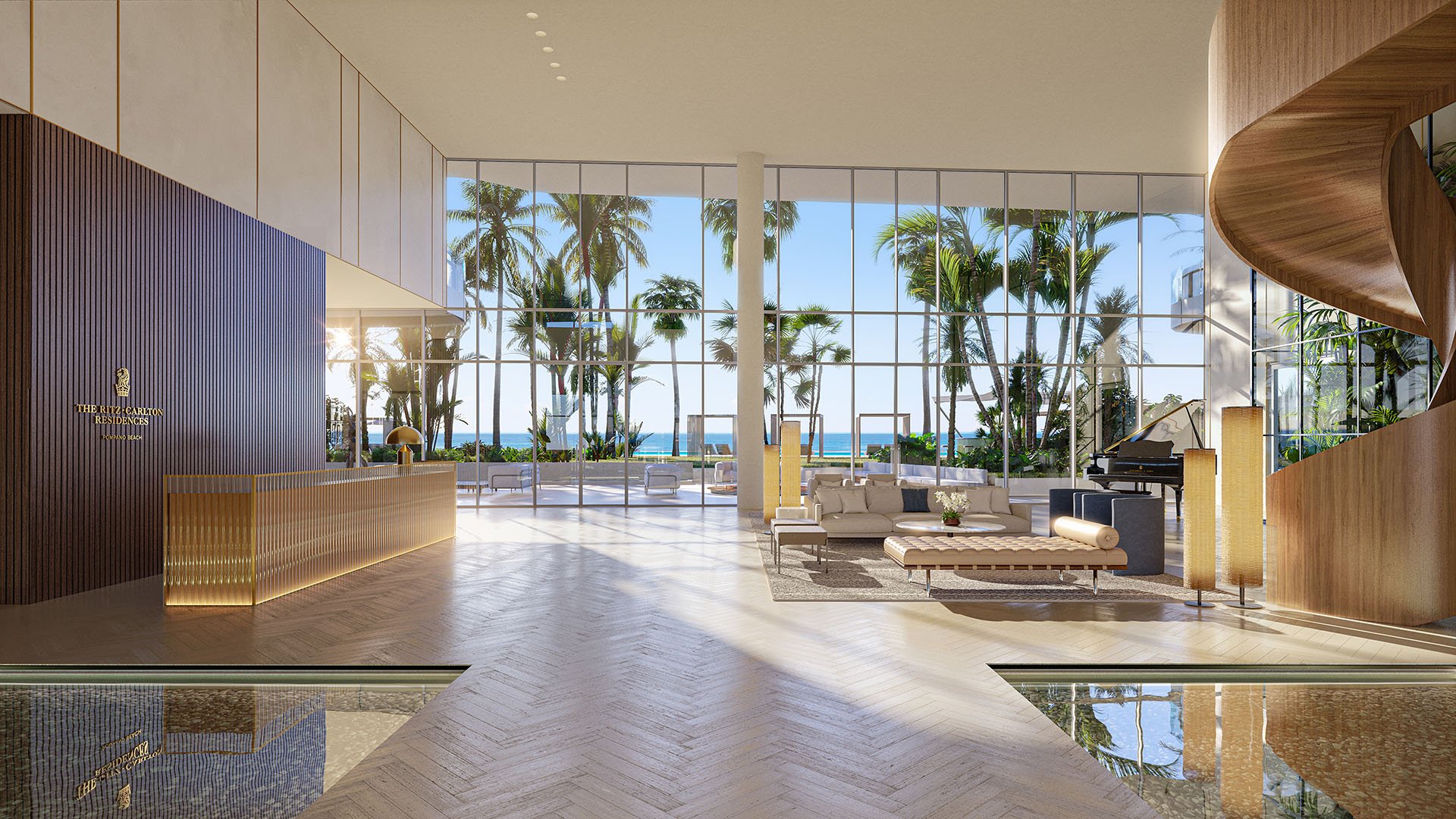
Fort Lauderdale buyers, especially near water and boating corridors, should treat dock activity as part of the acoustic evaluation. At The Ritz-Carlton Residences® Pompano Beach, as with any coastal address, the quiet test should include both landward and seaward exposures rather than relying on a single terrace impression.
In South Florida, new luxury often arrives in clusters. A beautiful view corridor today may be joined by nearby construction tomorrow. Buyers should ask what is planned, entitled, under review, or visibly moving in the immediate area. The concern is not only a future obstruction. It is the interim period of trucks, staging, pile activity, lane closures, and workday rhythm.
New-construction buyers should distinguish between temporary construction noise and permanent neighborhood noise. Temporary noise may be manageable if the long-term setting remains compelling. Permanent noise, such as a heavily used road, nightlife concentration, or recurring service activity, should be priced emotionally before it is priced financially.
A buyer drawn to the village scale of Coconut Grove might compare that character with the wellness-driven residential language of The Well Coconut Grove. Even in quieter districts, the best practice remains the same: visit, listen, wait, and return at a different hour.
The most useful questions are precise. Which glass system is used in the residence? Are balcony doors impact-rated and properly sealed? Where are the nearest mechanical rooms? What building systems sit above, below, or beside the unit? Are there restaurants, retail spaces, hotel uses, or event areas in the building or adjacent properties? Where do delivery vehicles queue? How is pool deck music managed? What are the rules for private events in amenity spaces?
Buyers should also ask for building documents that clarify operating rules. Noise is not only a construction issue. It is a governance issue. A building with clear controls on amenity hours, short-term guests, music, service routing, and renovations may live more quietly than a building with similar physical design but weaker enforcement.
If the residence is exceptional but the sound profile is imperfect, the buyer has options. The issue can inform pricing, timing, floor selection, exposure choice, window treatment planning, or even the decision to choose another line within the same building. A calm north exposure may be preferable to a more dramatic but louder view. A secondary bedroom near the elevator may matter less if the primary suite is protected. A spectacular terrace may still work if interior quiet is excellent.
The goal is not to eliminate personality from South Florida living. It is to avoid surprise. Quiet is personal. Some buyers find the low murmur of the city energizing. Others want near-total retreat the moment the elevator opens. The neighborhood noise test makes that preference visible before the deposit becomes emotional.
How many times should I visit before buying? Aim for at least four visits at different times, including one late-night visit and one weekend visit.
Is a higher floor always quieter? No. High floors may reduce some street noise, but wind, distant sound, and rooftop systems can still matter.
Should I test noise with the balcony door open or closed? Do both. The open-door test shows lifestyle sound, while the closed-door test reveals interior performance.
What is the most overlooked noise source in luxury condos? Service operations are often missed, including loading, trash rooms, valet lanes, and mechanical equipment.
Can marina noise affect a waterfront residence? Yes. A marina can create pleasant atmosphere or recurring disruption depending on proximity and activity patterns.
Should construction nearby stop me from buying? Not necessarily. Separate temporary construction disruption from the permanent sound profile of the address.
Are impact windows enough to ensure quiet interiors? Not by themselves. Installation quality, door seals, wall assemblies, and mechanical placement also influence quiet.
Is nightlife noise always obvious during a showing? No. It may appear only late at night, on weekends, or during seasonal periods of higher neighborhood activity.
Can building rules affect how quiet a condo feels? Yes. Amenity hours, music policies, renovation rules, and guest controls can shape the lived experience.
What should I prioritize if I love the view but worry about sound? Prioritize bedroom quiet first, then evaluate whether terrace noise feels acceptable for your lifestyle.
For a discreet conversation and a curated building-by-building shortlist, connect with MILLION.
If branded residences are on your mind — as a home or as an allocation — we would be glad to share what we are seeing, privately.
Begin a quiet conversation