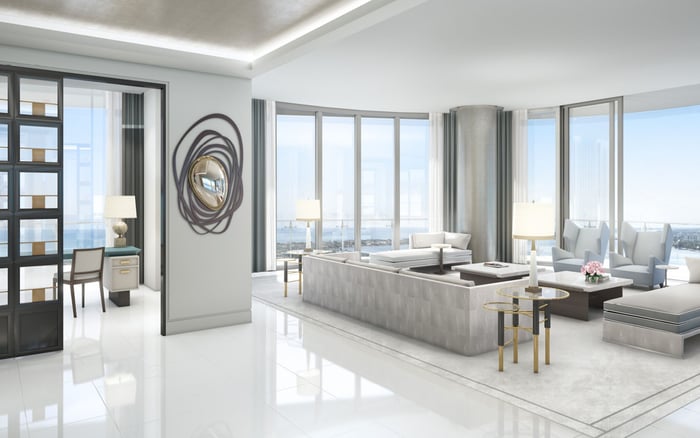
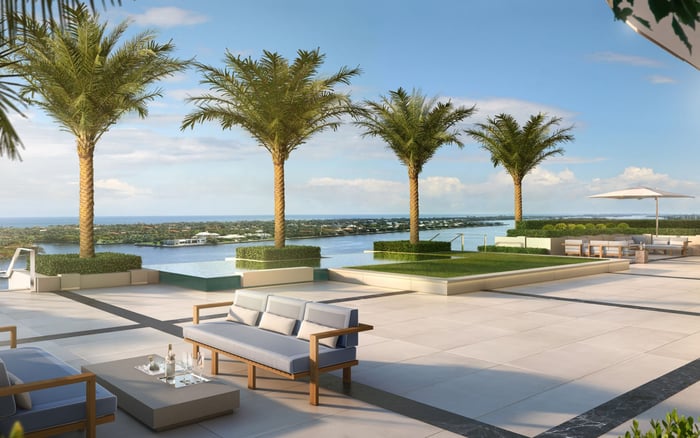
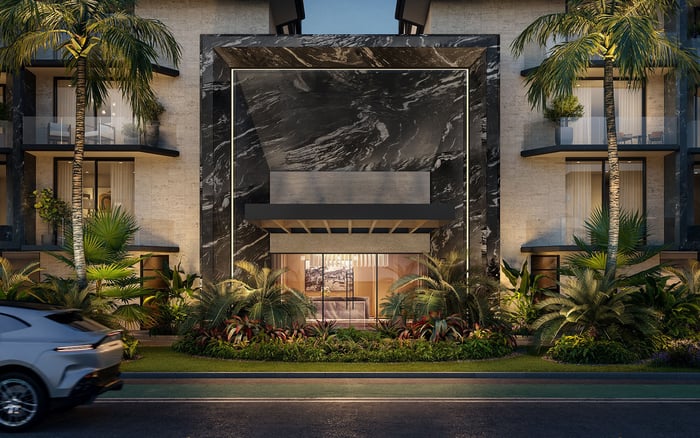
A buyer-oriented comparison of South Flagler House and Forté on Flagler in West Palm Beach, focused on how ultra-luxury households should evaluate service circulation, privacy, art installation, storage, and daily livability before choosing a Flagler Drive residence.
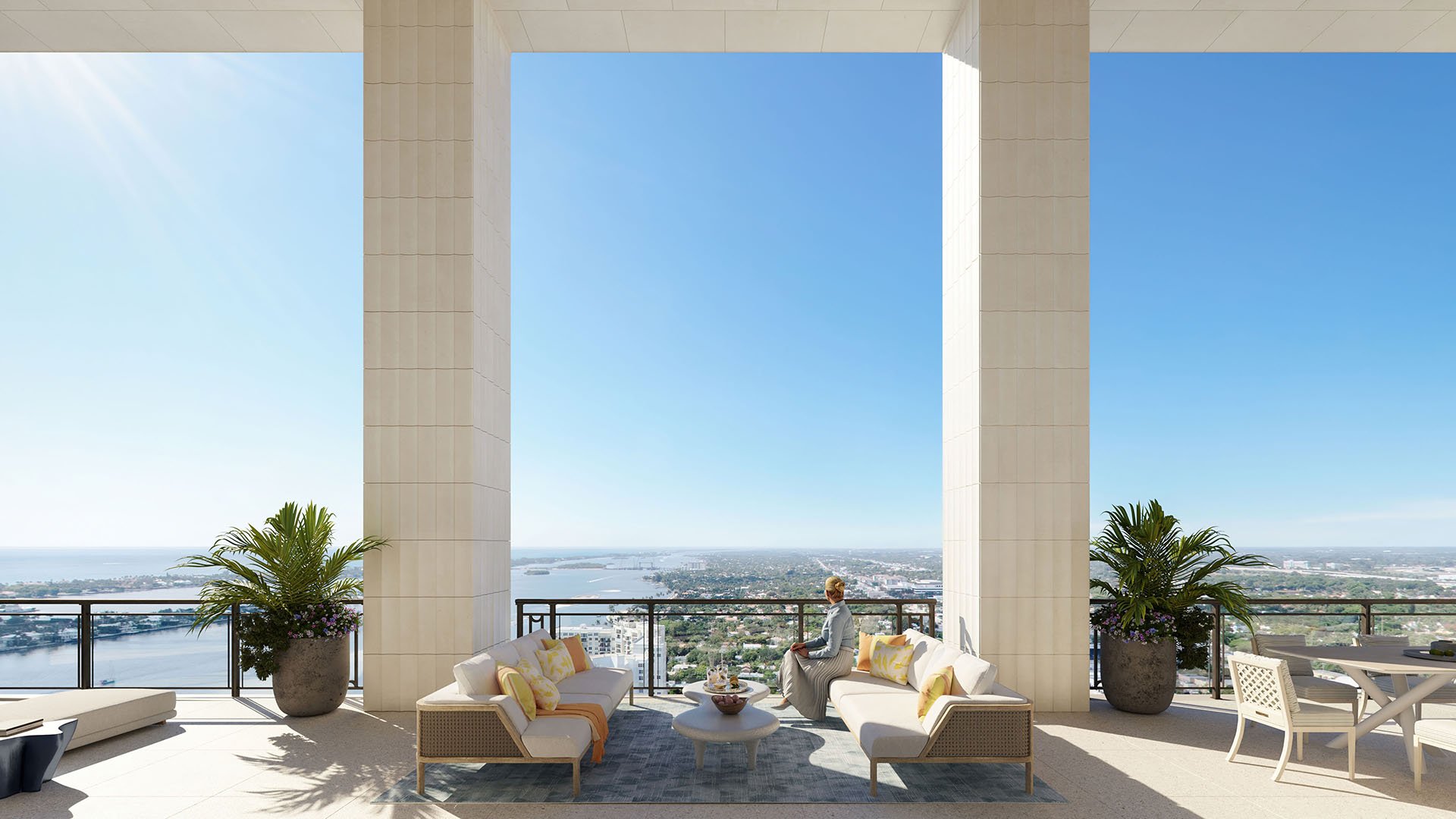
On West Palm Beach’s most scrutinized residential corridor, beauty is only the first threshold. The more revealing measure is how a residence performs when life is fully in motion: private dinners, visiting family, art handlers, house managers, florists, stylists, drivers, and security moving in carefully choreographed layers. That is the lens through which South Flagler House West Palm Beach and Forté on Flagler West Palm Beach deserve to be compared.
Both are West Palm Beach projects, and both occupy the buyer imagination around Flagler Drive living. Yet the most sophisticated comparison is not a beauty contest. It is a due-diligence exercise. For households accustomed to staff, collections, discretion, and formal entertaining, the decisive issues may be less visible than the view: service circulation, delivery protocols, elevator dimensions, entry sequencing, privacy between family and staff zones, and the ability to install meaningful art without compromising the architecture.
Household-staff flow is often discussed as if it were a single feature. In practice, it is an operating system. A buyer should study how people and objects enter the building, pass through controlled points, reach the residence, and remain discreet once inside. The strongest buildings allow daily support to feel invisible rather than improvised.
For South Flagler House, the prudent approach is to evaluate household-staff flow as an open question to verify through plans, building rules, and private walkthroughs. The same applies to Forté on Flagler. Buyers should not assume staff corridors, service elevators, back-of-house routing, or delivery handling without reviewing confirmed documents. The elegant question is not simply, “Does it have service access?” It is, “Can the residence support the way this household actually lives?”
For a principal residence, that may mean a house manager arriving before the family wakes, a chef receiving provisions without crossing formal entertaining areas, or a valet coordinating luggage while guests remain unaware of the logistics. For a seasonal home, it may mean maintenance, wardrobe rotation, art care, and security checks taking place while owners are away. In either case, staff flow should be tested against real routines, not brochure language.
Collectors often ask about height, but art-worthy scale is a broader discipline. Wall proportion, natural light exposure, climate stability, installation access, freight movement, elevator capacity, turning radii, storage options, and privacy during installation all matter. A dramatic wall is only useful if a work can be brought safely to it.
That is why South Flagler House versus Forté on Flagler should be approached through a sequence of practical questions. Can large works arrive without passing through high-traffic social areas? Are there suitable staging points for installers? How are insurance, security, and after-hours access handled? Does the residence offer meaningful wall runs, or does glazing dominate the composition? Are humidity, sunlight, and temperature conditions compatible with the collection?
No buyer should infer art-storage features, ceiling heights, or service-elevator specifications for either property without confirmed materials. Instead, the advantage belongs to the building and residence line that can document the route from truck to wall, then support the collection long after installation day. A residence can be glamorous in photographs and still prove difficult for serious art living.
The temptation in any “versus” comparison is to declare a winner. Here, that would be too blunt. South Flagler House and Forté on Flagler should be assessed against the buyer’s operating profile. A couple with a lean staff, a modest collection, and frequent travel may prioritize lock-and-leave privacy. A family with private chefs, rotating guests, and a material collection may care more about separation of movement and robust delivery choreography.
The site visit should be structured. Begin with arrival: car, valet, private entry sequence, guest reception, and staff access. Then examine vertical movement: resident elevators, service movement where available, and delivery controls. Next, study the residence itself: where staff would stage, where luggage would land, where catering would flow, and where art would live. Finally, review governance: rules for vendors, hours, insurance requirements, elevator reservations, and storage use.
This is where Shorecrest Flagler Drive West Palm Beach and Alba West Palm Beach can be useful contextual comparables for buyers surveying the broader West Palm Beach landscape. They need not answer the same brief, but they help frame how different buildings may interpret privacy, waterfront living, and modern residential service.
In buyer shorthand, this is a West-palm-beach and Palm-beach conversation, often filtered through New-construction, Penthouse, and Waterview priorities. Those search labels are useful, but they are only the beginning. The better lens is operational elegance: the degree to which the residence makes complex living feel serene.
A serious buyer should request residence plans, building circulation diagrams where available, elevator and loading information, delivery rules, vendor access policies, storage details, and any confirmed specifications relevant to artwork, climate, and installation. The goal is not to collect paper for its own sake. The goal is to understand friction before it becomes part of daily life.
For South Flagler House, ask how the residence supports privacy between family, guests, and staff during a normal day. For Forté on Flagler, ask the same question using the same checklist. Consistency matters. A fair comparison requires both buildings to be tested against identical scenarios: a catered dinner, an art delivery, a family arrival with luggage, a staff shift change, and a maintenance visit while owners are absent.
Buyers considering a larger regional move may also compare the West Palm Beach experience with branded or design-forward alternatives elsewhere in South Florida, such as The Ritz-Carlton Residences® West Palm Beach. The point is not to dilute the Flagler Drive decision, but to clarify what kind of service culture feels most natural.
This comparison matters most for households that live with invisible complexity. That includes collectors, frequent hosts, families with multi-generational use, owners with private aviation rhythms, and buyers who expect residences to function with the precision of a private estate. For them, household-staff flow is not a luxury extra. It is the difference between calm and constant adjustment.
Art-worthy scale is similarly personal. A buyer with a few decorative works may need handsome walls and good light. A serious collector needs a building that respects movement, privacy, condition, and security. In that context, the best residence is the one where architecture, operations, and ownership habits align.
South Flagler House West Palm Beach and Forté on Flagler West Palm Beach both belong in the conversation for buyers focused on Flagler Drive. The final choice should come only after confirming the details that cannot be seen from the skyline: how staff move, how art arrives, how privacy is protected, and how gracefully the building performs when no one is watching.
Is South Flagler House or Forté on Flagler better for household staff? The better fit depends on confirmed circulation, access rules, and the buyer’s staffing model. Review plans and operating policies before drawing a conclusion.
Can buyers assume either building has dedicated service corridors? No. Service corridors, service elevators, and back-of-house routes should be verified through official materials and building representatives.
What does art-worthy scale mean in this comparison? It means more than impressive rooms. Buyers should evaluate wall proportions, installation routes, climate conditions, storage, security, and privacy.
Should collectors ask different questions than typical luxury buyers? Yes. Collectors should focus on freight movement, staging, light exposure, humidity, insurance requirements, and after-hours installation protocols.
Is this a ranked comparison? No. The available verified information supports a due-diligence comparison rather than a ranked winner between the two properties.
Why does staff flow matter in a condominium residence? Staff flow affects privacy, entertaining, maintenance, deliveries, luggage movement, and the overall calm of daily living.
What should buyers bring to a private tour? Bring a practical checklist based on real routines, including catering, art delivery, guest arrivals, staff access, and travel-related maintenance.
Are pricing and floor plans discussed here? No. Pricing, unit counts, floor plans, and detailed specifications should be reviewed only through current confirmed materials.
How should seasonal owners evaluate these buildings? Seasonal owners should focus on access during absences, vendor coordination, security, climate control, and maintenance procedures.
What is the most important takeaway? The right Flagler Drive residence is the one that supports private life with the least visible friction.
For a discreet conversation and a curated building-by-building shortlist, connect with MILLION.
If branded residences are on your mind — as a home or as an allocation — we would be glad to share what we are seeing, privately.
Begin a quiet conversation