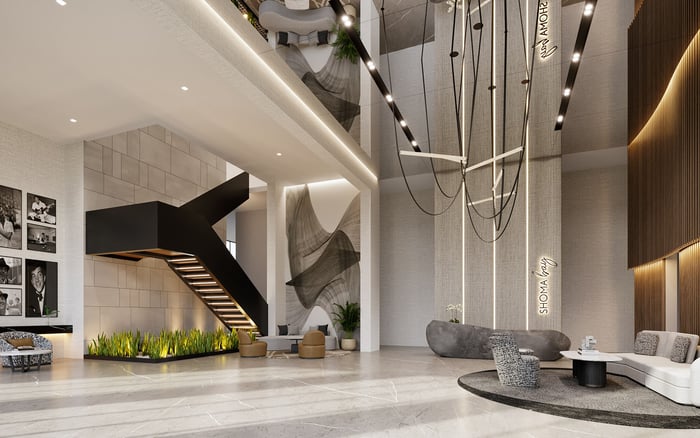
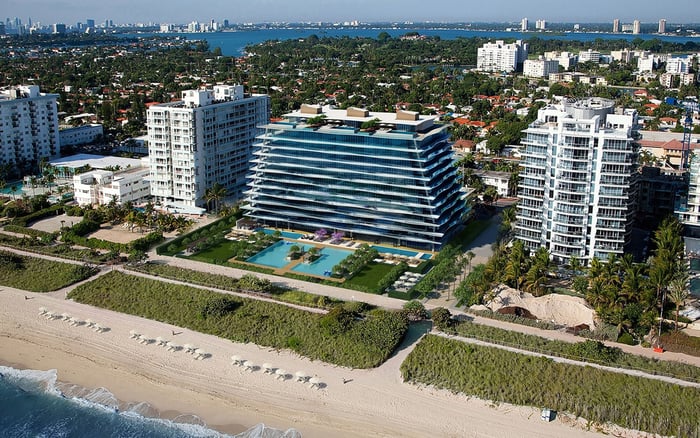
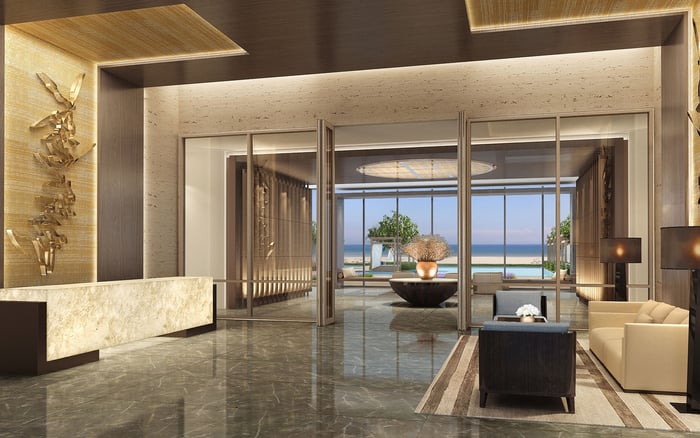
Surfside’s appeal lies in its rare balance: a quiet residential posture that still supports graceful hosting, easy arrivals, and private owner routines.
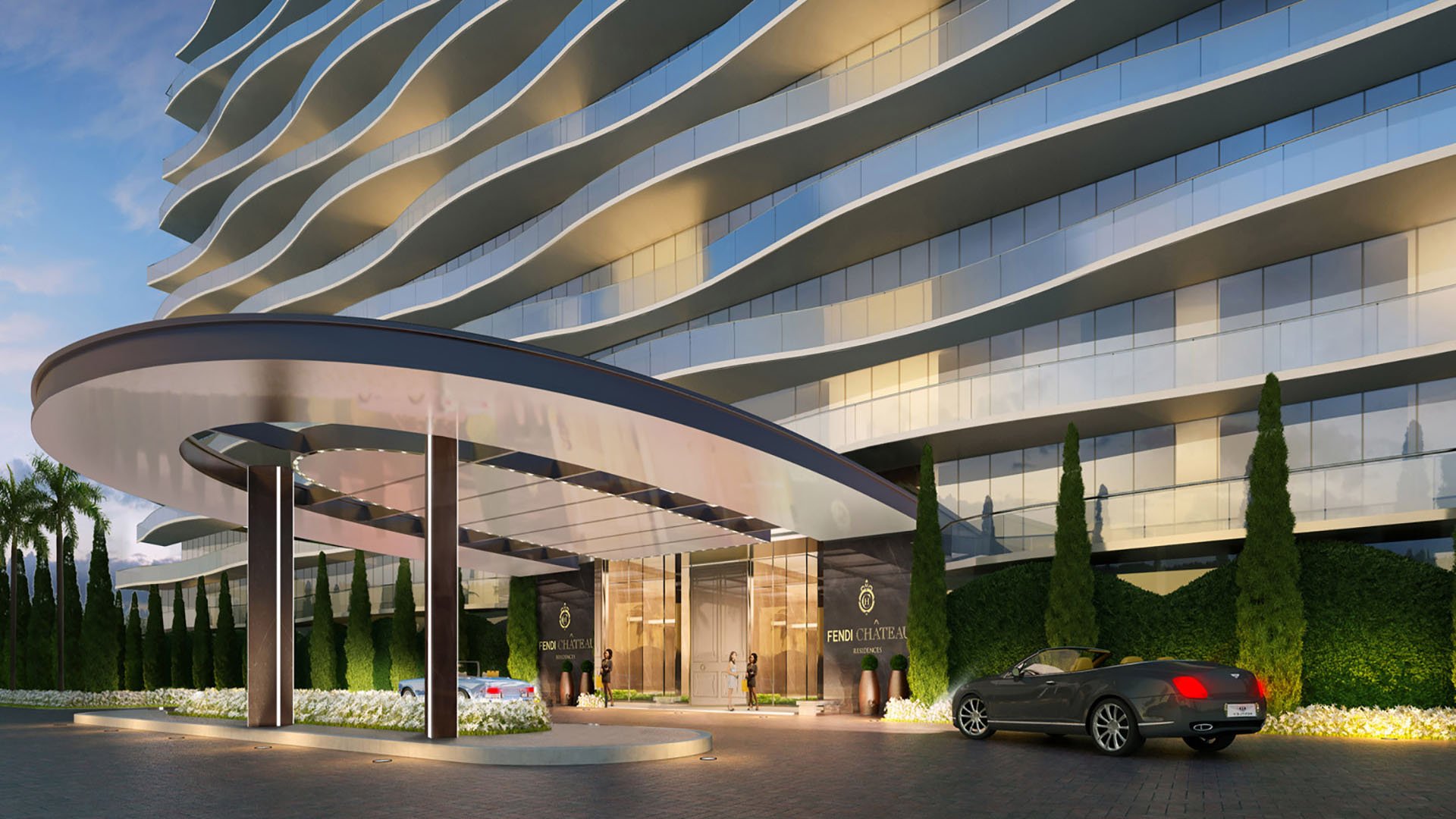
For many ultra-premium buyers, the question is no longer simply whether a residence is beautiful. It is whether the home can absorb a full social life without making ownership feel exposed. Surfside answers that requirement with unusual clarity: a residential setting where guests can be welcomed elegantly while the owner’s daily rhythm remains protected.
That distinction matters. A South Florida home often functions as more than a primary residence or second home. It may receive adult children, close friends, extended family, private chefs, wellness practitioners, drivers, and visiting colleagues. The right property must make those arrivals feel seamless without allowing the home to read like a lobby.
In Surfside, the strongest buyer brief is often less about spectacle than choreography. Where do guests arrive? How are they greeted? Can they reach the residence, beach, pool, or dining areas without passing through the owner’s most private spaces? Does the building culture support discretion, or does it encourage constant visibility? These questions increasingly define true luxury.
Surfside attracts buyers who want proximity to the broader Miami lifestyle without placing themselves inside its highest-volume corridors. That is the essential tension the town resolves. Owners can host with ease, then return to a setting that feels composed, residential, and controlled.
The privacy benefit is not only emotional. It is practical. Smaller-scale environments can make arrivals easier to understand. Guests know where to go. Staff can coordinate without excessive movement. Family members can come and go without feeling as if they are entering a stage set. The home remains gracious rather than performative.
This is why boutique scale, oceanfront calm, and beach-access convenience carry such weight in the Surfside conversation. The best residences are not so isolated that they complicate hospitality. They are positioned to welcome people naturally while preserving a sense of retreat.
In MILLION advisory language, the search often sits at the intersection of Surfside, Bal Harbour, Bay Harbor, Miami Beach, oceanfront, and boutique preferences. The buyer is rarely choosing only a map point. They are choosing a style of occupancy.
Guest logistics begin before anyone reaches the front door. A polished arrival sequence can reduce friction, protect anonymity, and give visitors a clear understanding of how the property operates. That may include a restrained motor court, an intuitive valet sequence, a well-managed reception area, or elevator access that feels calm rather than crowded.
For owners who entertain frequently, this is not a minor amenity. It is a daily operating system. A residence may have superb interiors, but if visitors create congestion, confusion, or unwanted visibility, the home will not feel private. Conversely, a well-planned building can make even frequent hosting feel orderly.
The ideal scenario is a property where public, semi-private, and fully private zones are legible. Guests can be welcomed with warmth, yet there is no ambiguity about where the household begins. This is especially important for buyers with staff, multigenerational use, or a steady stream of seasonal visitors.
The most successful Surfside residences are evaluated through two parallel experiences. The first is the guest experience: arrival, greeting, circulation, terrace, dining, beach, and departure. The second is the owner experience: morning routines, work calls, wellness, service coordination, and quiet evenings.
When those two experiences overlap too much, privacy erodes. When they are thoughtfully separated, the home can host generously without requiring the owner to retreat. This is one reason floor plan logic matters as much as finish level. Entry galleries, powder rooms, service access, bedroom placement, staff circulation, and terrace orientation all influence how the residence lives.
Buyers should consider whether guests can enjoy the social portions of the home without drifting into family rooms, office zones, or bedroom corridors. They should also consider whether household help can support an event without crossing the most personal areas of the residence. These details are rarely glamorous, but they are central to luxury.
Some buyers initially equate privacy with remoteness. Surfside suggests another model: privacy through control. The residence does not need to be far from restaurants, shopping, beach life, or nearby enclaves. It needs to manage access well.
That distinction is especially relevant in South Florida, where owners may arrive for long weekends, extended winter stays, or flexible seasonal use. A home that is too removed can become burdensome for guests and staff. A home that is too exposed can compromise the very quiet the buyer is seeking. Surfside’s appeal is that it can support a lifestyle of closeness without demanding constant social contact.
For the right buyer, this balance is powerful. Friends can visit without elaborate planning. Family can gather without feeling stranded. Yet the owner can close the door and return to a private, residential cadence.
The most important due diligence is experiential. Buyers should walk the path a guest would take from arrival to residence. They should ask how visitors are announced, how elevators are managed, where cars wait, how deliveries are handled, and how beach or amenity access is controlled.
They should also test the building’s social tone. Some properties feel hotel-like, with constant movement and visibility. Others feel deeply residential, where service is present but quiet. Neither model is inherently wrong, but only one may match a buyer who wants easy guest logistics without sacrificing privacy.
Another key consideration is the future use pattern. A couple who entertains occasionally may prioritize serenity above all else. A family with frequent visitors may need more flexible sleeping arrangements and better separation. An owner who hosts philanthropic dinners, private business meetings, or holiday gatherings may focus on arrival privacy, staff access, and entertaining space.
The point is to define the operating life of the home before falling in love with the view. In Surfside, the best purchase is one where beauty and function reinforce each other.
Surfside’s luxury appeal rests in restraint. It is not trying to be everything to every buyer. Its strongest audience understands that discretion can be more valuable than display, and that convenience can be designed without becoming public.
For buyers who host often, this is the sweet spot. A residence can welcome guests elegantly, accommodate family movement, support service needs, and still feel like a private home. That is a rare combination in any coastal market.
The result is a more sophisticated definition of ease. It is not merely quick access or a beautiful setting. It is the ability to live fully, receive well, and remain unobserved when desired. For many buyers, that is precisely why Surfside remains compelling.
Why does Surfside appeal to privacy-focused buyers? Surfside appeals because it can feel residential and composed while still supporting an active hosting lifestyle.
Is guest logistics really a luxury real estate priority? Yes. For many buyers, arrival flow, service coordination, and visitor privacy are as important as finishes.
What should buyers look for in a Surfside building? They should study arrival design, elevator flow, staff access, amenity circulation, and the overall culture of discretion.
Does privacy mean choosing a remote property? Not necessarily. Privacy often comes from controlled access and thoughtful planning rather than distance.
Why does building scale matter? Scale affects how visible residents and guests feel, and how calmly the property handles daily movement.
How can a residence support frequent visitors? A strong layout separates guest areas from bedrooms, workspaces, service zones, and family routines.
Are oceanfront settings always the best choice? They can be compelling, but the better question is whether the setting supports both views and privacy.
What role do amenities play in guest logistics? Amenities matter when guests can use them intuitively without disrupting the owner’s private areas.
Should second-home buyers think differently? Yes. They should consider how easily the home operates when they arrive, depart, host, or lend it to family.
What is the key Surfside buying principle? Choose the residence that makes hospitality feel graceful while keeping the owner’s life quietly protected.
If you'd like a private walkthrough and a curated shortlist, connect with MILLION.
If branded residences are on your mind — as a home or as an allocation — we would be glad to share what we are seeing, privately.
Begin a quiet conversation