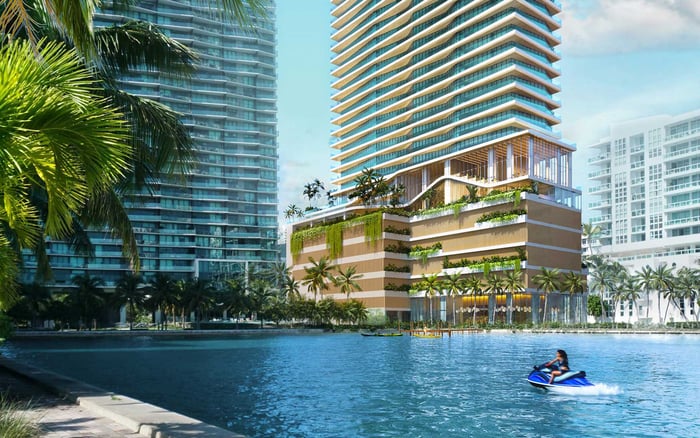
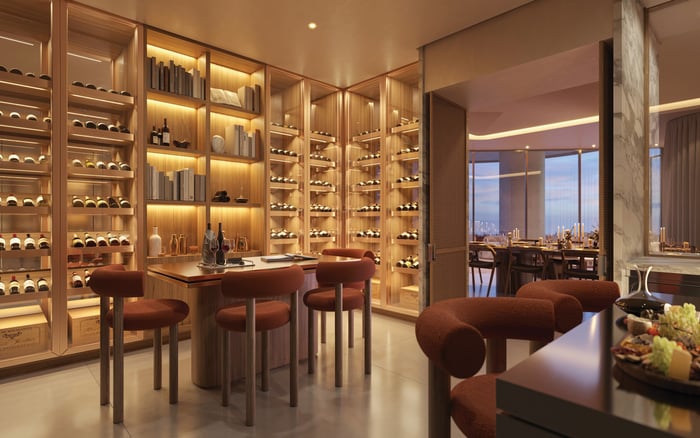
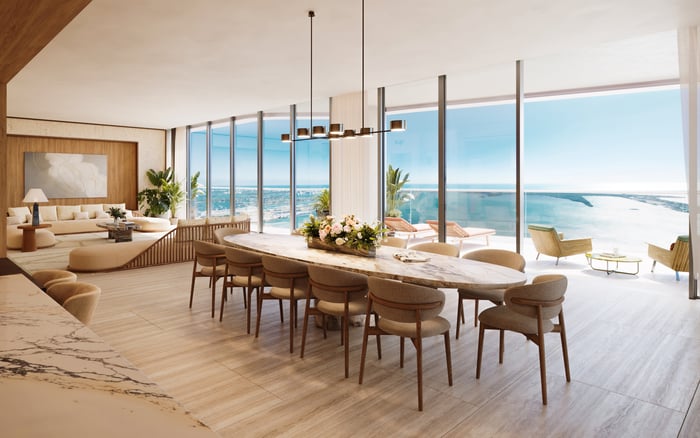
For high-frequency buyers, a residence's invisible systems can matter as much as its views. This MILLION editorial examines the South Florida buildings and operating models best suited to owners who depend on secure receiving, discreet staff circulation, smart access control, and hospitality-grade service discipline.

For a certain class of owner, residential luxury is no longer defined only by ceiling height, waterfront exposure, or a branded arrival sequence. The real differentiator often sits behind closed doors: how a building receives, secures, stores, and moves everything from couture deliveries to household provisions, visiting staff, and time-sensitive packages.
In South Florida, that question has become especially pressing. Heat and humidity raise the stakes for receiving areas. Frequent travel increases the value of remote authorization. Full-time households, hybrid owners, and family offices place heavier demands on concierge coordination than a conventional condominium model was built to handle.
The strongest buildings tend to excel in four areas: branded-service depth, smart-access integration, dedicated service circulation, and secure storage capacity. Those traits do not belong to a single neighborhood or typology. In Brickell and Downtown, larger mixed-use environments can offer scale, throughput, and layered staffing. In Surfside or Miami Beach, a more boutique format may deliver tighter control and a more personalized chain of custody. In Sunny Isles, the oceanfront luxury model often relies on concierge-supported handling that helps keep service discreet.
For buyers considering St. Regis® Residences Brickell or The Residences at Mandarin Oriental, Miami, the larger lesson is clear: service culture is not an amenity. It is infrastructure.
1. The Residences at Mandarin Oriental, Miami - branded hospitality discipline
For owners who want white-glove handling as part of the residential baseline, this is one of the clearest fits in the market. Branded hospitality service is a strong proxy for package control, household coordination, and the kind of back-of-house rigor that matters when deliveries are frequent and discretion is non-negotiable.
This type of platform tends to appeal to international owners, principals with staff, and buyers who expect service requests to move through a refined operational chain rather than an improvised concierge desk.
2. The St. Regis Residences, Miami - high-touch coordination for complex households
The appeal here lies in the hotel-branded service model and the expectation of elevated concierge standards. For owners managing deliveries, household personnel, visiting assistants, or overlapping service requests, that operational culture can be more valuable than any headline amenity.
In practice, buildings shaped by hospitality protocols often stand out because they are better prepared for timing, privacy, and resident-specific handling.
3. Paramount Miami Worldcenter - scale, throughput, and centralized receiving
Large master-planned environments can offer the opposite advantage of a boutique property: operational scale. Paramount Miami Worldcenter is notable because extensive amenity and service infrastructure can translate into stronger receiving capacity, more robust staffing, and better delivery throughput.
For owners with heavy package volume or multiple household inputs, scale can reduce friction in ways smaller buildings sometimes cannot.
4. Brickell City Centre - integrated systems in the urban core
Brickell City Centre is relevant for buyers who prioritize organized delivery patterns and efficient service circulation in a dense urban setting. Integrated building systems and the logic of a mixed-use environment make it an important benchmark when evaluating how deliveries move without overwhelming resident-facing spaces.
For buyers who live actively in Brickell, that combination of infrastructure and location can be especially practical.
5. Echo Brickell - smart control and remote authorization
Echo Brickell earns its place because smart-home integration increasingly shapes the logistics conversation. Owners who travel frequently or delegate access need more than secure doors; they need the ability to manage entry, deliveries, and household operations remotely.
That digital layer is becoming central to modern luxury livability, especially in buildings where app-based notifications and controlled access support more flexible receiving.
6. ARTE by Antonio Citterio - boutique scale and controlled handling
Not every logistics-focused buyer wants a large tower. ARTE by Antonio Citterio represents the boutique case: fewer residences can mean lower package volume, more personalized handling, and a more controlled service rhythm.
For owners who value privacy above throughput, this can be a compelling trade.
7. 1000 Museum - super-prime complexity with premium support expectations
In the super-prime category, operational sophistication matters. 1000 Museum belongs in the discussion because its service model and building complexity make it relevant for buyers comparing premium support systems and day-to-day resident assistance.
For households that expect seamless execution behind the scenes, that operational layer can be decisive.
8. Monad Terrace - privacy-forward systems and concealed service functions
Monad Terrace stands out for its emphasis on design, privacy, and modern building systems. Those qualities matter when assessing contactless deliveries, secure access, and the ability to keep service functions visually quiet.
For buyers in Miami Beach who are especially sensitive to discretion, that combination is meaningful.
9. Jade Ocean - concierge-supported handling in oceanfront product
Jade Ocean deserves a place on any serious shortlist for owners comparing concierge-supported delivery handling in oceanfront residences. Established luxury product can still compete well when service is disciplined and receiving remains resident-friendly.
For Sunny Isles buyers, the question is often less about novelty and more about how consistently the building supports daily life.
10. Ten Museum Park - advanced receiving and concierge coordination
Ten Museum Park remains part of the conversation for package-heavy owners because of its service-oriented positioning and concierge coordination. It is especially relevant for buyers who want Downtown access while still placing real value on operational support.
As with any shortlist, the right fit depends on whether an owner prioritizes scale, personalization, or smart control.
The first is branded service. Hospitality-backed residences often bring more disciplined staffing models, more polished service protocols, and clearer accountability around receiving and household requests. That helps explain the enduring appeal of branded projects in Brickell, Downtown, and beyond, including Waldorf Astoria Residences Downtown Miami.
The second is smart-building integration. App-based notifications, controlled access, and remote authorization tools are increasingly tied to how smoothly an owner can manage deliveries without being physically present. This is especially important for second-home buyers, frequent travelers, and family offices that need delegated access without compromising security.
The third is service circulation. Buildings with dedicated service elevators and separate staff routes are generally better suited to frequent deliveries because they reduce interference with resident-facing areas. In a market where presentation matters, invisible movement is part of true luxury.
The fourth is storage and receiving quality. Climate-controlled holding areas may sound operational rather than glamorous, yet in South Florida they are essential. Luxury goods, perishables, floral installations, electronics, and wardrobe deliveries all benefit from a receiving environment designed for more than basic parcel drop-off.
For some buyers, smaller ultra-luxury buildings are the ideal answer. Lower residence counts can mean fewer daily delivery conflicts, more personalized handling, and a staff culture that knows each household's preferences intimately. This helps explain why Surfside and boutique enclaves continue to attract owners who want a tightly edited living experience. Projects such as Arte Surfside often resonate with that buyer profile, as do other boutique addresses where privacy is part of the operating model.
For others, scale wins. Larger developments may offer more robust loading capacity, deeper staffing, and a receiving system built for constant volume. In busy urban neighborhoods like Brickell or Downtown, that can be the more functional answer for households with steady package flow, rotating assistants, or regular in-residence services. Buyers studying One Thousand Museum Downtown Miami often understand this instinctively: super-prime living depends on systems, not only aesthetics.
Neither model is universally superior. The more important question is whether your household behaves like a private estate, a hotel suite, or a hybrid of both.
Brickell remains one of the strongest settings for owners who value urban convenience paired with operational sophistication. Dense vertical living tends to reward buildings with integrated systems, mature staffing, and well-managed service circulation. That is why Brickell continues to attract globally mobile owners who treat efficiency as a luxury in its own right. Brickell also tends to appeal to buyers who want proximity to business, making back-of-house reliability all the more important.
Downtown offers a similar but more infrastructure-heavy proposition, with several towers oriented toward high-rise complexity and premium support. For owners juggling multiple residences, assistants, and frequent deliveries, that environment can feel especially practical.
Surfside and Miami Beach lean toward privacy, lower visual noise, and a more controlled residential cadence. In these neighborhoods, buyers may accept less operational scale in exchange for calmer service patterns and stronger personalization.
Sunny Isles remains compelling for oceanfront households that still want concierge-supported delivery handling. Established luxury inventory continues to compete here because day-to-day execution can matter more than novelty.
What makes a residence good for package logistics? The best buildings combine secure receiving, disciplined staff handling, smart access control, and discreet service circulation.
Are branded residences better for back-of-house efficiency? Often, yes. Hospitality-led service models usually translate well to package handling, staff coordination, and resident requests.
Do smaller buildings handle deliveries better than larger ones? Sometimes. Boutique properties can offer more personalized oversight, while larger towers may perform better on volume and throughput.
Why does climate-controlled receiving matter in South Florida? Heat and humidity can affect perishables, electronics, floral deliveries, and luxury goods waiting for pickup or in-unit delivery.
Is smart-home technology relevant to package handling? Yes. Remote access, app notifications, and controlled authorization can make deliveries far easier for traveling owners.
What should buyers ask during a tour? Ask how packages are received, where they are stored, how access is granted, and whether service routes are separate from resident areas.
Is Brickell a strong area for logistics-minded buyers? Yes. Brickell stands out for integrated urban infrastructure, mixed-use convenience, and service-oriented high-rise living.
What about Downtown? Downtown appeals to buyers who want large-building operational scale, premium support expectations, and easy access to the urban core.
Can oceanfront buildings still offer strong package handling? Absolutely. In areas like Sunny Isles, concierge-supported systems can keep receiving discreet and highly functional.
What is the simplest takeaway for buyers? Look beyond finishes and ask how the building works when no one is watching. That is where real luxury often reveals itself.
For a confidential assessment and a building-by-building shortlist, connect with MILLION.
If branded residences are on your mind — as a home or as an allocation — we would be glad to share what we are seeing, privately.
Begin a quiet conversation