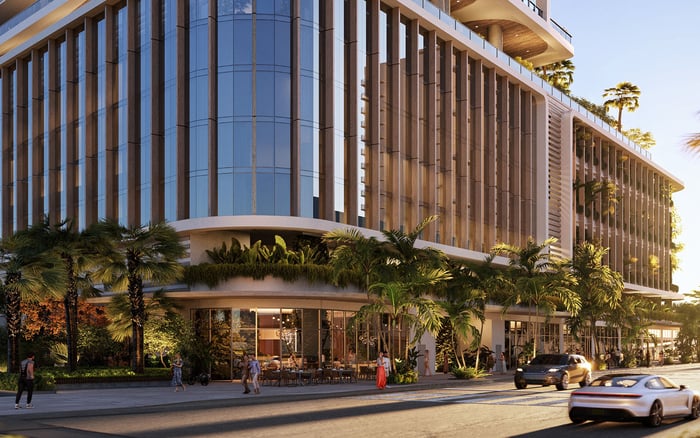
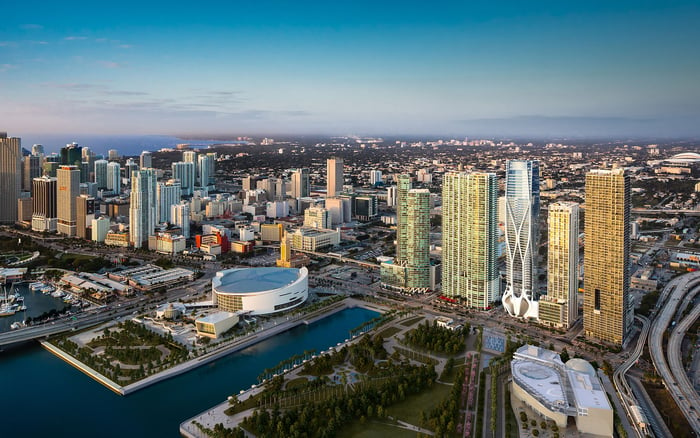
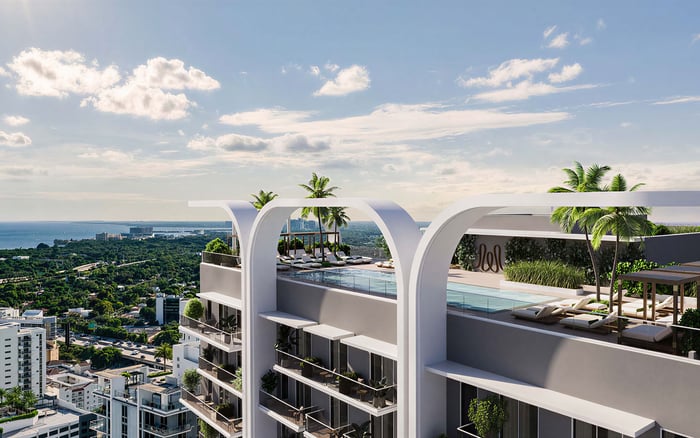
In South Florida’s luxury market, a short walk to dinner can matter more than a longer amenity deck. Buyers increasingly treat the neighborhood itself as part of the residence, especially in scarce, mixed-use districts where convenience, variety, and social energy shape daily life.
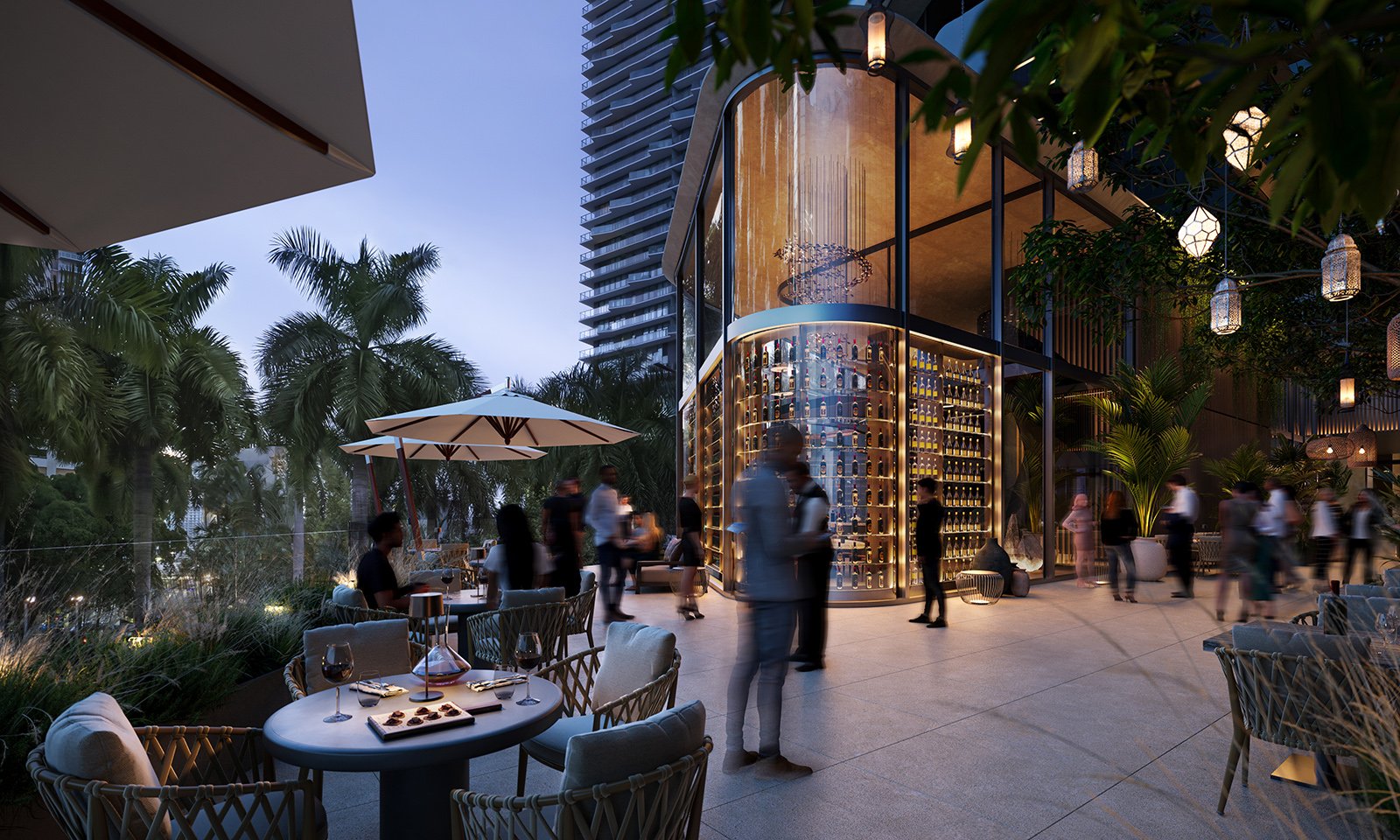
For a certain kind of buyer, the decisive amenity is not a golf simulator, a private screening room, or even a lavish spa suite on the 40th floor. It is the ability to leave home on foot, choose from several strong dinner options within ten minutes, and return without thinking about traffic, valet queues, parking tickets, or the choreography of a car-dependent evening.
That preference is not anti-amenity. It is simply more discerning. Internal building features are often impressive in the sales gallery and only occasionally useful in real life. Walkable dining, by contrast, is repeatable. It can shape a Tuesday as much as a Saturday. In a luxury market increasingly centered on daily experience, what a buyer can use spontaneously often matters more than what looks good in a brochure.
This is particularly true in South Florida, where genuinely walkable districts remain relatively limited. In a region still defined by the automobile, the few neighborhoods that deliver a credible live-work-dine rhythm carry a scarcity value of their own. That scarcity helps explain why buyers in places like Brickell, Downtown, Wynwood, and select pockets of Coconut Grove increasingly judge a residence not only by its interiors, but by the life immediately outside the lobby.
In residential real estate, a ten-minute walk has become a useful shorthand because it translates the vague idea of walkability into an everyday radius. Buyers understand it intuitively. It is close enough for a casual coffee, a weeknight reservation, or an unplanned cocktail, yet broad enough to capture a meaningful set of choices.
That distinction matters. A building restaurant can be elegant, but it is still one restaurant. A neighborhood with a true dining ecosystem offers range, frequency, and mood. One evening calls for a polished dining room, another for a simple sidewalk table, another for sushi after a late meeting. Mixed-use districts provide that elasticity, allowing the neighborhood to function as an extension of the residence itself.
This is one reason projects in active urban enclaves resonate so strongly with sophisticated buyers. In Brickell, residences such as ORA by Casa Tua Brickell and Cipriani Residences Brickell benefit from a district where the streetscape, dining mix, and after-hours rhythm contribute to the ownership experience. The appeal is not confined to the building envelope. It is embedded in the surrounding network of options.
Luxury marketing once leaned heavily on self-contained resort language. The premise was simple: everything desirable should be inside the property line. That model still has power, especially in waterfront enclaves and more private residential settings. But in denser South Florida submarkets, the emphasis has shifted toward integration with an active district.
Buyers increasingly value the idea that restaurants, cafés, boutiques, and nightlife effectively extend a property's amenity offering beyond what a developer or condo board can physically deliver. In that sense, the neighborhood is no longer a backdrop. It is a working part of the product.
This helps explain the growing pull of mixed-use environments and street-level activation. In Downtown, for example, residential appeal is tied not just to skyline views or service programs, but to a fuller live-work-dine environment. Projects such as Waldorf Astoria Residences Downtown Miami and Aston Martin Residences Downtown Miami read differently when buyers also understand the district as a place of regular movement, dining, and street activity.
The same principle applies in Wynwood, where the neighborhood's commercial evolution has been shaped by hospitality, dining, and experiential retail. A residence there benefits from more than square footage or finishes. It gains proximity to a district that already has texture and energy. Frida Kahlo Wynwood Residences sits within that broader logic, where neighborhood access itself becomes a daily-use luxury.
There is also a more pragmatic reason buyers privilege walkable dining over headline amenities: neighborhood offerings can renew themselves. A building gym, lounge, or pool deck may feel dated only a few years after delivery, even if it was market-leading at launch. Restaurants, retail concepts, and street life can evolve far more dynamically.
For owners thinking beyond first impressions, that matters. A residence linked to a strong district can remain fresh because the surrounding experience keeps changing. New openings, shifting culinary scenes, and improving streetscapes create a sense of momentum that a static amenity suite cannot always match.
This is not an argument against beautiful in-building features. It is an argument for durability. The most compelling luxury proposition may be a well-designed residence paired with a neighborhood capable of refreshing the owner's routine over time. In Coconut Grove, for instance, projects such as The Well Coconut Grove can be understood through that lens: wellness and design matter, but so does access to an established district where daily life extends beyond the front desk.
Among affluent buyers, convenience is often undervalued because it can sound ordinary. In practice, it is one of the most refined forms of luxury. Wealthy residents may have drivers, second cars, reserved parking, or concierge support, yet many still prefer to remove unnecessary friction from everyday decisions.
A short walk to dinner eliminates several layers of logistics. There is no waiting for the car, no wondering whether valet will be backed up, no debating where guests will park, and no sense that a simple evening out requires production. The point is not affordability. It is ease.
That is why walkable restaurant access can outperform grander amenities in buyer psychology. It is used more often, remembered more favorably, and integrated more seamlessly into daily life. Over time, the ability to move through a neighborhood with minimal effort often feels more luxurious than access to a room visited twice a month.
South Florida remains broadly car-dependent, which means truly walkable dining districts are not the norm. They are exceptions. And in real estate, exceptions tend to command attention.
When a neighborhood offers genuine proximity to restaurants, cafés, shops, and nightlife, buyers are not simply paying for convenience. They are paying for rarity. That helps support stronger interest in districts where lifestyle is visible at street level and where the value proposition extends beyond the residence itself.
This is also why mixed-use planning has become more central to newer urban development. Ground-floor retail and restaurant components are no longer decorative additions. They are essential to creating the kind of neighborhood activation buyers increasingly expect. The market has become more fluent in the idea that place-making is not separate from residential value. It is one of its drivers.
At the top end of the market, the choice is rarely between a good building and a good neighborhood. The most attractive addresses aim to deliver both. But when buyers quietly rank what shapes satisfaction after closing, walkable dining often rises above more theatrical features.
It signals several things at once: convenience, variety, social visibility, and a degree of urban confidence. It suggests that ownership is connected to a district with energy, not isolated from it. It also reflects a subtle shift in taste. For many buyers, status now comes less from having every amenity behind private doors and more from living within easy reach of a coveted cultural and dining landscape.
That shift is especially visible in Brickell, Downtown, Wynwood, and Coconut Grove, where the neighborhood itself is increasingly treated as an extension of the home. In those settings, the question is not simply what the building offers. It is what kind of evening the address makes possible.
Why do some buyers value nearby restaurants over building amenities? Because dining within walking distance can be used far more often than a lounge, spa room, or theater, making it a more practical luxury.
What makes a ten-minute walk important in real estate? It is a simple, usable measure of whether daily conveniences feel truly close rather than merely nearby.
Does walkability affect property value? Walkable locations often draw stronger buyer interest because daily convenience becomes part of the appeal.
Why is this especially relevant in South Florida? Much of the region is car-dependent, so neighborhoods with genuine walkable dining and retail remain relatively scarce.
Are building amenities becoming less important? Not necessarily, but many buyers now see them as secondary to a strong location with everyday usability.
Why can neighborhood amenities age better than in-building ones? Restaurants and retail can change over time, while a gym or lounge may feel dated after a few years.
Which South Florida areas best fit this preference? Brickell, Downtown, Wynwood, and Coconut Grove are among the districts most associated with this lifestyle.
Is this preference only about convenience? No. It also reflects variety, social energy, and the appeal of living near an active dining scene.
Do affluent buyers still care about avoiding car logistics? Yes. Even when cost is not the issue, many prefer to reduce friction and save time in everyday routines.
What is the best way to shortlist comparable options for touring? Start with location fit, delivery status, and daily lifestyle priorities, then compare stacks and elevations to validate views and privacy.
When you're ready to tour or underwrite the options, connect with MILLION.
If branded residences are on your mind — as a home or as an allocation — we would be glad to share what we are seeing, privately.
Begin a quiet conversation