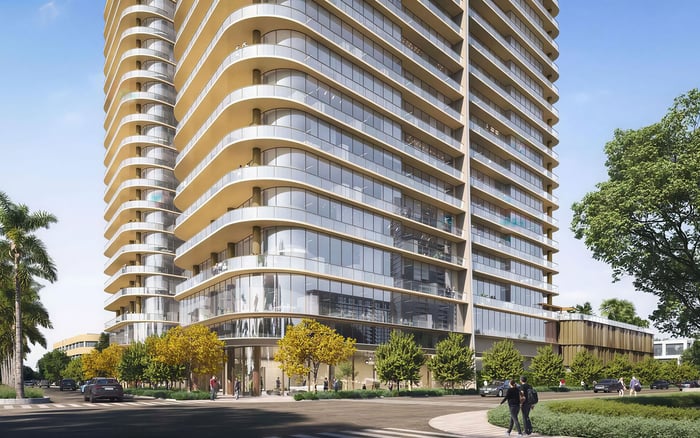
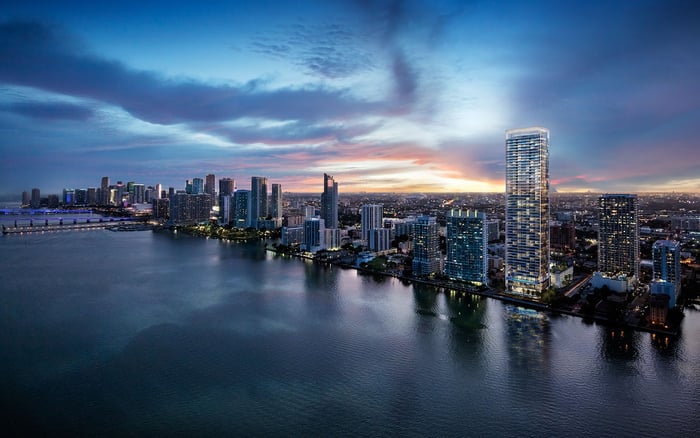
A discreet buyer’s guide to Wynwood’s quiet luxury appeal when rail-connected mobility, design culture, and urban ease shape South Florida real estate decisions.
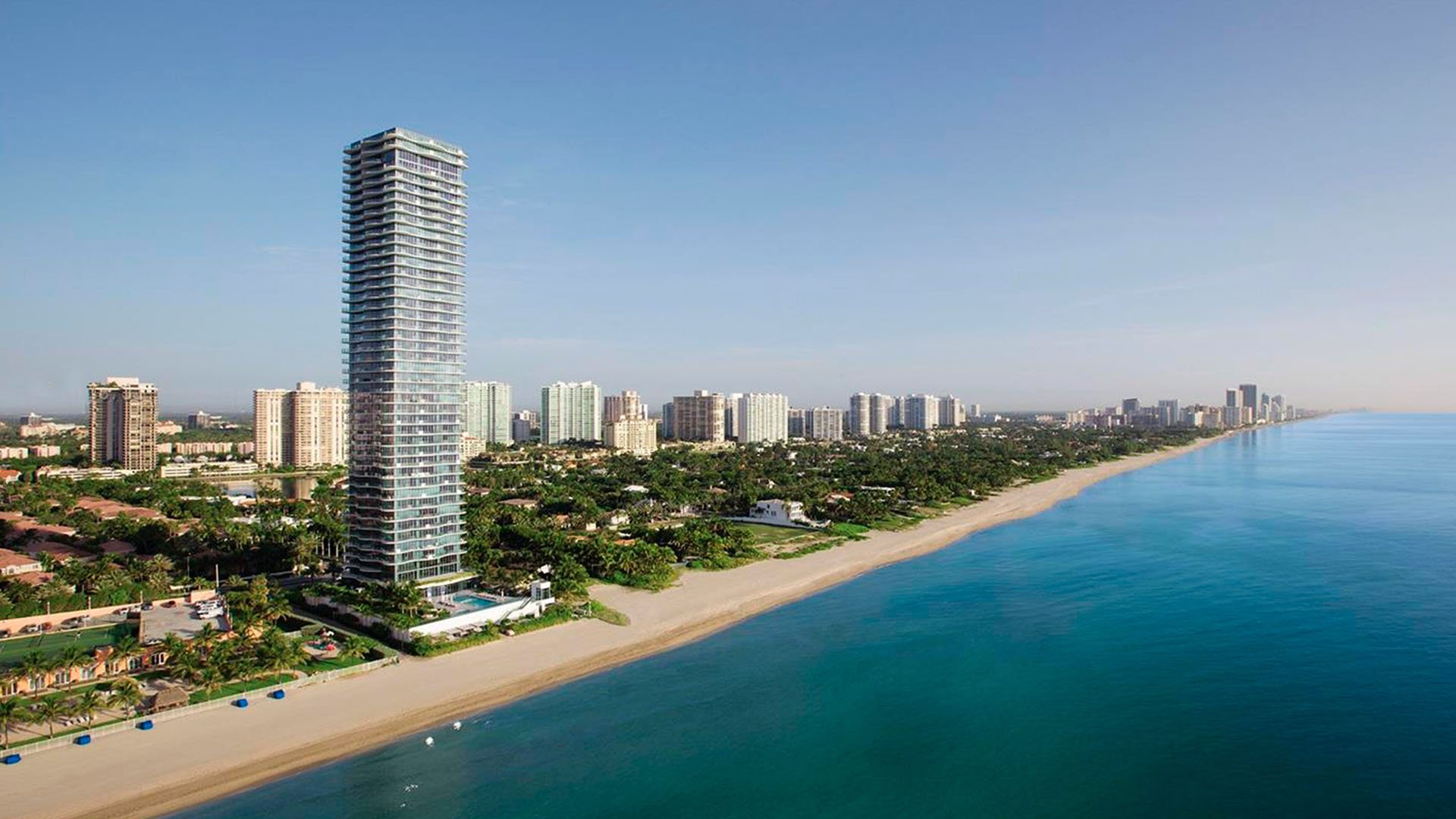
Quiet luxury in South Florida is often associated with waterfront privacy, gated arrival, and resort-grade service. Yet for a certain buyer, especially one whose life moves between meetings, airports, private clubs, art events, and regional travel, luxury is increasingly measured by friction removed. Wynwood enters that conversation not by imitating the beach or the bay, but by offering a more urban proposition: proximity, cultural texture, and a lifestyle that does not need to announce itself.
The quiet luxury case for Wynwood is not about flash. It is about living near Miami’s creative engine while preserving the ability to move efficiently. When Brightline-connected travel matters, the value equation changes. A residence no longer has to be judged only by water views or traditional prestige. It can be judged by how well it supports a life in motion, one where a South Florida address feels connected rather than isolated.
For the buyer considering Wynwood, the decision is less about following a trend than recognizing a new kind of urban privilege. It is the privilege of being close to design, dining, galleries, offices, and rail-linked regional movement, while maintaining a home base that feels curated rather than performative.
In the ultra-premium market, time is rarely discussed as plainly as finishes, ceiling heights, or amenity decks, but it may be the most valuable amenity of all. A Brightline-connected lifestyle gives particular weight to neighborhoods that allow residents to reach rail access without turning every trip into a production. For owners who split their weeks across Miami, Fort Lauderdale, Boca Raton, West Palm Beach, or beyond, mobility can become a core residential criterion.
Wynwood’s appeal is strongest for buyers who want Miami intensity without living inside the most formal luxury corridors. It can serve as an urban hinge, close enough to Downtown and Brickell to support business needs, while retaining its own creative identity. That balance matters for principals, founders, collectors, consultants, and second-home owners who want Miami access without daily life being defined by hotel-like spectacle.
This is where quiet luxury becomes practical. The best version of it is not invisible because it is plain. It is invisible because it works. A polished arrival, a calm lobby, secure parking, strong building management, and a residence that allows one to step out into the city or retreat from it with equal ease can be more meaningful than a louder address.
Wynwood is not trying to be Miami Beach, Fisher Island, or Bal Harbour. Its strength is different. It offers a neighborhood identity built around visual culture, creative entrepreneurship, hospitality, and an urban street rhythm that appeals to buyers who prefer energy over formality. For some, that makes it less obvious. For others, it makes it more personal.
The name Wynwood now carries a particular lifestyle signal. It suggests a buyer who is comfortable with design, who may care as much about where they have coffee, commission art, host a dinner, or walk to a studio as they do about a classic lobby experience. In this context, luxury does not disappear. It becomes more edited.
This is also why the neighborhood can speak to investment-minded buyers without reducing the decision to yield alone. A residence in a culturally recognizable district may offer personal use value, rental flexibility where permitted, and long-term relevance if the building quality and ownership structure are sound. That does not make every opportunity equal. It simply means the buyer’s lens should be broader than view corridors and brand names.
The Wynwood buyer who cares about Brightline-connected travel is usually not shopping for conventional opulence. They may already have access to a waterfront home, a primary residence elsewhere, or a more formal South Florida address. What they want is a base that reduces distance between appointments, culture, restaurants, and regional movement.
This buyer may compare Wynwood against Brickell for business access, Downtown for centrality, and Miami Beach for lifestyle pull. The difference is mood. Brickell can feel corporate and vertical. Downtown can feel civic and transitional. Miami Beach can feel leisure-driven and traffic-sensitive. Wynwood sits in between, with a creative edge that feels less scripted.
For a second-home buyer, that distinction can be decisive. A compact, highly usable residence in a well-managed building may be preferable to a larger home that requires more upkeep and more planning. For a local owner, Wynwood may function as an urban pied-à-terre, a workweek base, or a place to host visiting collaborators without moving the entire household rhythm.
In Wynwood, quiet luxury should be evaluated through restraint. The strongest residences will likely feel calm behind the door, even if the neighborhood outside is energetic. Buyers should look closely at acoustics, elevator experience, window systems, storage, parking logic, service access, and the quality of common spaces. In a dense urban setting, these details create composure.
New construction can be compelling when it brings modern building systems, contemporary layouts, and amenity programming aligned with how residents actually live. But newness alone is not enough. The question is whether the building can deliver privacy, operational discipline, and a sense of arrival that does not feel overdesigned.
Finishes should be considered with the same discipline. Warm minimalism, durable materials, integrated lighting, and kitchens designed for both daily use and hosting will typically age better than decorative excess. A Wynwood residence should not feel like a themed extension of the neighborhood. It should feel like a refined counterpoint to it.
A buyer comparing Wynwood with Brickell, Downtown, Edgewater, or Miami Beach should begin with lifestyle choreography. Where are the weekly commitments? How often does regional rail matter? Is the home primarily for workweek use, seasonal stays, entertaining, or long-term living? The right answer depends less on prestige and more on patterns.
Brickell may appeal to buyers who want financial-district immediacy and a more established high-rise luxury environment. Downtown may suit those who value central positioning and access to entertainment or civic venues. Edgewater may offer a more residential waterfront mood. Miami Beach remains powerful for ocean-oriented buyers, especially when leisure and beach access dominate the brief.
Wynwood becomes compelling when the owner wants cultural proximity and urban convenience without defaulting to a predictable luxury script. It is for buyers who do not need their residence to explain their status. They need it to support their pace.
A careful Wynwood search should focus on fundamentals first. Confirm building governance, use restrictions, rental policies, parking allocation, service protocols, reserves, insurance structure, and the quality of property management. These details determine whether an elegant purchase remains elegant after closing.
Buyers should also spend time in the neighborhood at different hours. A morning walk, a weekday arrival, an evening dinner, and a late return will reveal more than a single polished showing. The question is not whether Wynwood has energy. It does. The question is whether that energy matches the owner’s tolerance and intended use.
For privacy-focused buyers, access control and circulation matter. How residents enter, where guests wait, how deliveries are handled, and whether elevators feel secure can shape the daily experience. For design-focused buyers, the interior architecture should be strong enough to stand apart from the neighborhood’s visual intensity. For mobility-focused buyers, the journey from residence to rail, airport, office, and dinner should be tested in real time.
The most persuasive case for Wynwood is not that it replaces South Florida’s established luxury enclaves. It does not need to. Its role is to offer another mode of ownership, one defined by culture, connectivity, and discretion. For the right buyer, that can be more valuable than a traditional trophy address.
Quiet luxury is maturing. It is less about being hidden from the city and more about choosing precisely which parts of the city to keep close. Wynwood’s strength lies in that selectivity. It allows a resident to live near Miami’s creative pulse, maintain practical access to the region, and still retreat into a private, well-composed residence.
When Brightline-connected travel matters, the question becomes simple: does the home make South Florida feel smaller, easier, and more intelligently connected? If the answer is yes, Wynwood deserves a serious place on the shortlist.
Is Wynwood considered a traditional luxury neighborhood? Not in the classic waterfront sense. Its luxury appeal is more urban, design-led, and mobility-driven.
Why does Brightline-connected travel matter for Wynwood buyers? It can make regional movement easier for owners who regularly move across South Florida for work, culture, or personal commitments.
Who is the ideal buyer for a Wynwood residence? A discreet, mobile buyer who values culture, convenience, and design more than conventional status signaling.
How should Wynwood be compared with Brickell? Brickell is more corporate and established, while Wynwood offers a more creative urban rhythm with a less formal tone.
Is Wynwood better for a primary home or a second home? It can work for either, but it is especially compelling for owners who want an efficient urban base in Miami.
What should buyers prioritize in new construction? Focus on sound control, parking, privacy, building management, and layouts that feel calm despite the urban setting.
Does Wynwood make sense for investment purposes? It may, if the building quality, ownership rules, location, and long-term usability support the buyer’s objectives.
How important is parking in Wynwood? Very important for luxury buyers. Parking convenience can materially affect daily comfort and resale appeal.
Should buyers visit Wynwood at different times of day? Yes. The neighborhood’s rhythm changes, and a serious buyer should understand morning, evening, and weekend patterns.
What is the best way to shortlist comparable options for touring? Start with location fit, delivery status, and daily lifestyle priorities, then compare stacks and elevations to validate views and privacy.
To compare the best-fit options with clarity, connect with MILLION.
If branded residences are on your mind — as a home or as an allocation — we would be glad to share what we are seeing, privately.
Begin a quiet conversation