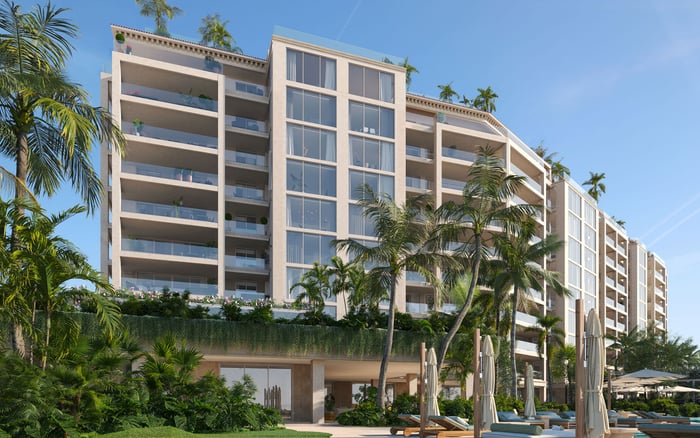
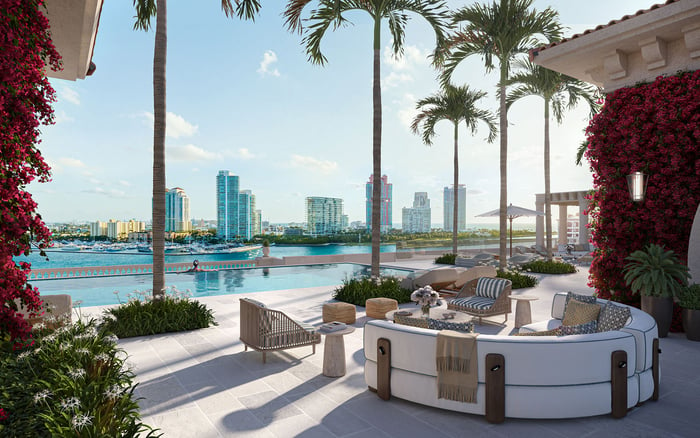
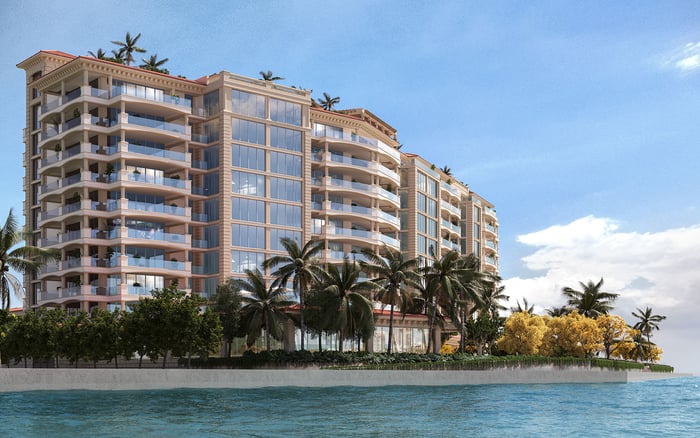
A discreet, buyer-oriented guide to reading flood-zone context at The Residences at Six Fisher Island, with emphasis on daily ownership, insurance conversations, building design, and long-term waterfront resilience.
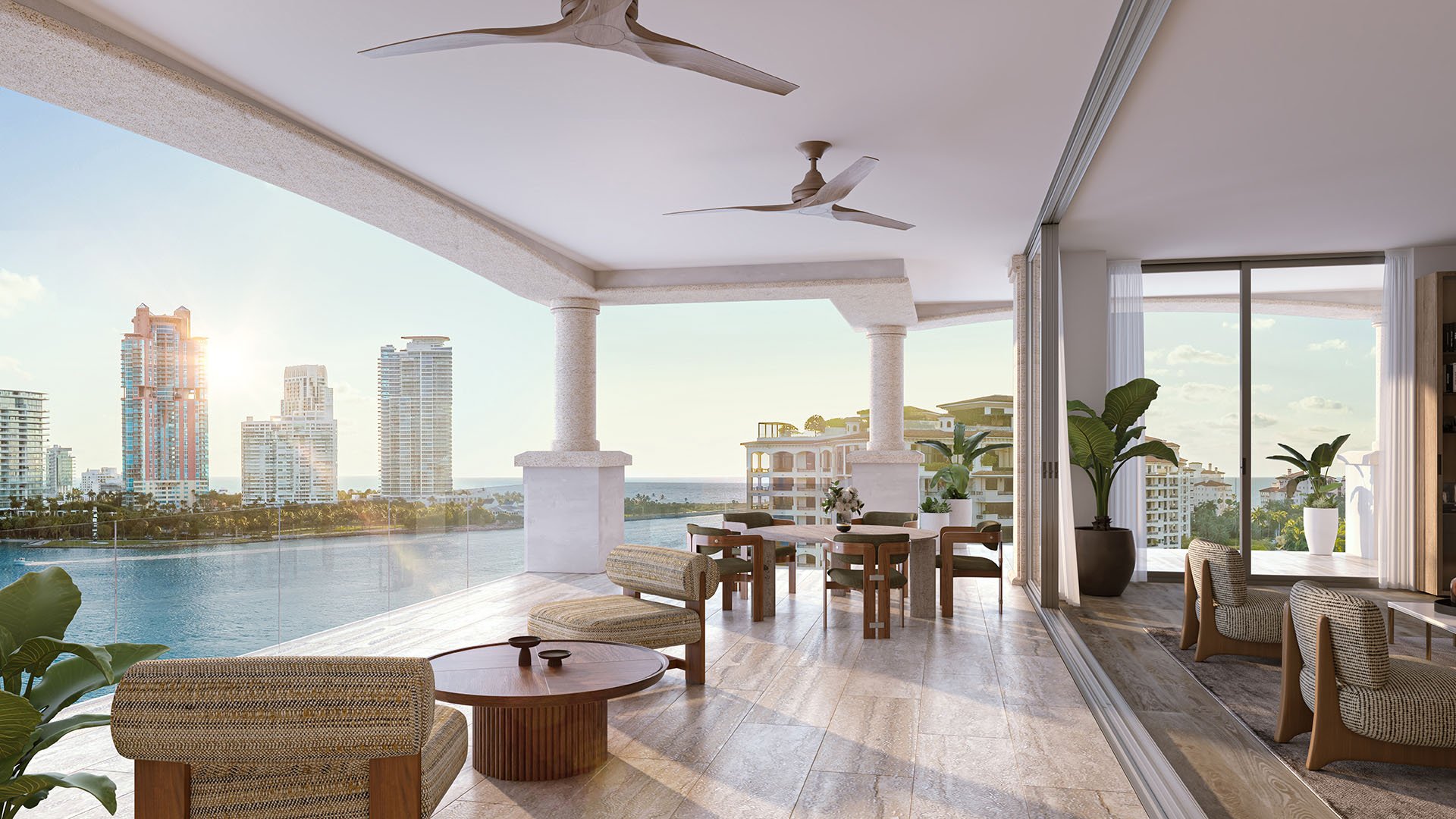
For full-time owners considering The Residences at Six Fisher Island, flood-zone interpretation deserves the same disciplined attention as architecture, privacy, service, and long-term value. A flood-zone label is not a verdict on desirability. It is the starting point for a more precise conversation about elevation, building systems, insurance, access, personal tolerance, and how the property is meant to function day after day.
In South Florida’s luxury market, waterfront living is not an abstract amenity. It is often what makes a residence feel rare. Oceanfront proximity, bay views, marina culture, and the rhythm of tropical weather are part of the appeal. The practical question is not whether water is nearby. The question is whether the ownership structure, building design, documentation, and personal planning are coherent enough for a full-time resident who expects comfort in every season.
The most sophisticated buyers do not read flood-zone language as a headline. They treat it as one layer of diligence. At The Residences at Six Fisher Island, that means asking how the zone designation relates to the specific residence, the broader building approach, the elevation of critical areas, the association’s preparedness, and the owner’s intended use of the home.
A second-home buyer may focus heavily on closing costs, seasonal insurance, and how the residence performs during select weeks of the year. A full-time owner has a wider set of concerns. Daily routines matter. So do access, storage, parking, mechanical reliability, staff coordination, pet logistics, medical needs, family schedules, and the ability to live calmly through periods of severe weather.
That is why flood-zone interpretation for full-time owners should never be reduced to one map color or one insurance quote. The more relevant question is how resilient the ownership experience feels in practice. If a storm system is being monitored, can the owner secure outdoor areas efficiently? Are essential building functions protected in a manner consistent with the expectations of a premium residence? Is communication from management clear, timely, and actionable? Can residents make decisions without confusion?
For Fisher Island buyers, privacy and separation are part of the lifestyle language. That same sense of separation makes planning even more important. Full-time residents should look beyond the residence itself and consider the sequence of daily life before, during, and after significant weather.
A flood zone is a mapping category. Elevation is a physical condition. Exposure is the practical relationship between the property, surrounding water, drainage, access points, wind, and storm surge assumptions. These ideas overlap, but they are not the same.
A residence may carry a flood-zone designation because of its coastal setting, yet the owner’s actual risk profile can depend on many other factors. Finished-floor height, garage placement, lobby configuration, critical equipment location, drainage design, window and door specifications, and emergency procedures can all influence the lived experience. Buyers should ask counsel, insurance specialists, and qualified inspectors to explain these layers in plain language before treating any one factor as decisive.
Waterview value is not the same as unexamined risk. Views are emotional; ownership is operational. The best due diligence allows both ideas to coexist. A buyer can appreciate the elegance of water, light, and horizon while still asking serious questions about systems, reserves, and continuity of use.
In high-end waterfront ownership, insurance belongs in the first serious round of evaluation, not at the end as an administrative step. Full-time owners should understand what policies may be required, what deductibles apply, how wind and flood coverage interact, and where association-level coverage ends and owner responsibility begins.
The goal is not merely to obtain a premium estimate. The goal is to understand how the residence would be handled if a claim arose. Owners should ask how interior improvements, built-ins, art, wine storage, furnishings, technology, and temporary living arrangements may be treated. A luxury residence is rarely just walls and floors. It is a curated environment, and the insurance conversation should reflect that complexity.
New-construction buyers should not assume that newness alone answers every question. Newer buildings may incorporate contemporary expectations, but the exact documents, warranties, maintenance obligations, and association responsibilities still matter. The practical owner reads the governing documents, reviews budgets, and asks how future capital needs will be managed.
Flood-zone interpretation becomes more useful when paired with a review of building design and governance. In a luxury condominium setting, the individual owner is buying both a private residence and a share of a larger operating environment. That environment must be able to maintain systems, communicate clearly, and fund work when needed.
For The Residences at Six Fisher Island, a buyer’s advisory team should review the condominium documents, budget structure, insurance arrangements, maintenance standards, and any available engineering materials. The purpose is not to create unnecessary friction. It is to determine whether the building’s operating culture matches the owner’s expectations.
Gated-community living can provide a sense of order and discretion, but it does not replace technical diligence. Security, privacy, and controlled access are lifestyle strengths. Flood-zone interpretation asks a different set of questions: how water moves, how systems are protected, how residents are informed, and how quickly normal life can resume after an interruption.
Before a full-time owner signs a contract or waives important contingencies, the flood-zone conversation should become specific. Ask for the current flood-zone designation applicable to the property and confirm how it applies to the building and the individual residence. Ask whether elevation information is available and whether critical systems are placed in protected areas. Ask how the association prepares for severe weather and how residents are expected to secure private terraces, vehicles, storage areas, and service arrangements.
Buyers should also request clarity around reserves, maintenance responsibilities, and any known capital planning related to water intrusion, drainage, exterior envelope care, or mechanical equipment. The language should be plain enough for a non-engineer to understand the ownership implications. If an explanation feels vague, continue asking.
For oceanfront and near-water residences, the right diligence is not pessimistic. It is respectful of the asset. A waterfront home is often purchased for serenity, views, and rarity. Those qualities are better protected when practical risk is understood rather than minimized.
The most composed luxury buyers tend to build a small circle of informed advisors. That may include real estate counsel, an insurance specialist, an inspector or engineer, a tax advisor, and a property manager familiar with full-time use. Each advisor should answer a different question, and the buyer should insist on clarity rather than jargon.
A useful framework is to divide the review into four parts: the map, the building, the policy, and the lifestyle. The map explains designation. The building explains physical resilience. The policy explains financial protection. The lifestyle explains how the owner will actually live in the residence.
When these four pieces align, flood-zone interpretation becomes less intimidating. It becomes part of the normal discipline of buying exceptional property in a coastal market. For The Residences at Six Fisher Island, that discipline is especially relevant because full-time ownership demands more than beauty. It demands continuity, foresight, and confidence in the details.
Flood-zone interpretation should neither discourage nor seduce. It should inform. The right conclusion depends on the specific residence, the building’s design and governance, the insurance structure, and the owner’s tolerance for coastal realities.
For a full-time owner, the most valuable outcome is not simply a favorable label. It is a residence that can be enjoyed with clarity. That means knowing what is covered, what is maintained, what is planned, and what personal steps are expected. In the rarefied language of Fisher Island ownership, discretion and diligence belong together.
Does a flood-zone designation mean a residence is unsafe? No. It is a planning and insurance category that should be read alongside elevation, design, systems, and professional guidance.
Should full-time owners evaluate flood risk differently than seasonal owners? Yes. Full-time owners rely on the residence every day, so access, communication, building operations, and continuity matter more.
Is insurance the only issue connected to flood-zone interpretation? No. Insurance is important, but owners should also review building systems, association planning, reserves, and emergency procedures.
Can a luxury building still require careful flood diligence? Yes. Luxury finishes and services do not replace the need to understand design, governance, and risk allocation.
What documents should a buyer review? Buyers should review condominium documents, insurance information, budgets, maintenance obligations, and any available technical materials.
Should buyers rely only on a map designation? No. A map is useful, but it should be interpreted with elevation, exposure, residence location, and building-specific details.
How early should insurance be discussed? Insurance should be discussed before key contract deadlines, so coverage, deductibles, and responsibilities are understood clearly.
Does new construction eliminate flood-related questions? No. New construction may offer contemporary design expectations, but documents, warranties, systems, and association duties still need review.
Why does gated-community planning matter for flood review? Gated-community operations can affect communication, access, security, and resident coordination during periods of severe weather.
Is The Residences at Six Fisher Island suitable for a waterview-focused buyer? A waterview-focused buyer should balance the appeal of water and privacy with disciplined review of insurance, design, and ownership obligations.
For a discreet conversation and a curated building-by-building shortlist, connect with MILLION.
If branded residences are on your mind — as a home or as an allocation — we would be glad to share what we are seeing, privately.
Begin a quiet conversation