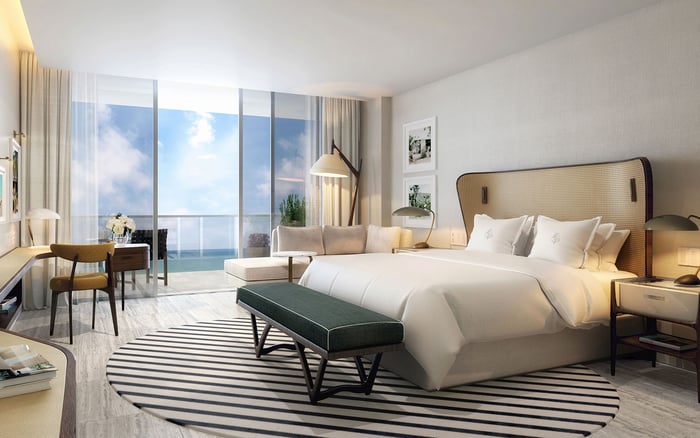
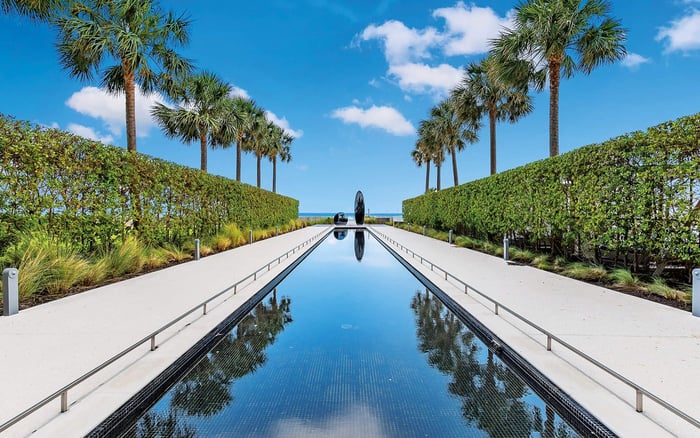
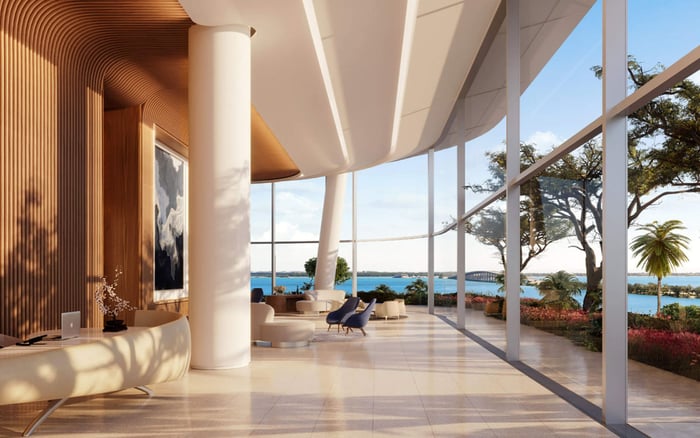
For a growing share of affluent South Florida buyers, the most valuable luxury is not a private path to the sand. It is the ability to step out for dinner, meet friends for cocktails, catch a performance, and return home without planning the night around a car ride. In that calculus, a finely tuned evening routine can outweigh direct beach frontage.
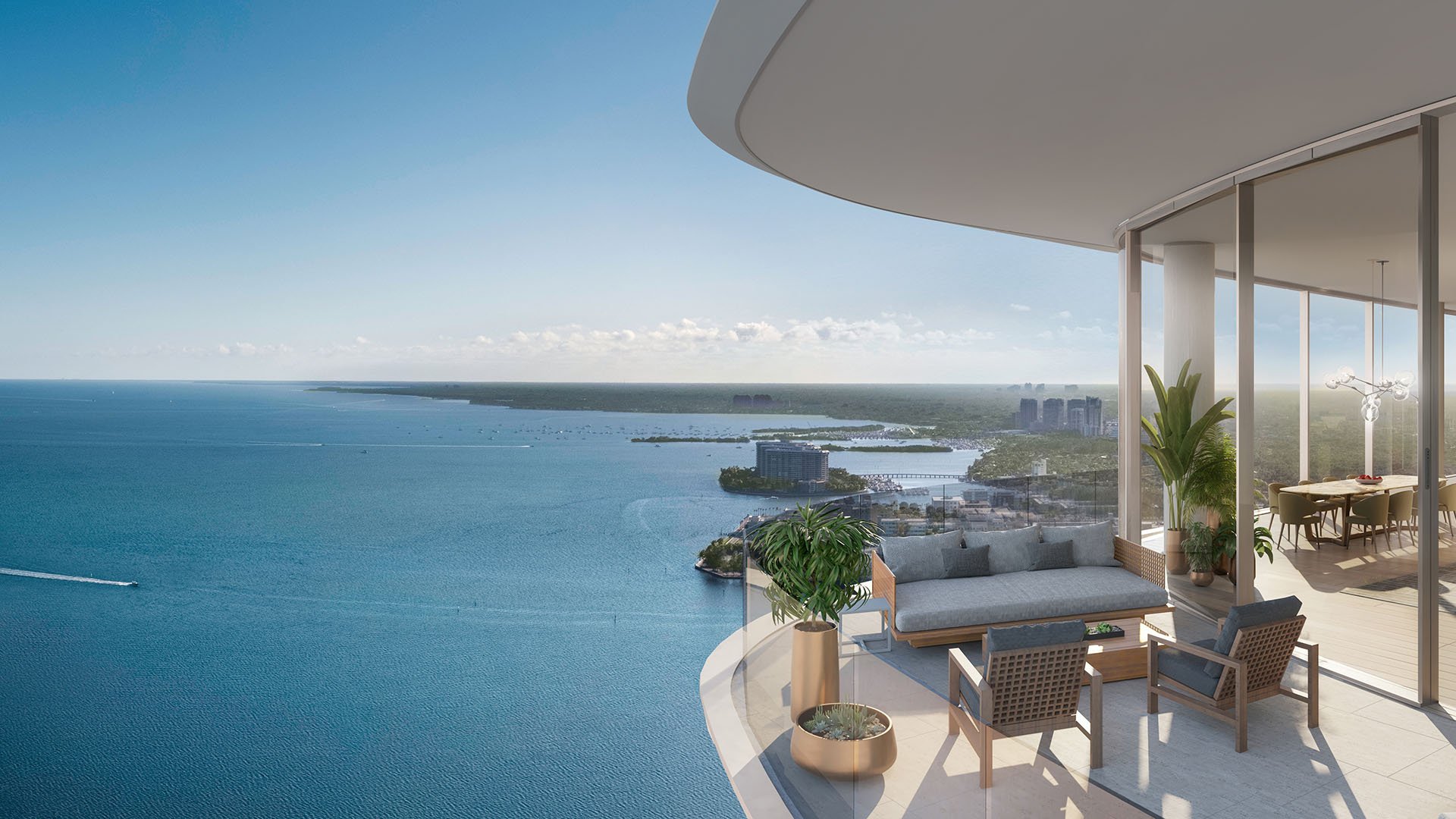
For decades, direct beach frontage stood as one of South Florida's clearest signals of luxury. The appeal remains easy to understand: open ocean views, immediate sand access, and the prestige of a true waterfront address. Yet for a notable segment of affluent buyers, the decision matrix has become more nuanced.
The question is no longer simply, How close am I to the beach? It is also, What happens at 7 p.m.?
For many purchasers, especially second-home owners and buyers who use their residences as a base for social life rather than daytime recreation, the most meaningful measure of luxury is the quality of the evening routine. A residence that places fine dining, wine bars, cultural programming, marina sunsets, and spontaneous gatherings within easy reach can feel more rewarding than a home with direct sand frontage but a quieter after-dark setting.
That helps explain the appeal of districts like Brickell, Coconut Grove, and select bayfront enclaves, where the rhythm of daily life extends naturally into the night. In these neighborhoods, ownership is less about a single iconic feature and more about a fully realized lifestyle ecosystem.
True direct-oceanfront inventory has always been finite, but in Miami-Dade it is also shaped by tightly managed coastal conditions and strict regulation. That scarcity reinforces value, but it also means buyers are often weighing a narrow, highly specific segment of the market against a broader range of luxury alternatives.
There is also the practical side of ocean exposure. Salt air, high winds, and storm-related wear create a level of maintenance intensity some owners would rather avoid, particularly if they are not using the beach every day. For a buyer who spends winter evenings entertaining, dining out, and hosting guests, trading a bit of proximity to the sand for a more convenient, lower-friction lifestyle can feel entirely rational.
This is where newer urban and bay-oriented residences have gained ground. A home at 2200 Brickell or Una Residences Brickell speaks to buyers who still want water presence and architectural polish, but also value quick access to restaurants, private clubs, and the social energy of Brickell. The prestige differs from pure oceanfront living, but it is prestige nonetheless.
Luxury buyers often talk about lifestyle in broad terms, but evening routine is where those preferences become tangible. Can you walk to a reservation rather than coordinate a drive? Can friends join you for a last-minute drink without turning the night into a logistical exercise? Can the neighborhood offer enough variety that the residence feels animated all season, not just on beach days?
In South Florida's most desirable mixed-use environments, the answer is increasingly yes. Concentrated dining, hospitality, retail, and cultural offerings create a dependable nightly rhythm that many more isolated beachfront towers cannot match within walking distance. The result is a different expression of luxury: less trophy-postcard, more seamless living.
That distinction matters because many affluent owners do not use their homes in the way marketing imagery once implied. They may spend mornings on a terrace, afternoons in meetings or at wellness appointments, and evenings moving through the neighborhood. When that is the actual pattern of use, a better routine can outweigh a better shoreline.
Projects such as ORA by Casa Tua Brickell illustrate the appeal of residences tied to a more socially active urban context. The value lies not only in the apartment itself, but in the ease with which the night can unfold around it.
Sacrificing direct beach frontage does not necessarily mean giving up water altogether. Many buyers are gravitating toward bayfront, Intracoastal, and marina-adjacent residences that preserve the emotional benefits of living near the water while improving access to restaurants, nightlife, and cultural destinations.
That middle path can be especially persuasive in areas where boating, sunset views, and promenade-style living feel as important as daytime sand access. In those cases, the buyer is not stepping down in lifestyle. They are refining it.
Consider the appeal of The Residences at Mandarin Oriental, Miami for those who want a refined waterfront setting near the urban core, or Park Grove Coconut Grove for buyers drawn to Coconut Grove's more layered blend of bay scenery, dining, and village atmosphere. These are not anti-beach choices. They are pro-convenience choices made at a very high level.
For many owners, waterview is enough when paired with a dynamic neighborhood. That combination can feel richer in daily use than a more isolated beachfront address that shines brightest during a narrower window of the day.
Another reason direct beach frontage has lost some of its monopoly on desire is that luxury residential programming has become far more sophisticated. Rooftop lounges, wine rooms, private dining spaces, wellness facilities, concierge-led events, and hospitality-inflected service have elevated what residents can do without leaving home.
This matters because the old beach premium was partly about instant leisure. Today, that leisure can be recreated through design, service, and social curation. The best new buildings do not merely offer a residence. They shape an entire evening.
A buyer comparing an oceanfront tower with a highly serviced urban project may reasonably conclude that the latter delivers more actual enjoyment over the course of a season. That is particularly true in Brickell, Downtown, Edgewater, and Coconut Grove, where the private amenity offering inside the building is reinforced by a broader public realm outside it.
Prestige has become more experiential. The address still matters, but what the address allows you to do matters just as much.
This tradeoff tends to resonate with a few distinct buyer profiles. Second-home owners are an obvious group, particularly those who arrive for long weekends or winter stretches and want immediate access to dinners, galleries, cocktails, and hosted gatherings. Older buyers also often place a premium on ease, preferring neighborhoods where evening plans require less coordination.
There is also the socially oriented purchaser who sees real estate as an extension of personal rhythm. For this buyer, the residence should support a polished life rather than demand constant planning. If the best restaurants, arts venues, and after-dark destinations are nearby, the home becomes more usable, not less luxurious.
Cost considerations can play a role as well. Even at the ultra-premium end of the market, buyers assess the full ownership equation, including fees, upkeep, and exposure-related wear. If a non-beachfront residence delivers a stronger day-to-day experience with fewer burdens, the decision can feel surprisingly straightforward.
The broader implication is that South Florida prestige is no longer concentrated exclusively along the sand. Oceanfront remains elite, but it now shares status with neighborhoods that offer a richer mix of dining, design, wellness, and social opportunity.
That shift has helped elevate Brickell, Coconut Grove, Bay Harbor, North Bay Village, and selected urban waterfront districts as serious alternatives for buyers who want beauty at home and momentum beyond the lobby. The new benchmark is not simply access to the beach. It is access to a life that feels elegant without being effortful.
For some buyers, direct beachfront living will always be the ultimate prize. For others, the greater luxury is ending the day with options, spontaneity, and a neighborhood that comes alive after sunset.
Why would a luxury buyer choose a non-beachfront home in South Florida? Many prioritize walkable dining, nightlife, culture, and easier daily use over direct sand access.
Does giving up beach frontage mean giving up water views? No. Many bayfront and marina-oriented residences still offer strong waterview appeal and sunset exposure.
Are beachfront homes harder to maintain? They can be, since salt, wind, and coastal exposure often increase wear and ongoing upkeep.
Which areas best fit an evening-focused lifestyle? Brickell and Coconut Grove are leading examples because dining and social options are closely concentrated.
Is oceanfront still the most prestigious category? It remains highly prestigious, but experience-rich neighborhoods now compete for the same buyers.
Do second-home buyers think differently about location? Often yes. Many use their residences most heavily for dinners, entertaining, and evening plans.
Can building amenities offset the lack of direct beach access? In many cases, yes. Private dining rooms, lounges, wellness spaces, and concierge services add meaningful value.
Why are urban luxury districts gaining traction? They combine residential quality with nearby hospitality, retail, and cultural activity in one setting.
Is this shift mostly about convenience or status? It is both. Convenience increasingly defines status when it produces a more polished daily lifestyle.
What should buyers compare beyond the view? They should assess evening walkability, ownership burdens, amenity programming, and how the neighborhood feels after dark.
When you're ready to tour or underwrite the options, connect with MILLION.
If branded residences are on your mind — as a home or as an allocation — we would be glad to share what we are seeing, privately.
Begin a quiet conversation