A buyer-focused look at why quiet recovery zones carry more daily value for full-time South Florida owners than for seasonal guests who experience a residence in shorter, more curated intervals.
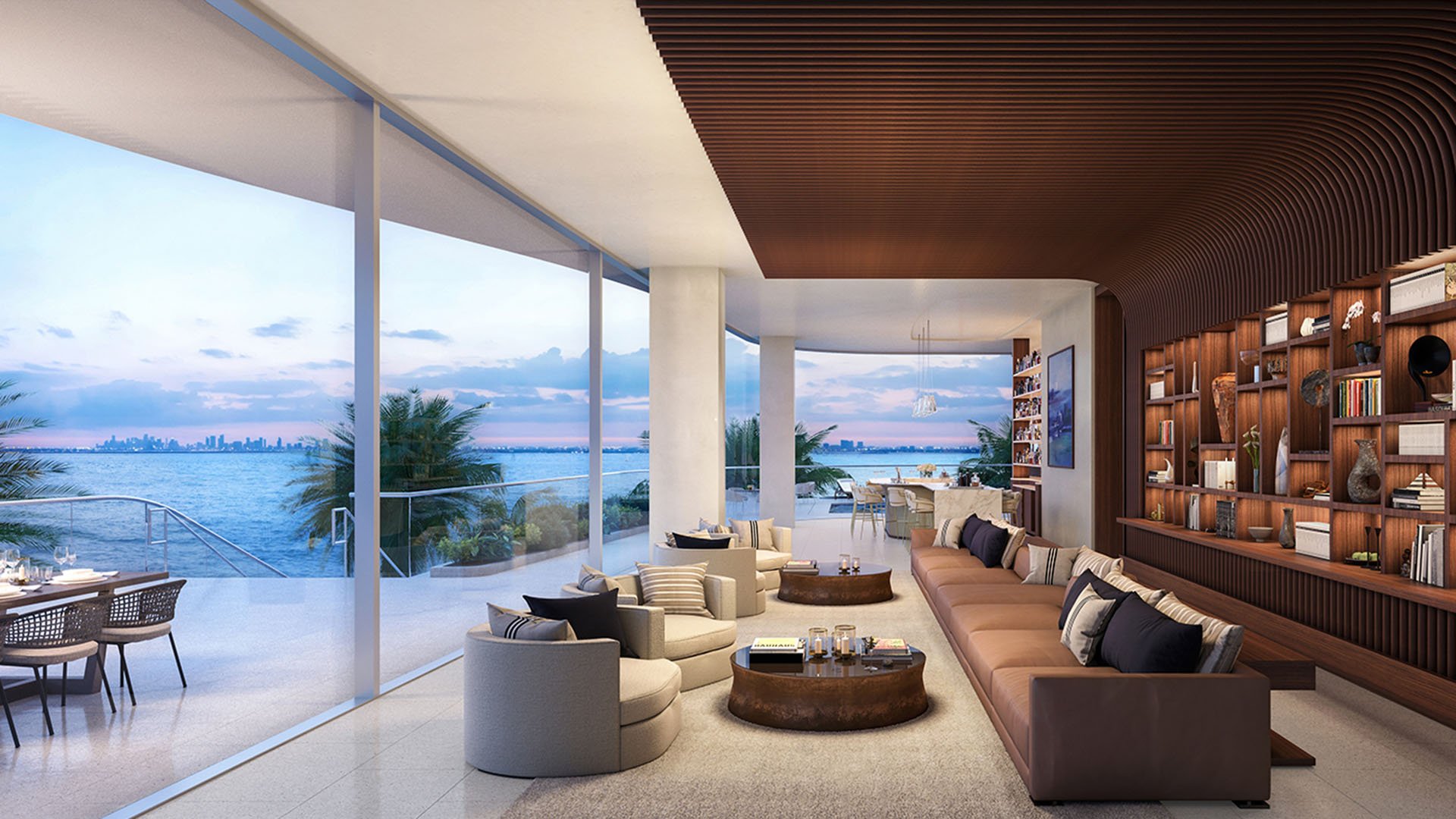
For seasonal guests, South Florida often unfolds as a sequence of beautifully framed moments: the first view from the balcony, the evening swim, the dinner reservation, the weekend with family. Noise may register, but it is often absorbed into the theater of travel. For full-time owners, the equation is different. A residence is not simply a destination. It is the daily container for sleep, work, recovery, entertaining, aging, privacy, and routine.
That is why quiet recovery zones matter more to the person who lives in a property through ordinary Tuesdays than to the guest who arrives for a long weekend. The distinction is subtle, but consequential. A seasonal visitor may remember the view. A full-time owner remembers whether the bedroom remains calm after the building wakes up, whether the elevator lobby feels composed after dinner hours, and whether the terrace can be used without competing with mechanical sound, pool activity, or traffic below.
In the upper tier of the market, quiet is not merely the absence of noise. It is the ability to choose intensity. A home can be social, open, and dramatic while still offering private zones where the nervous system can settle. This is especially important in markets such as Brickell, where urban energy is part of the appeal, and in waterfront settings where outdoor lifestyle and daily retreat must coexist with precision.
Seasonal use is forgiving. A guest may tolerate the occasional corridor conversation, the hum near an amenity deck, or the activity around a pool because the stay is temporary. Full-time ownership is cumulative. Small frictions repeat until they become part of the home’s lived reality.
A year-round owner evaluates a residence by rhythm. Morning light, afternoon calls, evening entertaining, pet routines, guest arrivals, and late-night quiet all have to function. A floor plan that photographs beautifully may still fail if private rooms sit too close to social circulation, if the primary suite is exposed to shared activity, or if outdoor living is enjoyable only during select hours.
This is where the language of luxury becomes more disciplined. Square footage, finishes, and views remain essential, but they do not answer the full-time question: where does the owner recover? The best homes create layers of retreat. There is a public face for entertaining, a semi-private zone for daily living, and a protected inner area for rest. The transition between those layers matters as much as the rooms themselves.
A quiet recovery zone is not one room. It is a sequence of decisions. It may begin at the private elevator foyer, continue through a buffered entry, and resolve in a bedroom, den, library, spa bath, or shaded terrace that feels removed from the building’s active life. The goal is not monastic silence. The goal is composure.
For buyers, the most useful question is not simply, “Is it quiet?” A better question is, “Quiet from what, at what time, and for whom?” A primary suite may be quiet from the living room but exposed to a neighboring mechanical area. A den may be visually serene but acoustically connected to the kitchen. A terrace may be ideal at sunrise and less restful in the evening. Full-time residents live through all of those cycles.
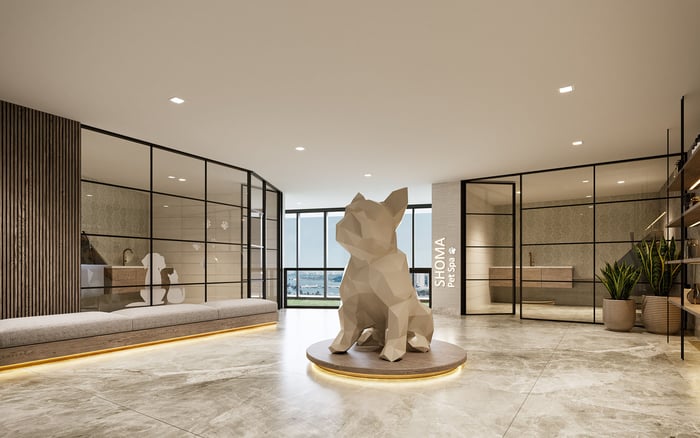
Pets also change the analysis. Homes that support pets well tend to have practical thresholds: places to enter, pause, clean up, and separate activity from rest. If a dog reacts to hallway noise or elevator movement, the issue is not only convenience. It becomes a daily stress pattern. Quiet recovery, in this sense, applies to the entire household.
The seasonal guest tends to evaluate from the point of arrival. The residence should feel impressive, effortless, and transportive. The full-time owner evaluates from the point of return. After travel, meetings, school runs, medical appointments, or dinner out, the home must receive the owner without demanding more energy.
This is why a dramatic entry should not come at the expense of calm. The same is true of amenity proximity. Being close to the fitness room, pool deck, or social lounge can be convenient, but convenience must be weighed against daily exposure. A seasonal guest may love being near the action. A resident may prefer to visit the action, then leave it behind completely.
Second-home buyers occupy an interesting middle ground. They may not live in the residence every day, but many still want it to function like a true home rather than a hotel suite. For that buyer, quiet recovery zones protect the property’s usefulness over time. They allow the owner to extend stays, host family with less friction, and move between social life and private restoration without compromise.
Luxury buyers often look carefully, but the strongest ones also listen carefully. A showing should include pauses. Stand in the primary bedroom without conversation. Close the doors. Visit the balcony or terrace and remain there long enough to understand the sound field. Walk the corridor. Notice whether the entry sequence buffers the living spaces or opens directly into them.
If possible, experience the residence at more than one time of day. A property may be tranquil at midday and more active at evening arrival. Another may feel energetic during amenity hours but calm in the private wing. The point is not to eliminate all sound. South Florida is animated by water, streets, hospitality, boats, families, and weather. The point is to understand whether the home gives the owner options.
The strongest residences allow contrast. They offer places to gather and places to withdraw. A generous kitchen can coexist with a quiet den. A panoramic living room can coexist with a protected bedroom. A showpiece terrace can coexist with an interior room designed for work, reading, or recovery. This balance is what separates a beautiful stay from a sustainable life.
Wellness is often described through visible amenities, but daily wellness is frequently quieter. It is the ease of waking without intrusion, the ability to take a call without ambient disruption, the comfort of reading without retreating to a closet-like room, and the pleasure of ending the day without negotiating background activity.
A spa, gym, or treatment room may be valuable, but quiet recovery begins at home. The private residence should not rely entirely on shared amenities to deliver restoration. Owners need a personal refuge that is available at any hour, regardless of building programming, guest volume, or weather.
This is particularly important for buyers who entertain. Hosting well requires a home that can absorb energy gracefully. Guests may move through the living room, dining area, and terrace, while the owner still retains a private suite, secondary sitting area, or study that remains composed. The best entertaining homes are not the loudest. They are the most controlled.
Quiet recovery zones are not a decorative preference. They influence how a residence ages with its owner. A home that supports concentration, sleep, privacy, and emotional reset is more likely to remain satisfying after the novelty of acquisition fades. That long-term satisfaction is a form of value, even when it is difficult to quantify.
For full-time owners, the question becomes increasingly personal: can this home carry the life I actually live? Not the brochure version, not the holiday version, but the everyday version. A polished residence that cannot provide retreat may be better suited to short stays than to permanent life. A quieter, better-zoned home may feel less theatrical at first but prove more luxurious over time.
In South Florida’s prime residential market, the most discerning buyers are learning to read silence as design. They are not simply searching for less noise. They are searching for homes that understand when to be vivid and when to disappear.
What is a quiet recovery zone in a luxury residence? It is a private or semi-private area designed to feel calm, buffered, and restorative within the broader home.
Why does it matter more for full-time owners? Full-time owners experience small acoustic and privacy issues repeatedly, so comfort depends on daily consistency rather than occasional appeal.
Can a lively building still offer quiet recovery? Yes. The key is separation between active shared areas and private residential zones, along with thoughtful internal planning.
Should buyers prioritize the bedroom when assessing quiet? The primary bedroom is essential, but buyers should also evaluate dens, terraces, corridors, and entry sequences.
How does a pool affect the quiet of a residence? Pool proximity can add energy and convenience, but buyers should consider whether sound travels into private rooms or outdoor spaces.
Is a terrace always a quiet recovery space? Not always. A terrace may be restorative at certain times and more exposed at others, depending on orientation and surrounding activity.
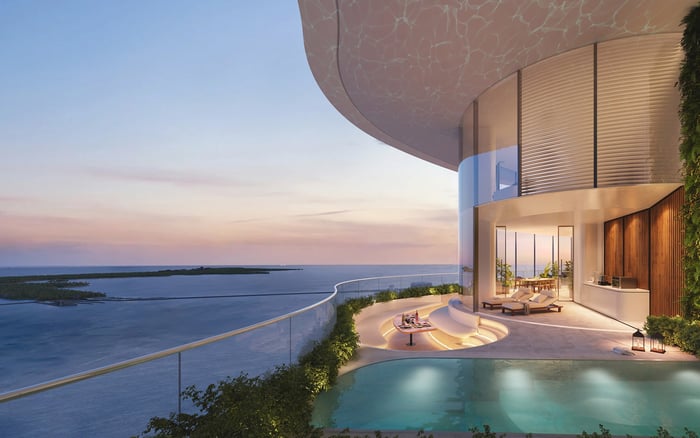
Does balcony placement matter? Yes. Balcony enjoyment depends on view, exposure, sound, privacy, and how comfortably it connects to interior living.
Why are pets part of this conversation? Pets can be sensitive to corridor, elevator, and exterior noise, making calm transitions important for household comfort.
Do seasonal guests value quiet less? They may value it, but their shorter stays often make them more tolerant of conditions that would affect daily life.
What should buyers ask before choosing a full-time residence? Ask where the home becomes quiet, how that quiet is protected, and whether it supports the routines of everyday life.
For a tailored shortlist and next-step guidance, connect with MILLION.
If branded residences are on your mind — as a home or as an allocation — we would be glad to share what we are seeing, privately.
Begin a quiet conversation