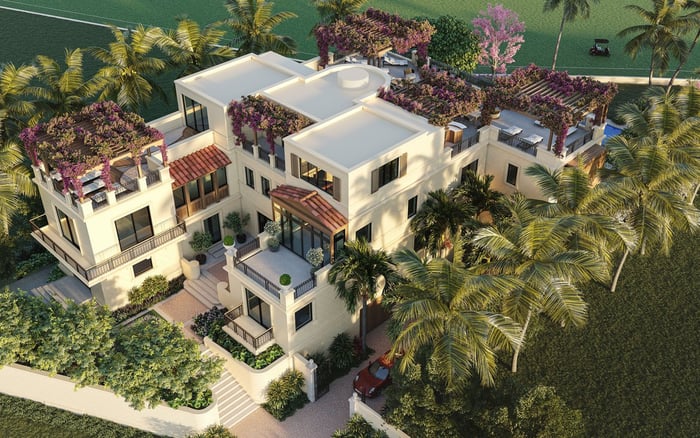
For South Florida luxury buyers, new-development choice is valuable, but the real advantage comes from aligning timing, livability, governance, privacy, and long-term exit strategy before selecting a residence.
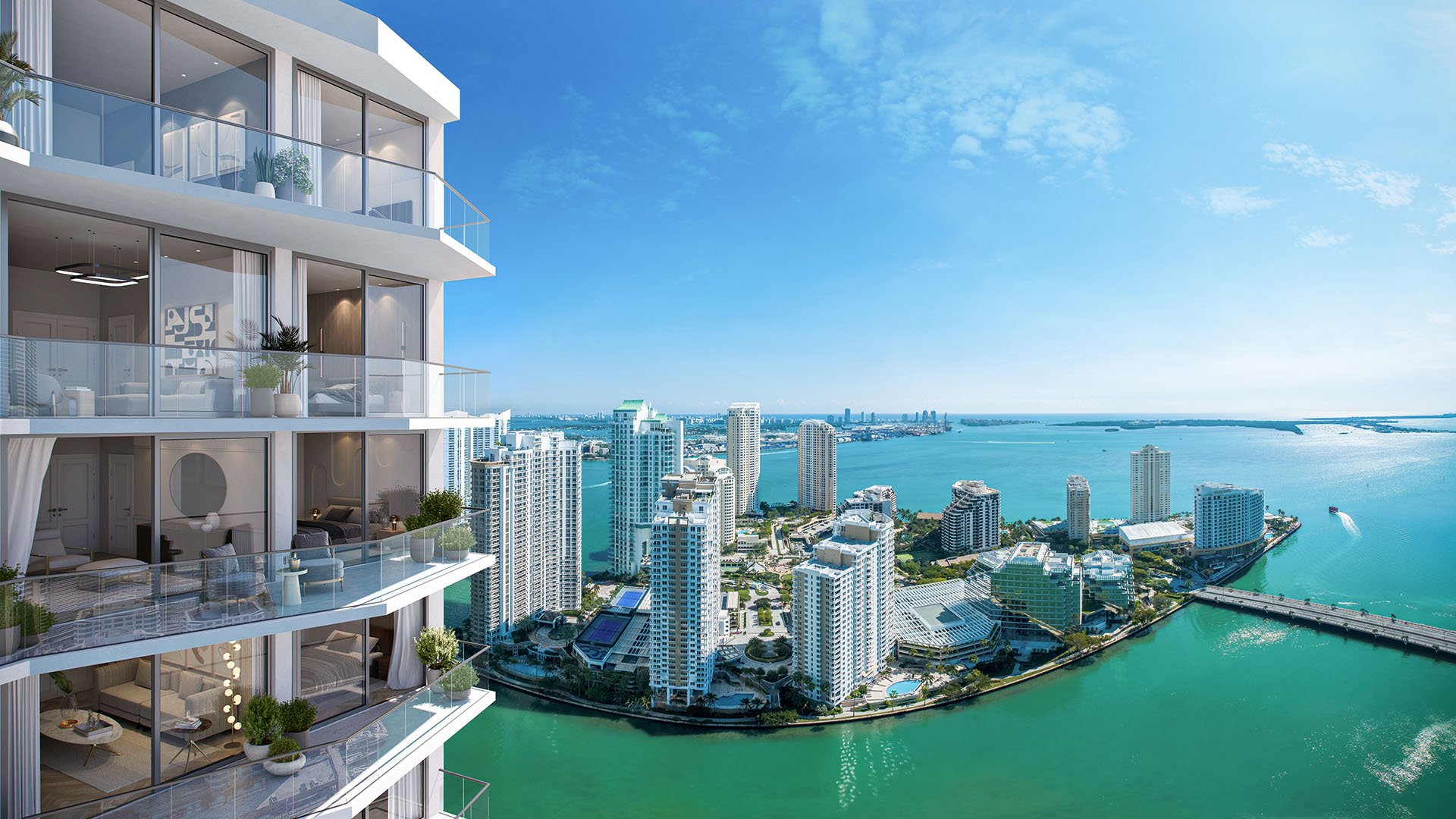
South Florida’s luxury buyer is often introduced to new development through abundance: waterfront towers, branded residences, boutique buildings, private clubs, wellness concepts, marina access, walkable urban addresses, and quiet residential enclaves. That range has real value. It allows a buyer to compare distinct lifestyles before committing capital, time, and attention.
Yet optionality is only the starting point. The refined buyer understands that choice alone does not create confidence. Confidence comes from filtering choice through a disciplined thesis: how the residence will be used, how it will feel day to day, how privacy will be protected, how service will function, how the building will mature, and how the asset may be perceived by a future buyer.
Within MILLION, a buyer may begin with search lenses such as Brickell, Miami Beach, Palm Beach, new construction, pre-construction, or investment. But the true advisory work begins after the list of possibilities appears. The question becomes less, “What is available?” and more, “Which residence will still make sense after the initial excitement has passed?”
New development gives luxury buyers a rare ability to shape the experience before move-in. Depending on the offering, a buyer may evaluate floor height, exposure, terrace depth, bedroom configuration, finish direction, parking, storage, amenity access, and construction timeline. This is a meaningful advantage over a completed resale purchase, where the buyer accepts an existing condition and negotiates around fixed constraints.
That advantage can also create distraction. A buyer can become absorbed by renderings, brand language, amenity menus, and launch positioning without sufficiently testing the fundamentals. The best residences are not simply those with the longest amenity list. They are the ones where architecture, plan, service model, location, and long-term ownership profile all support the way the buyer actually lives.
For a primary resident, the test may be morning light, school commute, elevator rhythm, arrival sequence, kitchen utility, staff access, and storage. For a second-home buyer, it may be lock-and-leave simplicity, guest privacy, building management, airport access, and seasonal ease. For an investor-minded owner, it may be demand durability, maintenance logic, rental limitations, and the depth of future buyer interest.
A serious buyer should convert choice into a written brief. Not a wish list, but a hierarchy. The first tier should hold the non-negotiables: view, privacy, bedroom count, waterfront orientation, walkability, service level, or building scale. The second tier can include preferences: design language, wellness programming, food and beverage access, club atmosphere, or proximity to cultural life. The third tier can include features that are attractive but not decisive.
This discipline prevents the buyer from being over-influenced by whatever is newest, loudest, or most visually seductive. South Florida’s luxury market rewards clarity. A buyer who knows what cannot be compromised can move decisively when the right residence appears and walk away from inventory that is impressive but misaligned.
The strongest brief also accounts for how often the owner will be present. A residence used for three weeks each winter should not be evaluated like a year-round family home. A pied-à-terre in an urban core has a different success metric than a quiet oceanfront retreat. A large residence intended for entertaining must be judged differently from a sanctuary designed for privacy.
Pre-construction offers buyers the possibility of early selection, but it also requires patience and tolerance for future delivery. Completed new residences offer immediacy, often with fewer choices. The right answer depends on the buyer’s time horizon, liquidity, flexibility, and appetite for process.
Some buyers benefit from entering early because they want the broadest menu of exposures and floor plans. Others are better served by waiting until a building is more tangible, even if that means accepting a narrower selection. In either case, timing should not be treated only as a pricing question. It is a lifestyle question. When does the buyer want to occupy? How much uncertainty is acceptable? What happens if personal needs change before delivery?
The most sophisticated buyers do not confuse speed with advantage. They are prepared, but not rushed. They understand that in luxury real estate, the right residence often requires patience, and the wrong residence can be expensive even if purchased efficiently.
A luxury residence is never just a private interior. It is also a shared environment. The building’s culture will shape daily life through arrival, staffing, amenity etiquette, guest protocols, pet policies, rental rules, maintenance standards, and board dynamics. These elements may not be as photogenic as a lobby or pool deck, but they are central to ownership satisfaction.
Buyers should study whether a building is designed to feel social, discreet, resort-like, club-oriented, family-friendly, urban, or highly private. A residence may be beautifully conceived and still be wrong if the building culture does not fit the owner’s temperament. For some, energy and visibility are part of the appeal. For others, the greatest luxury is anonymity.
This is especially important in South Florida, where buyers often cross-shop very different lifestyles in a single search. A waterfront condominium, a branded urban residence, a boutique beach building, and a private island address may all satisfy a budget, but they do not satisfy the same life.
Luxury buyers are naturally drawn to views, and rightly so. But view should not obscure plan. A dramatic exposure can lose appeal if the residence does not live well. Circulation, ceiling height, bedroom separation, terrace usability, service access, kitchen placement, and entertaining flow are all part of the value equation.
A floor plan should be read like a daily script. Where does the owner arrive? Where do guests gather? Can family members retreat without crossing formal spaces? Is the primary suite genuinely private? Does the terrace function as an outdoor room or simply as a visual feature? Are staff, deliveries, and service needs handled gracefully?
In the ultra-premium segment, elegance is often found in what does not need explanation. The best plans feel intuitive. They reduce friction. They allow the residence to support both quiet mornings and formal evenings without compromise.
Even buyers with no immediate intention to sell should consider exit from the start. A luxury residence should satisfy personal use first, but it should also have a clear future audience. The question is not whether the home is universally appealing. True luxury is rarely universal. The question is whether its appeal is legible, durable, and supported by scarcity.
Scarcity can take many forms: a rare view corridor, a limited building scale, a distinctive location, a thoughtful plan, a level of privacy, or a service environment that is difficult to replicate. Buyers should ask what will remain compelling once the development is no longer new. If the answer depends only on launch momentum, the thesis may be thin.
This is where optionality becomes strategy. The buyer begins with many choices, then narrows toward the residence with the clearest alignment between personal life and future market logic.
Why is optionality important in South Florida new development? It allows buyers to compare lifestyle, timing, design, and ownership structures before committing to a specific residence.
Why is optionality not enough on its own? Too many choices can dilute judgment unless the buyer has a clear brief and defined priorities.
Should a buyer prioritize location or building quality? Both matter, but the best decision aligns the address, building culture, floor plan, and intended use.
Is pre-construction better than completed new inventory? It depends on timing, selection needs, and tolerance for process. Neither path is inherently superior.
What should a second-home buyer focus on first? Ease of ownership, privacy, service quality, guest comfort, and lock-and-leave simplicity should lead the evaluation.
How should an investment-minded buyer assess new development? The buyer should consider future demand, scarcity, maintenance logic, rental rules, and the likely resale audience.
Do amenities determine long-term value? Amenities help, but lasting value usually depends more on location, architecture, service, privacy, and plan quality.
Why does building culture matter? It affects daily life through staffing, rules, social atmosphere, privacy expectations, and shared-space etiquette.
How should buyers compare Brickell, Miami Beach, and Palm Beach? They should compare them as distinct lifestyles rather than interchangeable luxury markets.
What is the smartest first step for a luxury buyer? Define the ownership thesis before touring, then use each property visit to test that thesis with discipline.
If you'd like a private walkthrough and a curated shortlist, connect with MILLION.
If branded residences are on your mind — as a home or as an allocation — we would be glad to share what we are seeing, privately.
Begin a quiet conversation