A buyer-focused look at why terrace drainage, waterproofing, and exterior water management can materially affect the ownership cost of a seasonal South Florida pied-à-terre.

A South Florida pied-à-terre is often evaluated through its most seductive metrics: view, exposure, ceiling height, privacy, amenity access and distance to the water. Yet for the seasonal buyer, one quiet technical detail can alter the real cost of ownership: terrace drainage.
A terrace is not simply outdoor square footage. It is an exposed assembly of tile or pavers, waterproofing, drains, slopes, thresholds, railings, planters and door systems. When it performs well, it extends the residence into the climate and gives the owner the daily ritual that makes a second home feel effortless. When it performs poorly, it can become a recurring source of maintenance, inconvenience and negotiation friction.
The issue matters most for an owner who is not present year-round. A full-time resident may notice ponding after rain, a slow drain, staining at a threshold or moisture at an interior baseboard. A seasonal owner may discover the same condition weeks later, after water has had time to sit, migrate or leave visible evidence. In the luxury market, where finishes are exacting and expectations are high, small defects can quickly feel disproportionate.
The seasonal pied-à-terre is designed around ease. Owners want to arrive to a cooled, prepared residence, open the doors, step onto the balcony or terrace and resume a South Florida rhythm without management drama. Drainage complicates that promise because water is persistent, patient and rarely convenient.
A blocked scupper, a poorly pitched surface or an aging membrane may not announce itself dramatically at first. It may begin as standing water in one corner, mineral marks along a tile edge, mildew at exterior joints or swelling near an interior transition. For a lock-and-leave owner, the real cost is not only the repair. It is also the coordination: access permissions, association approvals, vendor scheduling, furniture removal, finish protection and the possibility of returning to a residence that is not ready for use.
This is why terrace condition belongs in the same conversation as views and floor plan. A sweeping exterior living space can be a powerful investment attribute, but only if its assemblies are understood. The most elegant private outdoor room is still exposed to water, wind, heat and regular use.
A buyer should ask practical, unglamorous questions before being carried away by the sunset. Does the terrace drain quickly after rain? Are there multiple drains or only a single low point? Is the surface properly sloped away from interior thresholds? Are door tracks clean and elevated enough to reduce vulnerability? Are there planters, pavers or outdoor kitchens that could conceal drainage paths? Has any terrace waterproofing work been performed, proposed or discussed by the association?
The answers should be observed, not merely assumed. A dry-day showing can flatter an outdoor space. A careful buyer studies staining patterns, grout condition, sealant lines, railing penetrations, drain covers and the relationship between the finished floor and the interior. On larger residences, it is also worth understanding whether outdoor furniture layouts could interfere with drains or trap debris.
In buildings such as 57 Ocean Miami Beach, where the appeal of coastal living is closely tied to private outdoor space and proximity to the sand, the terrace is central to the lifestyle proposition. The same is true across Miami Beach more broadly, where exposure, views and exterior living often carry meaningful emotional weight in a purchase decision.
A drain itself may be a modest component. The expensive part is often what surrounds it. If water has found a path beneath finishes, the solution can involve lifting tile or pavers, testing membranes, repairing substrates, replacing waterproofing, reinstalling finishes and protecting adjacent interiors. If the issue affects more than one residence, the matter may move from private maintenance to association-level planning.
For a seasonal owner, time becomes part of the expense. A winter stay interrupted by terrace work has a different cost than the invoice alone. So does uncertainty at resale. Buyers often read exterior water issues cautiously, especially when documentation is thin or repairs appear improvised. Clean records, professional maintenance and transparent association communication help preserve confidence.
This is why sophisticated buyers do not treat terrace drainage as a simple yes-or-no condition. They think in layers: current performance, maintenance history, building responsibility, owner responsibility, access constraints and the age of visible finishes. A beautiful terrace with ambiguous water history may deserve a different pricing posture than a similar terrace with clear documentation and recent, well-executed work.
In dense urban settings, the terrace can feel more architectural than garden-like. Brickell buyers may focus on skyline views, bay glimpses, access to dining and the convenience of a residence that can function as a city base. At 2200 Brickell, the urban pied-à-terre conversation naturally centers on design, location and ease of use. Drainage belongs in that same practical evaluation.
Vertical living does not eliminate exterior water considerations. It changes them. Wind-driven rain, balcony thresholds, shared façade systems and association protocols can all shape how a terrace is maintained. A waterfront residence may be especially compelling, but exterior exposure is part of what the owner is buying. The question is not whether the terrace will meet weather. It is whether the building and residence are designed, maintained and documented in a way that supports a low-friction ownership experience.
Buyers comparing a compact city pied-à-terre with a larger resort-style residence should resist assuming that smaller terraces are automatically simpler. A small terrace with one compromised drain can be more disruptive than a larger terrace with thoughtful redundancy and easy maintenance access.
In Miami Beach, private outdoor space often carries a particular premium because it mediates between architecture, light and climate. A well-planned terrace can become the preferred room of the residence, used for breakfast, evening drinks, reading, entertaining and simply taking in the air. That lifestyle value is precisely why buyers should be disciplined about the technical side.
At The Perigon Miami Beach, as with other high-design coastal residences, the emotional draw of outdoor living can be immediate. The prudent buyer lets that emotion lead to better questions rather than fewer questions. How does the terrace handle water at the door? Where does runoff travel? Are planter beds or built-ins part of the original design or later additions? Who maintains the drains, and how often can access be arranged when the owner is away?
The goal is not to diminish the romance of a terrace. It is to protect it. A well-drained exterior space feels effortless precisely because the less visible systems are doing their work.
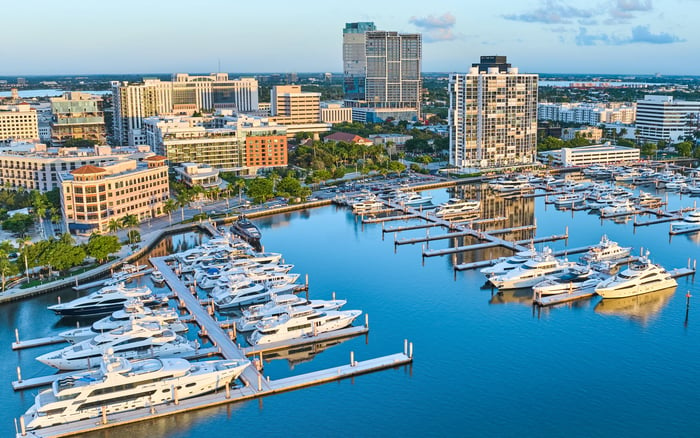
The same thinking applies beyond Miami-Dade. In West Palm Beach, a seasonal residence may be used around cultural events, family visits, dining, boating or a quieter winter rhythm. A buyer considering Alba West Palm Beach may be drawn to water views, ease of access and a refined residential scale. The lock-and-leave question remains: what happens on the terrace when the owner is not there?
For any second-home purchase, the service model matters. A residence manager, housekeeper or building team may be able to report standing water, clear visible debris and flag early signs of staining. Still, ownership documents should clarify where responsibility begins and ends. Does the association handle structural waterproofing? Is the owner responsible for surface finishes? Are modifications allowed? Are there rules for planters, irrigation, outdoor rugs or furniture that might affect drainage?
A terrace should be beautiful, but it should also be legible. The best seasonal residences make it easy to understand how water moves, who maintains what and how quickly a concern can be addressed.
Before closing, buyers should request association documents, maintenance history relevant to terraces, rules for exterior modifications and any available information about prior repairs affecting the residence or surrounding stack. A qualified inspection should include exterior surfaces, drains, door thresholds and signs of moisture migration. If concerns appear, specialized review may be appropriate before negotiation is complete.
The contract conversation should remain calm and specific. A buyer does not need to catastrophize every stain or slow drain. The stronger approach is to identify the condition, understand responsibility, estimate disruption and decide whether the price, terms or post-closing plan reflect the risk. In luxury real estate, certainty has value. So does the ability to arrive in season and use the home as intended.
Why does terrace drainage matter in a seasonal pied-à-terre? Because the owner may be absent when small water issues begin. Delayed discovery can increase repair complexity and disrupt planned use.
Is a larger terrace always riskier than a smaller balcony? Not necessarily. Design, slope, drain placement, maintenance access and waterproofing condition matter more than size alone.
What should I look for during a showing? Look for ponding marks, staining, cracked grout, clogged drains, damaged sealant and moisture signs near interior thresholds.
Should drainage concerns affect my offer? They can. The key is understanding responsibility, likely disruption and whether documentation supports the current condition.
Who is usually responsible for terrace waterproofing? Responsibility depends on the condominium documents. Buyers should review governing documents before assuming owner or association responsibility.
Can planters or outdoor rugs create drainage problems? They can interfere with water flow or trap debris if placed poorly. Any exterior design plan should respect drainage paths.
Is new construction immune from terrace drainage issues? No residence should be assumed immune. Buyers should still review design, access, maintenance obligations and warranty processes.
How can an absentee owner manage terrace risk? Arrange periodic checks, keep drains visibly clear, document conditions and ensure building access procedures are in place.
Does terrace drainage affect resale value? It can influence buyer confidence. Clear records and well-maintained exterior assemblies help support a smoother resale conversation.
What is the best first step before purchasing? Treat the terrace as a technical asset, not just a lifestyle feature, and include it in inspection and document review.
To compare the best-fit options with clarity, connect with MILLION.
If branded residences are on your mind — as a home or as an allocation — we would be glad to share what we are seeing, privately.
Begin a quiet conversation