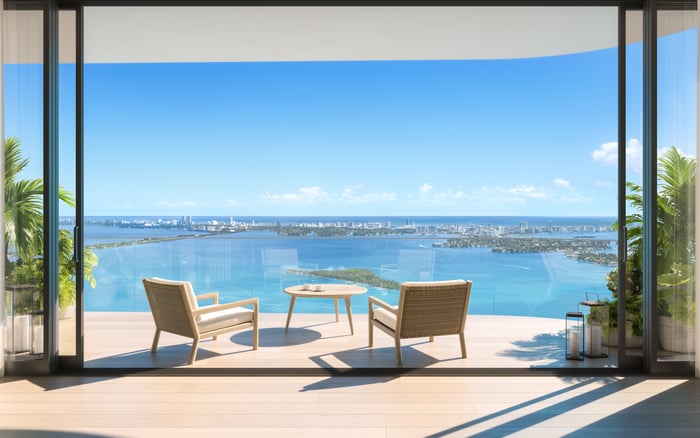
A buyer-focused editorial on why The Cove Residences Edgewater merits consideration when the goal is long-term daily living rather than purely speculative ownership.

The best primary-residence purchase is rarely the loudest one. It is the address that still feels intelligent after the closing dinner, after the first season of use, and after the first glow of newness gives way to weekday routine. That is the lens through which The Cove Residences Edgewater deserves attention.
For buyers who intend to live in Miami full time, or close to it, the question is not simply whether a residence feels luxurious. It is whether the building supports privacy, convenience, maintenance confidence, and a sense of calm that can withstand everyday use. A primary-residence strategy requires discipline: less impulse, more fit. The Cove belongs on the shortlist because it can be assessed against that more serious standard, particularly for buyers already drawn to Edgewater.
This is not a call to chase novelty. It is an argument for measured comparison. A buyer weighing Cove Miami should look beyond presentation materials and ask whether the residence aligns with how life is actually lived: morning routines, work patterns, guests, storage, pets, family rhythms, entertaining, parking preferences, and the simple pleasure of coming home without friction.
Edgewater has become one of Miami’s most closely watched residential settings for buyers who want connection without surrendering to a hotel-district rhythm. It sits within the broader urban conversation, yet its appeal for primary users is more nuanced than nightlife or skyline drama. The area works best for buyers who want the city nearby, while still expecting home to feel like a private base.
That distinction matters. A second-home buyer may prioritize drama first: the most cinematic view, the most recognizable brand, the most rentable narrative. A primary-residence buyer tends to be more exacting. They ask whether the arrival sequence feels comfortable, whether the elevator experience is efficient, whether the lobby culture matches their pace, and whether the neighborhood works on an ordinary Tuesday.
In this context, comparisons are useful. EDITION Edgewater speaks to one style of elevated urban living, while Villa Miami presents another point of reference within the same broader corridor. The Cove should be measured against these alternatives not as a popularity contest, but as a test of temperament. Which building feels right for the way a buyer actually lives?
Primary-residence buyers should begin with the floor plan rather than the amenity deck. A beautiful amenity program can enhance life, but it cannot rescue a residence that feels awkward every morning. The right home should make daily movement intuitive: entry, kitchen, living area, bedrooms, service spaces, storage, and terrace use should all support how the owner will occupy the home.
Privacy is equally central. In luxury condominiums, privacy is not only about walls and views. It is about acoustics, elevator patterns, circulation, the number of neighbors encountered in transition, and how public spaces are managed. Buyers should ask how the building experience feels at peak times, how guests are received, and whether common areas are designed for resident comfort rather than social display.
Ease is the third pillar. A primary residence must reduce mental load. That includes building operations, service expectations, maintenance processes, parking logistics, package handling, and the clarity of rules. These details can seem secondary during a polished sales appointment, but they often determine whether an owner remains satisfied years later.
Waterfront is one of the most powerful words in South Florida real estate, but a primary-residence buyer should treat it as an experience, not a slogan. The value of water orientation depends on how it is felt from the residence, how light enters the home, how outdoor space can be used, and whether the view contributes to serenity rather than merely resale language.
For The Cove, the buyer’s task is to determine whether the setting supports a daily relationship with the water. Does the terrace feel usable at the times of day the owner will actually be home? Does the exposure work with the buyer’s preference for sun, shade, and privacy? Does the residence offer a sense of calm when the city is active around it?
This is where a full-time strategy differs from a trophy strategy. A trophy strategy often rewards the most immediate visual impact. A primary-residence strategy rewards repeatable pleasure. The question is not whether the view impresses guests once. It is whether it restores the owner every day.
New-construction buyers in Miami often face an abundance problem. There are many polished presentations, many strong design narratives, and many neighborhoods competing for attention. The disciplined buyer narrows the field by defining use first. Will this be a daily home, a flexible pied-à-terre, a family base, or a long-term hold with limited personal use?
Viewed this way, The Cove does not need to be everything to everyone. It needs to be the right answer for a defined buyer. Those also considering Aria Reserve Miami may be thinking carefully about scale, views, residence mix, and the way a larger residential environment feels over time. Others may expand the search into Brickell, where 2200 Brickell offers a different urban rhythm and a different relationship to daily city life.
The comparison is valuable because it clarifies priorities. If a buyer wants a quieter residential mood, Edgewater may remain compelling. If walk-to-office convenience is paramount, Brickell may deserve greater weight. If the owner’s life is centered on arts, dining, waterfront routines, and convenient movement through Miami, The Cove may remain firmly in contention.
The most natural buyer for The Cove is not necessarily the buyer seeking maximum spectacle. It is the buyer who wants a polished Miami residence that can function as a real home. This buyer may already own property elsewhere, but is not treating Miami as an occasional backdrop. They want a place that can support extended stays, hybrid work, visiting family, and a more grounded relationship to the city.
They may also be moving from a single-family home and seeking less maintenance without giving up a sense of privacy. For that buyer, the building must feel secure, well managed, and sufficiently refined. They will likely scrutinize storage, service routes, parking, pet policies, guest access, and how the building handles the ordinary demands of daily life.
This is where lifestyle becomes more than a marketing word. It is not about constant activation. It is about alignment. The right residence should make life smoother, not busier. It should offer enough amenity value to support wellness and entertaining, without creating the feeling of living inside a public venue.
A shortlist is not a commitment. It is a disciplined buying tool. Placing The Cove on that list allows a buyer to compare it against relevant alternatives, pressure-test the floor plans, study the ownership structure, and understand the cost of living in the building before emotion takes over.
The strongest buyers are rarely rushed by presentation alone. They ask for clarity on carrying costs, construction expectations, deposit structure, rules, service model, and future resale positioning. They compare not just price, but livability per dollar. They think like owners before they act like purchasers.
For buyers using this as part of a Buyer's Guides framework, the central point is simple: The Cove Residences Edgewater merits attention when the purchase objective is a refined Miami base with long-term usability. It should be toured slowly, compared intelligently, and judged by the standards of a home rather than the theater of a launch.
Is The Cove Residences Edgewater best viewed as a primary residence or investment purchase? For this strategy, it should be evaluated first as a primary residence. Rental or resale considerations may matter, but daily livability should lead the analysis.
Why should primary-residence buyers consider Edgewater? Edgewater can appeal to buyers who want an urban Miami setting with a residential sensibility. The fit depends on commute patterns, lifestyle preferences, and building culture.
What should I review first at The Cove? Start with floor plan logic, privacy, storage, exposure, and the ease of moving through the building. Amenities should support the residence, not distract from it.
How many competing projects should I compare before deciding? A serious buyer should usually compare a small, curated group of relevant options. Too many tours can blur judgment, while too few can hide a better fit.
Does waterfront positioning automatically make a residence better? Not automatically. The important question is how the water orientation affects light, privacy, terrace use, and everyday enjoyment.
Is new construction always preferable for a full-time buyer? Not always. New development can offer contemporary design and systems, but the right choice depends on execution, governance, timing, and personal needs.
Should I prioritize amenities when buying for daily use? Amenities matter, but they should be weighed after the residence itself. A home with the right proportions and privacy usually ages better in daily life.
What makes Cove Miami different from a resort-style purchase? The distinction is in how the buyer uses it. A primary user should focus on quiet functionality, service consistency, and comfort rather than occasional spectacle.
Can The Cove work for buyers relocating from a house? It may, if the buyer is comfortable with condominium living and confirms that storage, privacy, pets, parking, and service expectations align with daily routines.
What is the smartest next step before making an offer? Build a focused comparison set, review the residence details carefully, and decide whether the building supports the way you expect to live most days.
To compare the best-fit options with clarity, connect with MILLION.
If branded residences are on your mind — as a home or as an allocation — we would be glad to share what we are seeing, privately.
Begin a quiet conversation