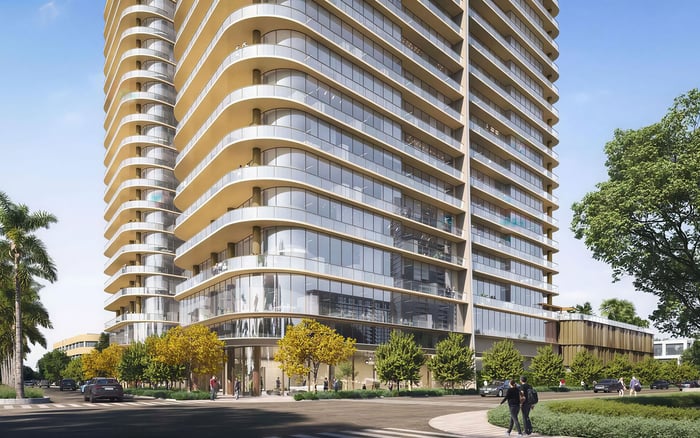
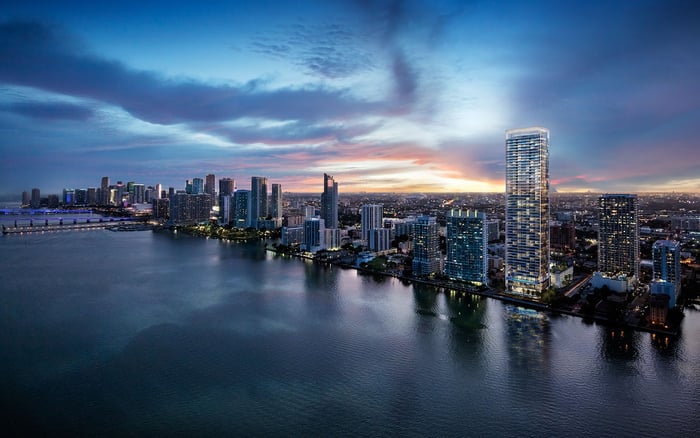
A discreet buyer’s guide to why the Miami Design District can work as a refined, urban South Florida base for owners moving between New York and Florida.
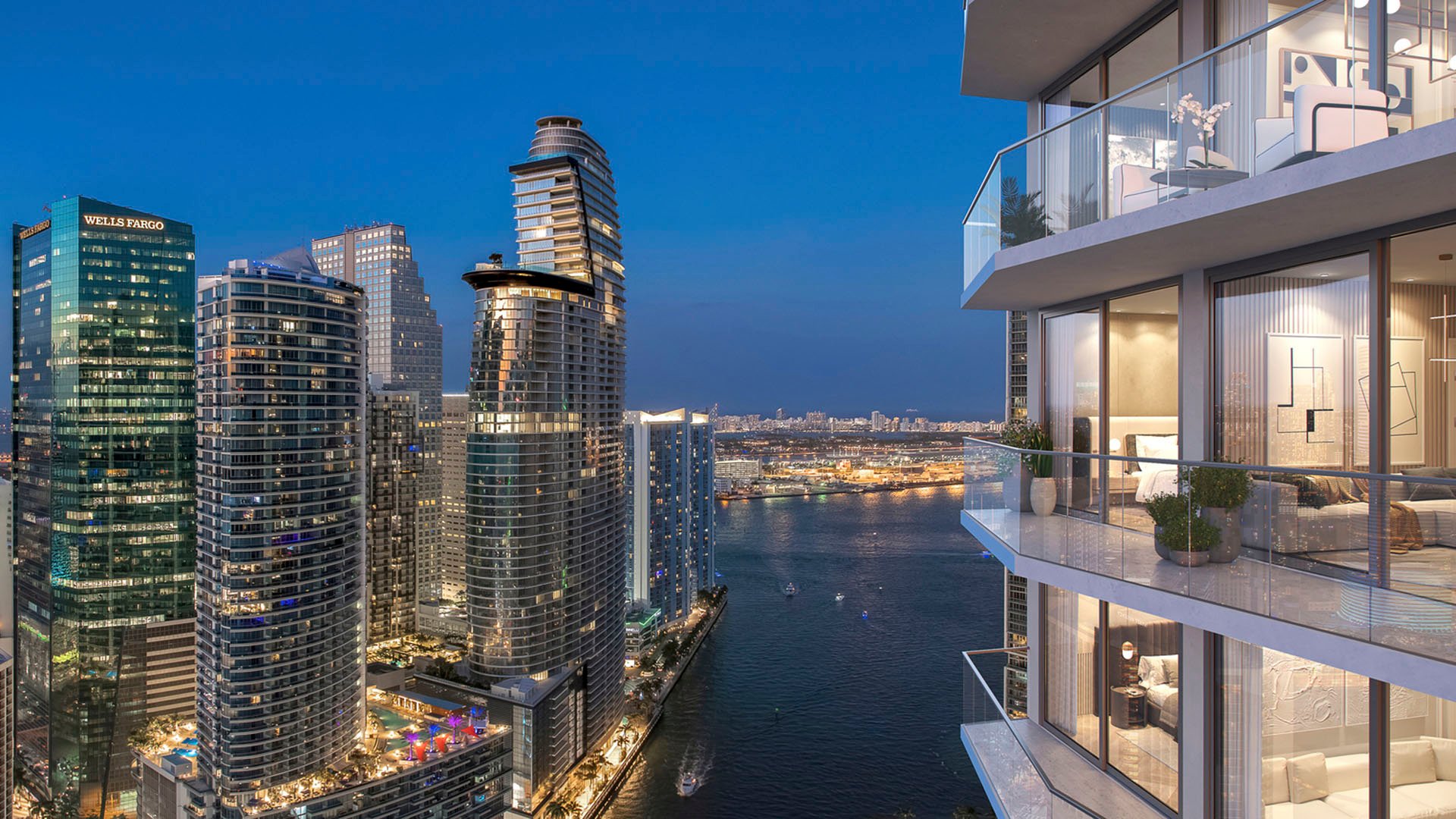
For buyers who divide their calendar between New York and Florida, the Miami Design District offers a compelling proposition: an urban base with a design-forward identity, close to the city’s cultural and residential core, without requiring a full retreat into resort living. It is not a substitute for a beachfront estate, nor is it trying to be. Its appeal is more exacting. It speaks to owners who want a polished, walkable-feeling routine, a visually considered setting, and a home that functions elegantly whether they are in residence for a week, a month, or an extended season.
That distinction matters. Many New York buyers arrive in South Florida assuming the choice is binary: either a high-rise financial-district lifestyle or an oceanfront address. The Design District introduces a third path. It can feel more curated, more intimate, and more aligned with those who already live around art, interiors, hospitality, and fashion in New York. A residence such as Kempinski Residences Miami Design District naturally fits that conversation because the location itself is part of the value proposition, not simply a backdrop.
The strongest buyers here are not chasing maximum spectacle. They are seeking a refined second-home base with the ease of an urban pied-à-terre and the warmth of South Florida. That may mean a residence with thoughtful services, strong privacy, high design integrity, and enough flexibility to support both personal use and longer stays.
A New York buyer often wants Florida to simplify life, not complicate it. The ideal South Florida residence should be easy to leave, easy to return to, and comfortable from the first hour of arrival. The Design District works well for this mindset because it supports a rhythm familiar to city residents: morning errands, dining, galleries, personal appointments, and social plans can all exist within a compact, highly edited lifestyle orbit.
This is not about recreating Manhattan. It is about translating the best parts of city living into a softer climate and a more relaxed cadence. Buyers accustomed to private clubs, residential staff, destination restaurants, and considered design will likely respond to a neighborhood that feels intentional. For many, the question is not whether the building has the most amenities on paper. It is whether the building supports a life that feels composed.
That is where boutique positioning can be especially important. A smaller or more design-led residence may appeal to buyers who do not want the anonymity of a very large tower. Conversely, some buyers prefer a full-service building with a more substantial amenity program. The right answer depends less on trend than on use pattern: frequency of visits, household size, guest expectations, staff needs, and the level of discretion desired.
The Design District should be evaluated with its nearby alternatives, not in isolation. Brickell is often the comparison for buyers who want a more vertical, financial-district energy. It can be compelling for those who prioritize skyline living, banking proximity, and a denser condominium market. Projects such as 619 Residences by Foster + Partners + Nobu Hospitality and 888 Brickell by Dolce & Gabbana represent the kind of branded, urban luxury that may attract buyers who want their Florida base to feel metropolitan and highly serviced.
Wynwood adds another dimension. Its appeal is less formal, more creative, and often interesting to buyers who want proximity to Miami’s evolving cultural edge. A Design District address can allow a buyer to enjoy that adjacency while choosing a more polished residential environment. For certain New York buyers, that balance is critical: access to energy without living directly inside the most active street-level atmosphere.
Miami Beach remains relevant as well, especially for owners who prioritize sand, ocean air, and resort rituals. Yet not every New York buyer wants a Florida home defined by the beach. Some prefer to keep the beach as an amenity within a broader life rather than the center of daily living. For those buyers, studying a property like Shore Club Private Collections Miami Beach alongside Design District options can clarify whether the emotional pull is coastal or urban.
For a buyer splitting time, the residence itself must do more than photograph well. It should reduce friction. Storage, arrival sequence, service access, natural light, guest accommodations, and the relationship between indoor and outdoor space all matter. A beautiful apartment that cannot support real living will feel thin after the first season.
New-construction residences can be attractive because they often align with contemporary expectations for layouts, wellness spaces, security, and building systems. Still, a buyer should not assume that newer automatically means better. The more useful lens is durability: Will the floor plan still feel calm in five years? Are the public spaces too theatrical for daily use, or do they enhance the owner’s routine? Does the building culture match the buyer’s expectations for privacy?
The Design District buyer should also think carefully about hosting. New York owners often use their Miami home as a gathering point for family, friends, or professional relationships. The residence should be able to shift gracefully between quiet personal time and a dinner before an evening out. Miami Design Residences Midtown Miami is one example of why buyers evaluating this pocket often look closely at how residential design, neighborhood access, and urban convenience come together.
A South Florida purchase for a New York buyer is rarely just a lifestyle move. It is also a portfolio decision. The most resilient purchases tend to combine personal conviction with broad future appeal: strong location logic, timeless design, credible services, and a building concept that is not overly dependent on novelty.
That investment lens does not require a purely financial posture. In the luxury market, value is often protected by emotional clarity. A buyer who understands why a home fits their life is less likely to be distracted by features that sound impressive but do not serve daily use. The Design District can be particularly persuasive because its appeal is specific. It is for the owner who values proximity, taste, urbanity, and ease more than maximal resort acreage.
For the New York and Florida household, the most elegant choice may be the one that feels almost inevitable after a few days of living with it. It should let you arrive without adjustment, host without strain, and leave without concern. That is the true measure of a refined South Florida base.
Is the Miami Design District better as a primary home or second-home? It can work especially well as a second-home for buyers who want an urban South Florida base with design, dining, and cultural adjacency.
How should New York buyers compare the area with Brickell? Brickell may feel more corporate and vertical, while the Design District often reads as more curated and design-led. The better fit depends on daily rhythm.
Should I only consider new-construction residences? New-construction can offer modern layouts and services, but the more important test is whether the building supports long-term comfort and privacy.
Does a boutique building make sense for this buyer profile? Yes, if the buyer values discretion, a more intimate arrival experience, and a residential culture that feels less anonymous.
Can a Design District base still feel private? It can, provided the building has a strong arrival sequence, thoughtful service model, and residences that separate public energy from private life.
How does Wynwood fit into the search? Wynwood may appeal to buyers who want creative energy nearby while maintaining a more refined home base in or around the Design District.
Is Miami Beach still relevant to this decision? Yes, especially for buyers deciding whether they want beachfront living or prefer the beach as part of a broader Miami lifestyle.
What matters most for an investment-minded buyer? Focus on location logic, design longevity, service quality, and whether the home will remain desirable beyond the current market moment.
Which nearby projects should be studied first? Start with residences that match the intended lifestyle, then compare Design District, Brickell, and Miami Beach options against that standard.
What is the best first step? Define how often you will use the home, who will stay there, and what level of service, privacy, and neighborhood energy you expect.
For a discreet conversation and a curated building-by-building shortlist, connect with MILLION.
If branded residences are on your mind — as a home or as an allocation — we would be glad to share what we are seeing, privately.
Begin a quiet conversation