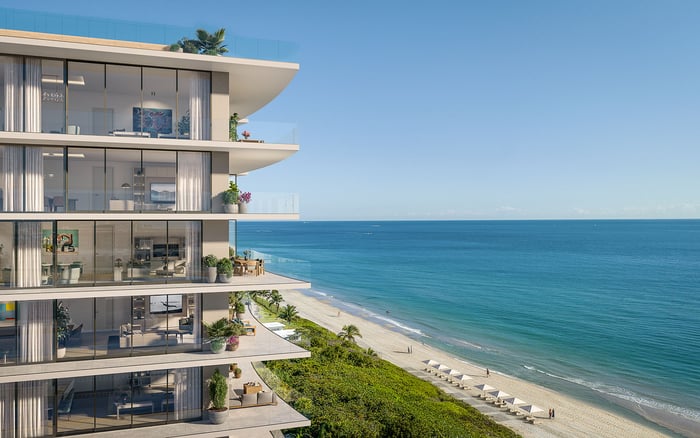
A practical framework for aligning a Pompano Beach residence with a yacht’s dimensions, operating needs, ownership structure, and everyday waterfront routine.

For yacht-focused buyers, a Pompano Beach property search should begin with the vessel’s operating profile. Length, beam, draft, height, displacement, shore-power requirements, fueling preferences, tender storage, and crew needs all determine what qualifies as a workable home base. A beautiful residence cannot compensate for a berth that is undersized, difficult to approach, or unavailable when needed.
This is the essential distinction between buying waterfront real estate and choosing a residence that genuinely supports yacht ownership. The first is an architectural and lifestyle decision. The second adds a technical layer encompassing navigation, docking rights, utilities, maintenance, security, insurance, and daily logistics.
For readers using MILLION's Buyer's Guides, the most disciplined sequence is vessel first, route second, berth third, and residence fourth. This order prevents interiors and views from overshadowing the practical conditions that will define ownership after closing.
A boat-slip description is only a starting point. Buyers should obtain the berth’s verified dimensions and clarify how they are measured. Pilings, fenders, neighboring vessels, dock boxes, lifts, and turning space can reduce usable capacity even when the headline measurement appears sufficient.
The approach deserves equal scrutiny. A captain should assess maneuvering room, current, wind exposure, water depth, tidal variation, fixed obstructions, and any operational constraints between the berth and open water. That evaluation should reflect the yacht at its normal cruising load, not merely an abstract specification.
Utilities matter as well. Confirm electrical service, water, lighting, connectivity, waste-handling arrangements, and shutoff locations. Determine who maintains each component and how repairs are authorized. If crew, contractors, or provisioning teams will visit regularly, examine loading access, parking, entry procedures, working hours, and the distance from vehicle to vessel.
The legal character of a berth can materially affect its use. Determine whether it is deeded, assigned, licensed, leased, shared, or controlled through an association. Then establish whether the right transfers with the residence, can be reassigned, is subject to a waitlist, or depends on continued approval.
Review governing documents for vessel-size limits, residency requirements, guest use, commercial activity, liveaboard restrictions, charter rules, contractor access, fueling, repairs, noise, lighting, and hurricane procedures. Verbal assurances should never replace written confirmation from the parties authorized to interpret and enforce those rules.
A marina arrangement may also carry fees or obligations beyond the residence’s regular assessments. Buyers should request a complete schedule of recurring charges, deposits, utility billing, maintenance responsibilities, and potential special assessments. Counsel familiar with waterfront transactions can help reconcile the purchase contract, association documents, berth agreement, survey, and title materials before contingencies expire.
Pompano Beach buyers may begin by comparing distinct residential concepts, including Armani Casa Residences Pompano Beach and The Ritz-Carlton Residences® Pompano Beach. The meaningful comparison extends beyond branding to how each available residence fits the owner’s complete onshore and marine routine.
That review should encompass the route between parking, the residence, service areas, and vessel access. Consider luggage, groceries, marine equipment, children, pets, guests, and crew. Privacy may hinge on how visitors enter, whether contractors use separate access points, and where deliveries are staged.
Buyers considering W Pompano Beach Hotel & Residences or Ocean 580 Pompano Beach should apply the same document-led process. An oceanfront address and a yacht-compatible home base remain separate propositions unless berth access, route conditions, operating rules, and costs have all been confirmed for the specific transaction.
The acquisition price is only one component of a yacht-centered residence. A prudent budget may include berth charges, utilities, dock maintenance, electrical work, insurance, storm preparation, security, vessel management, cleaning, provisioning, crew parking, and transportation between the residence and any off-site service facility.
Responsibilities should be assigned clearly. Establish which repairs fall to the owner, association, marina operator, or third-party vendor. Determine how emergency work is handled, whether preferred contractors are required, and whether access rules could delay time-sensitive service.
Insurance review should begin early, not immediately before closing. The residence, dock, berth interest, and vessel may involve separate policies with different requirements. Buyers should ask their advisers to identify exclusions, deductibles, named-storm procedures, liability allocation, and any conditions tied to vessel size, storage, or evacuation.
Before committing, recreate a realistic day of ownership. Arrive in the vehicles normally used, follow the guest-entry process, move equipment to the berth, inspect utilities, and walk the return route to the residence. If permitted, evaluate the navigational route with an appropriately qualified captain under representative conditions.
Repeat the exercise after dark if nighttime use matters. Lighting, access control, visibility, staffing, noise, and the ease of securing the yacht can feel markedly different outside daytime showing hours. The goal is not simply to confirm that docking is possible, but to determine whether the entire routine is elegant, secure, and repeatable.
A yacht-oriented purchase succeeds when the marine infrastructure and residence function as one private system. In Pompano Beach, disciplined buyers should make that integration the central test, then allow architecture, amenities, and views to refine the final choice.
Should the yacht or the residence define the search first? Start with the yacht’s dimensions and operating requirements, then identify residences and berth arrangements capable of supporting them.
Is a listed slip length enough to confirm compatibility? No. Verify usable dimensions, beam clearance, depth, pilings, neighboring vessels, approach space, and applicable rules.
Why should a captain inspect the route? A qualified captain can assess maneuvering, depth, tides, wind, current, obstructions, and the vessel’s actual operating profile.
What berth documents should a buyer review? Review the deed, assignment, license, lease, association documents, rules, fee schedules, surveys, and applicable transfer provisions.
Can berth rights transfer automatically with a residence? Do not assume they do. Transferability should be confirmed in the controlling documents and purchase agreement.
Which operating rules deserve particular attention? Focus on vessel limits, guest use, crew and contractor access, repairs, fueling, charters, liveaboard use, noise, and storm procedures.
What recurring expenses are easy to overlook? Utilities, dock maintenance, assessments, insurance, storm preparation, security, vessel management, cleaning, and parking can materially affect the budget.
Why test the route from parking to the yacht? It reveals how easily owners, guests, crew, provisions, luggage, and marine equipment can move through the property.
Does an oceanfront residence necessarily support yacht ownership? No. View orientation and berth functionality must be evaluated separately unless the transaction documents clearly connect them.
When should insurance be reviewed? Begin during due diligence so coverage terms, exclusions, deductibles, and storm obligations can inform the purchase decision.
To compare the best-fit options with clarity, connect with MILLION.
If branded residences are on your mind — as a home or as an allocation — we would be glad to share what we are seeing, privately.
Begin a quiet conversation