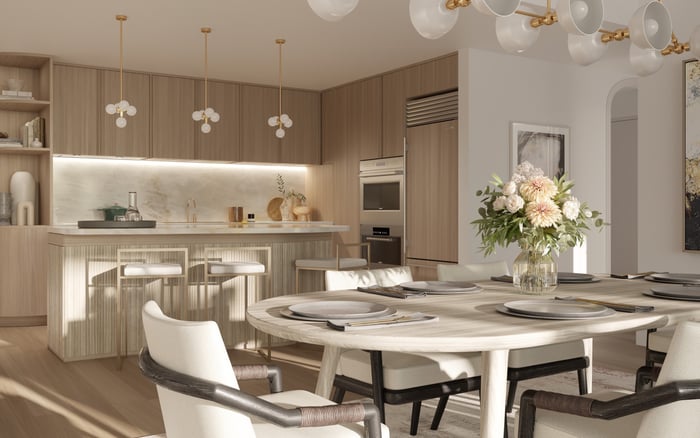
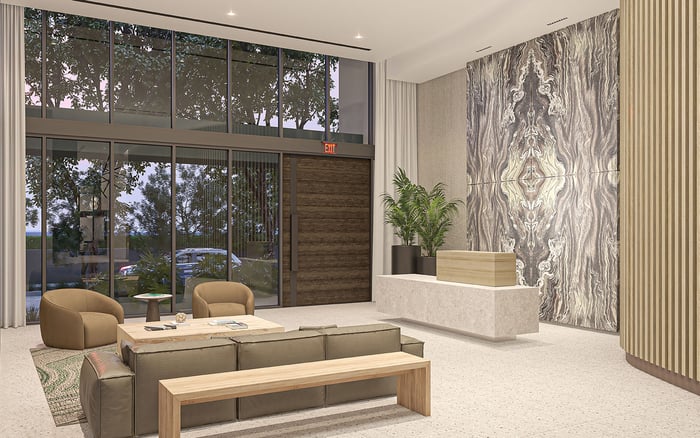
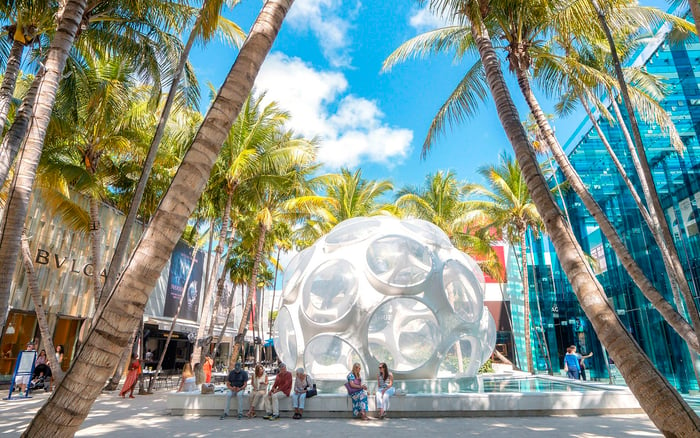
A discreet buyer’s guide to choosing a seasonal South Florida pied-à-terre with boutique proportions, emphasizing privacy, lock-and-leave ease, neighborhood rhythm, and long-term livability.
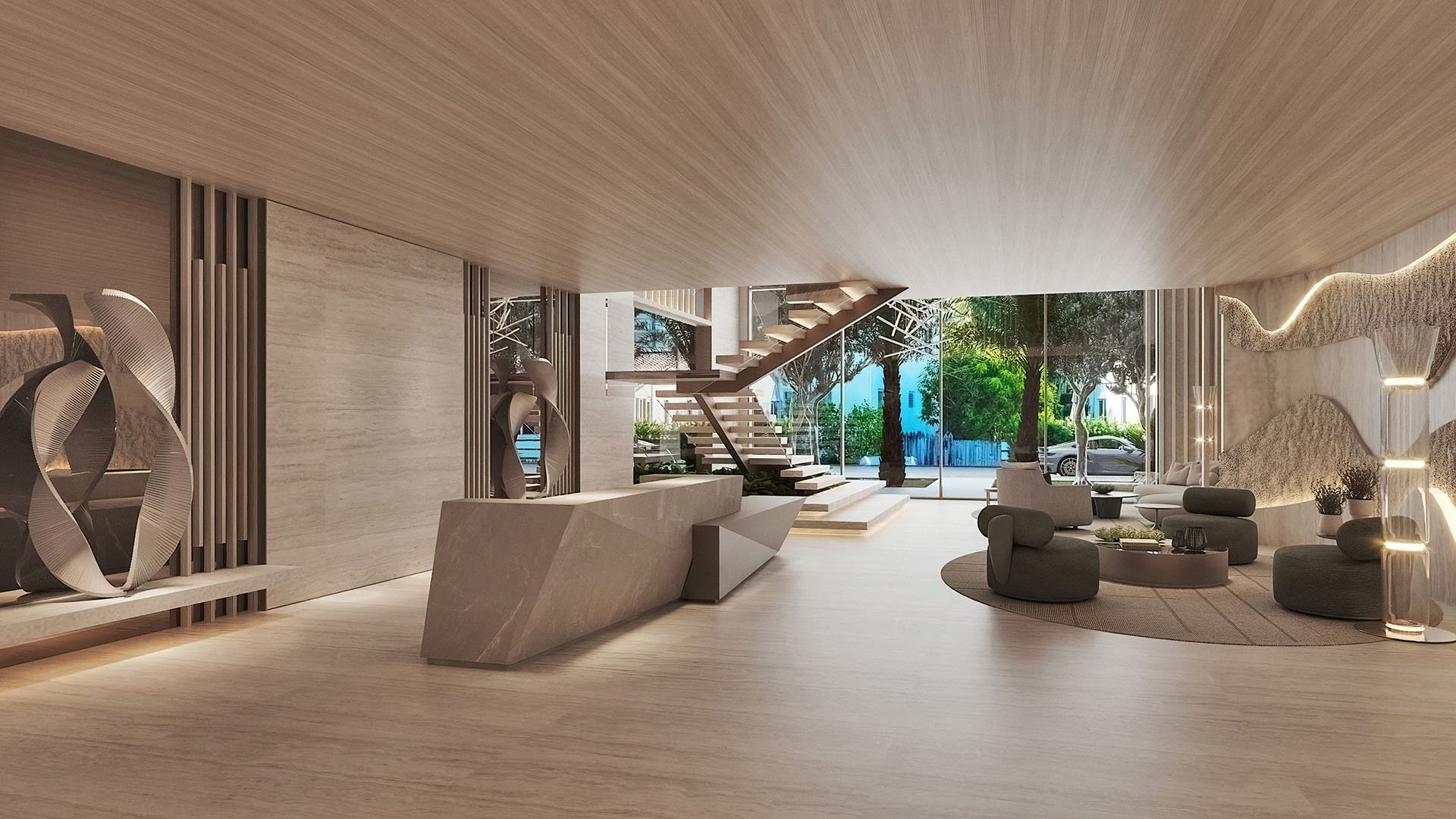
For a certain South Florida buyer, the ideal seasonal pied-à-terre is not the tallest tower, the loudest lobby, or the address designed to announce itself. It is a residence that works beautifully for three months, three weeks, or a long weekend, then recedes gracefully when its owner returns north, abroad, or to another primary home.
Boutique scale has become a meaningful preference because it answers a particular luxury brief. The buyer wants privacy, architectural composure, fewer transitions, and a building culture that feels residential rather than performative. A seasonal home should be simple to open, simple to close, and easy to enjoy without constant attention.
That is why the strongest choices are less about spectacle and more about fit. A pied-à-terre should reflect the owner’s actual pattern: morning swims, family visits, art-week entertaining, boating weekends, dining close to home, or a quiet terrace after a flight. In the Boutique and Second-home conversation, scale is not merely a design feature. It is a way of living.
1. Bay Harbor Islands, quiet island base
Bay Harbor Islands suits buyers who want a calmer residential rhythm while remaining connected to the broader Miami Beach and Bal Harbour orbit. It is especially compelling for owners who prize a softer arrival experience, lower-key streets, and the feeling of retreat after an evening out.
The appeal is not theatrical. It is practical, discreet, and highly livable. A seasonal buyer can focus on light, terrace use, parking convenience, staff responsiveness, and how the building feels when friends or family arrive for a short stay.
2. Surfside, beach-oriented discretion
Surfside works for buyers who want a coastal pied-à-terre with a more restrained personality than the most social parts of Miami Beach. The best fit here is a residence that privileges privacy, sand, and daily ease over constant activity.
For seasonal owners, Surfside is often about the ritual of returning: open the door, walk to the beach, host dinner, and leave again without drama. A boutique building can make that rhythm feel personal rather than institutional.
3. Coconut Grove, leafy village living
Coconut Grove appeals to buyers who prefer shade, texture, and a residential village feel. The seasonal pied-à-terre here is less about beachfront display and more about continuity, with an atmosphere that can feel relaxed even during the busiest months of the year.
This is a strong match for owners who want restaurants, marinas, parks, and cultural life within their personal orbit, while still maintaining privacy at home. In buyer shorthand, Coconut Grove often signals warmth, greenery, and permanence.
4. West Palm Beach, polished seasonal convenience
West Palm Beach has become a natural consideration for buyers who want a refined seasonal home north of Miami, with access to dining, culture, and Palm Beach’s social calendar without necessarily choosing an estate-scale commitment.
For the pied-à-terre buyer, the question is whether the residence can support both spontaneous visits and extended winter use. West Palm Beach is often considered by owners who want a polished base with a manageable footprint and a familiar seasonal cadence.
5. Fort Lauderdale and Pompano Beach, coastal ease with room to breathe
For some buyers, the ideal boutique pied-à-terre sits farther north along the Broward coast. The draw is a more relaxed waterfront sensibility, strong access to boating culture, and a residential pace that can feel less compressed than central Miami.
The best seasonal fit depends on whether the owner wants beach, marina, dining, or airport convenience to define the experience. In this context, boutique scale can turn a coastal residence into a true private base rather than a resort substitute.
Boutique living is felt most in the intervals: the elevator ride after a late arrival, the lobby at noon, the handoff with a valet, and the staff’s familiarity with seasonal routines. A smaller-feeling environment can make the residence feel more owned, more personal, and less exposed.
That does not mean sacrificing polish. It means choosing amenities that will actually be used. A pied-à-terre buyer may value a serene pool, a useful fitness room, thoughtful package handling, secure access, and attentive maintenance more than an oversized amenity menu. The question is not how many features exist. The question is whether the building supports absence and return with equal grace.
In Bay Harbor, projects such as The Well Bay Harbor Islands can enter the conversation for buyers seeking a quieter address with a wellness-minded residential sensibility. The point is not to chase every amenity. It is to identify which building culture matches the owner’s seasonal rhythm.
For buyers drawn to the ocean, the boutique brief becomes especially nuanced. Larger beachfront buildings may offer scale, services, and drama, but not every seasonal owner wants to feel part of a resort ecosystem. The more discreet buyer may prefer a residence that lets the beach remain the central luxury.
Surfside is particularly relevant for this mindset. A building such as Ocean House Surfside may appeal to buyers who want a coastal address framed by privacy rather than constant performance. Nearby, The Delmore Surfside belongs in a different but related conversation for buyers who want a highly considered oceanfront setting without defaulting to conventional tower thinking.
The decision should come down to how the residence feels at different times of day. Is the morning quiet? Does the terrace feel usable? Is the arrival sequence calm? Can guests visit without turning the home into a logistical exercise? These details matter more in a seasonal pied-à-terre than many buyers expect.
Not every seasonal buyer wants the beach to define the entire purchase. Some want the feeling of a neighborhood, a favorite café, a shaded walk, or an easy dinner close to home. Coconut Grove answers that desire with a softer, more residential mood, making it a natural fit for buyers who want their South Florida home to feel lived-in from the first night.
A project such as The Lincoln Coconut Grove can be considered by buyers drawn to the Grove’s more intimate residential atmosphere. The appeal lies in the possibility of having a seasonal base that feels less like a hotel alternative and more like a compact private home.
Farther north, West Palm Beach offers another version of seasonal warmth. For buyers considering a right-sized urban pied-à-terre, Alba West Palm Beach may sit within the broader conversation about easy seasonal living, access, and a polished but manageable home base.
The most successful boutique pied-à-terre purchase begins with an honest calendar. How often will the owner arrive? Will the home be used by adult children, guests, or staff? Is the priority beach, boating, dining, wellness, culture, or simple winter light? A residence that is perfect for a social season may be wrong for a buyer who wants solitude.
Storage is another quiet marker of quality. Seasonal owners need space for clothes, sports equipment, entertaining pieces, and personal items that should not travel back and forth. Building management, security, and maintenance protocols also deserve close attention because the home must function when the owner is absent.
Finally, buyers should resist being over-sold on scale. A pied-à-terre does not need to replicate a primary residence. It should edit life beautifully. The best South Florida seasonal home lets an owner arrive, exhale, entertain, rest, and leave without friction.
What makes a pied-à-terre different from a primary residence? A pied-à-terre is typically chosen for periodic use, so convenience, security, storage, and low-friction maintenance often matter as much as square footage.
Why do some seasonal buyers prefer boutique scale? Boutique scale can feel more private, personal, and residential, especially for owners who do not want a large resort-style environment.
Is an oceanfront address always the best choice? Not necessarily. Some buyers value beach access above all, while others prefer a village, island, or urban neighborhood rhythm.
Which South Florida areas suit discreet seasonal living? Bay Harbor Islands, Surfside, Coconut Grove, West Palm Beach, Fort Lauderdale, and Pompano Beach can each suit different versions of a quieter seasonal lifestyle.
Should buyers prioritize amenities or services? Services often matter more for seasonal use because the home must be cared for before arrival, during occupancy, and after departure.
How important is parking and arrival experience? Very important. A calm arrival sequence can define how effortless the residence feels after flights, dinners, and guest visits.
Do boutique buildings work for families? They can, provided the floor plan, guest accommodations, storage, and building culture align with how the family will use the home.
What should buyers consider before leaving the home vacant? Security, maintenance access, climate control, package handling, and communication with building staff should all be reviewed carefully.
Can a smaller residence still feel luxurious? Yes. In a seasonal home, luxury often comes from proportion, privacy, finishes, light, and the ease of daily use.
What is the best way to shortlist comparable options for touring? Start with location fit, delivery status, and daily lifestyle priorities, then compare stacks and elevations to validate views and privacy.
For a confidential assessment and a building-by-building shortlist, connect with MILLION.
If branded residences are on your mind — as a home or as an allocation — we would be glad to share what we are seeing, privately.
Begin a quiet conversation