A buyer-focused guide to high-floor wind behavior in South Florida, with practical due diligence for Latin American purchasers evaluating luxury coastal condos.
For many Latin American buyers, South Florida feels comfortably familiar: vertical living, service-rich towers, expansive water views, and a well-established second-home culture. Yet the local wind environment is not the same as Bogotá, Mexico City, São Paulo, Buenos Aires, or other inland high-rise markets. Here, luxury towers meet Atlantic exposure, Biscayne Bay exposure, afternoon sea breezes, wet-season thunderstorms, and recurring tropical-weather risk.
That does not mean high floors are inherently unsafe. Modern towers are engineered with wind forces in mind, and wind load is a central structural-design consideration in high-rise construction. The more refined buyer question is different: will the residence feel calm, quiet, and usable in daily life?
High floors can deliver the view that defines a South Florida purchase. They can also change how a balcony door sounds, how a terrace performs, how furniture must be selected, and how often outdoor space is actually used.
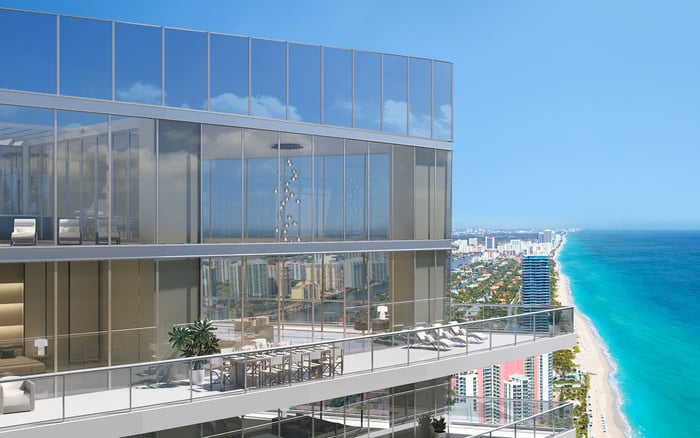
Wind speed generally increases as you rise above ground or water. A balcony on an upper floor can therefore feel materially windier than the porte cochère, pool deck, or sales-gallery terrace. A buyer touring at street level may be experiencing a different microclimate from the one that will shape daily life in the residence.
Sea breezes add another layer. Along Miami and Miami Beach, land and water conditions can create onshore winds that feel stronger during parts of the day. In practical terms, a morning showing may feel serene while a late-afternoon terrace dinner becomes gusty, noisy, or less comfortable.
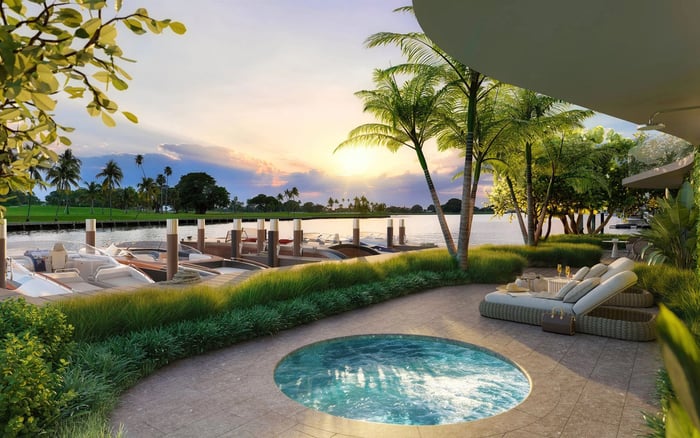
This is especially relevant for buyers drawn to highly exposed waterfront settings, whether comparing The Perigon Miami Beach, bayfront towers, or ocean-facing residences farther north. The same view corridor that looks spectacular in marketing photography may also be the corridor through which wind travels.
South Florida’s regulatory context is one reason international buyers trust the market. Buyers should understand how the building team describes wind design, impact-rated openings, façade systems, balcony doors, waterproofing, drainage, and storm procedures for the specific location and exposure.
Those protections matter. Still, comfort and compliance are not identical. A tower can be structurally designed for wind and still have upper-floor moments where movement is perceptible, terrace doors whistle, furniture shifts, or wind-driven rain tests the detailing around walls, windows, doors, roofs, and cladding.
For a buyer evaluating a glassy urban residence such as The Residences at 1428 Brickell, the point is not to question the premise of high-rise luxury. It is to treat wind, glazing, waterproofing, and façade performance as core due diligence, equal in importance to views, finishes, parking, and amenities.
Wind is not uniform across a tower. Floor height matters, but so do orientation, neighboring towers, balcony geometry, façade design, and whether a unit faces open water or a more protected urban condition. Two residences in the same building can feel different because one line catches a prevailing breeze directly while another is shielded by structure, setbacks, or adjacent buildings.
This is why buyers should avoid broad assumptions such as “higher is always better” or “oceanfront is always more valuable.” In some cases, the premium floor may offer the strongest view but demand more disciplined expectations around terrace usability. In others, a slightly lower or differently oriented line may feel more livable without sacrificing the sense of elevation.
In Brickell, tower spacing, bay exposure, and afternoon breezes can combine in ways that only become obvious from the actual floor plate. In Sunny Isles, oceanfront height and uninterrupted exposure deserve a specific conversation before a buyer commits to an upper floor at a tower such as St. Regis® Residences Sunny Isles.
South Florida’s wet season makes afternoon gusts especially relevant. Thunderstorms can bring sudden wind shifts and stronger gusts. For buyers imagining sunset dining, cigar evenings, children playing outdoors, or weekend entertaining, this is not an abstract technical issue. It is a lifestyle variable.
Storm conditions are more complex than sustained wind speed alone. They can include gusts, pressure effects, wind-driven rain, and debris concerns. In exposed coastal towers, those forces place more importance on the building envelope: balcony doors, sliding glass systems, window walls, railings, drainage, waterproofing, and façade detailing.
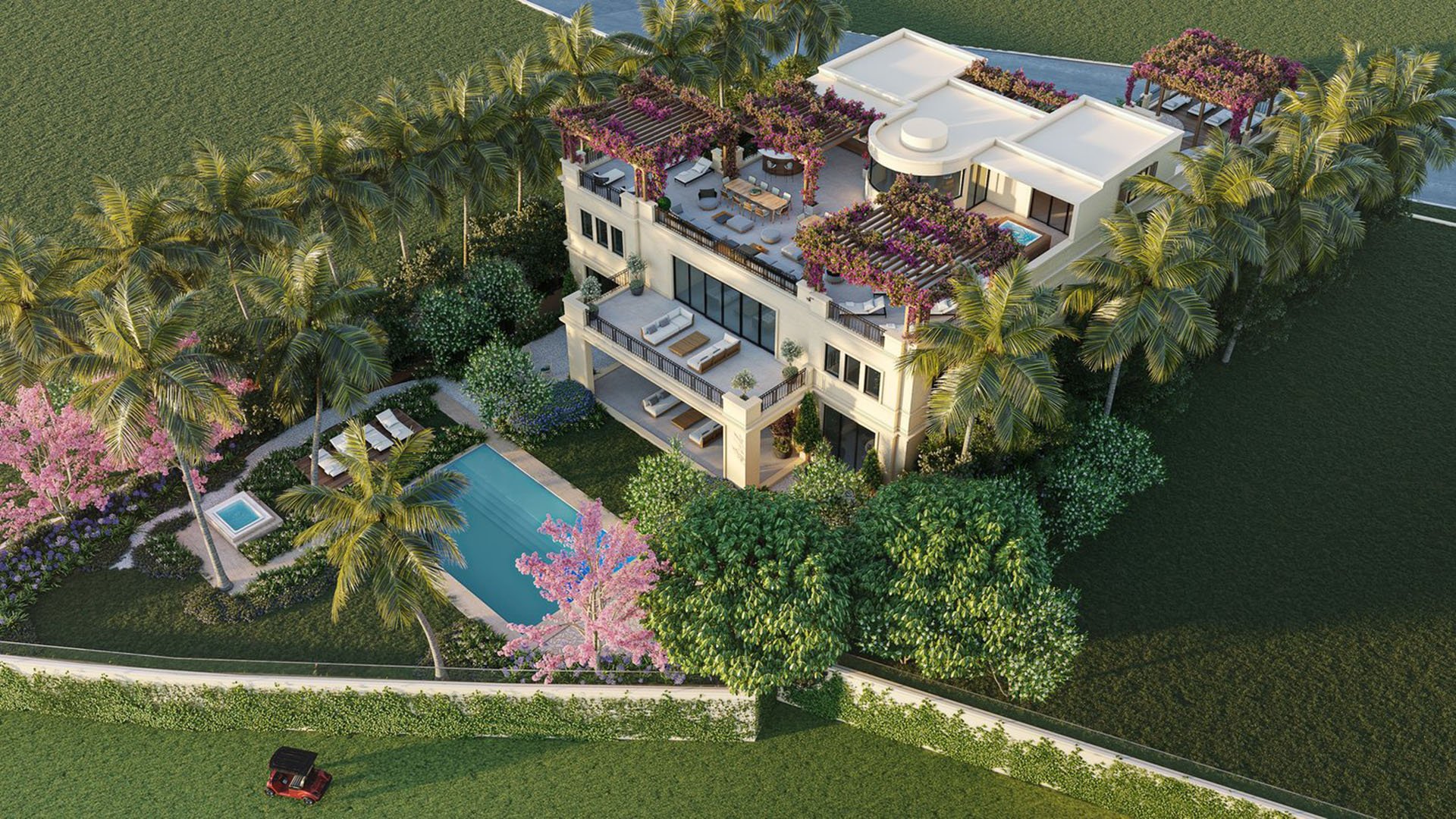
That is why a terrace that appears generous in renderings may not perform as expected during common windy periods. The question is not simply, “How large is the terrace?” It is, “How often will this terrace feel pleasant enough to use?”
The most sophisticated buyers ask for documentation early. They request current product approvals or technical documentation for balcony doors, sliding glass systems, window walls, railings, and relevant façade components appropriate to the building’s location and exposure. They ask how balcony drainage is detailed. They review warranty language around façade systems and waterproofing. They examine developer disclosures for limits on furniture, planters, umbrellas, shutters, and storm procedures.
These questions are not adversarial. They are part of buying well in a hurricane-focused market. A buyer considering ocean-facing or bay-facing new construction, from Miami Beach to Pompano Beach, should treat envelope performance as part of the luxury specification. At Armani Casa Residences Pompano Beach, or any comparable coastal setting, the premium is not only the brand, view, and finish package. It is confidence that the residence will live elegantly through South Florida’s wind calendar.
A controlled sales environment can make every residence feel tranquil. A better test is a visit to the actual unit, or to a comparable floor and orientation, on a breezy afternoon. Open and close the balcony doors. Listen for whistling or pressure. Step onto the terrace long enough to imagine lunch, drinks, or children moving between indoor and outdoor space. Ask current residents, where possible, about wind noise, rain intrusion, furniture management, and how often they use the terrace during the wet season.
For resale properties, ask whether there have been repairs involving window seals, sliding-door tracks, water intrusion, balcony drains, or railings. For pre-construction, ask how the developer describes the envelope systems and what documents will be available before closing.
The South Florida luxury buyer is not choosing between safety and beauty. The real decision is between assuming the view tells the whole story and verifying that the residence will feel as refined as it looks.
Are high-floor condos in South Florida unsafe because of wind? No. High-rise towers are engineered with wind forces in mind, but buyers should separately evaluate comfort, noise, terrace usability, and envelope performance.
Why do upper floors feel windier than lower floors? Wind speed generally increases with height above ground or water, so an upper-floor balcony can feel very different from the lobby or pool deck.
What should Latin American buyers compare with their home markets? South Florida combines high-rise living with sea breezes, thunderstorms, tropical-weather risk, and hurricane-focused building practices.
Does documentation matter for windows and doors? Yes. Buyers should ask whether balcony doors, sliding glass systems, window walls, railings, and related products have current documentation suitable for the exposure.
Can a code-compliant tower still feel uncomfortable in wind? Yes. Code compliance addresses structural and safety requirements, while livability includes sound, pressure, motion, rain intrusion, and terrace comfort.
Should buyers visit only during calm weather? No. A breezy afternoon visit can reveal door noise, pressure, balcony comfort, and whether the terrace supports the lifestyle being promised.
Do all unit lines in the same tower behave the same way? No. Orientation, height, neighboring buildings, balcony shape, and façade design can make one line feel calmer than another.
Why is wind-driven rain part of the review? Wind can push rain into weak points around walls, windows, doors, roofs, and cladding, making waterproofing and drainage important.
Does terrace size guarantee outdoor usability? No. A large terrace may still be noisy or impractical during common windy periods, especially when it faces open water.
What is the smartest first question before signing? Ask for building-specific wind, glazing, waterproofing, product-approval, façade, and balcony-drainage documentation before relying on renderings or views.
For a discreet conversation and a curated building-by-building shortlist, connect with MILLION.
If branded residences are on your mind — as a home or as an allocation — we would be glad to share what we are seeing, privately.
Begin a quiet conversation