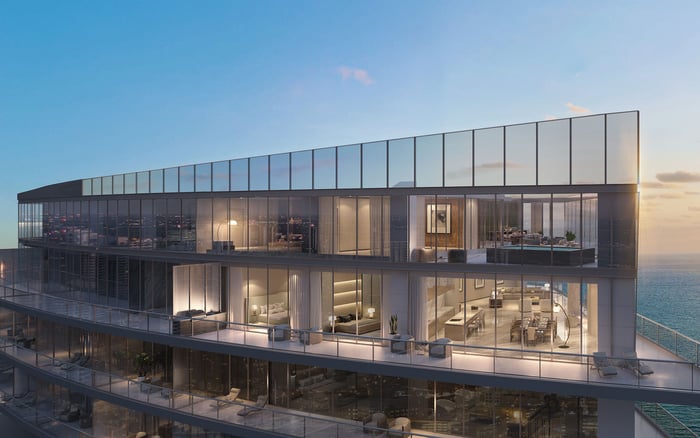
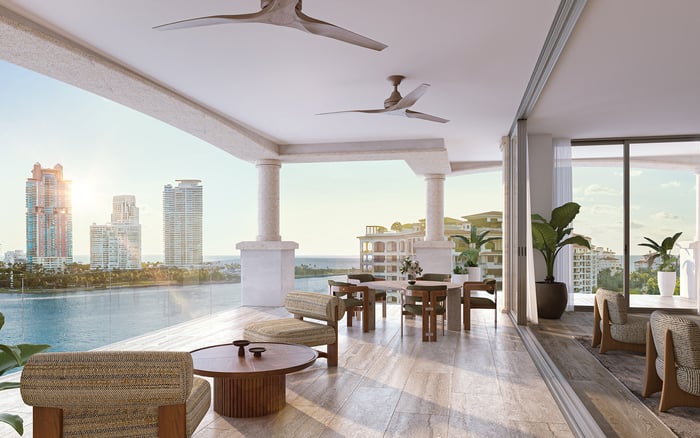
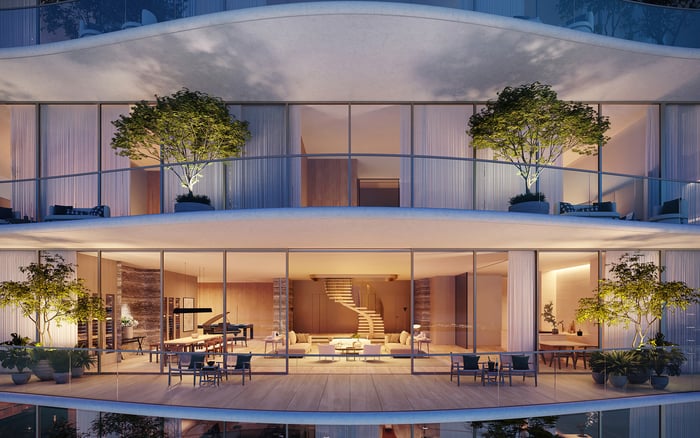
For New York buyers considering South Florida high-rise residences, wind is not just an engineering issue. It shapes balcony use, glazing comfort, door operation, sound, service rhythms, and the lived experience of a second home at height.
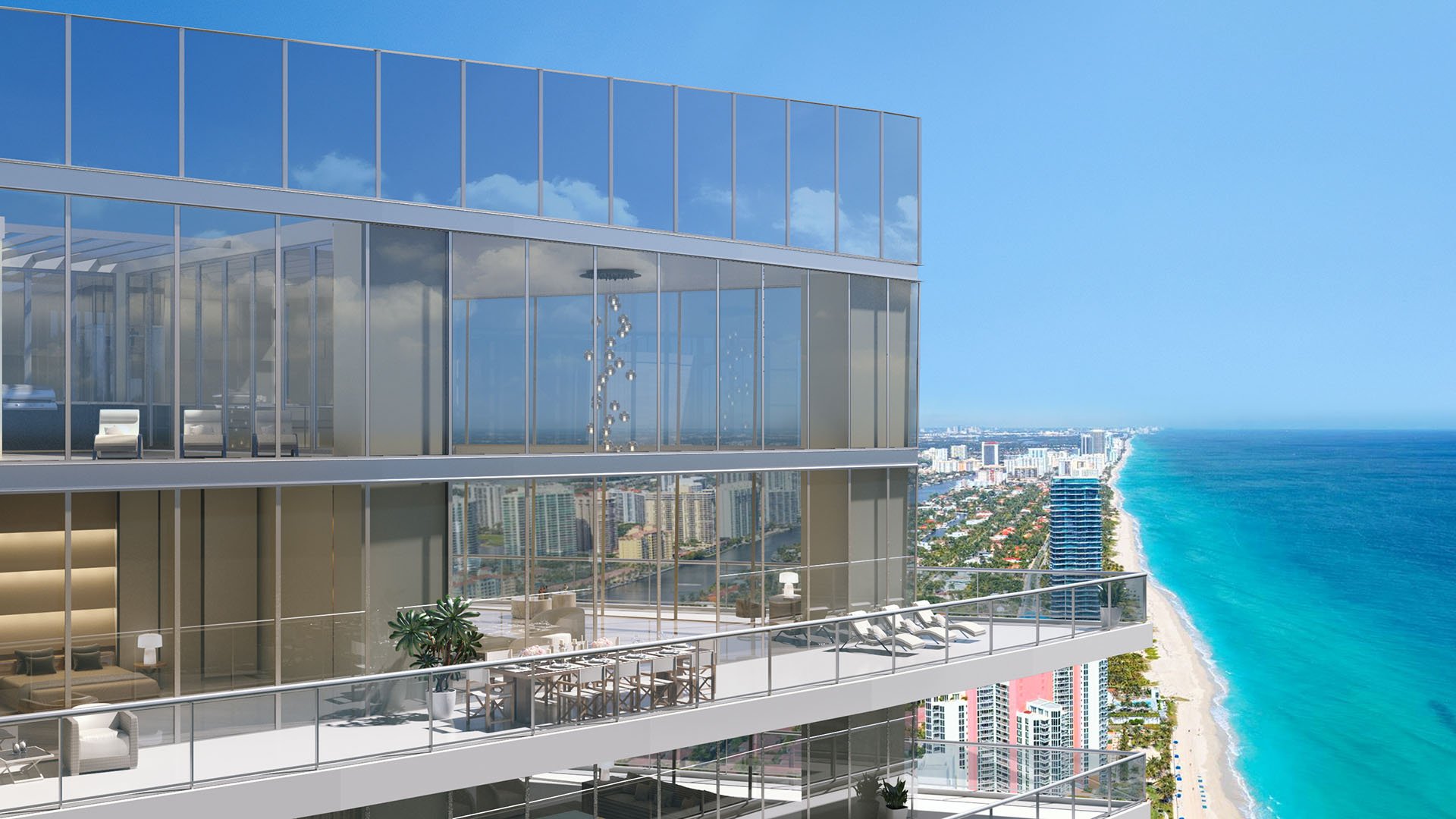
For buyers who divide their lives between New York and Florida, the appeal of a South Florida high-floor residence is immediate: open water, longer light, softer winters, and a more resort-like daily rhythm. Yet the same elevation that frames the view can also change how a home feels, sounds, breathes, and functions.
New York high-rise living teaches buyers to think vertically, but South Florida introduces a different set of questions. Here, exposure is not only about neighboring towers or street noise. It is about wind moving across open water, balcony pressure, wind-driven rain, operable doors, glazing performance, and the practical usability of outdoor space during ordinary breezy days, not only severe weather.
That distinction matters before signing. A residence that photographs beautifully can still carry daily comfort variables best understood in person. In Brickell, for example, buyers touring The Residences at 1428 Brickell may focus on skyline orientation and arrival sequence, but a refined review should also consider how the home feels when exterior doors open, how terraces are protected, and how the building manages high-floor conditions.
New York buyers often arrive with genuine high-rise experience. They know elevator etiquette, service corridors, package rooms, lobby security, and the subtle hierarchy of views. What can be less familiar is the South Florida relationship between height, water, weather, and outdoor living.
In Manhattan, a terrace is often a prized but occasional amenity. In South Florida, a balcony or terrace is part of the promise. Morning coffee, evening dining, and cross-season entertaining are central to the lifestyle proposition. That makes wind behavior more than a technical footnote. It is a question of usability.
A buyer should notice whether a terrace feels calm enough for furniture placement, whether conversation remains comfortable, whether sliding doors require extra effort, and whether the transition from interior to exterior feels graceful. These impressions can shift meaningfully by elevation, orientation, building shape, and neighboring context.
The same logic applies downtown, where tower living can be exhilarating. At Waldorf Astoria Residences Downtown Miami, the conversation naturally turns to height, skyline presence, and long-range views. A sophisticated buyer should add another layer: how does the residence perform as a home when the weather is active, doors are opened, guests are present, and the owner expects calm rather than drama?
Wind due diligence does not require a buyer to become an engineer. It does require sharper questions. The goal is not to eliminate wind; that is impossible at height. The goal is to understand how the building has been designed, detailed, operated, and maintained around it.
Ask how balcony doors and sliders are specified and maintained. Ask whether residents receive guidance on outdoor furniture, planters, and loose objects. Ask what the building recommends when strong weather is forecast. Ask how often exterior sealants, balcony drains, and glazing systems are inspected. Ask whether any high-floor units have recurring comfort issues that management has had to address.
Also ask to experience the exact residence, not only the model, sales gallery, or a lower-floor comparable. A high-floor corner home may behave differently from an interior line. An ocean-facing exposure may feel different from a city-facing exposure. A protected bay view may not feel like a direct Atlantic orientation.
In Miami Beach, where the romance of ocean air is inseparable from the architecture, a tour of The Perigon Miami Beach should include the same practical lens. How does the outdoor space sit in relation to prevailing breezes? Is the balcony deep enough to feel usable? Does the interior remain serene when the exterior is lively?
This topic is sometimes discussed too dramatically. For a luxury buyer, the more useful framework is comfort. High-floor wind behavior is not a reason to avoid vertical living in South Florida. It is a reason to buy more intelligently.
A well-selected residence can offer a remarkable balance: exposure without agitation, view without vulnerability, outdoor space without constant compromise. The buyer’s task is to distinguish architectural theater from livable refinement. A panoramic terrace is only truly valuable if it supports the way the owner intends to live.
This is especially important for a second-home buyer. If the property will be used in concentrated seasonal windows, the owner may not have months to gradually learn the building’s personality. The residence should feel intuitive quickly. Guests should know where to sit outdoors. Staff should understand weather protocols. Furnishings should be chosen with the building’s exposure in mind.
In Sunny Isles, the vertical beachfront lifestyle is especially compelling. A buyer considering Bentley Residences Sunny Isles should consider not only the prestige of the address and the water view, but also the daily choreography of arrival, elevator use, terrace enjoyment, and high-floor comfort.
Before committing, schedule at least one visit during a time when the residence can be experienced naturally, with doors opened where permitted and outdoor areas inspected closely. Notice sound, pressure, door movement, and the feel of the terrace. If the home is furnished, observe whether exterior pieces appear stable and appropriate for the setting.
Review the building’s resident guidelines. They can reveal how seriously management treats exterior conditions. Ask how storm preparation is communicated. Ask whether staff assists with outdoor items or whether responsibility sits entirely with the owner. For seasonal residents, clarity here is part of the service standard.
Look closely at thresholds, drains, balcony slopes, door tracks, and glazing edges. These are not glamorous details, but in a high-floor coastal environment they can shape satisfaction. A residence can have exceptional finishes and still disappoint if the transition between interior comfort and exterior exposure is poorly understood.
Finally, compare floors thoughtfully. The highest available home is not automatically the best home for every buyer. Some owners want maximum altitude. Others may prefer a slightly lower elevation with a more comfortable outdoor rhythm. The right answer is personal, but it should be chosen consciously.
Should New York buyers worry about high-floor wind in South Florida? They should not worry, but they should investigate. Wind affects comfort, outdoor use, sound, and daily operation at height.
Is a higher floor always better for resale? Not always. Views matter, but layout, exposure, outdoor usability, building quality, and buyer preference can be just as important.
Can a balcony be beautiful but rarely usable? Yes. A balcony may look exceptional in marketing yet feel too exposed at certain times, especially if furniture placement and wind behavior are not considered.
What should I ask building management? Ask about terrace rules, storm preparation, exterior maintenance, glazing inspections, and how residents are notified before significant weather.
Should I visit the exact unit before signing? Yes. The exact floor, line, exposure, and terrace configuration can all influence how the residence feels.
Does wind behavior differ between Brickell and beachfront markets? It can. Urban canyons, bay exposure, ocean frontage, and neighboring towers can all create different comfort profiles.
Are corner residences more exposed? They may feel more exposed because they often have broader glass lines and multiple orientations. The specific design matters more than the label.
Is this only a hurricane-season concern? No. Everyday breezes, rain, pressure at doors, and terrace usability are part of the year-round living experience.
Should outdoor furniture be selected differently at height? Yes. Weight, profile, materials, and storage plans should match the building’s exposure and management guidelines.
What is the best next step for a seasonal buyer? Pair the emotional tour with a practical walk-through focused on wind, doors, terrace comfort, and building protocols.
To compare the best-fit options with clarity, connect with MILLION.
If branded residences are on your mind — as a home or as an allocation — we would be glad to share what we are seeing, privately.
Begin a quiet conversation