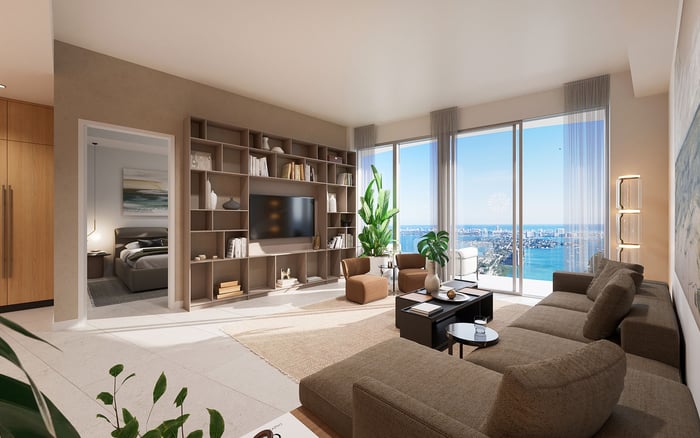
Full-floor living at One Thousand Museum can appeal to buyers seeking separation, control and exclusivity, but the privacy premium should be tested through residence-specific documents and inspections. Elevator access, acoustics, circulation, building procedures and long-term resale considerations all deserve careful review before a purchase decision.
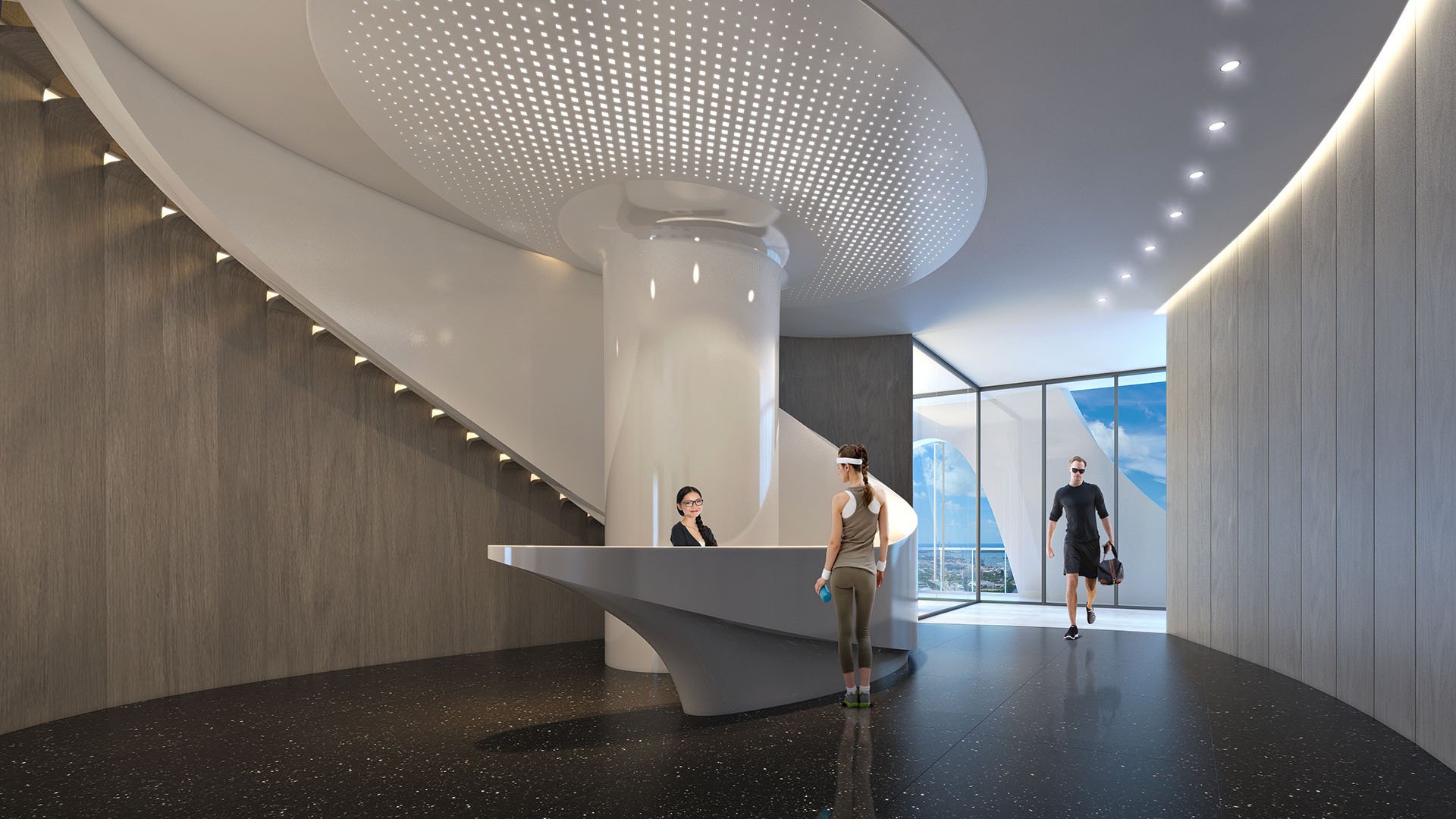
One Thousand Museum in Downtown Miami may attract buyers who associate full-floor living with privacy and exclusivity. That expectation should be translated into specific, verifiable conditions before a buyer assigns a premium to the residence.
Privacy in a managed condominium involves more than the number of homes on a floor. Buyers should examine the complete sequence from arrival and elevator access to the residence threshold, entertaining areas and private rooms. The objective is to distinguish physical separation from privacy that depends on building operations.
A full-floor plan can create opportunities for separating social, private and service areas, but the actual benefit depends on the specific layout. Buyers should review room placement, circulation paths, fixed building systems and any constraints affecting proposed alterations.
A design team can help determine whether the residence supports the buyer’s daily routines. Relevant questions include whether guests can move through social spaces without entering private areas, whether household staff have practical circulation routes and whether work or retreat spaces are sufficiently separated.
Customization should never be assumed to be unlimited. Any proposed work should be evaluated against the condominium documents, building requirements and applicable approvals before design flexibility is included in the purchase rationale.
The description “full-floor” does not by itself establish exclusive elevator use, a secured private vestibule, enhanced acoustic separation or restricted staff access. Each of those points requires residence-specific confirmation.
Buyers should map how residents, guests, vendors, deliveries and service personnel move through the property. They should also clarify how access is authorized and how emergency or maintenance entry is handled, without seeking disclosure of sensitive security details.
Comparable South Florida residences can help sharpen the analysis. Buyers may review Aston Martin Residences Downtown Miami and Waldorf Astoria Residences Downtown Miami using the same questions about floor occupancy, elevator arrangements, arrival flow and documented access rights. The purpose is not to assume equivalent features, but to compare each opportunity consistently.
The diligence process should begin with the condominium declaration, relevant rules, the current residence plan and available specifications. Buyers should ask which privacy features are attached to the residence and which reflect operating practices that may change.
An in-person inspection should focus on the elevator area, entry doors, bedroom boundaries, service zones and mechanical interfaces. Acoustic performance is best treated as an observed condition rather than inferred from a floor plan or sales description.
Written questions can also clarify guest authorization, vendor routing, delivery handling and staff procedures. Responses should be reviewed with appropriate legal, design and property professionals before a buyer relies on them.
For another urban comparison, The Residences at 1428 Brickell can be considered with the same diligence framework. Applying one checklist across properties helps separate presentation from evidence.
Without residence-specific transaction support, a full-floor premium should not be treated as a fixed percentage. Buyers can instead separate the asking price into components such as floor occupancy, usable space, layout quality, access arrangements, acoustic conditions and other attributes documented for the particular residence.
Permanent physical characteristics may carry a different long-term value from operating procedures. A buyer should identify which benefits are secured through title, governing documents or construction and which depend on current management practices.
Resale analysis should also consider whether a customized interior will remain understandable and useful to a future purchaser. Personalization can serve the current owner while still preserving clear circulation and a practical separation between social and private areas.
A different waterfront context, such as The Residences at Mandarin Oriental, Miami, can provide another point of comparison. As with every project, the analysis should remain specific to the residence and its governing documents.
The premium is most defensible when the residence’s physical layout, documented access conditions and observed daily experience align with the buyer’s priorities. Those priorities may include controlled arrival, reduced interaction, discreet entertaining, household-staff circulation or separation between work and private life.
Defining those requirements before negotiating turns privacy from a broad luxury concept into a practical checklist. A buyer can then decide which benefits are essential, which are preferable and which do not justify additional cost.
What should “full-floor” mean to a buyer? It should be treated as a description of floor occupancy whose exact boundaries and rights must be confirmed in the residence documents.
Does full-floor ownership guarantee exclusive elevator use? No guarantee should be assumed without reviewing the applicable plans, specifications and condominium documents.
Which documents are most relevant to privacy diligence? Buyers should review the condominium declaration, relevant rules, current plans, available specifications and written access procedures.
How can a buyer evaluate acoustic privacy? An in-person inspection should examine elevator areas, doors, bedrooms, service zones and mechanical interfaces under available operating conditions.
Why does the arrival sequence matter? Privacy can be affected by how residents, guests, vendors and deliveries move from the building entrance to the residence.
Can operating procedures change after purchase? Some practices may change, so buyers should distinguish documented rights from management procedures or informal conveniences.
How should customization potential be assessed? A design team should review fixed systems, circulation needs, condominium requirements and applicable approvals before plans are valued.
Is there a standard premium for a full-floor residence? A standard premium should not be assumed without reliable residence-specific support and a careful comparison of documented attributes.
What should buyers consider for future resale? They should consider whether the layout, access conditions and customized interiors will remain practical and understandable to another buyer.
What is the central decision rule? Pay a premium only for privacy benefits that can be documented, inspected and matched to the buyer’s actual routines.
To compare the best-fit options with clarity, connect with MILLION.
If branded residences are on your mind — as a home or as an allocation — we would be glad to share what we are seeing, privately.
Begin a quiet conversation