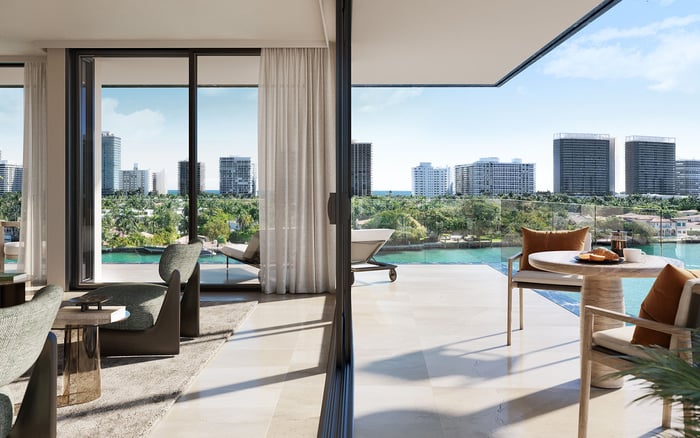
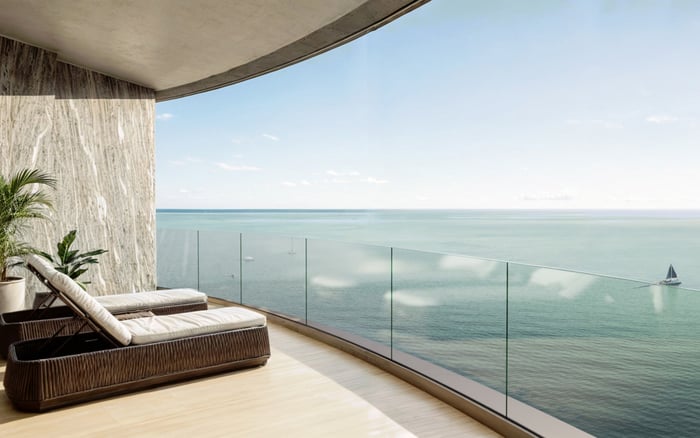
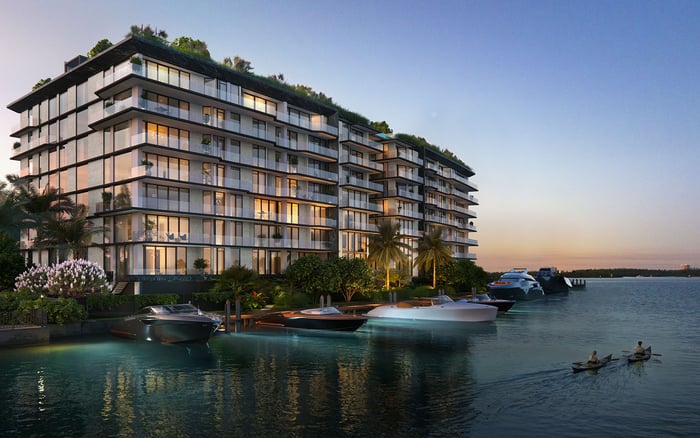
A buyer-oriented look at how Biscayne Bay access shapes use patterns, emotional attachment, renovation timing, and resale positioning at Bay Harbor Towers.
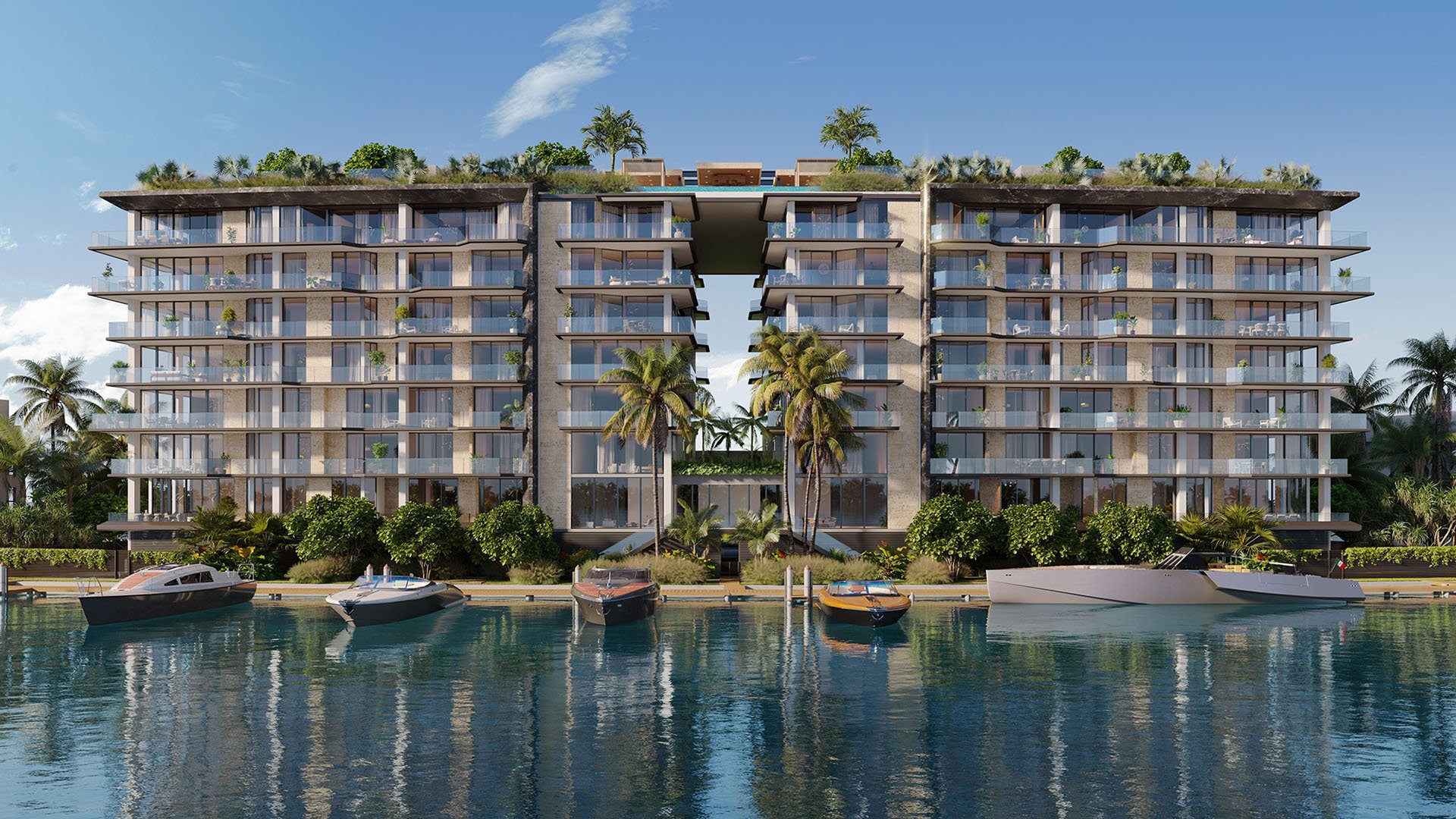
At Bay Harbor Towers, the waterfront is not a decorative feature layered onto the ownership experience. It is the operating system. The bay shapes when residents use the building most intensely, how they approach renovation timing, what they value in a particular residence, and how a future resale is positioned.
That is the quiet distinction of a bayfront condominium in Bay Harbor Islands. Buyers are not simply purchasing interior space near Bal Harbour and Surfside. They are buying a pattern of life organized around Biscayne Bay, where balcony time, pool-deck pauses, weekend boating routines, and sunset rituals become part of the property’s emotional value.
This is why Bay Harbor Towers competes differently from inland or non-waterfront buildings in the same neighborhood. Proximity has value, but direct water access changes the cadence. It turns the bay from a view corridor into a daily amenity, and that distinction tends to influence who buys, how long they hold, and what they emphasize when they eventually sell.
The strongest audience for Bay Harbor Towers is not necessarily the buyer searching for the newest amenity narrative or the most heavily branded residential environment. Its appeal is more elemental: direct contact with Biscayne Bay, boating convenience, a quieter residential setting, and quick access to the surrounding luxury geography of Bal Harbour and Surfside.
That creates a more specific buyer pool. These are owners who understand that a waterfront building is not judged only by lobby drama, fitness programming, or finish packages. It is judged by the quality of its relationship to the water. For some, that means an everyday water view that changes by the hour. For others, it means the practicality of boating access and the way the shoreline can turn a second home into a place that is used more often than expected.
The same logic shapes comparisons across Bay Harbor Islands. A buyer looking at newer boutique waterfront options such as Onda Bay Harbor and La Baia North Bay Harbor Islands may be evaluating a different balance of design language, newness, and amenity curation. Bay Harbor Towers sits in a more embedded category, where the core proposition is the bay itself and the ownership rhythm it creates.
In search terms, the building sits at the intersection of Bay Harbor, Bal Harbour, Surfside, water-view, and boat-slip demand. In real ownership terms, those labels translate into daily choices: whether to spend the morning outside, whether to keep boating central to the weekend, and whether the unit feels difficult to replace because the water is part of the routine.
Waterfront ownership has a way of reorganizing time. At Bay Harbor Towers, the bay can influence the day before any resident steps outside the building. Morning light, weather, wind, and water movement all affect how balconies are used. A pool deck is not merely an amenity deck when it sits in conversation with Biscayne Bay. It becomes a place to observe, pause, and return to throughout the day.
That daily relationship is one reason waterfront condominiums often generate stronger emotional attachment than comparable non-waterfront residences. A buyer may start with practical criteria, such as location, layout, and budget, but the decision to stay often comes from repetition. The same view at different hours. The same boat routine on weekends. The same quiet return from Bal Harbour or Surfside to a residential island setting.
This rhythm also helps explain seasonal occupancy. Direct water access can make a residence feel especially useful during the months when boating, outdoor entertaining, and longer stays in South Florida are most appealing. The residence is not just a place to visit. It becomes a base for a lifestyle that is easier to maintain because the water is immediately present.
Water access can also influence renovation decisions. In a building where the waterfront setting carries so much of the value proposition, owners may renovate with a different purpose. The goal is not always to compete with the newest development. It may be to make the interior better support the view, the balcony, the seasonal stay, and the transition between inside and out.
That distinction matters. A non-waterfront unit may depend more heavily on interior novelty to stand apart. A bayfront unit has another layer of identity. Finishes still matter, but they are strongest when they frame the water rather than distract from it. Flooring, lighting, window treatments, kitchen orientation, and living-room flow all become part of how the residence receives the bay.
This can affect hold behavior as well. Owners who use the water consistently may be less inclined to trade quickly, particularly if the residence has the view orientation and access pattern that matches their routine. The building becomes familiar in ways that are difficult to replace. Scarcity reinforces that attachment, because Bay Harbor Islands has finite bayfront frontage, and true waterfront utility cannot be replicated by buildings that offer only neighborhood proximity.
For sellers at Bay Harbor Towers, the resale story should not be reduced to square footage and finishes. Those details matter, but the more persuasive proposition is the combination of view orientation, waterfront lifestyle, and usable water access. The most compelling buyer is often trying to understand how the residence will live, not just how it will photograph.
That is where language and presentation need precision. A waterfront listing should show how the home interacts with Biscayne Bay: what the principal rooms see, how the balcony functions, how outdoor areas are used, and how boating or water access fits into the ownership pattern. The more clearly a seller can express that rhythm, the more distinct the residence becomes against non-waterfront alternatives.
The comparison is also broader than Bay Harbor Islands. A buyer weighing waterfront lifestyles might cross-shop boutique island residences, Surfside buildings, or Bal Harbour offerings such as Rivage Bal Harbour. In that context, Bay Harbor Towers should be understood for what it is: a bayfront address where embedded access, not resort-scale spectacle, anchors the value conversation.
The central buyer question is not simply whether a building is waterfront. It is how the water can actually be used. At Bay Harbor Towers, due diligence should focus on the quality and practicality of the access, the view orientation of a specific residence, and how the building’s waterfront setting aligns with the buyer’s real routine.
A buyer who boats should look beyond the romance of the shoreline and understand the practical conditions that govern use. A buyer who values sunsets should study how the particular residence receives light and water views. A buyer focused on long-term resale should think carefully about how the waterfront story will remain legible to the next owner.
This is also where nearby Bay Harbor Islands projects such as The Well Bay Harbor Islands may help sharpen preferences. Some buyers will prioritize wellness branding, new development polish, or amenity programming. Others will remain more drawn to a building where Biscayne Bay is the primary amenity and the ownership experience follows from that fact.
The ownership rhythm at Bay Harbor Towers is best understood as a cycle. Water access attracts a specific buyer. That buyer uses the residence in ways tied to the bay. Repeated use creates emotional attachment. Emotional attachment influences renovation and holding decisions. When the residence returns to market, the resale narrative depends on communicating that same water-driven lifestyle clearly.
This is the lifestyle-to-liquidity argument. The bay shapes how the property is lived, and the way it is lived shapes how it is valued. In a market filled with polished amenity concepts and design-forward launches, Bay Harbor Towers remains compelling for buyers who want the quieter privilege of daily contact with Biscayne Bay.
What defines the ownership rhythm at Bay Harbor Towers? It is the pattern of use created by direct water access, bay views, seasonal stays, boating routines, and long-term attachment to the waterfront setting.
Is Bay Harbor Towers mainly about amenities? Its appeal is more focused on Biscayne Bay access and waterfront living than on resort-scale amenity programming.
Why does water access matter for resale? It gives sellers a lifestyle proposition beyond square footage, especially when view orientation and practical access are clearly presented.
Should buyers evaluate every waterfront unit the same way? No. Buyers should study the specific residence, view orientation, balcony experience, and actual usability of the water access.
Who is the strongest buyer for Bay Harbor Towers? The strongest buyer is someone who values bayfront living, boating convenience, a quieter setting, and proximity to Bal Harbour and Surfside.
How does Bay Harbor Towers compare with non-waterfront buildings nearby? It offers direct waterfront utility rather than relying only on neighborhood access or general Bay Harbor Islands convenience.
Can water access affect renovation choices? Yes. Owners may renovate to frame the view, improve indoor-outdoor flow, and make the residence better suited to waterfront routines.
Does scarcity play a role in the ownership story? Yes. Bayfront frontage in Bay Harbor Islands is finite, which supports the long-term scarcity argument for true waterfront condominiums.
Is Bay Harbor Towers best suited for full-time or seasonal owners? It can appeal to both, particularly when the buyer’s routine includes the bay, boating, outdoor use, and easy access to nearby luxury districts.
What should sellers emphasize first? Sellers should emphasize the combined story of view orientation, water access, waterfront lifestyle, and how the residence is actually used.
To compare the best-fit options with clarity, connect with MILLION.
If branded residences are on your mind — as a home or as an allocation — we would be glad to share what we are seeing, privately.
Begin a quiet conversation